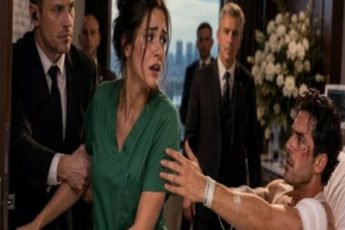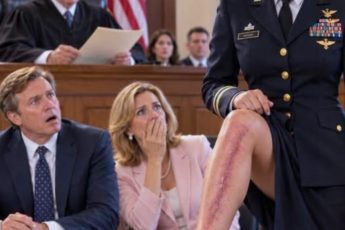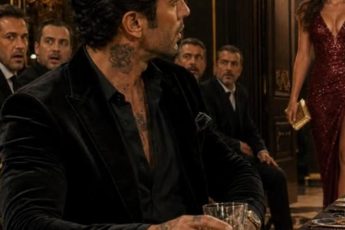

After the colonel’s last words, my father picked up the phone from the table and tried to leave the room.
The door was already locked.
“No one is leaving,” said the security officer.
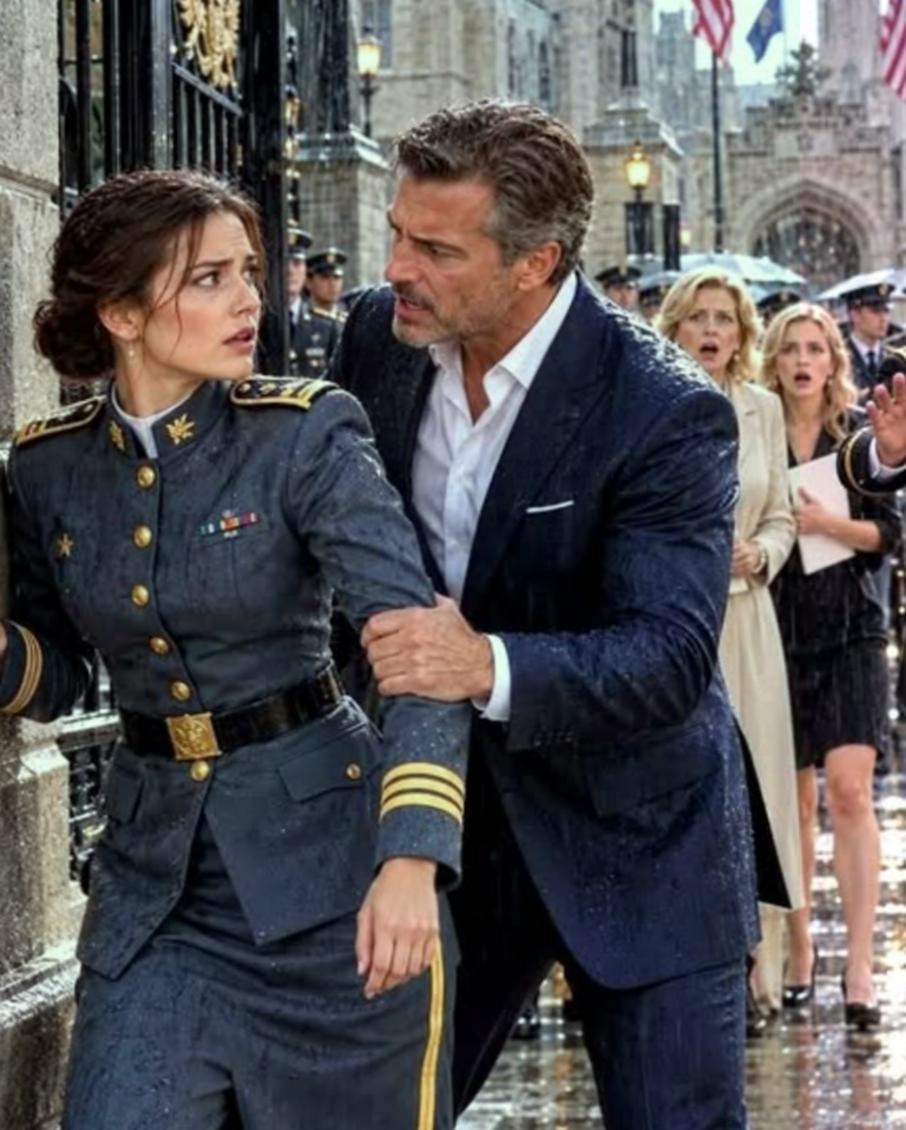
My father looked first at him, then at the colonel, and finally at me. His face no longer resembled the face of the man who had humiliated me in the rain a few minutes earlier. Now he looked only tired and frightened.
The phone rang again.
“Call a lawyer,” he told Diane.
Diane dialed a number with trembling fingers.
“He is not answering,” she said.
“Call again!”
“I have already called three times.”
Haley pressed herself against the wall. She was still holding my golden pass. It had become damp from the rain, and a small scratch had appeared on its edge.
“Dad, you told me you had taken care of everything,” she whispered.
“Be quiet.”
“Tell me that Clara would never find out.”
This time my father could not answer even her.

The colonel started the recording on the screen.
An image from four years earlier appeared. It was the academy’s old admissions room. I was standing in the corner, holding documents and waiting for the enrollment decision. My father was sitting at a table with an unfamiliar officer.
“If the girl is enrolled, you will lose control over the fund’s money,” the officer was saying.
“She is only eighteen years old,” my father replied. “She will never understand what I am doing.”
“If she becomes the best, the audit will reveal everything.”
My father then said the very words that had lived silently inside me for years.
“Then she must not become the best.”
The recording stopped in the room.
I could not even recognize my own voice.
“Was that you?” I asked my father.
He lowered his eyes.
“I wanted to protect you.”
“For four years you tried to make me forget myself.”
“When your mother died, everything remained on me. The debts, the fund, the house…”
“And the money taken in my name.”

This time he raised his head.
“I would have returned it.”
“When? When my career had finally disappeared?”
Diane covered her face with tears.
“I did not know,” she said. “I thought Clara was simply stubborn.”
“You knew,” I answered. “You always knew; it was simply more convenient for you not to know.”
Haley placed the pass on the table.
“I only wanted to spend one evening with the generals.”
“You took what was mine,” I told her. “But that was not the greatest betrayal.”
The colonel received a second call. This time the conversation was brief.
“The prosecutors are on their way. Also, the court has issued a temporary order to freeze the fund accounts.”
My father grabbed the chair.
“You want to destroy my life.”
“No,” I told him. “It is simply that no one will cover for you anymore.”
Those words fell most heavily.

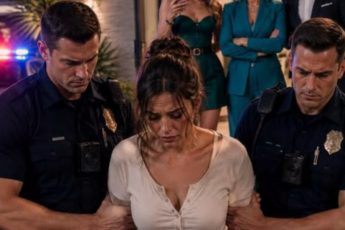
That same night the investigators took my father for questioning. He was not arrested immediately, but there was enough evidence against him: camera recordings, falsified evaluations, movements of money in the accounts, and the video of my pass being taken from me by force.
Diane caught my hand in the corridor.
“Clara, please, at least spare Haley.”
I looked at her fingers. Once, those hands had brushed my hair, before she became my stepmother.
“I am not going to destroy her, Diane. But I will not stop saving myself for the sake of someone else’s peace either.”
She let go of my hand.
The next day I went up on stage again in the academy’s main hall. This time no one locked the door. My uniform was dry, but the marks of my father’s fingers were still visible on my wrist.
When the colonel announced my name, everyone in the hall stood up.
“The best cadet in the course, Clara Morel.”
They fastened the medal to my chest. Its metal was heavy, although compared with the pain I had carried for years, it seemed almost light.
As I left the hall, I found my grandfather’s small copper whistle in my pocket. The three notches were still shining.
A few days later the lawyer called me.
“Your father is asking for an agreement,” he told me. “He says he regrets it and wants everything to remain within the family.”
“And what do you advise?”
“I have already refused to work on his behalf. He asked me to hide the evidence.”
For the first time I felt that protecting me was no longer only my own business. Truth too could stand beside me.

Months passed.
I moved to a coastal city and began working as an instructor at a military training center. In the mornings I taught beginners how to defend themselves, and at night, in a small rented apartment, I made tea and watched the distant lighthouse from the window.
At first, silence frightened me.
Then I realized that silence was not an empty room, but free space.
Haley wrote to me once.
“I do not know how to begin an apology.”
I looked at the screen for several minutes.
Then I wrote back: “With the truth.”
She did not answer me, but a week later she sent my golden pass in an envelope. The scratch was still visible on its edge.
My stepmother sent me only one short letter. She wrote that my room at home was empty and that she had found my mother’s photograph in the closet. On the back of the photograph was a drawing from my childhood—a little girl holding a flag in her hand.
Until then, I did not remember that the drawing existed.
In the first month of winter, a little girl whom I trained at the center asked me after practice:
“Ms. Clara, have you ever been afraid?”
I looked at the red ribbon tied to her rope.
“Every day.”
“Then how did you become strong?”
“I did not wait for fear to disappear.”
She thought about this answer and drew me on a small piece of paper. In the drawing, a woman was standing in the rain, holding a small whistle in her hand.
“This is you,” she told me. “But you are not alone anymore.”

That evening my father called me again.
His voice was old, tired, but it no longer had the power that had frightened me in childhood.
“Clara, you must not testify before the court. Everything will be fixed.”
“No, Father. Everything has already changed.”
“I am your father.”
“And I am your daughter. That is exactly why it hurts me, but that is exactly why I will no longer allow you to lie to me again.”
“Help me just once.”
I went to the window. The first snow was falling outside.
“All my life I helped you live with your lies. Now, for the first time, I am helping myself.”
The call ended.
The next day I recorded my testimony in court. I did not shout. Nor did I demand revenge. I simply told everything, exactly as it happened.
My father was ordered to return the money stolen from the fund, and for falsifying the academy records he was deprived of the right to serve in the military. Diane left the city after the court proceedings. Haley testified and accepted her share of the responsibility.
I did not wait for them to be punished.
My life was already moving in another direction.
Every morning before going to work, I put the golden pass in the small pocket of my bag. Not to prove to anyone whom it belonged to. Simply so that I would never forget how close I had come to losing myself.
And the copper whistle lay beside the bed, on the windowsill. The three small notches on it shone in the cold light.

One day the little girl asked me again:
“Are you still afraid now?”
I touched the whistle and smiled.
“Yes.”
“And you still go on?”
Beyond the window, snow was quietly descending over the city.
“Still.”
I picked up the whistle in my hand.
This time the voice belonged to me.
Missed the beginning?
Related posts:
 On Christmas Eve, I went to my ex-wife with accusations, but one look from her upon seeing the child froze me on the spot
 Três caminhões de concreto afundaram na minha fazenda, e quando a presidente da associação viu meus documentos, parou de sorrir
 My mother-in-law told me that I had to leave the house in two weeks, but Eric’s face changed when he saw the truck
 After childbirth, my husband saw my bruised legs, but when his mother entered the room, his smile disappeared
 My Father Was Fed by a Poor Woman at Night, but When I Followed Her Trail, a Stranger’s Face Suddenly Turned Pale
 A Flat Tire Stopped Me at a Desert Diner, but When the Waitress Heard My Name, the Color Drained from Her Face