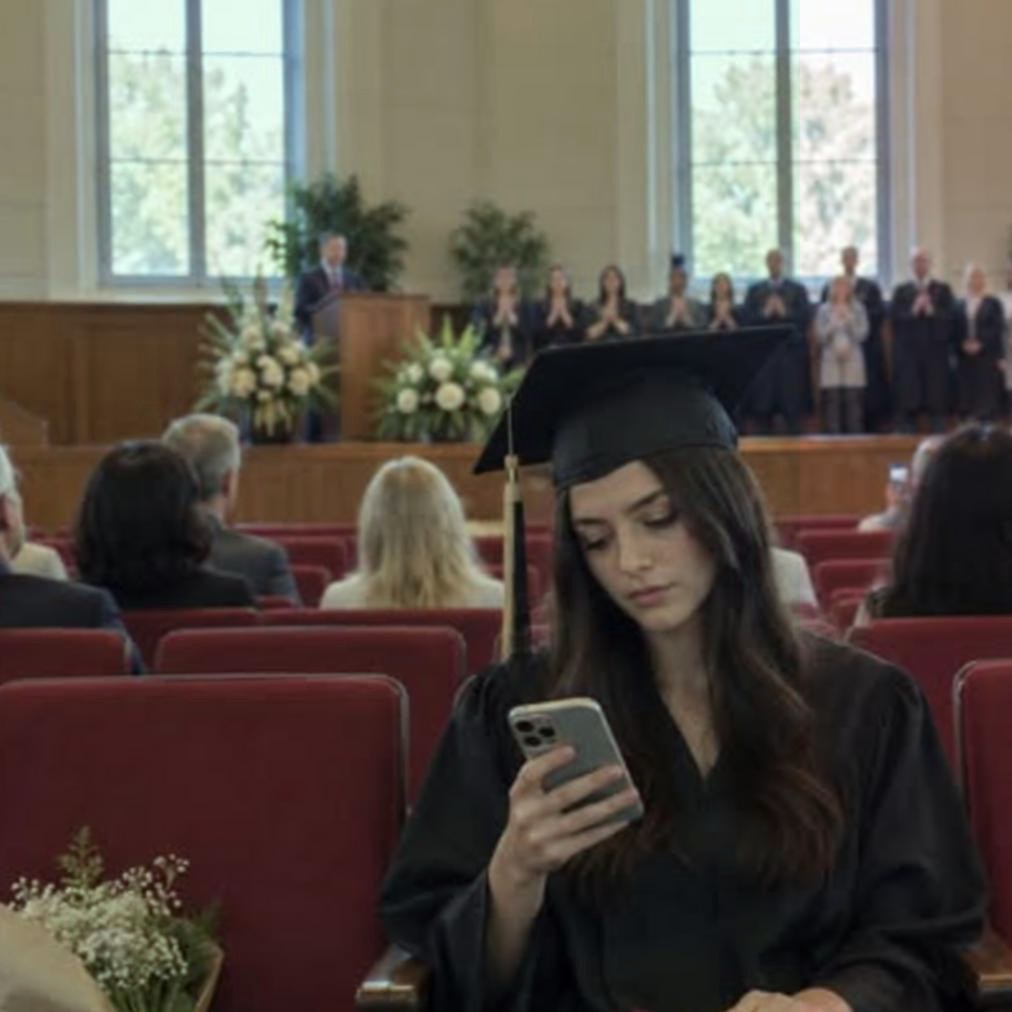

The call from the unknown number ended, but I heard the man’s voice for a long time afterward.
“The one they themselves formalized in your name.”
The next morning I went to Elena’s office.
Nika was already waiting for me. Three folders lay on the table, and each had a different date on it.
“We received all this last night,” he told me.
“Who sent it to you?”
“Camille.”
The name sounded as if the air in the room had grown heavier.
In the first folder lay a loan agreement formalized with my signature. The second was an addendum to the house mortgage. In the third were Mother’s emails, in which she asked a bank employee to use “Marlo’s good credit history.”
“I never signed this,” I said.
Salome put a pen on the table.
“That is exactly why Camille called us. She said that Mother transferred your electronic signature from an old computer.”
The phone rang immediately.
It was Mother.
“Someone at your company is turning you against us,” she told me without a greeting. “Cancel this contract immediately.”
“Which one?”
“Your job. We are family.”
“I remembered family when you left the four chairs meant for me empty.”
“Marlo, don’t dramatize.”
“You told the relatives that I had failed.”
“Because that day was an important event for Camille.”
“Her twenty-sixth birthday?”
“She needed our support.”
“And I never needed it?”
In reply I heard only heavy breathing.
“If you don’t cancel the contract, Father will lose the house,” she said at last.
For the first time there was no anger in those words. There was fear.
“I did not enter into this contract.”
“It is in your name.”
“Then we will settle it through legal means.”
“You would sue your own parents?”
“I can no longer sacrifice myself so that you can escape the consequences.”
I ended the call.

An hour later Elena arranged a meeting. Camille came to it too. Her hair was uncombed, and she held a shattered phone in her hand.
“I didn’t know Mother was acting illegally,” she said.
“But you knew that you skipped my graduation day.”
Camille lowered her eyes.
“I know.”
“Why did you send me the documents?”
“Because Father told me yesterday that he had asked you for money. It was the same old story. We always had to look to you.”
She placed her hands on her knees.
“Mother told me you would achieve nothing. I believed her because it was easier that way.”
“And now?”
“Now I heard your voice in the recording. When you told her, ‘For the first time I am standing up for myself’… I realized that all my life I had not lived in your shadow, but at your expense.”
I could not answer immediately.
That same evening Father and Mother came to the reception area of my new office. Mother held a photograph from Camille’s childhood, as if an old picture could open the door.
“Come back home,” Father told me.
“Why?”
“The family needs your help.”
“The family needs my money.”
Mother put the photograph on the table.
“Don’t speak to us like that.”
“You have already spoken your own words to me. I am only giving you the answer.”
Salome turned on the laptop.
My mother’s voice sounded in the room again.
“There’s no need for Marlo to go to the ceremony.”
My father’s voice.
“We’ll tell the relatives that she didn’t pass the defense.”
Camille’s laughter.
“She’ll never be as successful as she tells people she is.”
Mother froze.
Father’s face grew pale.
For the first time I heard them the way others had heard them all my life—from the outside, without defending myself.
The recording ended.
“You said this,” I told them.
Father grabbed the chair.
“That conversation was private.”
“My humiliation was not private. You made the whole family hear it.”

Salome laid the documents in front of them.
“Tomorrow we are going to the bank. The statement concerning the forged signatures is already prepared.”
Mother looked toward me.
“Marlo, please.”
It was the first time my name had sounded like a request and not a command.
“I will no longer protect you from the consequences you yourselves created.”
In the following weeks their calls did not stop. Father promised me that he would fix everything. Mother sometimes insulted me and sometimes apologized. Camille sent me a letter once and told me that she was looking for her own job for the first time.
I did not send money to any of them.
The case in court lasted several months. An examination confirmed that the electronic signatures had been stolen. The bank transferred the debt into the parents’ names, while the seizure placed on the house was canceled only after they began selling their property.
I did not go to court to win against them. I simply told the truth.
When the judge announced the decision, Mother did not look at me. Father, for the first time, sat alone.
That same evening the lawyer called me.
“Your parents want an agreement. They say it is necessary to speak with you before leaving the house.”
“I have already told them everything.”
“Your mother says this is the last chance.”
I stood by the window. The city lights spread across the wet asphalt.
“No,” I said. “This is their last chance to return me to the old Marlo.”
Several weeks later I emptied my old room. I was looking for Grandmother’s photograph under the bed, but I found only her copper bookmark. It had been in my bag on graduation day, and now it had a small scratch on its edge.
Nothing remained in the room except four pale squares on the wall—the places of the photographs that had once hung in my parents’ house hallway.
I locked the door.
For the first time I did not wait to see whether someone would follow me.
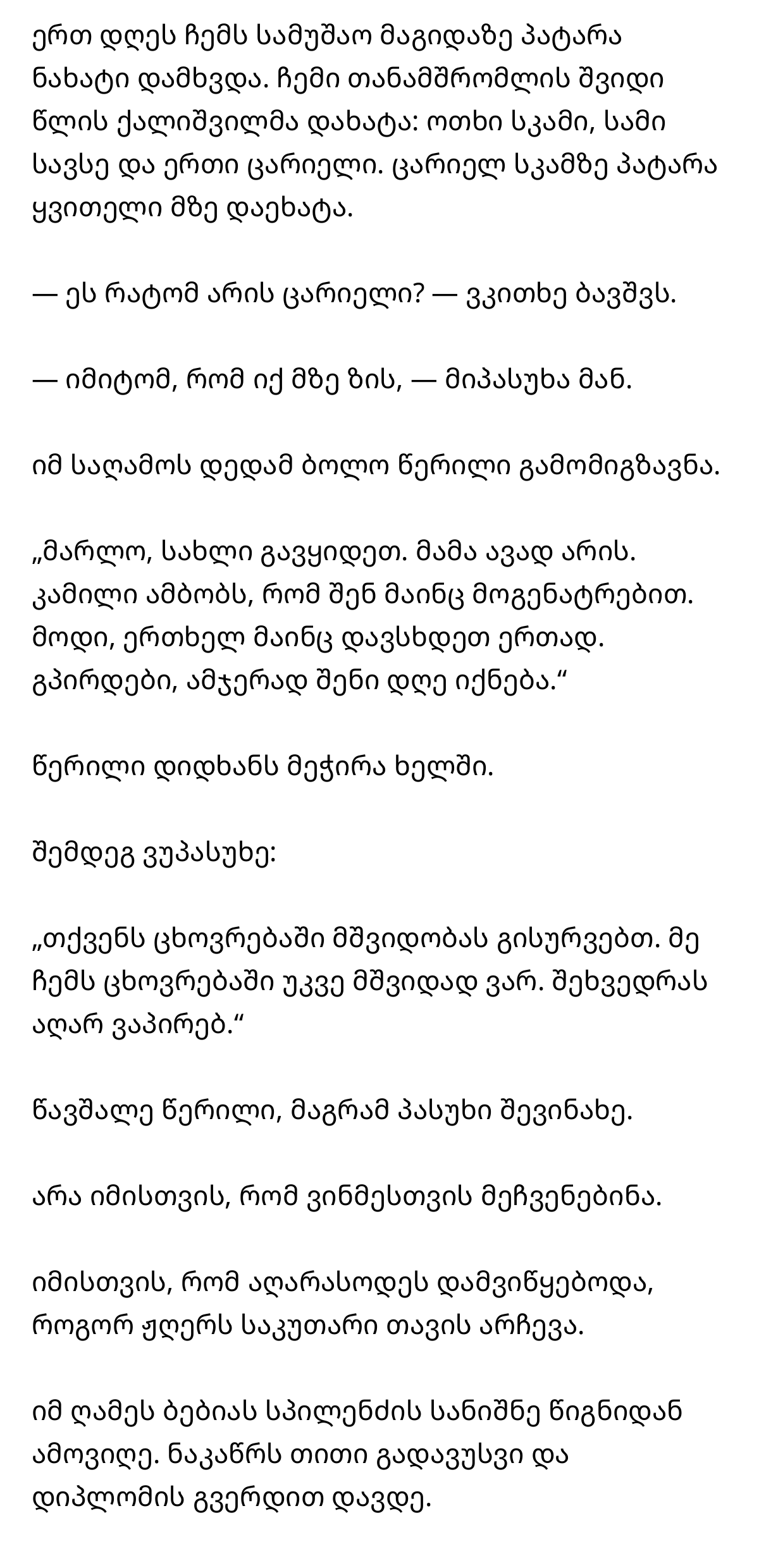


Six months later I was living in a coastal city. In the mornings I walked to the office. On the way I bought cinnamon bread at a small bakery and drank coffee without sugar. In my workroom I had a large window through which I could see the sea.
Camille called me once a week. She had found a new job and moved into a small apartment.
One morning she told me:
“I began living not because of you, but for myself.”
“That is exactly the good news,” I answered.
She thought for a long time.
“Will you ever forgive Mother?”
The first snow was falling on the window.
“Forgiveness may mean that I no longer carry her weight. It does not mean that I will allow her to hurt me again.”
“And Father?”
“He has the same choice I had. He simply has to make it himself now.”
My new life was not loud. At the office I helped young researchers. In the evenings I walked by the pool. On Sundays I put Grandmother’s bookmark in a book and read several pages.
One day I found a small drawing on my desk. My coworker’s seven-year-old daughter had drawn it: four chairs, three occupied and one empty. A small yellow sun was drawn on the empty chair.
“Why is this one empty?” I asked the child.
“Because the sun is sitting there,” she answered.
That evening Mother sent me her final letter.
“Marlo, we sold the house. Father is ill. Camille says that you still miss us. Come, let us sit together at least once. I promise, this time it will be your day.”
I held the letter in my hand for a long time.
Then I replied:
“I wish you peace in your lives. I am already at peace in mine. I am not going to meet.”
I deleted the letter, but kept the reply.
Not to show it to anyone.
So that I would never forget what choosing myself sounds like.
That night I took Grandmother’s copper bookmark out of the book. I ran my finger over the scratch and placed it beside the diploma.
The four chairs remained empty.
And for the first time, I came home.
Missed the beginning?
Related posts:
 My Family Deceived Me on My Graduation Day, Then an Unexpected Letter Wiped the Smile from My Mother’s Face
 I Put on My Sister’s Dress, Who Had Fled on Her Wedding Day, and When I Saw the Groom, the Entire Hall Suddenly Fell Silent
 My Five-Year-Old Daughter Was Slapped in the Face, but the Woman Who Came to the Christmas Tree on Christmas Eve Suddenly Stopped Smiling
 A Flat Tire Stopped Me at a Desert Diner, but When the Waitress Heard My Name, the Color Drained from Her Face
 After My Husband’s and Daughter’s Funeral, My Mother Asked Me for the Insurance Money, but the Bag on My Table Suddenly Erased Her Smile
 My Father Was Fed by a Poor Woman at Night, but When I Followed Her Trail, a Stranger’s Face Suddenly Turned Pale