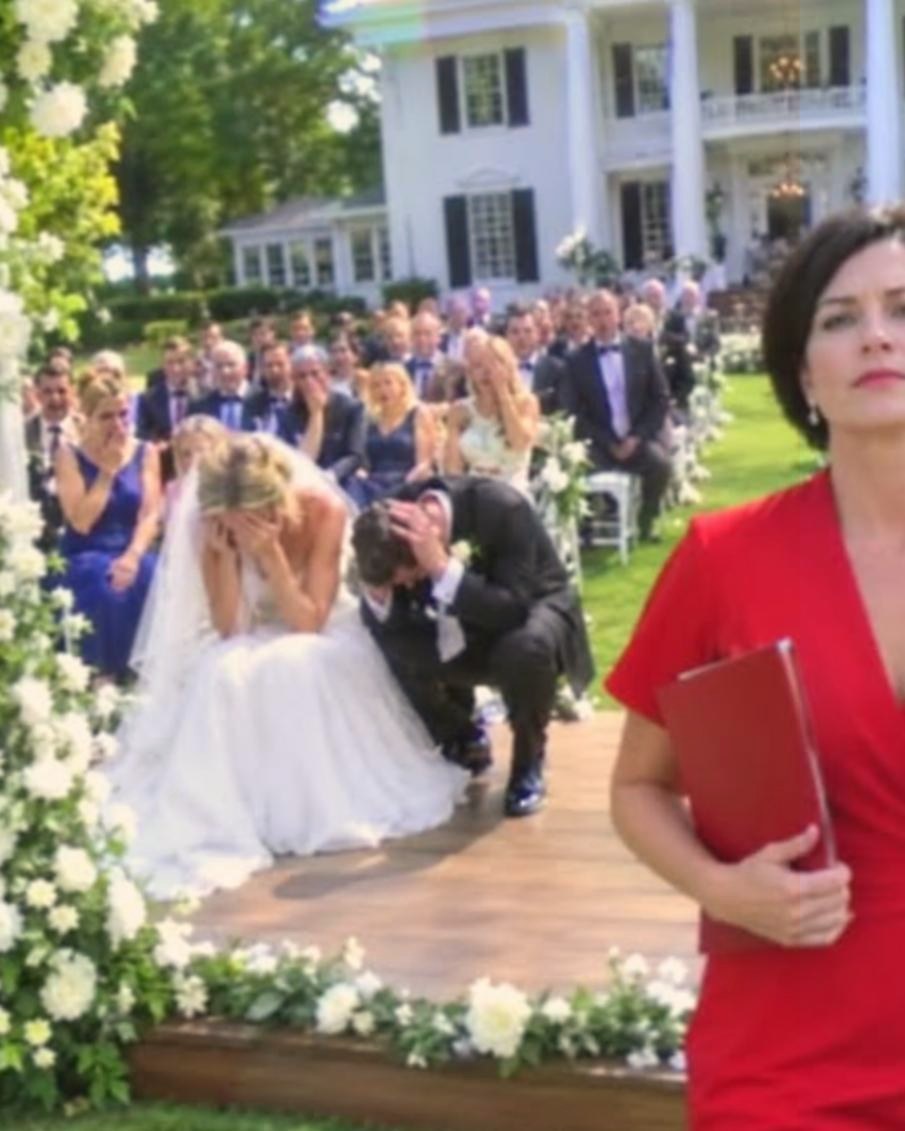

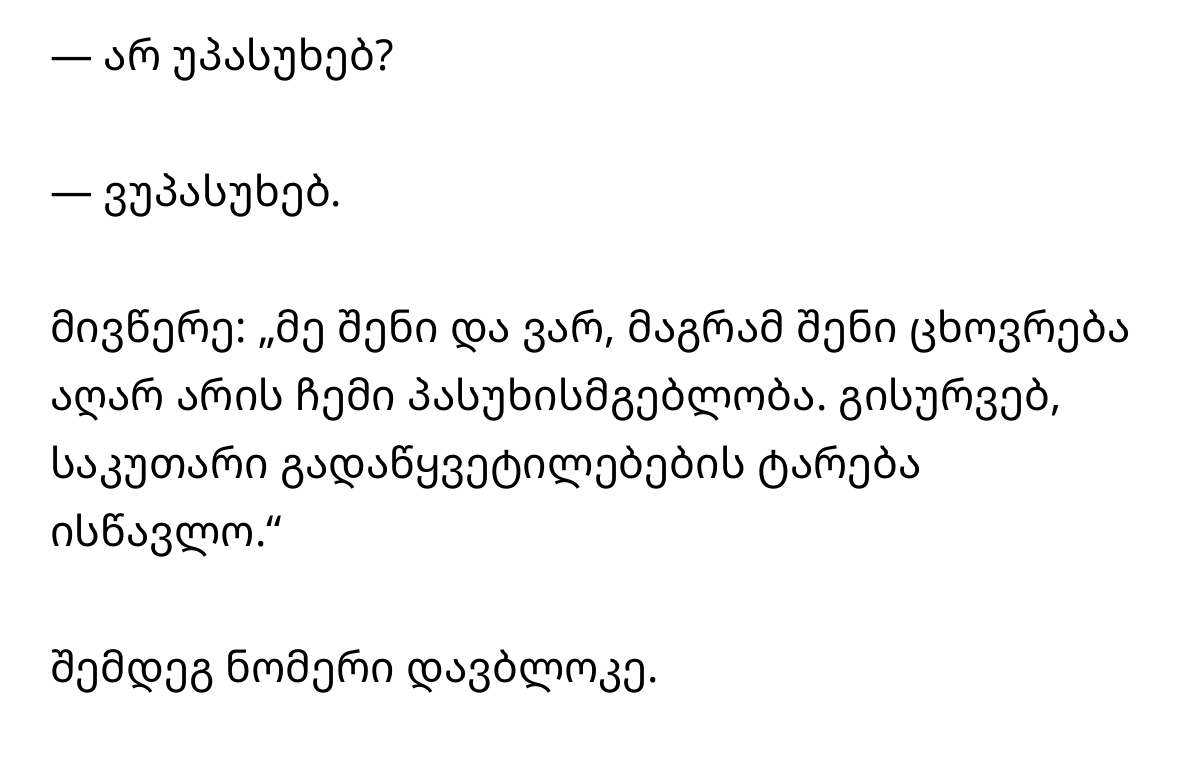
That night the wedding ended in ten minutes.
The music stopped.
The cake placed in the kitchen remained untouched, while the little sugar letters on top slowly collapsed. The guests quietly went out into the yard, as if they were avoiding their own shadows.
Dalton still tried to regain control.
“Everyone stay!” he shouted. “This is a misunderstanding!”
No one stopped.
Nicole stood by the stairs. The hem of her wedding dress was stained with dust.
“Don’t come to me,” she told him.
“Nicole, please.”
“You lied to me for two years.”
“We had different understandings of the house.”
“There is no different understanding of ownership.”
Her voice struck more strongly than any shouting.
Dalton called his father.
“Dad, tell her that this is our house.”
Father picked up the phone, but could not find a word.
“Tell her!” Dalton repeated.
“I will call a lawyer,” Father said finally.
“I already called one,” Dalton answered.
A few minutes later the lawyer arrived. He was holding a black leather bag, and on his face was the kind of expression a person gets when he sees his own client for the first time with the full truth.

“Mr. Dalton,” he said, “I cannot defend you in this matter.”
“What do you mean, you cannot defend me?”
“It means that you asked me to hide a document that speaks against you.”
“I did not ask you to hide it!”
“You asked me in writing. I saved that message.”
Dalton fell silent.
My phone rang at once as well. Nicole’s sister sent me the file she had spoken about. It was Dalton’s message.
“If Ciara asks, tell her that I received the house from Father. She has a lot of money and will swallow at least one house.”
Below it was also written:
“Imitating her signature is easy. No one at the bank will notice.”
Dalton read his own words aloud.
First his forehead wrinkled.
Then the phone fell from his hand.
“This is taken out of context,” he said.
“What context justifies this?” Nicole asked.
Dalton could not answer.
I stood before him and for the first time was looking not at my little brother, whom I helped when he fell from a bicycle in childhood, but at an adult man who had turned my kindness into a plan.
Father quietly said to me:
“Ciara, you can settle this within the family.”
“I settled it, Dad. You simply wanted me to bear the consequences.”

At ten o’clock in the morning the new owner entered. His representatives inspected the rooms, attached small paper labels to the cabinets, and packed Dalton’s things into boxes.
In the bedroom I found one thing that should not have been there.
An old photograph of me hung on the wall—Dalton and me in childhood, by the seaside, with a bought ice-cream cone in each of our hands. The frame of the photograph was broken, but it still hung there, as if someone had not dared to throw it away.
Dalton opened the door.
“This photograph will stay with me.”
“Take it.”
“Does everything end this simply?”
“No. It did not begin simply.”
He took the photograph, but after several seconds put it back on the table.
“You always thought you were better than me.”
“No. I simply thought I was your sister.”
These words hurt him more than losing the house.
A week later the bank confirmed to me that Dalton had indeed tried to use my signature. The case was transferred to law enforcement. Father changed lawyers, but not one of them could erase the messages, the recording, and the registry extract that said the same thing.
I did not go to the courtroom to punish Dalton.
I went to say that my life would no longer be a cover for someone else’s shame.
Dalton admitted attempting fraud and using a false document. The judge determined the punishment, but that day the heaviest sentence had already been delivered—Nicole annulled the marriage, while Father for the first time lost the right to speak in the name of the family.

Several months later I moved to another city.
I bought a small apartment with brick walls, two pots of basil on the balcony, and a window through which the sound of a tram could be heard in the morning. I still worked a lot at my job, but now every part of my salary was spent on my future and not on someone who hid my existence.
Mara came on Sundays. We drank tea in the kitchen, while her seven-year-old girl, Elene, drew on the floor.
One evening she handed me a drawing.
“This is your house,” she told me.
On the paper a small red sun was drawn above the door.
“Why the sun?” I asked.
“Because the door needs light.”
That night I looked at the drawing for a long time.
Dalton wrote to me for the first time after three months.
“Come, let’s start over. Dad is unwell. Nicole no longer speaks to me either. You are still my sister.”
The second message came a few minutes later.
“Can you rent a small apartment for me? Only temporarily.”
I put the phone on the table.
Mara asked me:
“You won’t answer?”
“I will answer.”
I wrote: “I am your sister, but your life is no longer my responsibility. I wish you to learn to carry your own decisions.”
Then I blocked the number.

This was not revenge.
It was a door that I was finally closing myself.
A few weeks later the first snow came. I went out onto the balcony and held the brass key in my hand. It no longer had any door, but the little red sun still shone.
I hung the key on the wall, beside Elene’s drawing.
That house could not preserve my family for me.
But it taught me to get myself back.
This time the door opened for me.
Missed the beginning?
Related posts:
 My Brother Did Not Invite Me to the Wedding in My Own House, but When an Unfamiliar Car Stopped at the Door, the Bride’s Smile Disappeared from Her Face
 My Ex-Wife Humiliated Me in Court and Demanded That I Be Stripped of My Rights to Our Child, but One Question from the Judge Made Gregory’s Smile Disappear
 Mi padre exigió que cediera la casa de mi abuela, pero al ver lo que llevaba en la mano dejó de sonreír
 They Found My Daughter and Her Newborn Locked in a Car, but When My Son-in-Law Denied Everything, the Neighbor’s Face Suddenly Changed
 My Father Was Fed by a Poor Woman at Night, but When I Followed Her Trail, a Stranger’s Face Suddenly Turned Pale
 At eight thousand meters, the commander asked for a combat pilot, and when I stood up, everyone on board fell silent





