


“Where is the message?” I asked.
My father handed me the phone. A document received from the court’s electronic system appeared on the screen. Beatriz’s statement said that I supposedly knew about the family’s financial situation from the beginning, deliberately entered the marriage, and then used my father’s influence to destroy the de la Vegas.
But on the last page there was one attachment.
Attached by her own hand, an old medical form.
The form bearing my forged signature.
Beatriz submitted it to the court to prove that I supposedly knew everything about Alejandro’s health and deliberately left him without help. She failed to take into account that in the lower corner of that same sheet the clinic’s stamp and the date of the alteration were visible.
Sandro smiled calmly.
“She herself brought us the document she had tried to hide for six years.”
Alejandro turned toward the police officers.
“This is all a family argument. You have no right to arrest me here.”

One of the police officers took the recording.
“Mr. de la Vega, we have several questions for you.”
“Valeria arranged all of this!”
“No,” I answered. “I am simply no longer trying to cover up your lies.”
That night the police took Alejandro for questioning. Formally, he was not yet arrested, but the clinic’s video recordings, the voice recording, and the signature examination proved sufficient for an investigation to begin into forgery, fraud, and the illegal use of medical data.
Beatriz called me immediately.
“If you sue Alejandro, you will destroy his future.”
For the first time, there was no arrogance in her voice. Only fear.
“I am not destroying your son’s future. You destroyed it yourselves when you treated a person’s trust as a contract.”
“You are still part of our family.”

“No, Beatriz. I am the woman in whose name you lied for years.”
I ended the call.
In the morning, the de la Vega company lost control. The bank stopped all new transfers. Construction of their technological complex stopped because several fictitious companies were found in the land ownership documents. My father’s group no longer granted them the loan.
I never put down the one signature they had been hoping for.
But my refusal proved sufficient.
Three days later, at the first court hearing, Alejandro sat in a metal cage. His eyes were red, but he still tried to present himself as the victim.
In the courtroom, Sandro played the audio recording.
“If we obtain her signature, all the financing will come under our control.”
It was Alejandro’s voice.
His face was not visible on the screen. Only the voice could be heard. That was precisely why the recording became even heavier. He heard his own words as if they were the confession of a stranger.

The judge asked:
“Do you confirm that this is your voice?”
Alejandro remained silent for a long time.
“The recording has been altered.”
Sandro then presented the second file: the complete recording from the clinic’s camera, in which Alejandro and Beatriz entered the file cabinet room six years earlier. In the video, Beatriz’s hand held the small moon-shaped key, the second copy of which they also had.
The judge raised his head.
“You said earlier that you had never been to this clinic.”
Beatriz’s lips moved, but she no longer made a sound.
The case continued for months. Alejandro was found guilty of financial fraud and document forgery. A separate case was opened against Beatriz for the illegal use of medical information. Camila denied everything at first, but messages were found on her phone in which she received instructions from Alejandro about how to humiliate and slander me.
I did not smile at a single hearing.

When the verdict was announced, I only closed my eyes. It was as if a very heavy door had closed, behind which I had lived for three years.
Beatriz’s house was emptied. The valuable items were put up for auction. Camila left the city. Alejandro even lost the support of his own lawyer when he said that he would no longer continue cooperating with his client.
One evening, after returning from the hearing, I opened the door to my old room in my father’s house.
The room was almost empty.
Only one photograph remained on the wall—I and my father, me at twelve years old, in front of his first factory. In my hand I held the small moon-shaped key.
And beneath the photograph lay the real key.
I picked it up and enclosed it in my palm.
This time it belonged to no closed door.
Several weeks later, I moved to Mexico City. My father offered me a job in the social projects department of his group, but at first I refused. I wanted to begin life under my own name, not as Arturo Mendoza’s daughter.
I rented a small office space in the city’s old district. There I helped women protect themselves from fraudulent contracts and forced debts. The first days were difficult. I often returned home tired, with dust on my shoes and dozens of unopened cases in my bag.

But this tiredness was mine.
One morning in December, I met my little niece, Marina, at the office. She sat at the table and was drawing a house on a sheet of paper. The house had one door, and a small moon was drawn on the door.
“Is this your house?” I asked.
“No,” she answered. “This is the house no one can enter unless you open it for them.”
Her words stopped something in my throat.
“And whom will you open it for?”
Marina put the pencil aside.
“For the one who learns to knock on the door.”
Outside the window, the first snow began to fall. The city was slowly turning white. And for the first time I understood that peace was not a noisy victory. It was the morning when you are no longer afraid of the ringing telephone.
Three months later, I received a letter from Alejandro. His lawyer sent it because he no longer had the right to contact me himself.

The letter said that he regretted it. That he had never loved Camila. That Beatriz had forced him to do everything. That if I withdrew the statements, one day we would be able to speak again.
At the end there was one sentence:
“You are still my family.”
I held the letter in my hand for a long time. Then I folded the sheet and returned it to the lawyer.
“Tell him that I am no longer part of his family.”
“Would you like to give any other answer?”
“Yes. Tell him that I wish him peace, but I will no longer allow him the right to return to my life.”
That evening I left the office late. On the street corner, the smell of cinnamon and warm bread came from a small bakery. The phone was no longer ringing. No one was waiting for me by the car. No one was asking me to sign, cover up a lie, or save someone else’s family.
When I got home, I took the moon-shaped key from my bag and placed it on the writing desk.
I put it beside the house Marina had drawn.
The key still shone, but now it was no longer the key to a door from the past.
It became the sign of my own life.
And for the first time, I closed the door myself.
Missed the beginning?
Related posts:
 Three Days After the Divorce, My Ex Mocked Me When He Saw an Old Man with Me — Then the Color Drained from His Face
 A férjem azt mondta, csak megcsúsztam, de amikor az anyja a párnát az arcomra szorította, a rendőr tekintete megváltozott
 My husband left me for his former lover and stabbed me twice, but his strange visitor at the hospital lost color
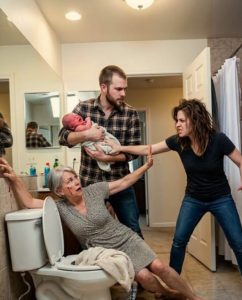 Encontré a mi recién nacido dentro del inodoro y, cuando señalé a la mujer junto a él, mi marido se quedó paralizado
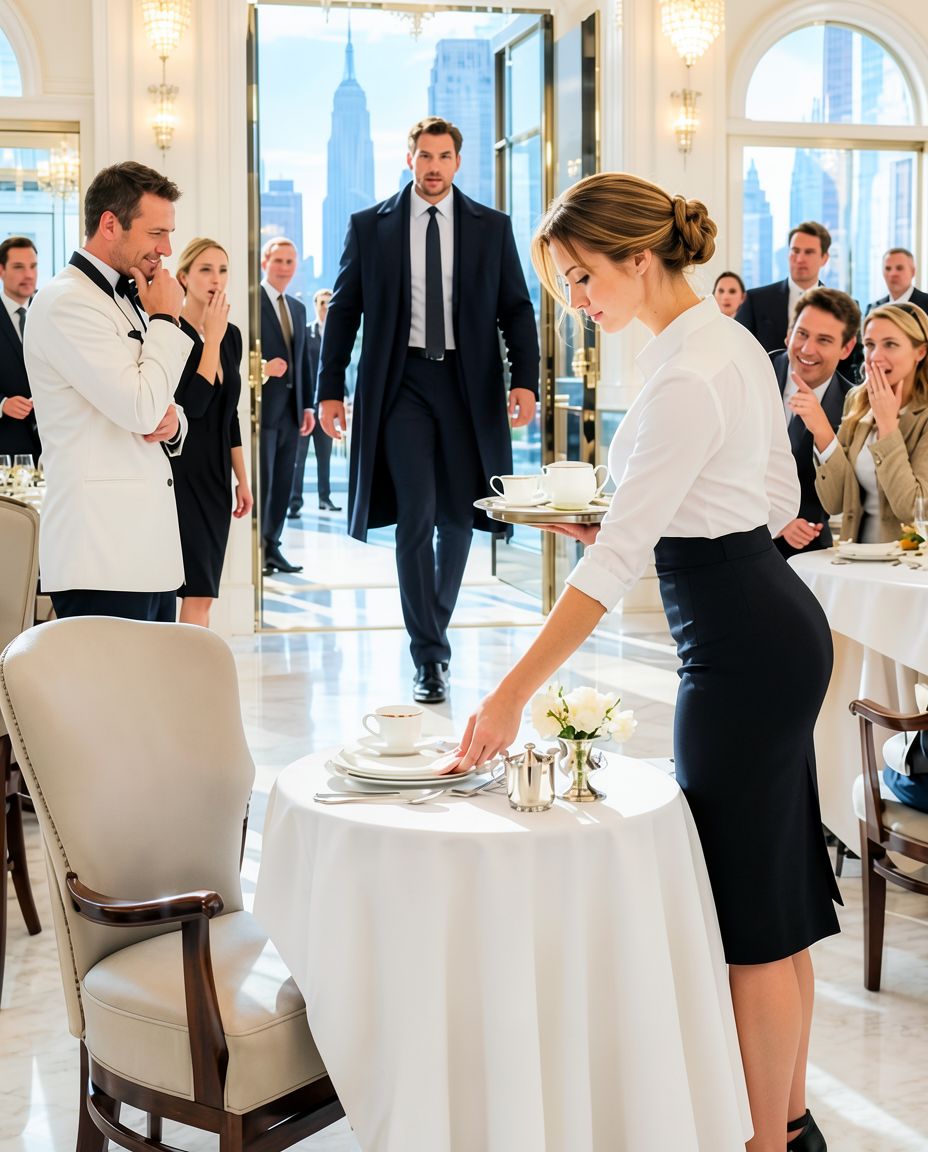 I was humiliated for feeding an unwanted old man, but when a black car stopped outside, Beatriz suddenly stopped smiling
 Two Hours Before Brain Surgery, My Husband Put Divorce Papers in Front of Me, but After My Calm Response, His Smile Slowly Disappeared