

Mira took the phone from my hand and read the message to the end.
Her face changed.
“When did your mother die?”
“Seven years ago.”
“And did you know Conrad before that?”
“I met him two years earlier.”
Conrad slammed the door.
“This is all ridiculous. Tessa, you are sick. Someone convinced you to turn against me.”
Mira gestured to the police officers.
“Mr. Voss, you decide nothing now.”
“In my house, I decide everything!”
“Not tonight.”
His phone rang. Conrad looked at the screen and immediately answered.
“I need a lawyer. Now.”
He listened for several seconds.
“No, I do not care where you are. Come here.”
Then silence fell.

His shoulders slowly dropped.
“What do you mean, you no longer represent me?”
Mira looked at him coldly.
“Apparently, your lawyer already understands that this is not only about infidelity.”
Conrad ended the call and leaned against the wall.
And only then did I notice that he was no longer looking at that woman.
He was looking only at me.
“Tessa, think,” he said. “If you continue this, you will be dragged in too.”
“I was already dragged in.”
“You did not kill anyone.”
“But I saw everything in your house.”
“And you kept silent.”
“Because I was afraid.”
“And now you are no longer afraid?”
For the first time, that old Conrad appeared in his voice, the man I had known for years: a man who moved others through his own fear.
But this time the woman who forgave everything was no longer standing before him.
“Now I am afraid,” I told him. “I am simply more afraid that I will believe you again.”


Mira quietly spoke my name.
“We have to check the upstairs room.”
We went up the stairs. Wood dust scattered from above crunched under our feet. At the end of the corridor, beside my mother’s photograph, lay a small tea tin. I had hidden it there months earlier because I no longer knew whom I could trust.
The tin was open.
The memory cards were gone.
“He found them,” I whispered.
Mira slid a finger under the tin and lifted a floorboard. There she found a small recorder.
A red light was blinking.
“When did you turn this on?” she asked me.
“I did not turn it on.”
At that moment, Conrad’s voice came from the recorder.
“If Tessa leaves, first you will look for the bag. Then for her. She cannot leave the city alive.”
My breathing stopped.
Conrad, standing below, would hear his own voice coming from someone else.
Mira picked up the recorder.
“This is enough for a warrant.”
Conrad looked up at the stairs and his face turned gray.
“No,” he said. “This recording is not mine.”
But his own voice was still being heard.
“Take care of Tessa. She knows where we hid them.”

The police officers twisted his hands behind his back.
The lover stood at the door and cried. I said nothing to her. She too would have to bear her decisions.
Outside, the car sirens lit up. Lights came on in the windows of the neighboring houses. Conrad was still trying to resist.
“Tessa, please, say that all this is a mistake.”
“For five years I told that to myself.”
“We are a family.”
“A family does not hide bodies.”
I spoke those words aloud for the first time.
And precisely then I received another call from my mother’s doctor.
“Mrs. Marlow, there is an old photograph in your mother’s folder,” he told me. “There is a date written on the back. On the day your father disappeared, Conrad Voss was there.”
Conrad heard this.
His gaze moved to my mother’s photograph.
“No,” he said very quietly. “This is impossible.”
I picked up the photograph. On the back, in my mother’s handwriting, it said: “If Tessa ever asks for the truth, tell her that her father did not leave. They forced him to flee.”
That night Conrad was taken away.
And for the first time I left his house without needing to look back.

The following weeks filled with noise. The phone rang constantly. Journalists stood at the gate. Conrad’s partners denied one after another that they knew anything. Some offered me help, while others offered money so that I would no longer reveal the recordings.
I refused everyone.
Mira increased my protection, but I soon realized that the most difficult protection I needed was not from outside, but from my own mind. For years, every one of Conrad’s threats had followed me like an inner voice.
“You will not be able to.”
“No one needs you.”
“Everything is thanks to me.”
One night I listened to a recording of these words. Mira had extracted all his conversations for the court. Conrad stood in the room and heard his own voice for the first time.
“You were nothing until I found you,” the recording said.
Then his living voice was heard.
“Turn it off.”
“Listen,” Mira told him.
“I did not say it like that.”
“You said it exactly like that.”
Conrad covered his face with his hands.
I stood at the window. I no longer felt his pain as I once would have. Nor did I feel joy.
Only exhaustion.
The lawyer finally announced that part of Conrad’s property had been seized. The companies were divided. His partners were questioned. The court sentenced him to many years in prison, while the case materials were handed over to the families who had been waiting for the truth for years.
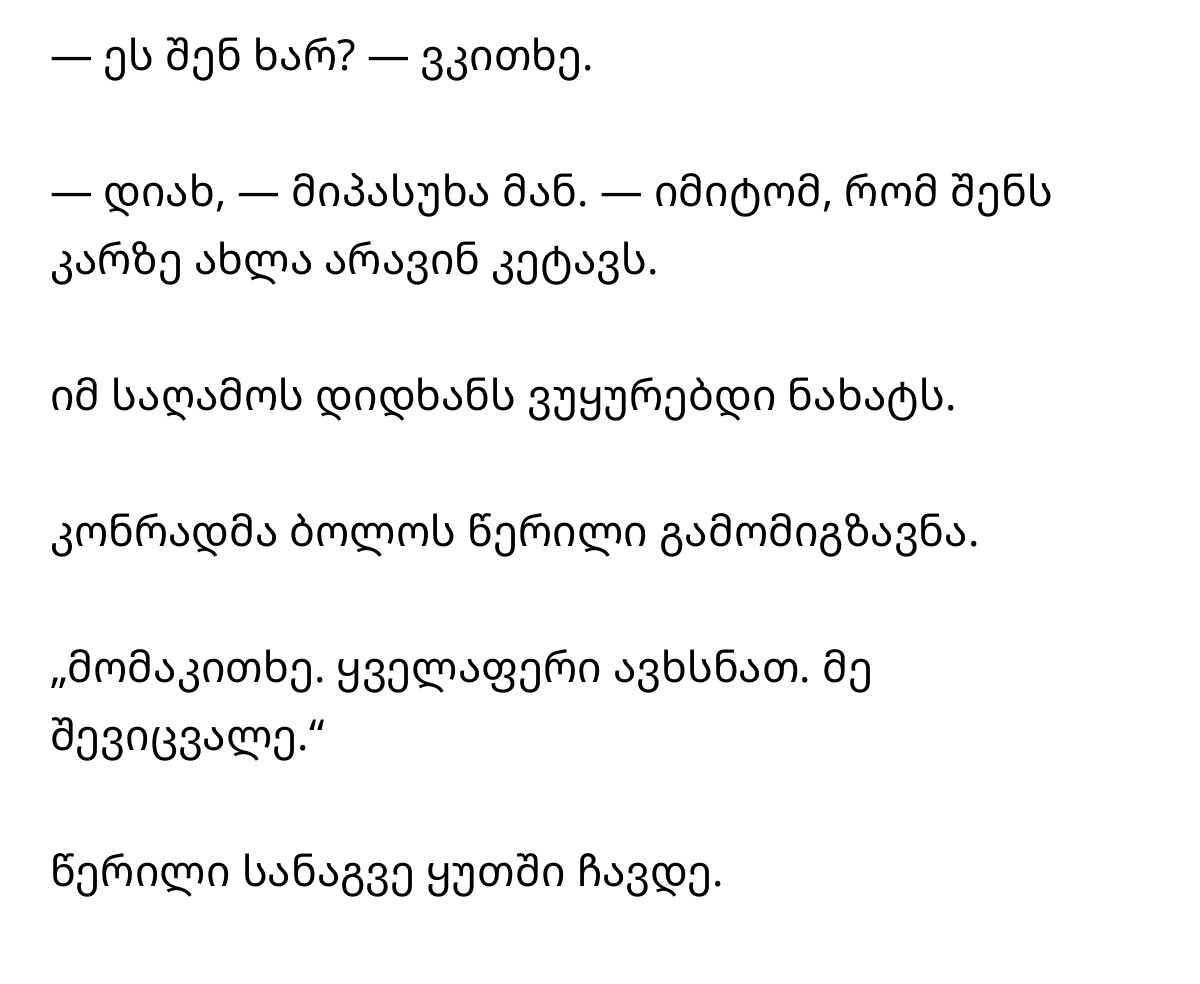

I entered the courtroom on the final day as well.
Conrad looked at me.
“If you leave me, I will have nothing left.”
“You left everything yourself.”
“You loved me anyway.”
“Yes. But love does not mean that you should help a person dig his own grave.”
Tears appeared in his eyes.
I did not stay.
I placed my mother’s photograph beside the bed in the small apartment I rented near the harbor. The room consisted of only two windows. In the morning, the smell of the sea came in, and at night I heard the horns of ships.
At first, the emptiness hurt.
Then the emptiness gave me space.
I started working at a small accounting company. No one there asked whose wife I was. They noticed only that I understood numbers well and was not afraid of accounts into which others did not even want to look.
Three months later, my neighbor’s son, Luka, gave me a drawing. On a small sheet of paper, he had drawn a house whose door was open.
“Is this you?” I asked.
“Yes,” he answered. “Because now no one locks your door.”
That evening I looked at the drawing for a long time.
In the end, Conrad sent me a letter.
“Come visit me. Let us explain everything. I have changed.”
I put the letter in the trash.
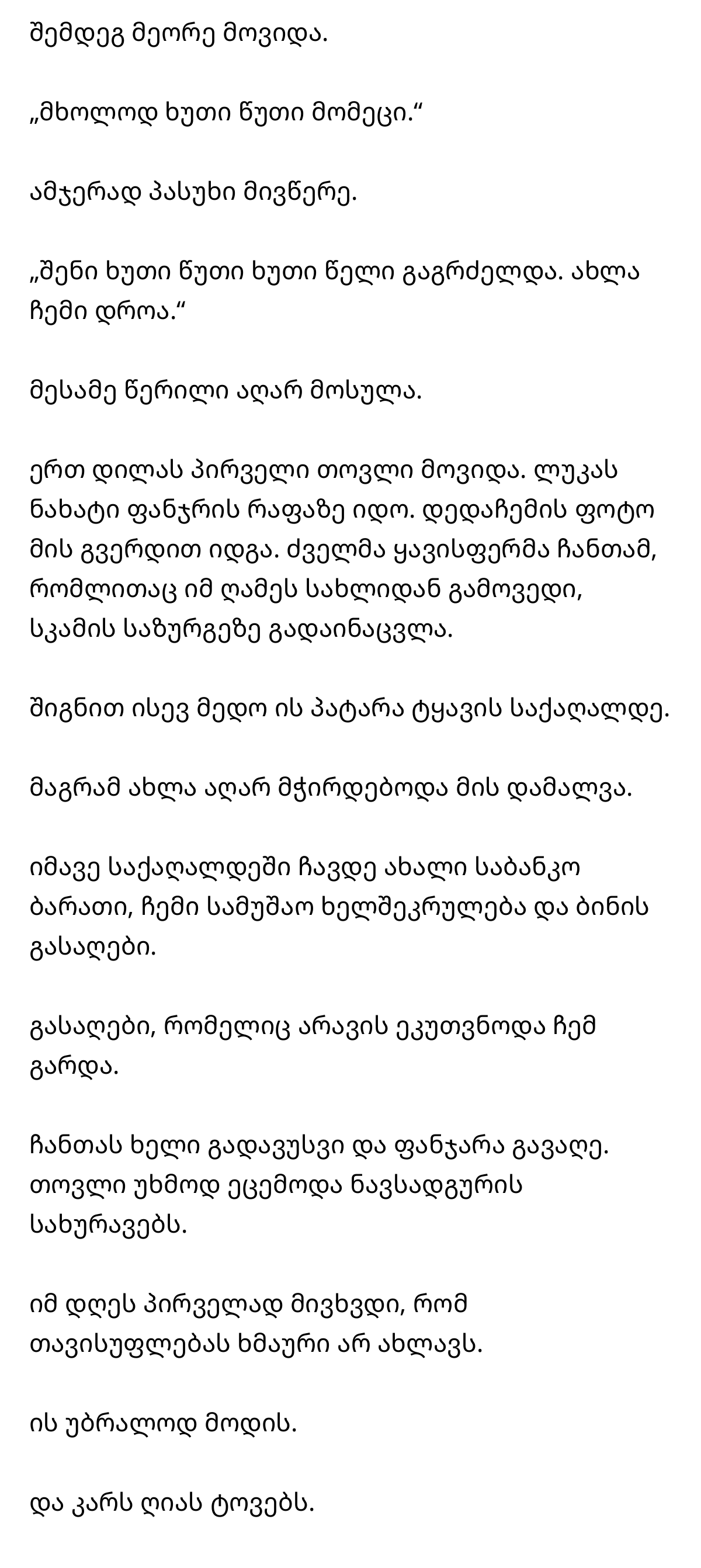

Then a second one came.
“Give me only five minutes.”
This time I wrote back.
“Your five minutes lasted five years. Now it is my time.”
No third letter came.
One morning the first snow came. Luka’s drawing lay on the windowsill. My mother’s photograph stood beside it. The old brown bag with which I had left the house that night had moved to the back of the chair.
The small leather folder was still inside it.
But now I no longer needed to hide it.
In the same folder I put a new bank card, my employment contract, and the key to the apartment.
A key that belonged to no one except me.
I ran my hand over the bag and opened the window. Snow was falling silently on the roofs of the harbor.
That day I realized for the first time that freedom does not come with noise.
It simply comes.
And leaves the door open.
Missed the beginning?
Related posts:
 My Husband’s Lover Put on the Silver Bracelet I Gave Him, but at the Sight of It Conrad’s Smile Suddenly Disappeared
 Ich sollte mein Land wegen einer trockenen Ecke verlieren, doch als dort Wasser auftauchte, hörte mein größter Spötter auf zu lachen
 They Offered Me Twenty-Eight Million for the Disappearance of Eight Years of Marriage, but the Message That Appeared on My Phone Screen Made Grant Pale
 A Flat Tire Stopped Me at a Desert Diner, but When the Waitress Heard My Name, the Color Drained from Her Face
 I took my mother from the house, but when my brother opened her room with a duplicate key, the color drained from his face
 At the Charity Evening My Older Sister Humiliated Me, but the Sight of My Place Made Her Smile Suddenly Disappear