Part 4
In that instant, I realized he already knew who it was from.
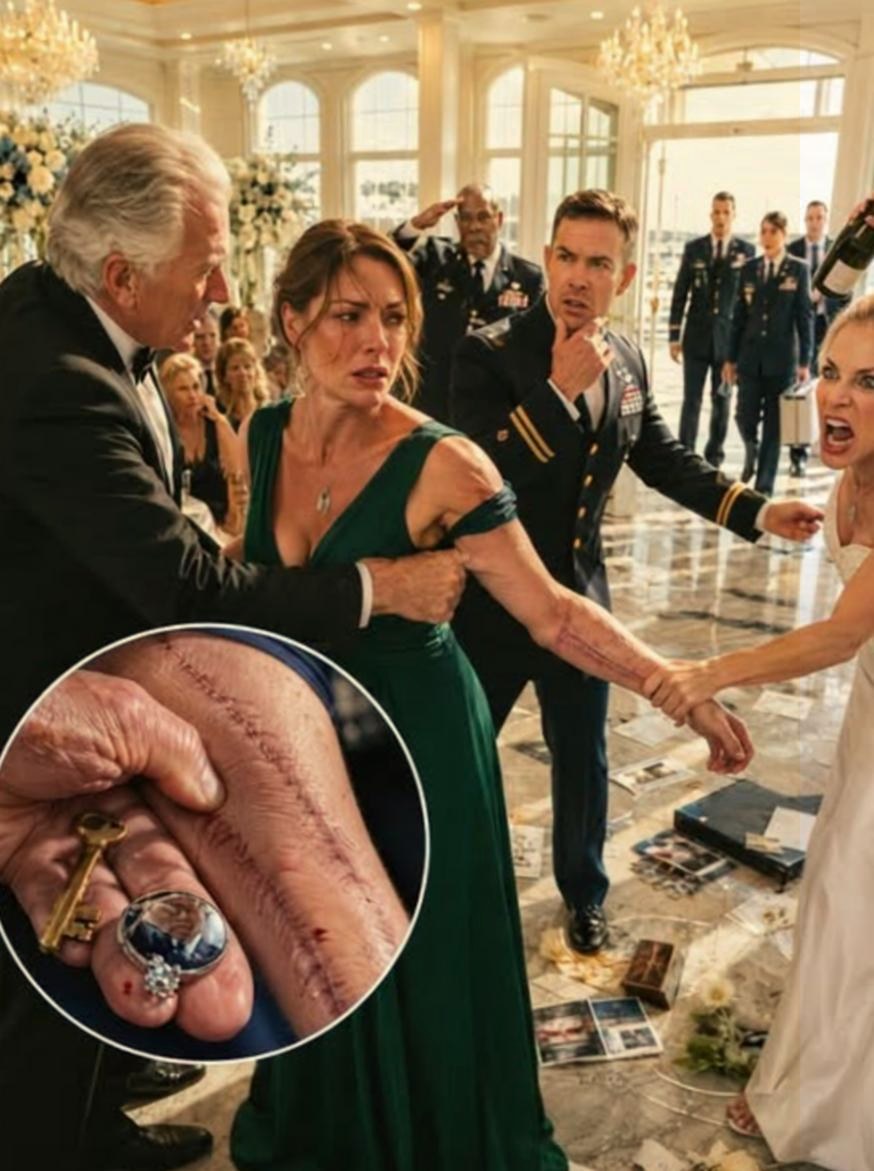
All the noise in the hall rushed back at once. Guests were asking one another what had happened. Some headed for the door, others recorded with their phones, while Matthew still stood in front of me, as though using his own body as a shield.
My father snatched the phone from my hand. — “I need to see this.”
Ethan grabbed his wrist and immediately pulled his hand away. — “You will never touch her without permission again.”
— “She is my daughter!”
— “And not your property,” I said.
My father’s phone rang. He answered. — “Hello?”
He listened for a few seconds. Panic crept across his face. — “You need to delete those recordings. Right now.”
Linda raised her hand. — “That conversation sounds very bad, Gordon.”
My father hung up, but it was already too late. The hotel head of security posted two guards at the door. Guests were permitted to leave, but my father was not.
— “I’m not hiding from anyone,” he said.
— “Then stay,” Matthew replied. “And for the first time, listen to your own words.”
Linda switched on another recording on the screen. It was the video taken tonight. My father’s voice echoed through the ballroom: “You disgraced everyone when you ran away from home to play soldier.”
Then my voice: “I earned a scholarship to the military academy.”
And my father again: “You failed out.”
My father stared at the screen. For the first time, he heard his own words as others heard them—not as a family joke, not as a frustrated father’s remark, but as the deliberate humiliation of a person.
— “This is taken out of context,” he muttered.
— “The entire hall was here,” I said.
In the recording, his fingers gripped my wrist tight. My face was visible. There was fear in my eyes, but my voice was calm: “Get your hand off me, Dad.”
My father turned his back to the screen. — “That’s enough.”
— “No,” Linda said. “It’s just beginning.”
She arranged copies of the transfers across the table. The funds from my mother’s medical trust. My tuition savings. The down payment on the house purchased in Madison’s name. Every single document bore my father’s signature.
Madison sat down slowly. — “You told me that was from Grandma and Grandpa.”
My father didn’t look at her. — “I didn’t want you to lack anything.”
— “So you stole it from my sister?”
My father had no answer left for that question.
The police arrived half an hour later. Linda had pre-filed complaints regarding financial fraud and embezzlement of the medical trust. They didn’t arrest my father on the spot; they brought him in for questioning, as the case required thorough documentation first.
My father still tried to regain control. — “Avery, if you go with them, you will destroy this family once and for all.”
I stood by the door. — “This family was destroyed when you sold the truth.”
— “I was protecting you.”
— “From what?”
He couldn’t give me an answer.
I didn’t go to the old harbor alone that night. Ethan, Matthew, and two investigators came with me. The sender of the message wasn’t waiting there. They found only a wooden box sitting beneath an old crane.
Inside the box was my mother’s bag.
A single letter waited inside: “Avery, if this bag has reached you, know that my death was not as natural as you were told. The doctor told me that Gordon altered my medication doses several times so that my mind would appear confused. I couldn’t prove his intent, but I left records. Do not seek revenge. Simply stop protecting a man who never tried to protect you.”
At the bottom of the letter was the doctor’s name and an old medical report number.
My father had no idea that letter existed at the time. The following day, the doctor came forward to the investigators himself, confirming that Gordon had altered the treatment records. The investigation into my mother’s death was reopened.
Three weeks later, I saw my father for the first time at a preliminary court hearing. He wore an old dark suit, but the collar was rumpled. An attorney no longer sat beside him; the lawyer had resigned from the case upon discovering the wire transfers and video recordings.
My father whispered as he saw me in the courtroom: — “You can still stop all of this.”
— “No,” I told him.
— “I am your father.”
— “And I was your daughter. You rewrote that otherwise with your own hands.”
Months later, he was sentenced for financial fraud. The investigation into my mother’s death continued. It was ultimately confirmed that her medications were intentionally altered—not only for money, but to conceal a hidden divorce demand from my mother.
I didn’t crave his punishment.
Somewhere deep down, I was simply exhausted from carrying responsibility in his place.
Madison broke off the engagement. Her relationship with Ethan restarted slowly later on, but this time nothing was hidden between them. Matthew called me every week. Sometimes we talked for only five minutes.
— “Does your wrist still hurt?” he asked me once.
— “Before it rains.”
— “Then always remember that pain is the price of survival, not shame.”
Six months later, I relocated to another city. I rented a small apartment near the coast where morning light caught the harbor cranes outside the window. I continued serving in the Air Force, though I was now training new rescue teams.
During the very first week in the instruction hall, a young officer asked me: — “Major, did you get that scar from an operation?”
I pulled up my sleeve. — “Yes.”
— “Does it hurt?”
— “Sometimes.”
— “Then why don’t you cover it?”
I smiled. — “Because you don’t always need to hide things.”
Madison gave birth to a daughter a few months later. She named the baby after our mother—Ellen. When I held the little girl for the first time, her fingers wrapped around my wrist.
— “Aunt Avery, why do you have that?” asked Madison’s seven-year-old son, who was standing nearby observing everything.
— “One night, I brought six people back home.”
— “Alone?”
— “No. There were many others with me.”
— “Did Grandpa know?”
The child asked the question so directly that a chill settled over the room. Madison lowered her head.
— “He knew,” I said. “But sometimes people hide the very things they ought to be proud of.”
— “Are you not hiding anymore?”
— “Not anymore.”
The first snow fell at the end of December. I stood by the kitchen window as the kettle whistled, while Ellen sat on the floor drawing on a sheet of paper. She drew a yellow lighthouse with six small figures beneath it.
— “Is that me?” I asked her.
— “No,” she replied. “That’s the path.”
I looked at the drawing for a long time.
That same evening, a letter arrived from my father. It was sent from prison, containing only four sentences: “Forgive me. I realize now that I shouldn’t have said everything. If you ever want to, I would like to talk to you.”
I placed the letter on the kitchen table. I didn’t tear it up. Nor did I answer.
The next day, his lawyer called me. — “Gordon wants you to come visit him.”
— “I won’t go.”
— “He says he has changed.”
— “Perhaps he has. But I am no longer obligated to become the proof of it.”
That was my quiet refusal.
Not revenge.
Simply a door that I was locking this time.
I still carried my mother’s copper key. For the first time in years, I took it out and placed it on the window sill. The little image of the lighthouse gleamed in the snowlight.
That night, I realized the key was never just meant to open Room 6 in the archives. It was there to remind me that my life was never locked inside someone else’s hands.
Outside, it was snowing.
Inside, for the very first time, there was absolute peace.
I cupped the key in my hand and turned off the light.
The path was already shining toward me.
Missed the beginning?
Related posts:
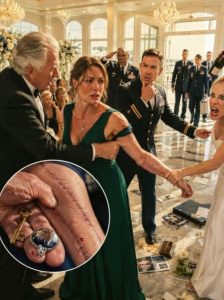 My father grabbed my wrist in front of eighty guests and called me a deserter, but the face of an unknown officer suddenly turned pale.
 I found my townhouse key on my husband’s mistress’s bracelet at a Manhattan party, and my husband suddenly stopped smiling
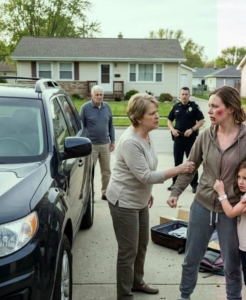 My parents wanted to throw my belongings out into the yard and keep my child, but the smile vanished from my father’s face the moment I gave my answer.
 My parents demanded twenty thousand dollars from my husband, then his quiet condition made my father stop smiling
 La miezul nopții, am primit o fotografie cu soțul meu în patul amantei, iar în loc să plâng am sunat-o pe soacra ei, fără să știu că acel apel va răsturna două familii
 A fourteen-year-old waiter read a single sentence from a rich man’s diary, and the foreigner sitting in the room instantly turned pale.