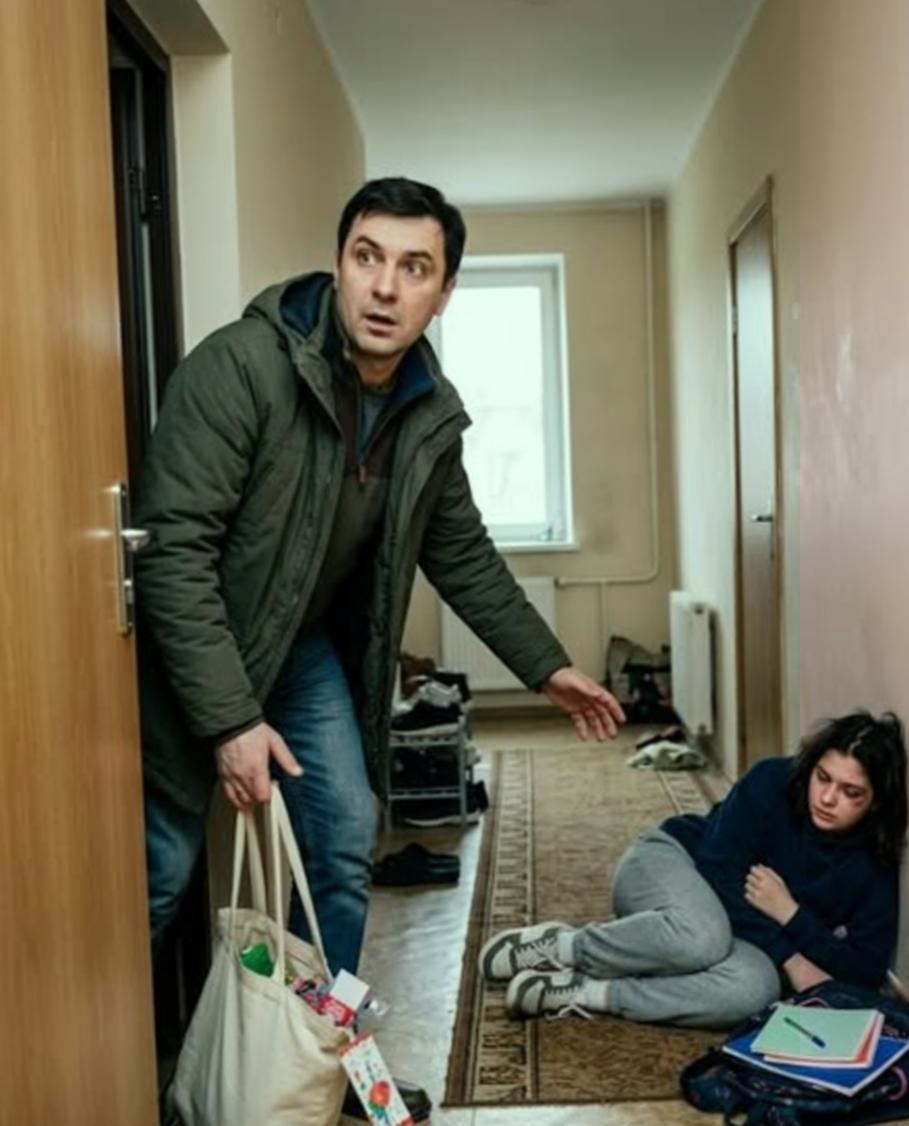
I found my sixteen-year-old daughter bloody in the hallway, while the entrance alarm was still calmly glowing green.
On Wednesday, in the middle of May, I got out of the car earlier than usual on our street in the outskirts of the city. It was still fifteen minutes before four. Sunlight scattered across the rooftops, the sprinkler clicked in the neighbor’s yard, and I held a bag containing Vika’s birthday present.
I wanted to come in quietly and hear her frightened joy.
There were two days left until her sixteenth birthday. Work had taken the last years from me: airports, foreign cities, nights when my phone lay under the pillow and I kept one shoe on. Vika always told me that everything was fine, but in video calls her smile was becoming more and more tense.
“I know, Dad, that you’re trying,” she told me the previous evening.
This time I simply had to be a father.
I found the door half open.
It was not broken. The lock was not hanging loose. The door stood as if someone had opened it from inside and lazily pushed it shut when leaving.
“Vika?” I called.
There was no answer.
I stepped over the threshold and immediately felt a wet, sharp, iron-like smell. I gripped the bag’s handle with my right hand so tightly that my fingers turned white. For fifteen years I had been taught how not to let the mind rush in danger.
But at that moment I was not a professional.
I was a father.
Everything in the living room stood in its place. The television was off. A mathematics notebook lay on the table, and small bubbles were still gathering in the half-full glass of lemonade. Neither the drawers had been pulled out nor the cupboards overturned.
It did not look like a robbery.
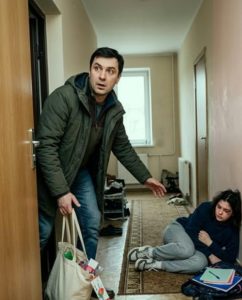
When I looked into the hallway, I saw Vika.
One sneaker had come off. The backpack lay open, her hair was stuck with blood at the temple, and her face was so swollen that for several seconds I did not recognize my own child.
“No… Vika, no…”
I fell to my knees. The cold ceramic floor sank into my knees, but I could not feel the pain. I put the phone on the floor and called an ambulance.
“It’s a girl, sixteen years old, severe head injury, signs of an assault,” I told the operator. “I’m giving you the address, don’t hang up.”
“Sir, the attacker may still be in the house. Go outside.”
“I cannot leave my child.”
I brought my fingers to her neck. I felt nothing the first time. The second time, either. Then, almost imperceptibly, her pulse touched the pad of my finger.
Vika was alive.
Her hand had caught onto something beneath the backpack strap. Carefully I pulled out a small copper keychain, shaped like a lighthouse, with the spare key to our entrance door attached to it. This key was always kept in the upper kitchen cupboard.
I looked at the alarm panel.
The green light was glowing.
The system had not been turned off. It had been disabled from inside and turned on again. Whoever entered knew the code. Or Vika herself had opened the door.
The ambulance siren was already approaching. The medics rushed in, fixed Vika’s neck, and put on an oxygen mask.
“Dad…” her voice was barely heard.
“I’m here, little one.”
She half-opened her eyes and reached her fingers toward the backpack.
I found a folded sheet in the pocket. The pen had been pressed so hard that it had left a deep scratch on the paper. I recognized the handwriting at once, although I forced myself not to read the name.
The medics transferred Vika onto a stretcher. I picked up the sheet, but at that same moment one of them looked at the lower corner, lost color, and said quietly:
“This name… why is it written here?…”
The medic did not snatch the sheet from my hand. He only saw its corner and immediately stepped back.
“Tell me the name,” I asked.
“First we have to take the girl.”
“Do you know that person?”
Vika sighed beneath the mask.
“Dad… I opened it myself.”
“For whom did you open it?”
She moved her lips, but no voice came out. Then she pointed at the backpack. I took another, smaller sheet from the side pocket. It said: “Do not turn on the alarm for the surprise. I will come.”
At the bottom stood one name.
Maya.
Vika’s mother.
Maya had been entering our house freely for years. She knew the code, the place of the key, and had Vika’s trust.
“Was she here?” I asked Vika.
The girl closed her eyes and barely nodded.
They wheeled the stretcher toward the door. The medic looked at the sheet once more and quietly told me:
“This woman was already calling the hospital. She said she was on the way.”
Maya knew that Vika had survived.
But I did not know what she had been trying to take until my daughter was almost killed.
I was left alone in the house. I held the small lighthouse-shaped keychain in my hand. Just then an unknown number called me, and a man’s voice said:
“If you go against Maya, next time Vika will not be alone…”
My phone froze in my hand.
“Who are you?” I asked.
In response I heard only three short breaths. Then the connection broke.
That same evening, at the city’s central clinic, I stood in front of the intensive-care door where Vika was. The wall clock showed eight. I still thought I could smell her blood on my hands. In my right pocket lay the little copper lighthouse, whose edges scratched my fingers.
Maya came at nine o’clock.
She wore a white coat, her hair was tied hurriedly, and her face carried such concern that I would probably have believed it before.
“Levan, how is Vika?”
“You tell me.”
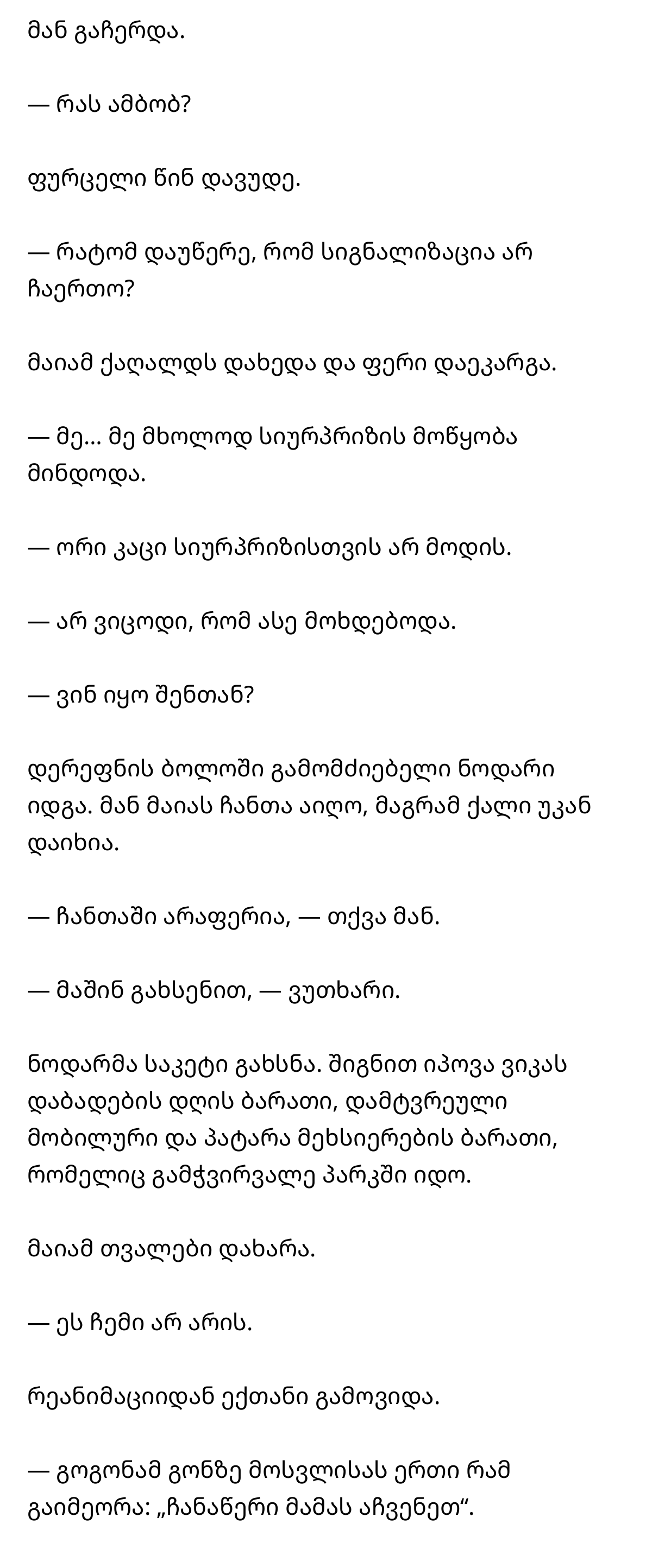
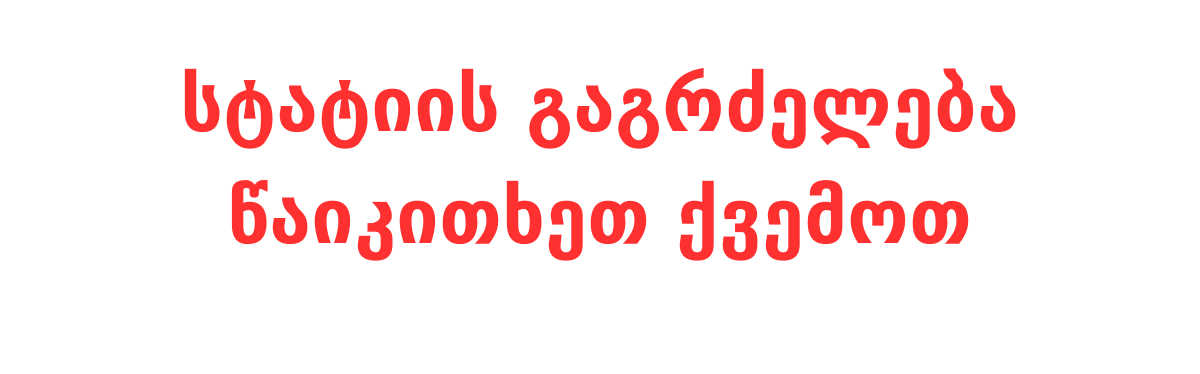
She stopped.
“What are you talking about?”
I put the sheet in front of her.
“Why did you write to her not to turn on the alarm?”
Maya looked at the paper and lost color.
“I… I only wanted to arrange a surprise.”
“Two men do not come for a surprise.”
“I did not know it would happen like this.”
“Who was with you?”
At the end of the corridor investigator Nodar stood. He took Maya’s bag, but the woman stepped back.
“There is nothing in the bag,” she said.
“Then open it,” I said.
Nodar opened the lock. Inside he found Vika’s birthday card, a broken mobile phone, and a small memory card lying in a transparent bag.
Maya lowered her eyes.
“It is not mine.”
A nurse came out of intensive care.
“When the girl regained consciousness, she repeated one thing: ‘Show the recording to Dad.’”
The memory card was taken to the laboratory. A few minutes later the investigator turned on the sound.
Maya’s voice was heard.
“Levan must not keep these files. If we do not find them today, everything is over.”
Then there was a man’s voice. Calm, heavy, familiar.
“Scare the girl; she will give you the card herself.”
I knew this voice.
It was Sandro—my former comrade, the man to whom I had entrusted my back for years.
Maya grabbed the chair.
“She was not supposed to hear this!”
In the recording Vika’s crying was heard, then the sound of a blow and Sandro’s cold exclamation:
“Tell me where the second copy is!”
Everything became clear. Vika had accidentally found the card in my old travel bag, listened to it, and transferred it to her phone. Maya learned about it. Sandro needed to destroy that recording.
“What was on it?” I asked.
Maya looked at me for the first time.
“Your mission,” she whispered. “The operation because of which you kept silent for fifteen years.”
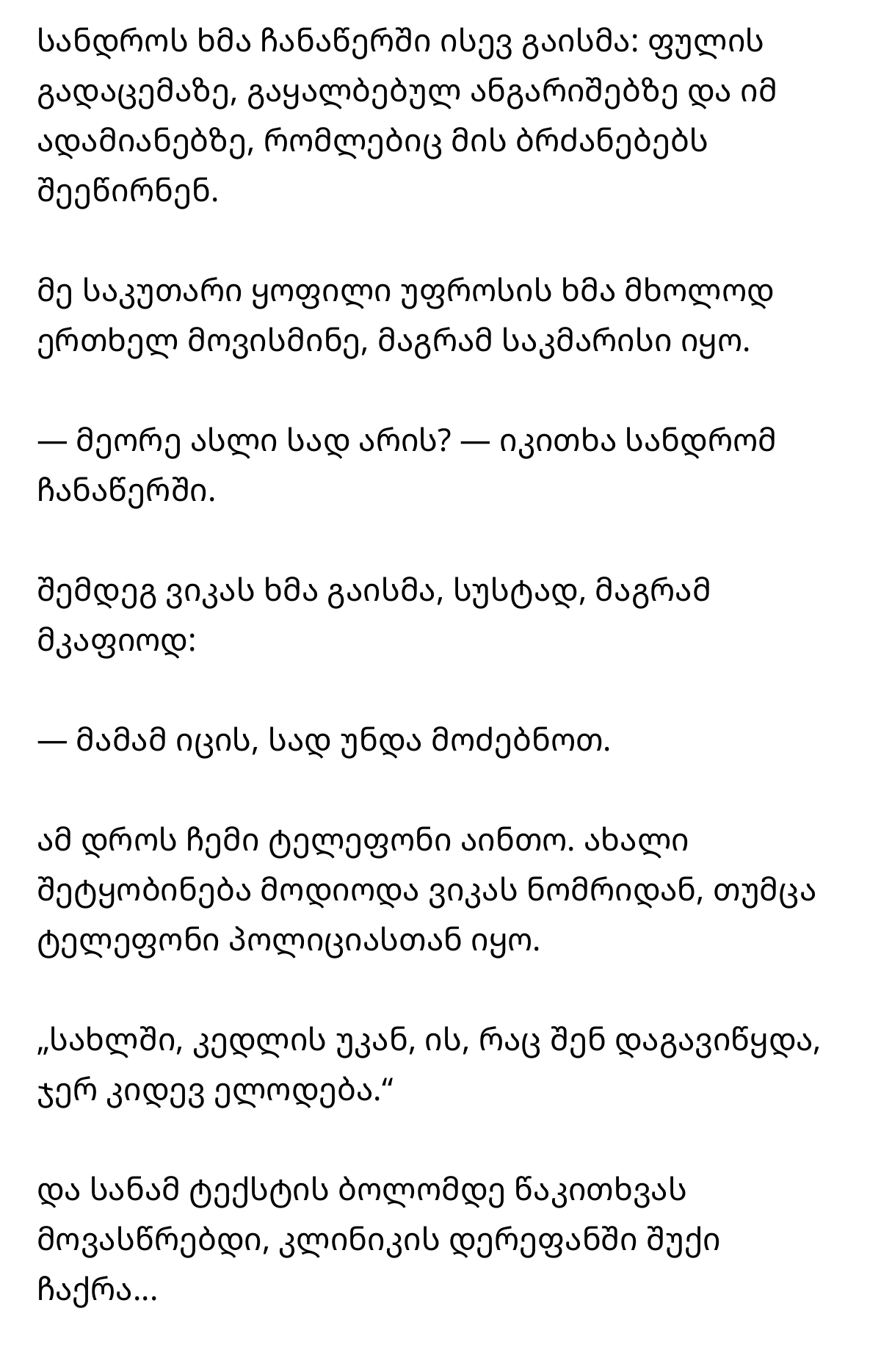
Sandro’s voice was heard again in the recording: about the transfer of money, falsified accounts, and the people who had been sacrificed to his orders.
I heard my former commander’s voice only once, but it was enough.
“Where is the second copy?” Sandro asked in the recording.
Then Vika’s voice was heard, weak but clear:
“Dad knows where you should look.”
At that moment my phone lit up. A new message was coming from Vika’s number, although the phone was with the police.
“At home, behind the wall, the thing you forgot is still waiting.”
And before I managed to read to the end of the text, the light in the clinic corridor went out…
ბოლო ჩანაწერმა სანდროს საკუთარი ხმა მოასმენინა…
სიმართლე მხოლოდ ახლა იწყებს ყველაფრის შეცვლას. ფინალში გაირკვევა, რას გადაარჩინა ვიკას გამბედაობამ.
„გოგოს დააშინე, ბარათს თვითონ მოგცემს.“
მისი სახე პირველად დაცარიელდა.
😱 გაიგე, რას მალავდნენ ისინი →
👇 ისტორიის ფინალი უკვე გახსნილია
Related posts:
 She returned to my workshop after eighteen years and changed everything with one phrase — the woman standing at the door suddenly turned pale
 Part 4 — When I Entered My House, I Found My Daughter in Blood, but When I Heard One Name, the Medic’s Face Changed
 My Husband Left Our Sick Daughter at Home Again, but the Doctor’s Face Suddenly Changed at the Hospital
 I Returned Home for New Year and Opened the Door to a Cold Apartment, While My Mother Answered Me on the Phone with Strange Calm
 Part 4 — She returned to my workshop after eighteen years and changed everything with one phrase — the woman standing at the door suddenly turned pale
 A Flat Tire Stopped Me at a Desert Diner, but When the Waitress Heard My Name, the Color Drained from Her Face