
The main organizer was trying to escape, but they were already waiting in the clinic corridor.
Abigail looked toward the door.
“This is a misunderstanding,” she said.
Not one of the investigators answered.
Her lawyer called ten minutes later. Abigail picked up the phone and immediately began shouting.
“You told me everything was under control!”
Her voice could be clearly heard in the corridor.
The man on the other side spoke for a long time. Abigail gradually fell silent.
“No,” she said at last. “You cannot abandon me.”
Only a few seconds later, a loud answer sounded from the phone, so clear that we heard it too.
“I already told you that I will no longer sign anything in your name.”
Abigail smashed the phone against the wall.
For the first time, I saw that she could no longer regain control.
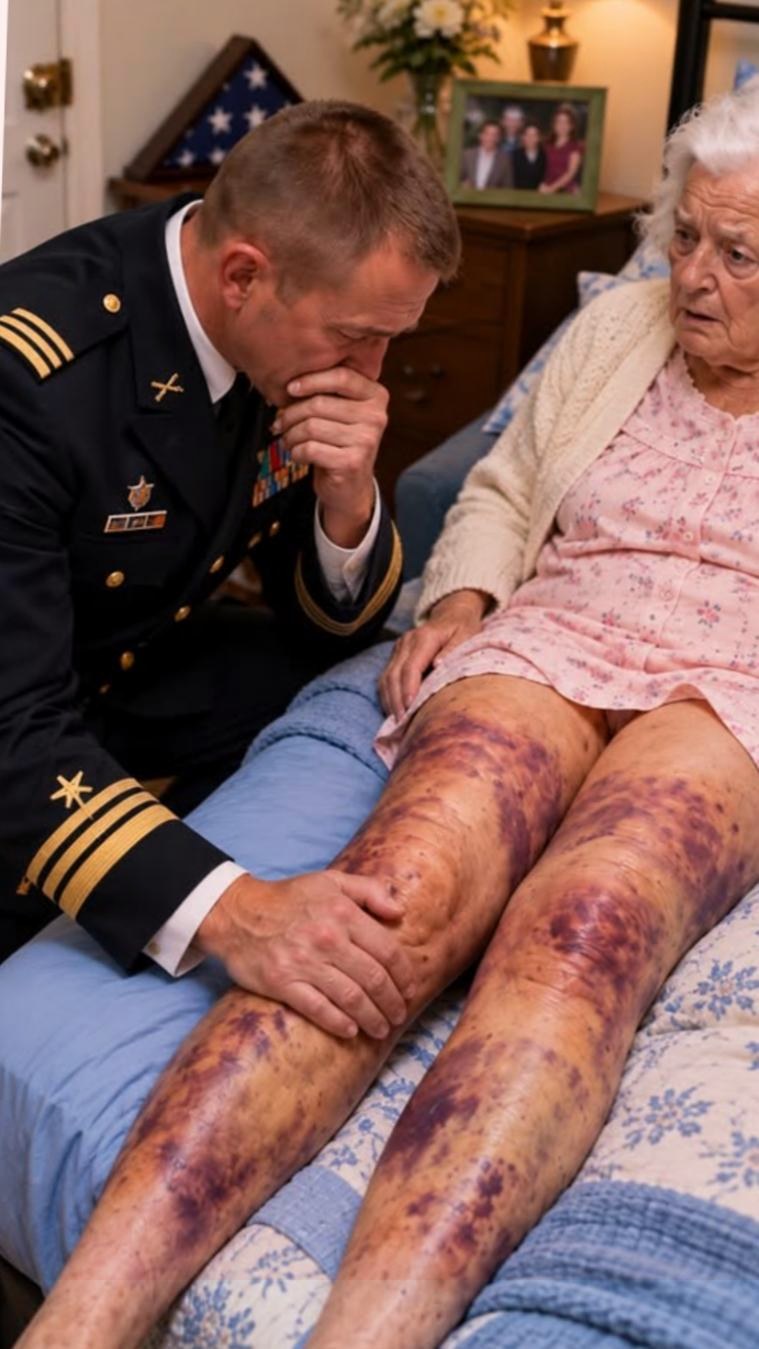
Mother was sitting in the doctor’s room. She held a glass of water, but her fingers were trembling so much that small circles appeared along the rim of the glass.
“I want to go home,” she told me.
“We will not return to that house.”
“Your childhood things are there.”
“We will save the things. You are more important.”

That same evening, the investigators searched the house. The living-room clock showed twelve minutes past nine when Abigail entered between two investigators.
“Samuel, tell them that this is a mistake.”
“You locked Mother’s room.”
“Because she was ill.”
“You also said in the audio recording that you would roll her down the stairs.”
Abigail shook her head.
“I was angry.”
“You recorded those words, not me.”
The investigator turned on the recording.
Her own voice sounded in the room. Sharp. Cold. Completely unfamiliar, although Abigail recognized it immediately.
“If you do not sign, next time I will roll you down the stairs.”
She stared at the words as if she were hearing their meaning for the first time.
“Turn it off,” she said.
The recording continued.
“I will tell your son that you hurt yourself.”
Abigail closed her eyes.
What she had said stood in the room against her.

That night I left only one thing in Mother’s bedroom: a small wooden table standing beside the bed. The room was empty. The square mark of her family photograph remained on the wall, and on the windowsill lay the small copper lemon-shaped pendant that I had taken from the lock.
Mother placed her hand on it.
“With this you opened the door for me,” she told me.
“Yes.”
“I thought you would not come.”
“I was also afraid that I would not reach you in time.”
She rested her head on my shoulder.
The next day, the prosecutor’s office confirmed that the case did not concern Abigail alone. A private doctor had been preparing false conclusions for years, while an intermediary collected money from the property of families who were declared ill.
Mother’s property was protected. The documents were annulled. The court sentenced Abigail to imprisonment, while the doctor lost his license and his freedom.
Not once in court did I look toward Abigail.
Not because I was afraid.
I simply no longer wanted to leave my attention in her life.
Six weeks later, I moved with Mother to a small seaside town. There, in the mornings, we heard the harbor bell from the window. I worked in the municipal audit service and helped Mother bake lemon pie in the evenings.
She still had difficulty being in locked rooms.
Therefore, the bedroom door was never locked.

The first snow came at the end of November. Mother stood at the kitchen window and looked at the white yard.
“Samuel, are we home now?” she asked me.
“Now we are truly home.”
She drew a small house on a sheet of cardboard. It had open windows. And two people stood by the door.
“This is you and me,” she said.
“I know.”
“No one will lock the door in this house.”
“No one.”
A few days later, I received a letter from Abigail. It was written in the lawyer’s hand, but the text was hers.
“I want to explain everything to you. Meet me at least once. Bring your mother too.”
I held the letter in my hand for a long time.
Then Mother asked me:
“Who is it from?”
“From the past.”
“Will you answer?”
“No.”
I put the sheet into the trash bin. I sent no reply either to the lawyer or to Abigail.

That evening we baked lemon pie. When I opened the oven door, a warm citrus scent spread throughout the house. Mother placed the small pendant on the table.
The copper lemon slowly glittered in the light of the snow.
“You will not need this anymore,” she told me.
“Why?”
“Because now the door opens from the inside.”
I took the pendant in my hand. For years I had thought that it showed me the way back home.
Then I understood that it did not show me the way.
It reminded me for whom I had to return.
That night, for the first time, I slept without hearing a single lock from the corridor.
The door remained open.
And Mother was no longer afraid.
Missed the beginning?
Related posts:
 When I Returned, My Wife Told Me That My Mother Was Losing Her Mind, but When She Heard My Question, the Neighbor’s Smile Disappeared
 My Husband Told Me He Was Going to a Client’s Child’s Baptism, but When He Reached the Altar, My Aunt Lost Color
 Mi padre exigió el fondo universitario de mi hija para salvar a mi sobrino, pero cuando ella llegó, su mano quedó inmóvil
 A Flat Tire Stopped Me at a Desert Diner, but When the Waitress Heard My Name, the Color Drained from Her Face
 I took my mother from the house, but when my brother opened her room with a duplicate key, the color drained from his face
 I always protested leaving three children for free, but after my calm answer Sloan’s smile suddenly disappeared