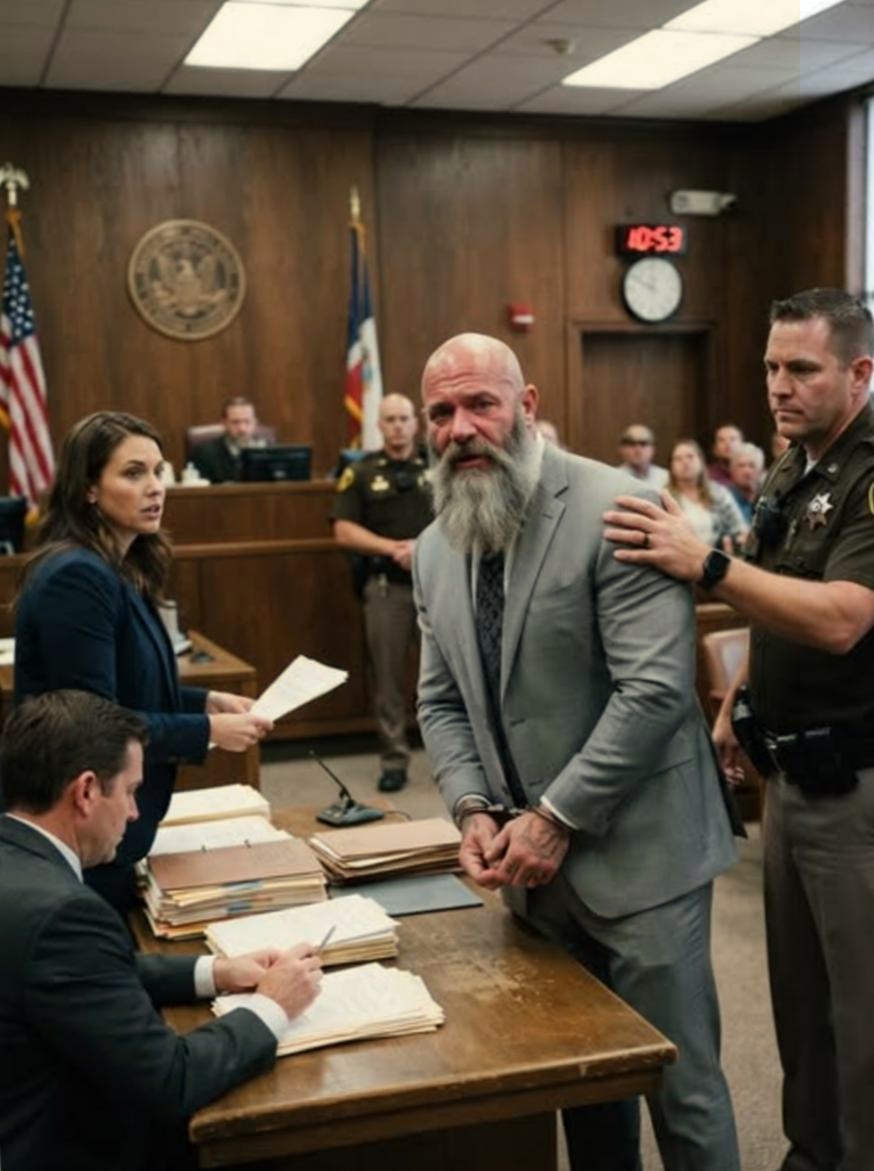

That day, when I raised my hand in court and lied, I knew that with that same lie I was going to destroy a man’s life.
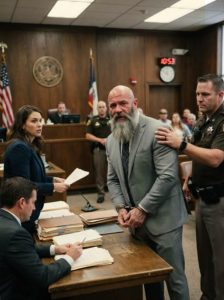
It was ten o’clock in the morning in the courtroom. Raindrops fell against the windows, while the bag lying on the wooden table in front of me moved every time a car passed outside. Three men sat before me. One had his jaw bound with wire, another had broken ribs, and the third had a dark mark under his eye.
On the other side stood Cole.
He was wearing a black vest; traces of rain dust could still be seen on his shoulders, and his face was so calm that this calm irritated me more than any of his words. For twelve years, whenever I saw motorcyclists, only one picture turned before my eyes: my daughter, Emma, beside a wrecked car on the road.
That night, a drunk driver took her life. He had a motorcycle.
After that, a leather vest, the sound of an engine, and motorcyclists’ hands meant the same thing to me.
The lawyer turned toward me.
“Mrs. Harper, did you see how the defendant attacked the three men?”
My throat went dry.
“Yes, I saw it.”
“Without warning?”
“Without warning.”

The words followed one another. I said that Cole was aggressive, that he had not tried to protect the girl, that the men were simply standing there and he had suddenly attacked them.
It was all a lie.
But the judge listened to me attentively, the prosecutor nodded, and the people sitting in the courtroom looked at me as if I were the only face of honesty. Only Cole did not look at me angrily.
He looked at me as if he already knew why I was doing this.
“Are you sure?” the judge asked me.
At that moment I squeezed my fingers against the chair so hard that my nails sank into my skin.
“I am completely sure.”
The sentence was announced that same evening. Five years for aggravated violence.
When the guards put handcuffs on Cole, he passed beside me. The smell of wet asphalt and smoke came from his leather vest. He passed very close.
“I would still have pulled you out of that car,” he told me quietly.
My breath caught.
I knew that phrase.
Twelve years earlier, during a fire, someone had smashed my car window, seized me by the shoulders, and pulled me out of the flames. I remembered only the leather vest. Not the face.
Cole disappeared before the rescuers arrived.
For two weeks I repeated to myself that I had done the right thing. That men like the killers of my daughter did not deserve trust. That Cole deserved punishment.
Then, one rainy afternoon, someone knocked on the door.

A young woman stood in the yard. She wore the uniform of the same diner where the fight had happened. She held a paper bag, and mud had dried on her shoes.
“Are you Mrs. Harper?”
“Yes.”
“I’m Kayla. The waitress from that night.”
She held out the bag to me.
“Cole left this for me.”
“Where is he?”
Kayla looked toward the street.
“In prison. And that is exactly why I came. You lied in court.”
I pulled the door more tightly closed.
“I don’t know what you’re talking about.”
Kayla took out a small dark device and placed it in my palm. Water drops glittered on its plastic surface.
“One of the men had his phone recording. He dropped it during the fight. The recording was not deleted.”
My hand trembled.
“Why didn’t you take it to the police?”
“Because they knew where I lived. They knew where my mother worked. Cole told me to hide until they arrested them.”
“And why did you come to me now?”
Kayla looked me in the eyes.
“Because Cole said that the only woman who can fix all this is the woman who testified against him.”

She took an old photograph from the bag.
In the photograph, children stood beside motorcycles. In the corner was a little girl with asymmetrical braids.
Emma.
Something had been written by hand on the back of the photograph. Kayla turned the paper over, and at that moment a black car suddenly stopped in the yard. Kayla looked toward the door, pale.
“They’re here,” she whispered.
I looked at the device on the table. The door handle slowly moved, while Kayla’s fingers reached to turn on the recording…
Kayla pressed the device, but the door lock had already turned.
“You have to leave through the back door,” she told me.
“I won’t leave you alone.”
“If they catch us, the recording will disappear.”
The sharp smell of coffee filled the room. I slipped the device into my pocket, and we went through the kitchen into the yard. The rain struck my face, but for the first time in a long while I did not feel the cold.
We took shelter in the neighbor’s shed. There Kayla took out one more thing—a folded child’s drawing. A purple motorcycle was drawn on it, and underneath, in Emma’s handwriting, it said: “Thank you for teaching me that motorcycles always stop for little children.”
“Cole had this for twelve years,” Kayla said.
“Why?”
“Because he was the one who pulled you out of the burning car.”

I leaned my head against the wall. The smell of damp wood made me nauseous.
“Did he know who I was?”
“He found out later. When he saw your name in the court papers.”
We turned on the recording. First a woman’s scream was heard, then the laughter of three men. Then Cole’s voice:
“Step back.”
Someone shouted, and the sound of a blow was heard.
The recording stopped in the middle.
That was enough for me to see the truth, but not enough to get Cole out of prison. Kayla took a folded sheet of paper from her pocket.
“There is another copy. And we have to give it to the prosecutor this evening. But before that, you have to look at one thing…”
In the lower corner of the sheet, beside my daughter’s name, I saw Cole’s handwriting. Next to it was a date that froze my blood…
It was the night of the accident.
The sheet said: “I called Emma’s father. The girl’s mother is alive. I will not leave until the rescuers come.”
I read the words several times. Then I realized that Cole had not happened to be by my car by accident. He worked at a roadside workshop, heard the sound of the crash, and entered the fire. My daughter was already dead then, but he saved me.

Tears ran down Kayla’s face.
“Cole told me that he heard your voice that night. You were repeating Emma’s name.”
“Why didn’t he tell me?”
“You never asked him.”
In the morning I went to the prosecutor’s office. The smell of old paper and disinfectant filled the corridor. In my hands I held the recording, the child’s drawing, and the photograph that Cole had kept in his wallet for twelve years.
Prosecutor David Rose closed the door.
“If you say that you lied, they may charge you yourself with perjury.”
“I know.”
“You may end up in prison.”
“I know.”
“Then why did you come?”
I turned on the recording. First Kayla’s scream sounded in the room, then the men’s threats, and finally Cole’s calm, stern voice.
“You will not touch the girl.”
It was as if the air disappeared from the room. The first blow was heard on the recording—not Cole’s, but the man who attacked him. Then the sounds of footsteps, a fallen chair crashing, and Kayla running became mixed together.
Cole had not chased anyone. He had not touched anyone again after they fell. Until the end, he stood between them and Kayla.

The prosecutor lowered his eyes.
“You did not say this voice in court.”
“Because I was afraid to admit my hatred.”
“Why?”
I placed the photograph on the table.
“One motorcyclist killed my daughter. And I turned all of them into that man. Cole saved my life, and I took his away.”
Kayla added quietly:
“He never blamed you.”
The prosecutor picked up the phone and called Cole’s lawyer. A few minutes later it was decided that the recording would be immediately handed to the judge. But before we left the room, the prosecutor’s phone rang.
He listened, his face changed, and he slowly sat down.
“Mrs. Harper, this recording is not only about acquitting Cole.”
“What else happened?”
He handed me a second sheet.
“One of the attackers was paying someone in the police so that Kayla’s case would be closed forever. And the transfer of the money was renewed yesterday.”
At the bottom of the sheet was the name of the owner of the bank account.
It was not Cole’s enemy.
This person had been sitting behind me in the courtroom the whole time…
კოული ციხის კარიბჭესთან გაჩერდა და ჩუმად შემომხედა…
მეგონა, სიმართლე ყველაფერს დაასრულებდა. მაგრამ ფინალში მივხვდი, რომ ზოგჯერ ყველაზე მძიმე განაჩენს სასამართლო კი არა, საკუთარი სიტყვები გამოგიტანს.
„ემას არ უყვარდა, როცა ადამიანები საკუთარ თავს მთელი ცხოვრება სჯიდნენ.“
ამ სიტყვებმა პირველად დამანახა, რისთვის უნდა მეცხოვრა.
👇 ისტორიის ფინალი უკვე გახსნილია
Related posts:
 Part 4 — I Accused a Motorcyclist Before the Jury, but at the Judge’s Words His Lawyer Suddenly Lost Color
 No meu casamento, minha família me comparou à minha irmã — até meu cunhado se levantar e meu marido ficar imóvel
 The Mafia Boss’s Car Fell into the Abyss, and I Tried to Save Him—but His Guards Pulled Out Their Guns
 PARTE 4 — No meu casamento, minha família me comparou à minha irmã — até meu cunhado se levantar e meu marido ficar imóvel
 An Unknown Man Humiliated Me in Front of Everyone, but the Restaurant Owner Looked at Me Only Once — and His Smile Immediately Disappeared
 A Flat Tire Stopped Me at a Desert Diner, but When the Waitress Heard My Name, the Color Drained from Her Face