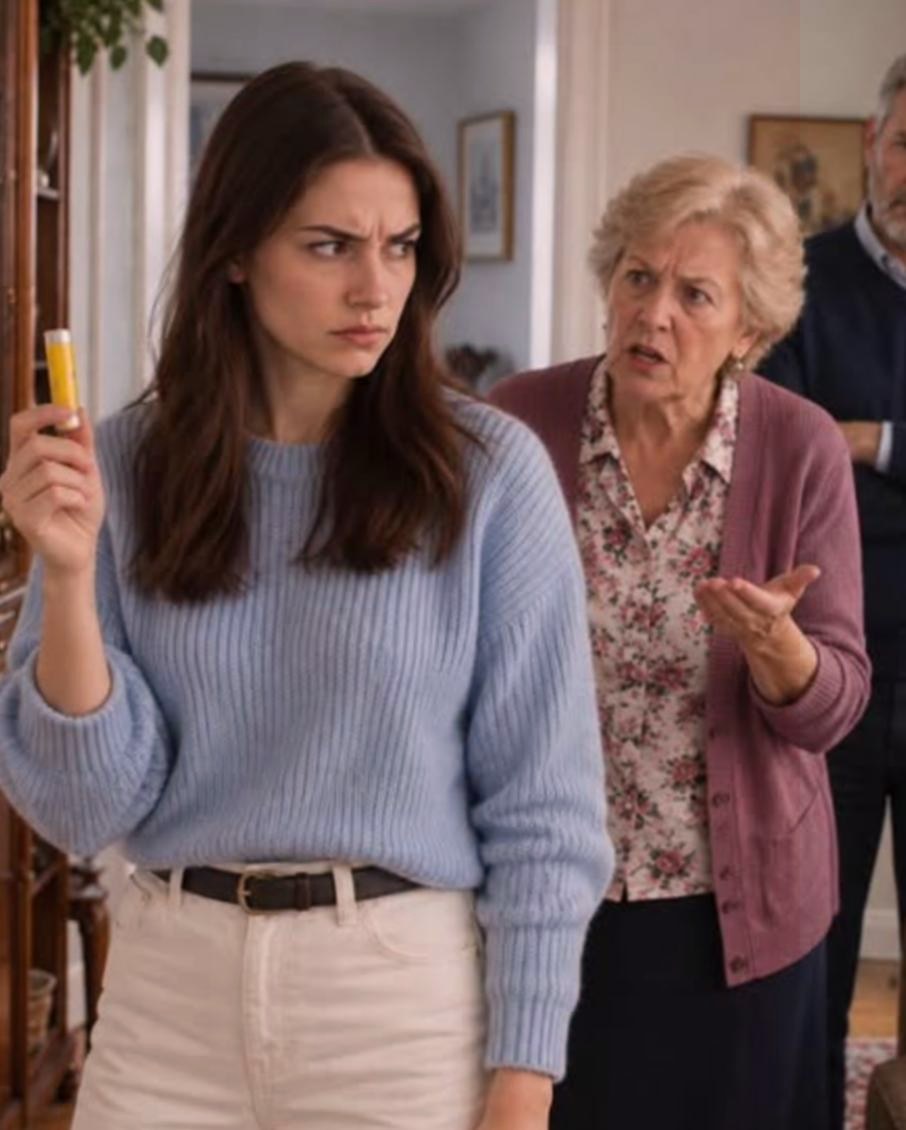

When I returned home earlier than usual, I heard my mother-in-law asking over the phone for my money to be transferred to her in full, and I forgot to take off my shoes.
A heavy silence stood in the hallway. Only Angela Viktorovna’s voice could be heard from the bedroom—so soft and feigned, the kind she used only when she needed Grisha to believe something important.
“Tell him to transfer the entire amount at once,” she was saying. “A daughter-in-law must help her mother-in-law. You have already transferred half to me, Grisha, but that still is not enough.”
I froze.
You have already transferred half to me.
Our savings were half a million. We had saved it for six years: my bonuses, his salary, giving up vacations, and refusing every small wish. I thought this money was for renovating the apartment. But Grisha, as it turned out, was building a different future.
I dropped my bag noisily onto the floor and entered the bedroom.
“Good evening,” I said.
Angela Viktorovna pressed the phone to her chest.
“Why did you come home so early?”
“I missed you. Especially the conversation in which you were asking for the remaining half of my money.”
The color changed in her face, but she immediately lifted her head.
“This is not your money. It is family money. I am Grisha’s mother.”
“Family money disappeared without my consent.”
“I have spent much more on him than you have ever spent!”
I laughed, although the laughter caught in my throat.
“After the operation I was lying with a fever, and you called Grisha and told him to fix your faucet. You call that an investment?”
At that moment the door opened and Grisha came in. He was holding the car keys. At the same moment I noticed that the thread had come loose from the small copper house-shaped keychain I had given him, on his keys.

“What is happening?” he asked.
“Did you transfer half a million to your mother?”
Grisha looked away.
“Nastya, she needed help.”
“Did you transfer it?”
“Yes.”
It was one word, but it seemed to contain our entire marriage.
“And she is asking for the entire amount too.”
“She simply owes money. She will return it to us later.”
“Who is to decide for us what our money is spent on?”
“Do not exaggerate.”
It was then that I understood that it was no longer only about money. He was neither apologizing nor trying to explain. He was sure that I should understand, remain silent, and even thank him.
I went into the kitchen, took out the folder of documents, and opened the mortgage agreement. I ran my finger over the pages. My signature. My transfers. My share in the apartment.
I returned to the hallway.
“In two weeks I will file for divorce,” I said. “I will buy out my share. Or you buy it out, if you still have the remaining money.”
“Nastya, think,” Grisha came closer to me.
“I have been thinking for six years.”
I put the keys on the bedside table. The copper keychain lightly touched the wooden surface.

Six days later I moved in with Marinka. On the seventh evening Grisha called me.
“We need to talk calmly.”
“Speak.”
“I will come in the evening. Alone.”
He came at exactly seven. Without flowers, without a gift—only with a thick folder.
He spread the documents on the table and said quietly:
“Our shares are equal. Let us transfer the apartment to me. I will compensate you for your half little by little.”
His fingers were trembling beneath the folder. I reached for the first page, but at that exact moment my phone rang. It was an unknown number.
“Mrs. Nastya,” a man’s voice sounded from the other end, “if you are with Grisha now, please do not sign anything yet. I found the document whose existence your husband hid…”
The phone froze in my hand, while Grisha suddenly leaned toward me…
I lowered the phone’s volume, but Grisha had already heard everything.
“Who is it?” he asked.
“A person who knows more about my money than you do.”
I immediately closed the folder. Grisha put his hand on it.
“Nastya, this is only a technical matter.”
“Is it a technical matter when a wife does not know where half a million has disappeared?”
The man said quietly into the phone:
“Come to the bank’s lawyer tomorrow morning. Bring your identity card and marriage certificate. Your mother-in-law was there too.”

The call ended.
Grisha turned pale.
“Do not go.”
“Why?”
“Because my mother’s situation will become more complicated.”
“Perhaps for the first time you should worry about your own situation.”
He picked up the folder and went toward the door. He stopped at the threshold.
“If you do this, you will lose everything.”
“I have already lost the person I thought was my husband.”
That night I could not sleep. In the morning Marinka brought me my old bag, in which I found the copper house-shaped keychain. Until then I had not noticed that a small number was engraved on its back.
The bank’s lawyer saw the number and his face changed.
“This is a safe-deposit box number,” he said. “And this safe-deposit box is in your name.”
“I have never had a safe-deposit box.”
He put a key on the table.
“That is precisely why you must see what was kept there…”

The safe-deposit box stood on the underground floor of the bank. It was ten in the morning, cold lights flickered on the walls, and my copper keychain lay together with the key in a small metal box.
The lawyer, Mr. Davit, also called Grisha. A few minutes later he and Angela Viktorovna entered. My mother-in-law held a black bag in her hands, gripping its handles so tightly that her fingers were turning white.
“This is all a misunderstanding,” Grisha said.
“Then you will not be afraid to open the safe,” Davit answered.
I turned the key.
Inside lay an envelope with a notary’s seal and several bank statements. My name was written on the very first page. Six years earlier, when we arranged the apartment mortgage, Grisha and I had signed an additional agreement: the sale or transfer of my share was possible only in my presence and with my written consent.
The second page was a statement of the half-million transfer.
The money had not been credited to Angela Viktorovna’s account. It had been transferred to a construction company that a person bearing Grisha’s name had registered three months earlier. And the owner of the company was Angela Viktorovna.
A heavy silence fell over the room.
“Mother?” Grisha could barely speak.
“I do not know what you are talking about,” she replied.
Davit opened the third document.
“The company was preparing to sell the apartment. You, Mrs. Nastya, thought the money would be used for medical expenses. In reality, the funds were transferred for the renovation and subsequent sale of the apartment. And your signature was being prepared in advance.”
Grisha struck the chair with his hand.
“Mother, you told me you needed the money for treatment!”
“You yourself wanted to leave this apartment,” she shouted. “Nastya would not have understood anything anyway.”

I looked at Grisha.
“Is that true?”
He could not answer me.
Davit switched on a small voice recorder. Grisha’s own voice sounded in the room:
“Nastya will sign. If not, we will convince her that her share was counted toward the debts.”
Grisha collapsed onto the chair. Angela Viktorovna covered her lips with her hand.
But for the first time I was no longer crying.
“When was the recording made?” I asked.
“The company’s accountant supplied it,” Davit said. “He also sent another file, which we have not opened yet.”
At that very moment Davit’s phone rang. He looked at the screen and knitted his brows.
“The accountant has been taken to the hospital,” he said. “But before that he sent us one message: ‘If anything happens to me, look for the old warehouse cameras. They show who took the second folder…’”
გრიშამ საკუთარი ხმა მოისმინა და პირველად დადუმდა…
მე მეგონა, ყველაზე რთული უკვე გადავიტანე. მაგრამ ნამდვილი ფინალი მაშინ დაიწყო, როცა დამალული სიმართლე ყველას თვალწინ ამოვიდა.
„ზოგჯერ უარი ყველაზე მშვიდი პასუხია.“
ამ სიტყვების შემდეგ ოთახში სრული სიჩუმე ჩამოწვა.
👇 ისტორიის ფინალი უკვე გახსნილია
Related posts:
 Part 4 — My Husband Transferred Half a Million to His Mother, but When I Opened the Folder of Documents, His Mother’s Smile Disappeared
 When They Considered Taking My Mother to the Doctor Humiliating, the Color Drained from My Husband’s Face and a Heavy Silence Fell over the Room
 I took my mother from the house, but when my brother opened her room with a duplicate key, the color drained from his face
 After My Husband’s and Daughter’s Funeral, My Mother Asked Me for the Insurance Money, but the Bag on My Table Suddenly Erased Her Smile
 A Flat Tire Stopped Me at a Desert Diner, but When the Waitress Heard My Name, the Color Drained from Her Face
 When I Took My Mother to the Hospital, My Husband Demanded That the Screen Be Turned Off and the Doctor’s Face Changed