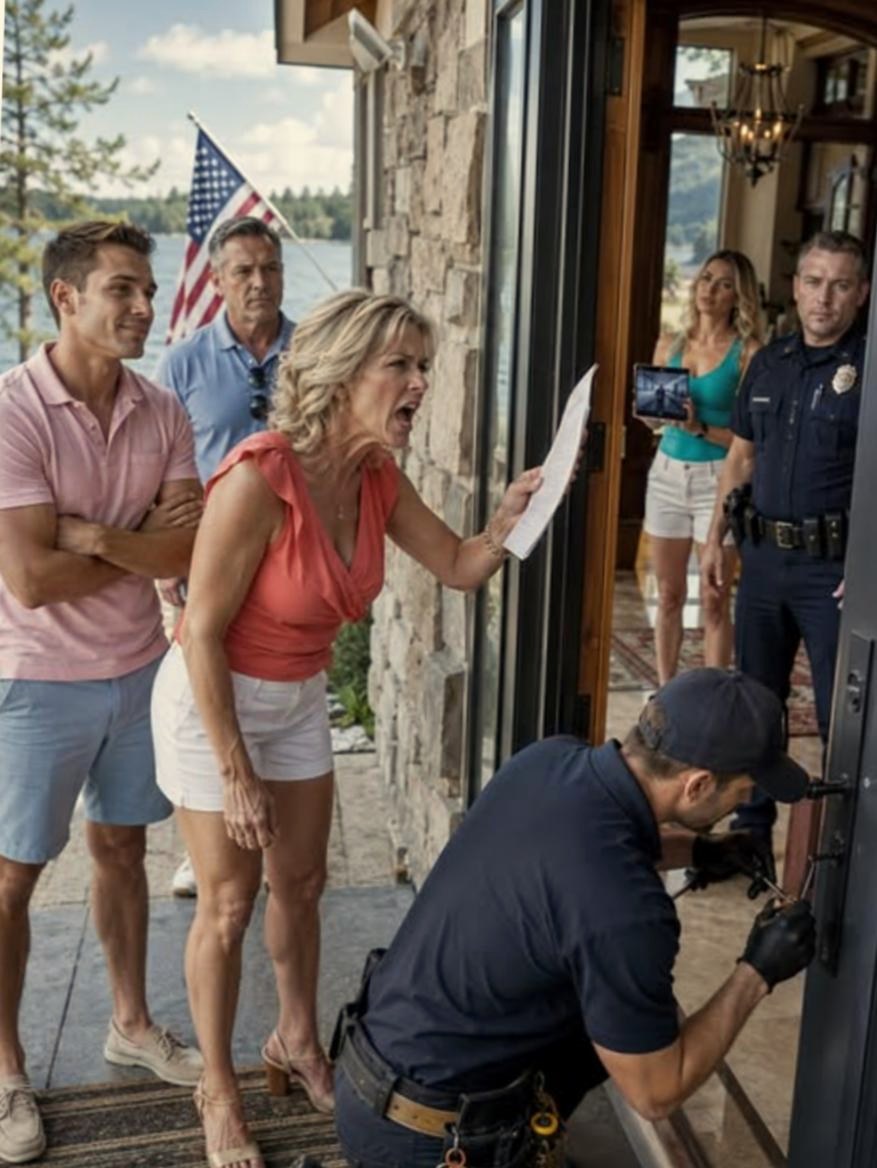

My mother was smiling while an unknown man was breaking the lock on my house.
That smile was what I could not get out of my head.
Not the fake lease agreement he had tucked under his arm. Not my father’s overnight bag. Not my brother Ethan’s nervous pacing beside the black car and checking his phone every minute.
The smile.
I had seen that smile before.
I was seven years old, sitting cross-legged on the carpet. Ethan was opening a new toy, while Natalie was hiding behind a dollhouse. My gift turned out to be cheap pencils and a coloring book.
“Is there anything else for me?” I asked my mother.
She did not even turn her head.
“You should be grateful, Megan.”
At seventeen, I stood on the school stage holding the award for best student. I had reserved two seats for my parents in the hall.
Both remained empty.
Mother went to Ethan’s baseball game. Father told me that awards were “school trifles” and that we would celebrate later.
We did not celebrate.
At university, I stopped telling them good news. In response to the scholarship, I received one like several days later. No one answered at all about the job offer. At the graduation ceremony where I graduated with honors, I again found empty seats.
So when my mother wrote under a photo of my million-dollar house near Lake Tahoe, “We are proud of our girl,” I did not feel love.
I saved the picture immediately.
My success finally showed me. And in my family, attention always came with a price.
I was twenty-eight years old. I worked on cybersecurity infrastructure at a technology company in San Francisco. I had not won the house in a lottery. It was the result of six years of restraint, saving, and work that no one at home had ever noticed.
Seven minutes after the photo was posted, my mother liked it. Twenty-three minutes later, my father wrote to me:
“It is a very beautiful place. Is it Tahoe?”
An hour later Ethan asked me:
“Do you live alone? A house like that is worth a fortune.”
I muted the family chat, then turned it on again. Something did not sit right with me. My profession had taught me one thing: never delete a suspicious trace.
In the following days, their questions became colder and more precise. Mother sent me childhood photos and wrote that the family needed “healing.” Father asked whether they could stay with me for a while. Ethan, who worked at a property-management company, sent me rental prices for houses like mine.

Then my mother called me.
“We’ll come up for a few weeks. You have enough rooms.”
“Do not come to my house without an invitation,” I wrote.
The answer came immediately.
“Don’t create drama.”
My father added:
“You cannot keep the family outside forever.”
A few hours later Ethan made a mistake.
“If you legally settle into the property, they cannot evict you that easily.”
I was reading this message in a truck when I called Claire, my lawyer.
“Send me everything,” she told me.
For two hours she prepared an official warning: Diana, Richard, Ethan, and their representatives had no right to enter my house, live there, or act in my name.
We sent it by email. By mail too. With delivery confirmation as well.
Mother sent me a laughing emoji.
Ethan wrote:
“You already hired a lawyer? That says a lot.”
The next day the camera recorded Ethan. He photographed my address plate, the door, the side gate, and the garage code. He did not knock.
That night Natalie called me. We had never been close, but she had always understood that silently surviving in the family was sometimes the only way.
“They are preparing something,” she told me quietly.
“What?”
“A lease. They say you signed it.”
My heart sped up as if I were running up stairs.
“I signed nothing.”
“I know. Ethan said the document only had to look real long enough for them to get through the door.”},{
At that very moment I opened my laptop.
Two days later, at eleven seventeen in the morning, the lock company called me.
“Ms. Carter, we are confirming today’s apartment-clearing job.”
“I ordered nothing.”
Silence fell on the other end.
“They provided us with a lease agreement.”
I wrote to Claire and asked her to have the document sent to her. A few minutes later I received the file. It was three pages. My address. My full name. My parents as three-year tenants. And at the bottom, my signature, which looked enough like the real one for a hurried person to believe it.

I recognized the signature immediately. It was from an old university financial-aid application that my mother had kept years ago.
Claire called me.
“Do not confront them alone.”
“I won’t be alone.”
Two police officers were already standing in my living room. I showed them the deed, the messages, the camera footage, and the fake lease.
In the afternoon my parents arrived. A few minutes later the locksmith appeared too. Mother handed him the document.
I watched through the cameras as the man placed the key in the lock.
Father gripped the bag tightly. Ethan looked at his phone.
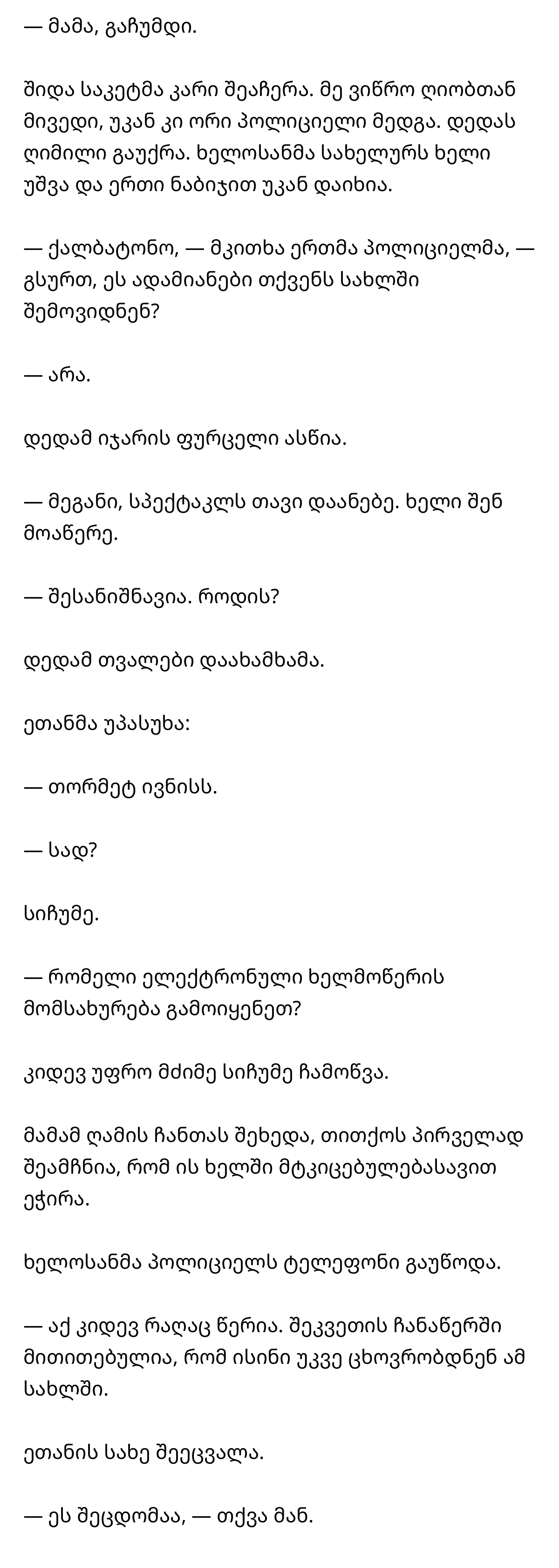
Then the locksmith put his hand on the lock, while I stood on the other side of the door with the police officers. Mother put her finger on the handle, and at that moment I realized that the next few seconds would change my family forever…
The door opened only three centimeters, but Father destroyed their whole story with six words.
“You told me it wouldn’t be here.”
Ethan immediately turned toward him.
“Dad, shut up.”
The inside lock stopped the door. I approached the narrow opening, with two police officers behind me. Mother’s smile disappeared. The locksmith released the handle and stepped back.
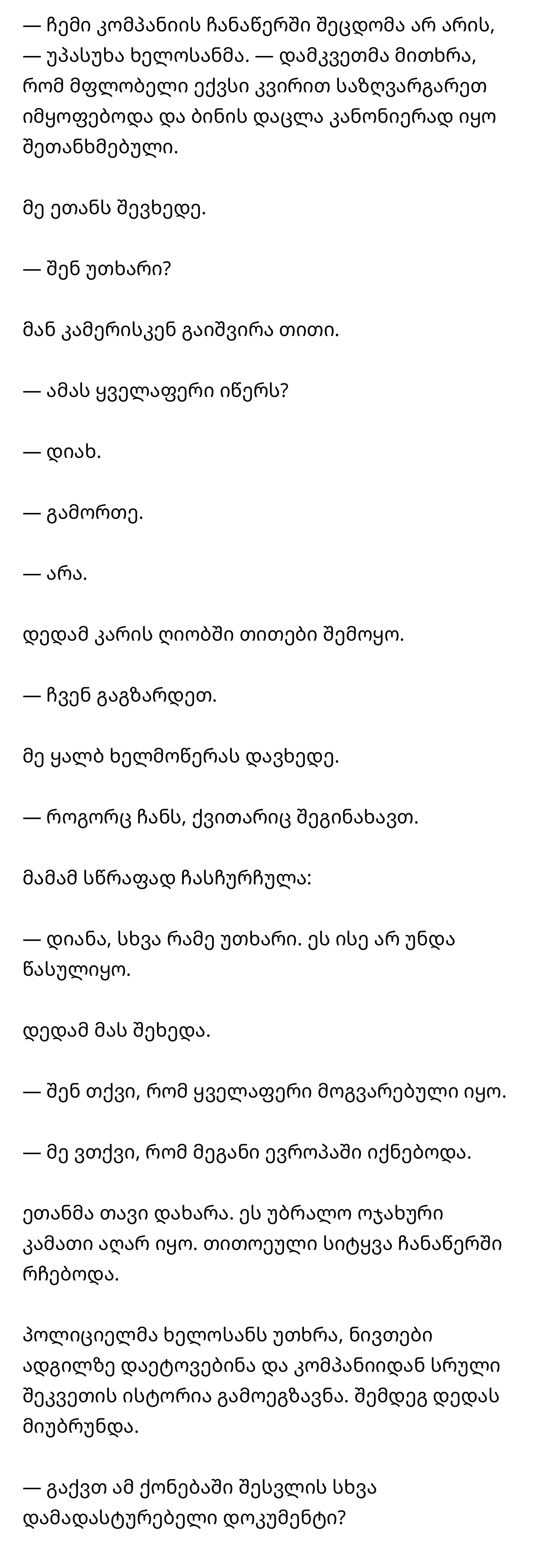
“Ma’am,” one of the officers asked me, “do you want these people to enter your house?”
“No.”
Mother raised the lease paper.
“Megan, stop the performance. You signed it.”
“Excellent. When?”
Mother blinked.
Ethan answered:
“June twelfth.”
“Where?”
Silence.
“Which electronic-signature service did you use?”
An even heavier silence fell.
Father looked at the overnight bag, as if noticing for the first time that he was holding evidence in his hand.
The locksmith handed his phone to the police officer.
“There is something else written here. The order record says that they were already living in this house.”},{
Ethan’s face changed.
“That is a mistake,” he said.
“There is no mistake in my company’s records,” the locksmith replied. “The customer told me that the owner was abroad for six weeks and that clearing the apartment had been legally arranged.”}]},{
I looked at Ethan.
“Did you tell him that?”
He pointed at the camera.
“Does this record everything?”
“Yes.”
“Turn it off.”
“No.”
Mother put her fingers through the opening of the door.
“We raised you.”
I looked at the forged signature.
“Apparently you kept the receipt too.”
Father quickly whispered:
“Diana, tell her something else. This was not supposed to go this way.”
Mother looked at him.
“You said everything was settled.”
“I said Megan would be in Europe.”
Ethan lowered his head. This was no longer a simple family argument. Every word remained in the recording.
The officer told the locksmith to leave the items in place and send the complete order history from the company. Then he turned to Mother.
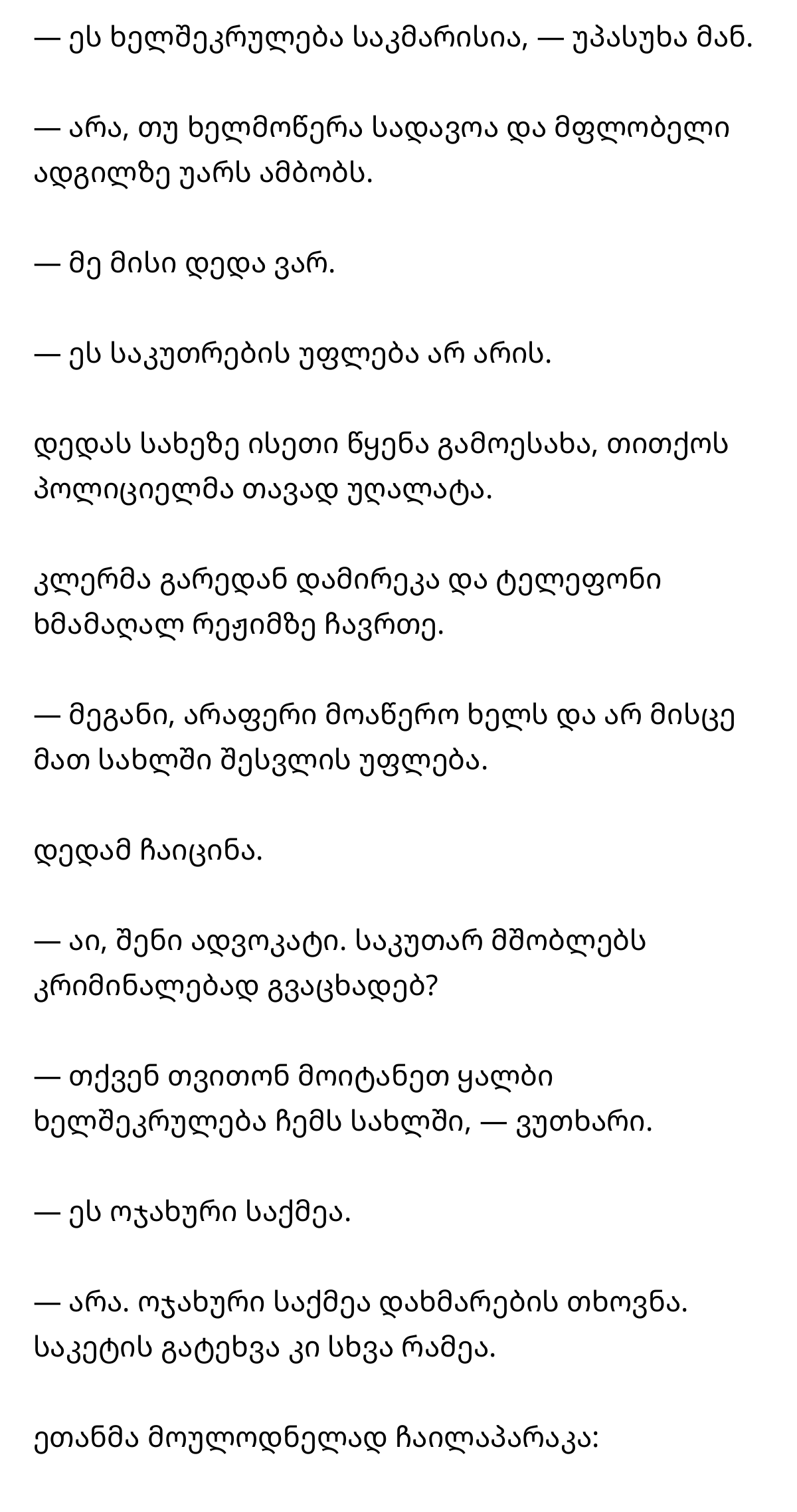
“Do you have any other supporting document for entering this property?”
“This agreement is sufficient,” she answered.
“No, not if the signature is disputed and the owner is here refusing.”
“I am her mother.”
“That is not a property right.”
Such hurt appeared on Mother’s face, as though the police officer himself had betrayed her.
Claire called me from outside, and I put the phone on speaker.
“Megan, sign nothing and do not give them permission to enter the house.”
Mother gave a short laugh.
“There is your lawyer. Are you declaring your own parents criminals?”
“You brought a fake agreement into my house yourselves,” I said.
“This is a family matter.”
“No. A family matter is asking for help. Breaking a lock is something else.”
Ethan suddenly muttered:
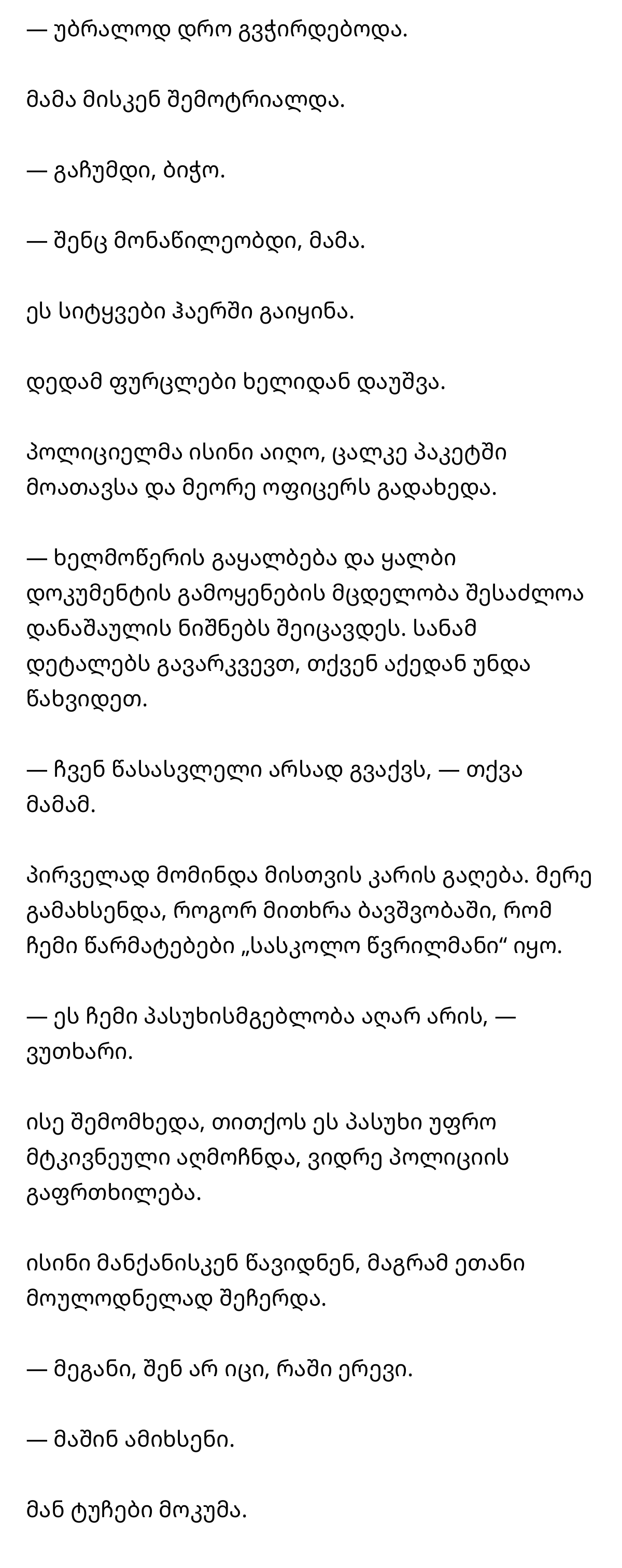

“We just needed time.”
Father turned toward him.
“Shut up, boy.”
“You participated too, Dad.”
Those words froze in the air.
Mother dropped the papers from her hands.
The officer picked them up, placed them in a separate bag, and looked at the other officer.
“Forgery of a signature and an attempt to use a fake document may contain signs of a crime. Until we clarify the details, you must leave here.”
“We have nowhere to go,” Father said.
For the first time I wanted to open the door for him. Then I remembered how he had told me in childhood that my successes were “school trifles.”
“This is no longer my responsibility,” I told him.
He looked at me as if this answer had hurt more than the police warning.
They walked toward the car, but Ethan suddenly stopped.
“Megan, you do not know what you are getting involved in.”
“Then explain it to me.”
He pressed his lips together.
“If we cannot use this house, debts will arrest all of us.”
“You used my signature.”
“We had no other way.”
“There is always a way that does not involve stealing someone else’s house.”
Ethan got into the car. On the back seat of the BMW I saw a new folder. He immediately covered it with his jacket.
That same evening Natalie sent me a photo. She had taken a picture of a copy of the folder several days earlier.
My name was written in the upper corner of the page. Below it was a clause whose existence was much more dangerous than the fake lease.
Claire read the document for a long time and finally told me:
“Megan, they were not only trying to enter your house. They had planned one more step…”
After Claire’s words, only the quiet hum of the refrigerator could be heard in the room.
“What step?” I asked.
She enlarged the folder photo on the screen. It was a document according to which I supposedly gave Ethan permission to temporarily encumber my house as security for a loan.
“This will not take effect if they do not have your real signature,” I said.
“They already have a fake lease, a fake signature, and the property address. It may look convincing enough to the bank until they verify it.”

“How much money did they need?”
Claire exhaled before answering.
“Three hundred thousand dollars.”
That night Natalie sat in my kitchen. She touched the rim of her glass with her fingers. In childhood she always did this when Mother and Ethan were arguing in the room.
“Tell me everything,” I said.
“A few weeks ago Father said the mortgage interest had increased. Mother said your house was the solution. And Ethan said that if they entered even once, a court case against you would begin afterward and they would gain time.”
“Do you have a recording?”
Natalie handed me her phone.
“I recorded it accidentally that night. I was frightened, but I could not delete it.”
Claire opened the recording. First came the sound of dishes, then Mother’s voice.
“Megan will give in eventually. She is always left alone.”
Father said:
“The main thing is for the bank to sign.”
Ethan’s voice was the clearest.
“The lock will open, we will enter, put things down, and then she will not be able to tell us that we do not live here.”
The recording ended.
I sat on the chair and could not distinguish my own breathing.
“Is this enough?” I asked.
“It is important evidence for court,” Claire answered. “But first we must know whether the bank approved anything.”
The next morning, at nine o’clock, we gathered at the city sheriff’s department. On the table lay the fake lease, Natalie’s phone, the camera footage, and a letter received from the bank.
The bank’s letter turned out to be the heaviest part of the case.
Ethan had already submitted a loan application. My house was listed as collateral. The application included the fake lease and a copy of my signature.
“When did he do this?” I asked.
The sheriff looked at the paper.
“Four days ago. He ordered the call to the lock company after that.”
Claire said calmly:
“So entering the house was not only an attempt to settle there. They wanted to strengthen the document through physical presence and then obtain the loan.”

I closed my eyes. For four days they had been looking at my house as a box full of money.
At noon my parents were summoned to the department. Mother arrived neat, as if she were going to lunch. Father carried the same overnight bag. Ethan was pale.
The sheriff played the recording.
Ethan’s own voice rang through the room:
“The lock will open, we will enter, put things down, and then she will not be able to tell us that we do not live here.”
Ethan lifted his head.
“This was taken out of context.”
For the first time Natalie looked directly at him.
“I was standing there. I know exactly what you meant.”
Mother held out a hand to her.
“Natalie, darling, we wanted to protect everyone.”
“No,” she said. “You wanted to protect yourselves.”
Father sat down in the chair. His face became gray.
Claire placed the bank document in front of him.
“Your name and signature are on this.”
Ethan looked at her.
“I thought she would finally agree.”
“So you forged the signature?”
He could not answer.
Mother turned her head toward me.
“Megan, we are family. You can stop all this.”
“You already stopped my trust,” I told her.
That evening the sheriff officially opened a case against them: attempted use of a fake document, a fraudulent loan application, and attempted unlawful entry. At that moment I thought the hardest part was over.
But Claire called me that same night.
“Megan, the bank sent another message.”
“What happened?”
For the first time I heard real fear in her voice.
“The application was already at the final stage of approval. And someone requested that money be deposited into a new bank account in your name.”
“Was the money deposited?”
Claire was silent for several seconds.
“No. But they listed an account opened in your name. Megan, the worst part is that this account is registered to your childhood address…”
მან საკუთარი ხმა მოისმინა და პირველად გაჩუმდა…
მეგონა, სიმართლის გამხელით ყველაფერი დამთავრდა.
მაგრამ ყველაზე მძიმე პასუხი ჯერ კიდევ წინ მელოდა.
„მე ერთადერთი აღარ ვარ, ვისაც ყველაფერი უნდა გადაარჩენინოს.“
ოთახში აღარავის დარჩა სათქმელი.
👇 ისტორიის ფინალი უკვე გახსნილია
Related posts:
 Part 4 — My Family Tried to Break into My House with a Fake Lease, but My Father Lost His Color When the Door Opened
 Mi esposa me hizo odiar a mi ex, pero al verla con dos bebés en una carretera desierta, mi rostro perdió el color
 My father grabbed my wrist in front of eighty guests and called me a deserter, but the face of an unknown officer suddenly turned pale.
 Father Left Houses to My Brothers, but Burdened Me with Mother’s Life — Yet My Brother’s Smile Suddenly Disappeared
 When the dangerous mobster’s son reached out towards me, his father looked at the photo and went pale.
 I told my former love the child in my arms was his, and when he saw the letter, his fiancée stopped smiling