PART 4
Elias Mercer was the name written on the back of the only photograph Jordan had carried out of the orphanage.
For several seconds, neither of us spoke.
Rain slid down the windows in crooked lines. The spilled tea had reached the edge of the table and dripped onto the floor.
‘Do you know him?’ I asked.
Jordan stared at the phone.
‘I know the name.’
The woman from the redevelopment office cleared her throat.
‘Mr. Hale, the board meets at eight tomorrow morning. If the claim is not challenged, the contract may be suspended.’
‘Send me everything,’ Jordan said.
‘There is one more thing. The witness is already at the county building. He says he wants to speak with you tonight.’
Jordan looked at me.
His face was calm, but I knew him well enough to see the fear beneath it.
‘We’re going,’ I said.
He shook his head.
‘You don’t have to come.’
‘I have spent twelve years standing beside you while they pretended you were invisible. I am not leaving now.’
At seven twenty, we drove through the rain to the county offices. The brass compass lay in the cup holder between us, its crooked leg tapping against the plastic whenever we turned.
Elias Mercer was waiting in a narrow conference room under fluorescent lights. He was an elderly man with a red scarf and a leather folder worn white at the corners.
When Jordan entered, Elias stood.
‘You have your mother’s eyes,’ he said.
Jordan stopped.
I felt his fingers find mine.
‘You knew my mother?’
Elias nodded. ‘I was the social worker assigned to your case.’
He opened the folder and removed a bundle of documents tied with a faded yellow ribbon. Not a hidden inheritance. Not a miraculous fortune.
Something far more painful.
‘Your mother did not abandon you because she did not want you,’ Elias said. ‘She was sixteen. Her parents threatened to send her away. They told her the baby had died during delivery.’
Jordan’s breathing became shallow.
‘They lied?’
‘They signed the surrender papers before she was allowed to see you. Your grandmother paid someone to alter the hospital record.’
I looked at the pages. There was a birth certificate, a hospital note, and a letter written in a young woman’s uneven handwriting.
Jordan did not touch it.
‘Where is she?’
Elias lowered his eyes.
‘She died eleven years ago.’
The room seemed to grow smaller.
Jordan pressed his palm against the table.
‘Did she know I was alive?’
‘She spent decades searching. Your grandparents threatened her with a lawsuit and told her the adoption was sealed. She believed you had been placed overseas.’
I thought of my parents mocking Jordan for being an abandoned orphan. I thought of my grandmother’s locked desk, my mother’s sudden silence whenever his childhood came up.
Elias turned to the final page.
‘Your father-in-law found these records six months ago. He contacted me because he wanted leverage over you. He offered money if I signed a statement saying your designs were his.’
Jordan’s voice was almost inaudible.
‘And you refused.’
‘I did more than refuse.’
Elias pushed a small envelope across the table. It was cream-colored and creased at the corners, stamped with the county seal.
‘Your mother left this for you. I found it in the archive after your father-in-law contacted me.’
Jordan opened it with shaking hands.
The letter was short. His mother wrote that she had never forgotten him, that she had kept a photograph of his tiny hand wrapped around her finger, and that she hoped one day he would know the difference between being abandoned and being taken away.
Jordan read it twice.
Then he covered his face.
I moved beside him. Elias turned toward the window and gave us privacy.
When Jordan finally spoke, his voice broke.
‘All these years, I thought nobody had wanted me.’
‘Someone wanted you,’ I said. ‘They just failed to protect you.’
He looked at the letter.
‘That failure was not yours.’
‘Neither was yours.’
The next morning, Jordan’s attorney filed the original drawings, the recordings, the financial transfers, and Elias’s sworn statement. The redevelopment board restored the contract before noon. The county referred my parents’ fraud claim for investigation.
My father called seventeen times.
Jordan’s attorney returned the eighteenth call.
‘My client will not negotiate while you continue threatening his wife,’ she said. ‘If you want assistance with the foreclosure, you may accept the written agreement. If not, do not contact them again.’
My father hung up.
Two days later, the recording was played in a mediation room downtown. My parents sat across from us beneath a wall clock that clicked too loudly.
Their own voices filled the room.
‘He’ll give us anything if we make her feel guilty enough.’
My mother looked at the table.
My father stared at the speaker.
When the recording ended, the mediator asked, ‘Do you understand that these are your words?’
My father whispered, ‘I was angry.’
Jordan answered, ‘You were honest.’
That was the moment my father finally understood. Nobody had invented his cruelty. Nobody had edited it. He had said every word himself, and Jordan had simply stopped carrying it for him.
My parents signed the apology and repayment agreement. Jordan paid the twenty thousand dollars directly to the lender, not to them. Their apartment was spared, but their company was sold to cover the fraud and the debts. The employees received the first share of the proceeds. My father had no authority over them anymore.
We did not celebrate.
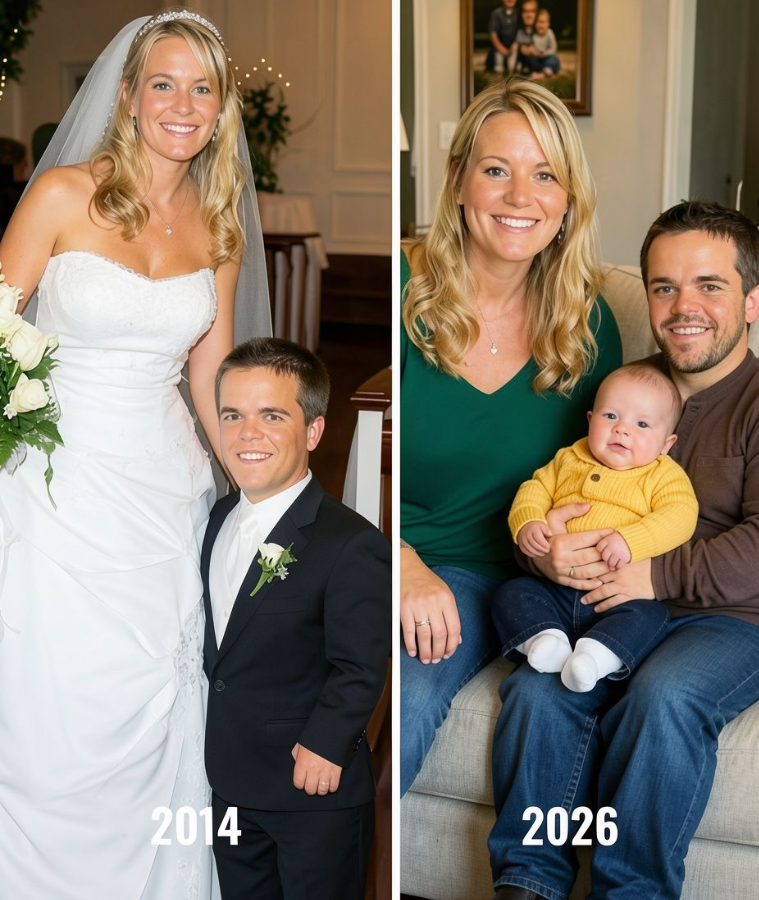
That evening, I went into my parents’ former office to collect the photographs they had kept of me. The room smelled of dust, printer ink, and old carpet. On the wall hung a framed picture from our wedding.
I was smiling at the camera.
Jordan was beside me, shorter than everyone in the photograph, but standing straighter than all of them.
I took the picture down.
The nail left a pale square on the wall.
For weeks, Jordan woke before dawn and sat at the kitchen table with his mother’s letter. Sometimes he read it. Sometimes he only touched the fold.
I learned not to ask him what he was feeling.
I simply made coffee and stayed.
Three months later, his firm opened a small design studio in Portland, where the streets were steep, the houses were bright, and nobody knew my parents’ names. Jordan hired two young architects and began a program for accessible housing. He called it Open Door.
On Saturdays, I helped at the studio reception desk. Children from the neighborhood drew pictures on the backs of old planning sheets. One little girl drew Jordan beside a building with a giant red door.
‘That’s you,’ she told him.
Jordan smiled.
‘Why did you make the door so big?’
‘So everyone can come in.’
The first snow arrived in December. It gathered on the studio windowsills and softened the city outside.
That afternoon, my mother sent one final message.
I’m ready to talk. Your father has changed. Please come home for Christmas.
I read it twice.
Then I placed the phone face down.
Jordan watched me from the drafting table.
‘You don’t have to answer.’
‘I know.’
‘Are you going to?’
I looked at the drawing on the wall, at the little red door, at the life we had built without asking permission.
‘No,’ I said. ‘Not yet. Maybe not ever.’
He nodded. There was no anger in his face. Only relief.
That night, I found the brass compass in the pocket of his coat. Its hinge was still scratched. Its crooked leg still refused to close.
I placed it beside his mother’s letter on the windowsill.
Outside, snow covered the footprints leading to our door.
For the first time, no one was asking us to let them in.
Missed the beginning?
Related posts:
 My parents demanded twenty thousand dollars from my husband, then his quiet condition made my father stop smiling
 My husband and mother-in-law threw me out of the bakery I built, but one quiet question made his smile disappear
 My mother demanded the apartment I had paid for, and when I refused at my brother’s birthday, his smile suddenly vanished
I told my former love the child in my arms was his, and when he saw the letter, his fiancée stopped smiling
My mother demanded the apartment I had paid for, and when I refused at my brother’s birthday, his smile suddenly vanished
I told my former love the child in my arms was his, and when he saw the letter, his fiancée stopped smiling
 I was publicly disowned at my father’s funeral, but when I opened his battered fishing box, my uncle suddenly stopped smiling
 I was humiliated for feeding an unwanted old man, but when a black car stopped outside, Beatriz suddenly stopped smiling