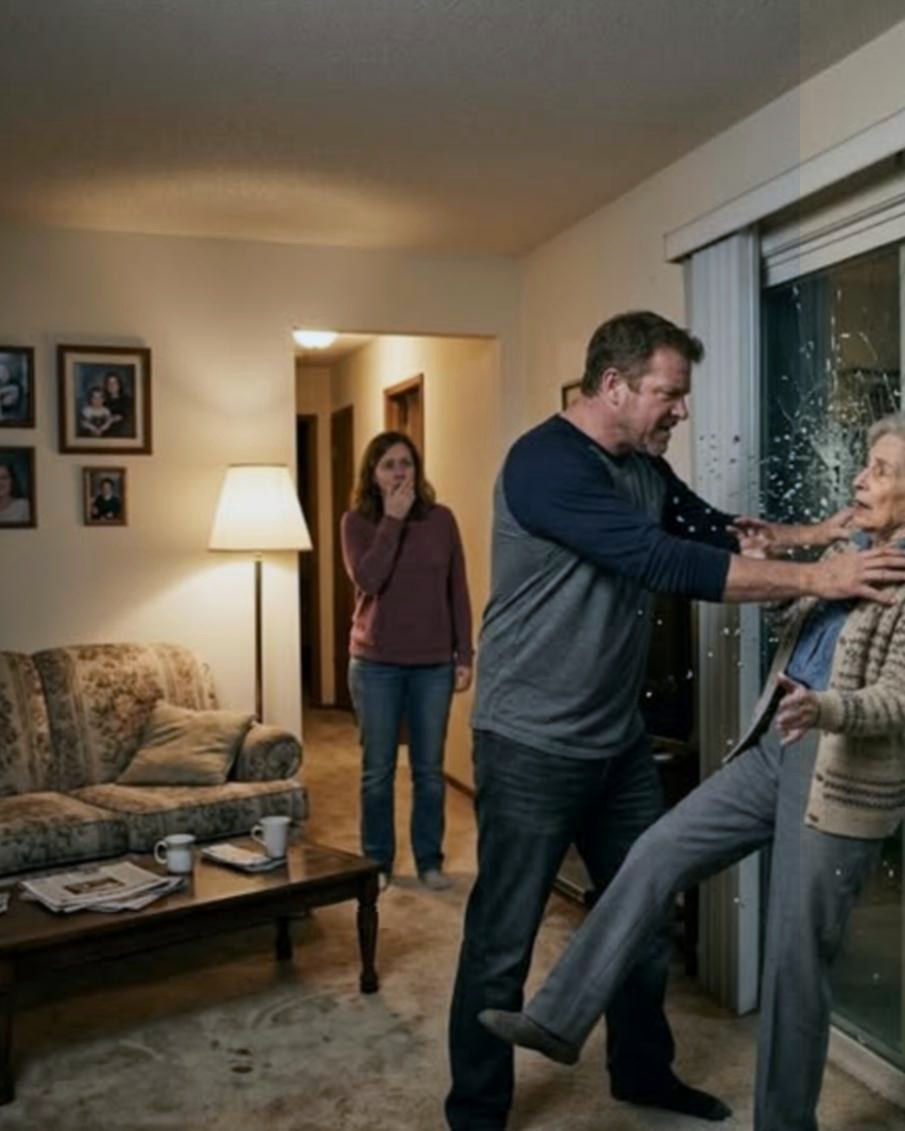

At David’s words, all movement in the room stopped.
They thought my personal account had been almost empty for years. In reality, it was only the security gateway of the fund.
“Block everything,” I told him.
“I already did,” David replied. “But they managed two attempts. The bank’s security department is contacting the police now.”
Ethan rushed to the window.
“Mother, this is Vanessa’s doing. I knew nothing.”
Vanessa looked at him as if she were seeing him for the first time.
“Now you are blaming everything on me?”
“You told me to make her sign the documents!”
“You threw me out!”
Her voice sounded like broken glass.
David put the phone on the table.
“Both of you stop. The police are on their way.”
Ethan turned toward me.
“Mother, please. Do not let them take me away.”
“I am not deciding to take anyone away, Ethan.”
“You are my mother.”
“That is exactly why it hurts so much.”
He took one step forward, but David raised his hand in front of him.
“Do not come any closer from here.”
Ethan stopped. For the first time I saw on his face a person who had lost his power. Not because he no longer had money, but because he could no longer force me to save him.

The police came twenty minutes later.
Vanessa immediately called a lawyer. A few minutes later the lawyer told her that he could not intervene in the case until he saw the documents about the money transfers.
“You are our lawyer!” Vanessa shouted at him.
A calm man’s voice could be heard from the other side of the phone.
“I am your lawyer only in lawful matters. Pressuring a witness and fraudulently transferring property are beyond the limits of my defense.”
“What do you mean, beyond them?”
“It means I am withdrawing from this case.”
Vanessa’s phone fell from her hand.
They still had not heard their own words.
But within a few minutes everything changed.
A police officer turned on the computer in the living room and displayed the camera recording on the screen. I was lying on the terrace. Then Ethan could be seen promising to throw me out into the street. Vanessa could be seen opening the door and saying: “If you do not sign now, you will not leave this house alive.”
Vanessa’s face changed.
Ethan watched the screen as if he saw another person there.
His voice could be heard clearly in the video.
“You own nothing anymore. You need no one. Sign.”
Ethan covered his ears with his hands.
“Turn it off.”
“You said it,” the officer told him calmly.
“I do not speak like that.”
But it could be heard. Word for word.
His own voice.

That evening Ethan and Vanessa were ordered to leave the house. The court issued a temporary protection order, and the fund accounts were officially frozen. Vanessa’s brother’s company returned the money because the bank had considered the transfer suspicious.
I did not feel victory.
Only exhaustion.
Three days later I inspected the house. The table on which they had placed the papers for my signature was still standing in the living room. I found a small piece of glass on the floor.
I did not touch it.
Only an old photograph remained in my son’s room. Ethan was six years old in it and held the small copper key hanging around my neck. On the back of the photograph, in a child’s hand, was written: “Mother’s treasure.”
I sat on the chair and looked at it for a long time.
I could not decide whether to take the photograph or leave it there.
In the end I took it.
Not for his sake.
For the sake of the version of me that once believed love could change everything through patience.
The legal case lasted several months. Ethan was sentenced for physical violence and coercion, and Vanessa for attempting to fraudulently transfer property. In court I did not hide my eyes even once.
But I did not smile even once.
When the judge announced the decision, Ethan turned toward me.
“Mother, you can still save me.”
I answered calmly:
“This time I cannot live in your place.”
These were the last words I said to him in court.

Several weeks later I moved to a small seaside town. With money received from the fund, I bought an old house whose windows filled with the smell of salt in the mornings. I opened a small bookshop on the first floor.
There I acquired the same habits every day.
I opened the door at seven in the morning.
I placed a pot of lemon on the windowsill.
In the evening I counted the money that had come in myself, not because I was afraid, but because now my hands belonged to my life again.
Doctor Marina visited me sometimes. David also called once a week and told me that the fund accounts were safe.
One day, almost four months later, a little girl brought me a drawing in the shop. A house was drawn on it, and in front stood a woman holding a golden key.
“This is you,” she told me.
“Why do I have a key?”
“Because this is your house.”
I hung the drawing on the wall.
That same evening I received a letter from Ethan. It had not been sent from prison—he wrote to me using a friend’s phone after being temporarily released.
“Mother, Vanessa left. I lost everything. Only you can help me.”
I looked at the screen for a long time.
Before, I would have run immediately after receiving such a message.
Now I wrote only one answer:
“I will not stop you from repairing your life, but I will no longer live it in your place.”
I deleted the number.

On the first morning of winter, snow came in front of the shop. White flakes covered the roofs and the old stone street. I opened the door and let in the cold sea air.
I put my hand into my pocket.
The small copper key was there. I felt the swallow shape under my finger and remembered the night when I opened the safe with a bloody hand.
Then I thought the key protected property.
Now I knew that it protected the door remaining inside me—the door that I had to lock forever.
The shadow of the lemon pot fell on the window. The child who had left me the drawing stopped in front of the shop and waved at me.
I smiled.
Then I took the key from my pocket and put it in a small wooden box beside the cash register.
This time I no longer needed it to save anyone.
I had already survived.
Missed the beginning?
Related posts:
 My Son Threw Me Through a Glass Door and Demanded That I Transfer the Property — But His Smile Vanished at the Sight of the Lawyer
 The Mafia Boss’s Car Fell into the Abyss, and I Tried to Save Him—but His Guards Pulled Out Their Guns
 Two Hours Before the Wedding, the Groom Threatened My Family, but the Sound of the Helicopter Drained the Color from His Face
 They threw me out from the Christmas table, but when I said whom the house belonged to, the smile disappeared from Vanessa’s face
 I saw my own husband and my friend together at my country house, but Vanessa’s smile vanished the moment she heard me arrive.
 My Family Tried to Break into My House with a Fake Lease, but My Father Lost His Color When the Door Opened





