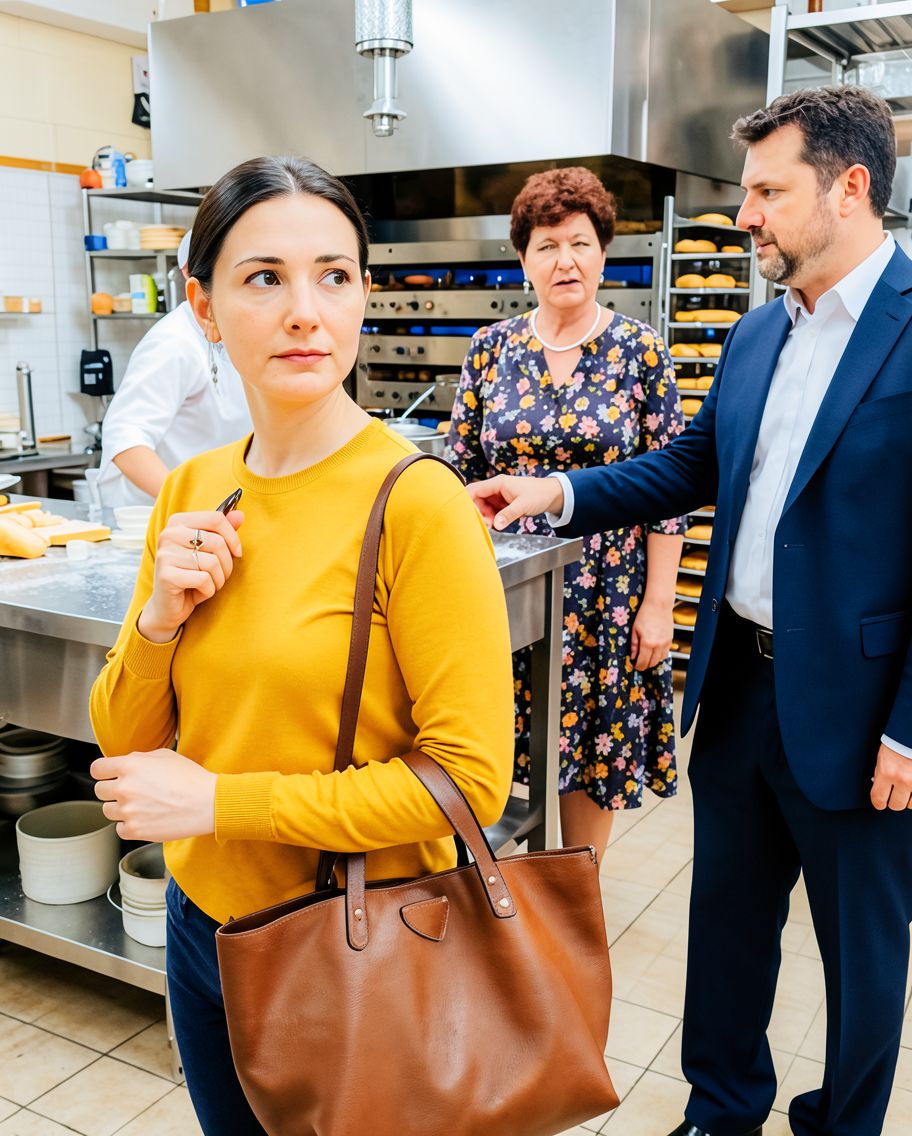
PART 4
The principal’s voice broke apart in my ear.
—Is Misha still with you?
—He is in my office. We did not release him, Mrs. Sokolova. The document looked official, but something was wrong.
I stood so fast my chair rolled into the wall.
—Lock the door. I’m coming.
At 8:16, Elena called the police while Pavel printed every page connected to the loan. My mother grabbed her coat with shaking hands.
—We’re going together.
—No, I said. —Stay with Dad. If they try anything with the apartment, call me immediately.
Outside, rain hammered the pavement. The wheat-shaped key tag bounced against my chest beneath my sweater as I ran to Elena’s car.
At 8:39, we reached the school. A police officer stood beside the entrance, and the principal held the suspicious document in both hands.
—The man left when I refused to release Misha, she said. —He told me you were hiding from your husband.
—Did he say his name?
—He called himself a courier.
The officer examined the paper.
—This is not a court order. It is a copied loan application with a fabricated stamp.
My knees nearly gave way.
Misha came through the office door wearing his green backpack. He ran into me and pressed his face against my coat.
—Mom, why did that man say Dad sent him?
I held him so tightly he squeaked.
—Because Dad made a terrible choice. But you are safe.
—Are we going home?
I looked at Elena.
—Yes, I said. —Just not to the old one.
At 9:25, Andrei began calling. First once. Then every few minutes.
Elena answered the fifth call.
—Mr. Sokolov, this is attorney Voronina. Do not contact my client or her child directly.
—She is my wife.
—That does not authorize you to forge her signature, obtain a loan with her identity, or send a stranger to collect her son.
There was a long pause.
—You don’t understand what happened, Andrei said.
—We understand your own words very well.
Elena played the bakery recording over the phone.
Andrei heard himself say, Once she signs, the buyer pays me directly. She’ll never understand the paperwork.
Then he heard his mother laughing.
For several seconds, nobody spoke.
—Turn it off, he whispered.
—You said it yourself, Elena replied.
—That was taken out of context.
—The context is eleven minutes long. The rest is worse.
I listened from the back seat, my hand wrapped around Misha’s small fingers. Hearing Andrei’s voice from the speaker made something inside me detach. For years, I had softened his words for him. I had explained his anger, his absences, his sudden contempt.
Now I heard what he had actually said.
He had never been confused.
He had been certain I would keep rescuing him.
At noon, the bank froze the loan after Elena sent the forensic report. The buyer withdrew from the sale. North River Holdings agreed to testify rather than become involved in a fraud investigation.
At 1:40, Andrei’s lawyer called Elena.
—My client wants to negotiate, he said.
—He can negotiate through the court.
—He is willing to return the bakery.
—The bakery was never his to return.
—He wants access to the accounts.
—Denied.
—He wants to see his son.
Elena glanced at me.
—That will be decided separately, after the attempted unauthorized removal from school is investigated.
The lawyer sighed.
—Mrs. Sokolova, you could lose everything if this becomes public.
—She has already lost a husband, Elena said. —She is not losing the truth to protect him.
At 3:15, police searched the bakery office. They found my red recipe notebook inside Andrei’s locked desk, along with a flash drive containing scans of my identity card and a draft agreement transferring the business to him for one dollar.
Valentina called while the search was happening.
—Natalia, you are destroying my son.
—No. He did that himself.
—He loves you.
I looked at Misha, who was drawing at the kitchen table in my parents’ apartment.
—Love does not send a stranger to a school with a fake order.
—You will regret this.
—Maybe. But I will not teach my son that fear is the price of keeping a family together.
She began to cry.
For the first time, I did not comfort her.
Three weeks later, the court confirmed that I was the sole owner of the bakery. The original capital agreement, bank receipt, registration, supplier contracts, and audio recording made the truth impossible to bury.
Andrei was charged with fraud, identity theft, and unlawful use of personal information. Valentina received her own charges for participating in the forged transfers. The bank released my parents’ apartment from the false guarantee.
The judge did not raise her voice when she read the decision.
That made it feel heavier.
The bakery reopened under a new name: Fourth Grain, after the tiny wheat-shaped key tag stamped 04 that had started everything.
I kept the old sign in a storage room. Not because I missed the past, but because I wanted to remember that I had built something before anyone gave me permission to believe in it.
Misha helped me paint the new window lettering on a Saturday morning. He got white paint on his nose and refused to wipe it off.
—Does this mean you’re the boss now? he asked.
—I was always the boss of the oven.
—No. I mean the real boss.
I crouched beside him.
—The real boss is the person who stays when everything becomes difficult.
He considered that while pressing a floury handprint onto the glass.
—Then you’re the real boss.
I laughed, and the sound surprised me. It had been months since laughter came without fear hiding behind it.
By spring, I hired two bakers and a bookkeeper. I stopped answering messages after midnight. I learned to drink coffee while it was still hot. I took the tram home through streets I had once crossed only to buy flour, and I began noticing the city again—the red awnings, the wet pavement, the old man who played a wooden flute near the station.
Every Thursday, Misha brought home a drawing from school. In the first one, he had drawn our bakery as a crooked yellow square with smoke coming from the chimney. In the second, he added three people behind the counter: him, me, and my mother.
There was no fourth figure.
I did not ask him why.
Seven months after the locks were changed, Andrei sent a message through his lawyer.
He wrote that he had made mistakes. He wrote that he missed our home. He wrote that the bakery had never meant more to him than I did.
At the bottom, he asked me to meet him once, without attorneys, so we could remember who we used to be.
I read the message in the new office while the morning dough rested beneath a clean linen cloth. Outside, the first snow of the year drifted past the window.
Misha was doing his homework at the counter.
—Are you going to answer Dad? he asked.
—Yes.
—What will you say?
I looked at the little wheat-shaped key tag lying beside my ledger. The brass had darkened where my fingers had touched it for years, but the number 04 was still visible.
I typed one sentence.
I hope you find a way to live with the choices you made, but I will not return to the life they destroyed.
Then I sent it.
No anger.
No explanation.
No open door disguised as kindness.
The next morning, Andrei came to the bakery anyway. He stood outside beneath the new sign, thinner than I remembered, his hands buried in the pockets of a borrowed coat.
I saw him through the glass.
He lifted one hand.
Misha looked at me.
—Do you want me to let him in?
I watched Andrei stare at the warm windows, at the customers laughing over coffee, at the woman who now managed the counter he had once claimed as his own.
—No, I said gently. —Some doors are not meant to be opened twice.
Andrei lowered his hand.
He walked away through the snow.
I turned back to the ovens. The dough had risen perfectly, soft and alive beneath the cloth. I took the wheat-shaped key tag from my desk and fastened it to the hook beside the new front door, where the morning light caught the stamped number.
This time, the key opened only for me.
Missed the beginning?
Related posts:
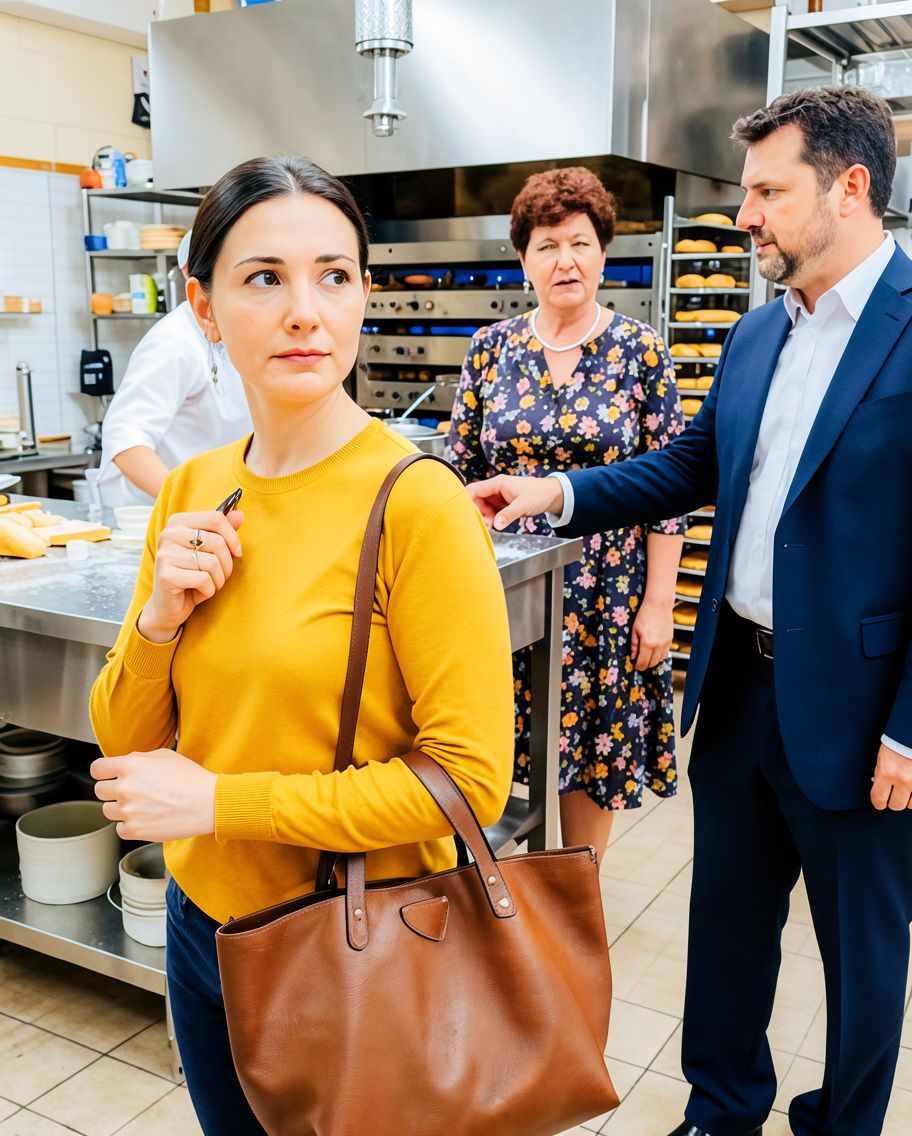 My husband and mother-in-law threw me out of the bakery I built, but one quiet question made his smile disappear
 Llegué al funeral de mi exmarido con cinco niños y, al verlos, su amante dejó de sonreír
 I stopped funding my husband’s family after a declined card, and the color drained from his face
 I was ordered to feed the city’s most feared man, but when he tasted my burnt garlic, his expression suddenly changed
 PARTE 4 — Mi suegra abofeteó a mi hijo por un pastelito, pero cuando mi esposo tomó el micrófono, el novio dejó de sonreír
I brought my daughter to the Cole mansion for one dinner, but when Julian saw her sleeve, his polite smile vanished
PARTE 4 — Mi suegra abofeteó a mi hijo por un pastelito, pero cuando mi esposo tomó el micrófono, el novio dejó de sonreír
I brought my daughter to the Cole mansion for one dinner, but when Julian saw her sleeve, his polite smile vanished