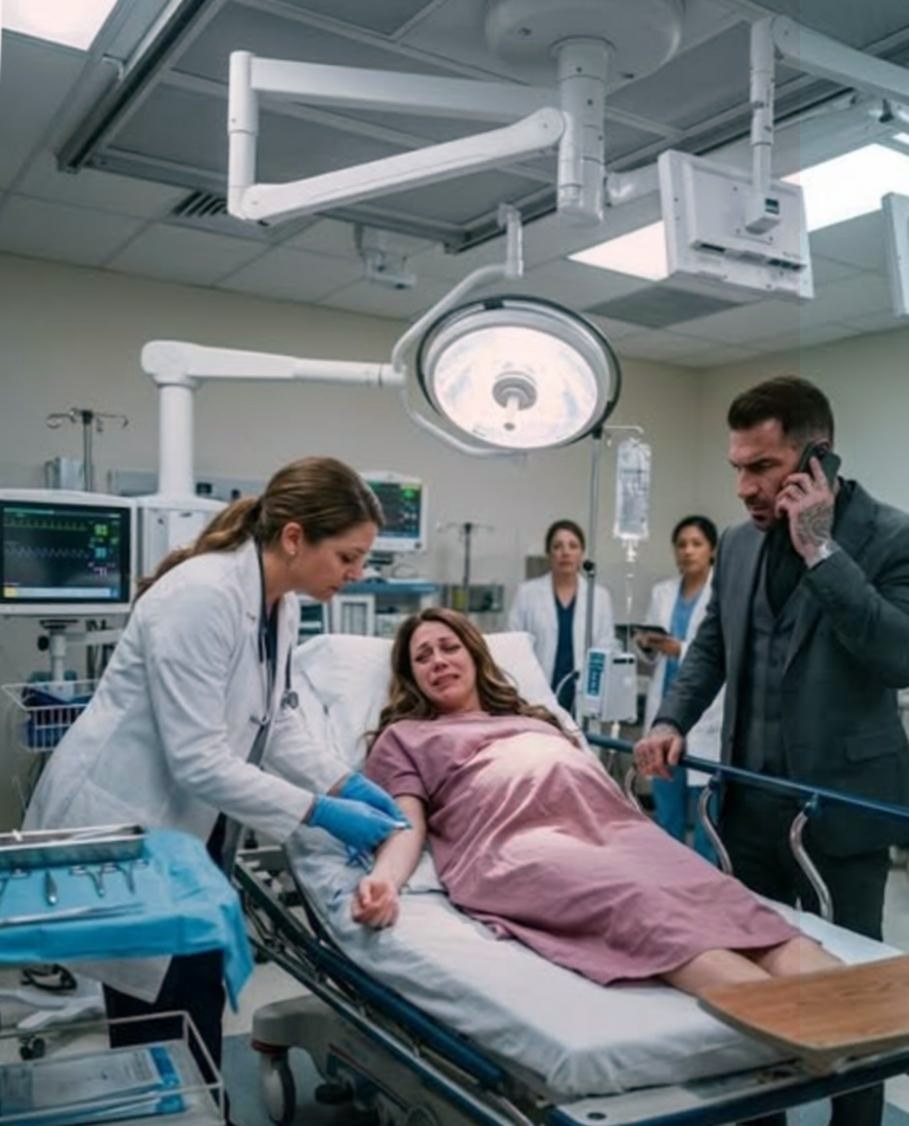


Nora’s words were still hanging in the room when all the hospital doors locked.
Red lights came on in the corridor.
“No one goes in and no one goes out,” the officer shouted.
But I heard only one thing — the sound of the alarm coming from the incubator room.
“My child is there!”
“Mrs. Moretti, stay in bed,” Doctor Okaфор told me.
“No.”
My legs were trembling, but I leaned against the wall and moved forward.
Marco was already standing in front of the incubator. He was holding a small girl in his arms. The nurse had taken her to a safe room while two police officers checked the underground parking lot.
“He was not here,” Marco said. “The car was found empty.”
At that moment my phone rang.
Dante’s name appeared on the screen.
“Don’t answer,” Nora said.
I answered anyway.
“Lucia, listen to me,” his voice was fast and tense. “Everything is a misunderstanding. You are in danger and I am trying to protect you.”
“Where is my child?”
“She is safe.”
“Where?”
The line fell silent.
“You do not understand whom you are fighting,” Dante continued. “If you give the recording to the police, you will lose both of them.”

“You are already losing both of them.”
For the first time his voice changed.
“Lucia, I am your husband.”
“No. You are the man who left a ring on the edge of my bed while I was losing blood.”
“Elena was sick.”
“I was the one who was bleeding.”
The line went dead.
Ten minutes later a second call came in. This time it was Dante’s lawyer.
“Mrs. Moretti, I advise you not to use the recording. My client can explain everything.”
“Then explain why he said in his own voice that he needed my death.”
The lawyer remained silent.
“This recording may have been obtained illegally.”
“And my blood? Was it obtained illegally too?”
He said nothing more.
That same evening the police searched one of Dante’s warehouses. There they found documents, medicine vials, and a camera that filmed the kitchen of our house.
Two days later Dante was arrested on the outskirts of the city. Elena was with him in the car.
During the arrest both tried to blame each other.
“He thought of everything!” Elena was shouting.
“You told me the child would be yours!” Dante answered.
The police recorded their conversation.
They did not know that the microphone was already on.

One week before the trial I heard my husband’s words for the first time through someone else’s mouth. The investigator turned on the recording. Dante’s voice sounded in the room:
“When the blood finally stops, everything will be over.”
I listened to these words in bed, while rain fell by the window.
Dante was sitting in the courtroom. He lowered his head.
Probably for the first time he realized that the voice was his.
His lawyer requested to withdraw from the case.
“It is impossible to cooperate with my client,” he said. “He denies all the evidence, despite the fact that his own confessions exist.”
Dante turned toward me.
“Lucia, help me.”
I looked at him.
“You chose this life yourself.”
The court sentenced him to a long prison term. Elena made an agreement and admitted part of the crime. Dante’s assets were frozen, and the foundation was transferred to the state.
I took nothing from him.
Neither the house.
Nor the car.
Nor the money for which he had planned my death.
I kept only the cost of my child’s treatment. This money had been obtained in my own name and not thanks to him.
After the trial I entered the house for the first time.
The kitchen was as I had found it that night. There were no traces of blood on the floor anymore, but the small white cup thrown beside the wall was still there. It was precisely in that cup that Dante had poured my medicine.

In his office I found an empty shelf.
Our wedding photograph had stood there. Dante had taken it, but left the frame.
Behind the photograph was attached a copy of the small angel from my ring. My mother had had it made for me before the wedding, in case I ever lost the real one.
I took the copy in my hand and looked at it for a long time.
Without Dante, the air in the house became light for the first time.
Three months later I rented a small apartment on the other side of the city.
In the mornings my daughter, Sofia, still slept in a special bed. Her breathing was weak, but even. Every time she opened her eyes, she moved her fingers in the air, as if searching for something.
“I am here,” I told her. “Mommy is here.”
Six months later Sofia smiled for the first time.
That smile turned out to be stronger than any court sentence.
I started working at the medical center. I spoke with patients’ family members, organized documents, and helped women not to be afraid of their own voices before doctors.
Every Thursday I walked Sofia in the park. She wore a small yellow hat with clouds drawn on its surface. And I always had the copy of the small angel in my bag.
Not because I was afraid of the past.
Because I remembered how dearly losing myself had cost me.
One morning, almost a year later, my phone rang again.
It was an unknown number.
“Lucia,” Dante said.
The old firmness was no longer in his voice.
“I only want five minutes.”
“No.”

“I want to see Sofia.”
“The court decision is in force. You will not see her.”
“I have changed.”
I looked at the snow through the window. It was the first snow. Sofia was sitting on the floor and drawing with colored pencils.
“You may really have changed,” I told him. “But my life should no longer pay for this change.”
“Please.”
“Do not call me again.”
I ended the call.
Sofia brought me a drawing.
There were three figures on it: a little girl, a woman, and above them a large sun. The woman held a golden dot in her hand.
“What is this?” I asked.
“An angel,” she told me.
A small box stood on the windowsill. Inside I kept my mother’s gift — the copy of the angel that I had carried for years.
I placed it beside Sofia’s drawing.
Then I opened the window.
Cold air entered the room, and snow descended silently over the city where I had once thought that I could not live without Dante’s shadow.
But there was no shadow anymore.
Only morning.
And my child’s voice.
“Mom, I am here.”
Missed the beginning?
Related posts:
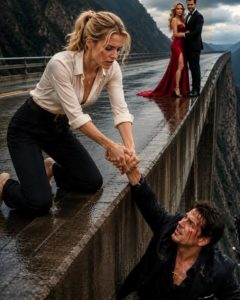 The Mafia Boss’s Car Fell into the Abyss, and I Tried to Save Him—but His Guards Pulled Out Their Guns
 At the Wedding They Mocked My Autistic Son, and I Stopped the Music — Dante Moretti’s Face Suddenly Turned Pale
 She Tried to Laugh at My Surgical Fee, but After One Phrase the Mafia Boss’s Smile Vanished from His Face
 Part 4 — I Agreed to Carry the Mafia Boss’s Son to Save My Father’s Life, but After the Birth His Plea Took My Breath Away
 When Her Bleeding Pregnant Wife Was Left Alone in the Hospital, Her Husband’s Last Gesture Left Even the Nurse Frozen
 The son left his granddaughter alone in the storm, but when I learned the real reason for the cruise, the smile disappeared from his face