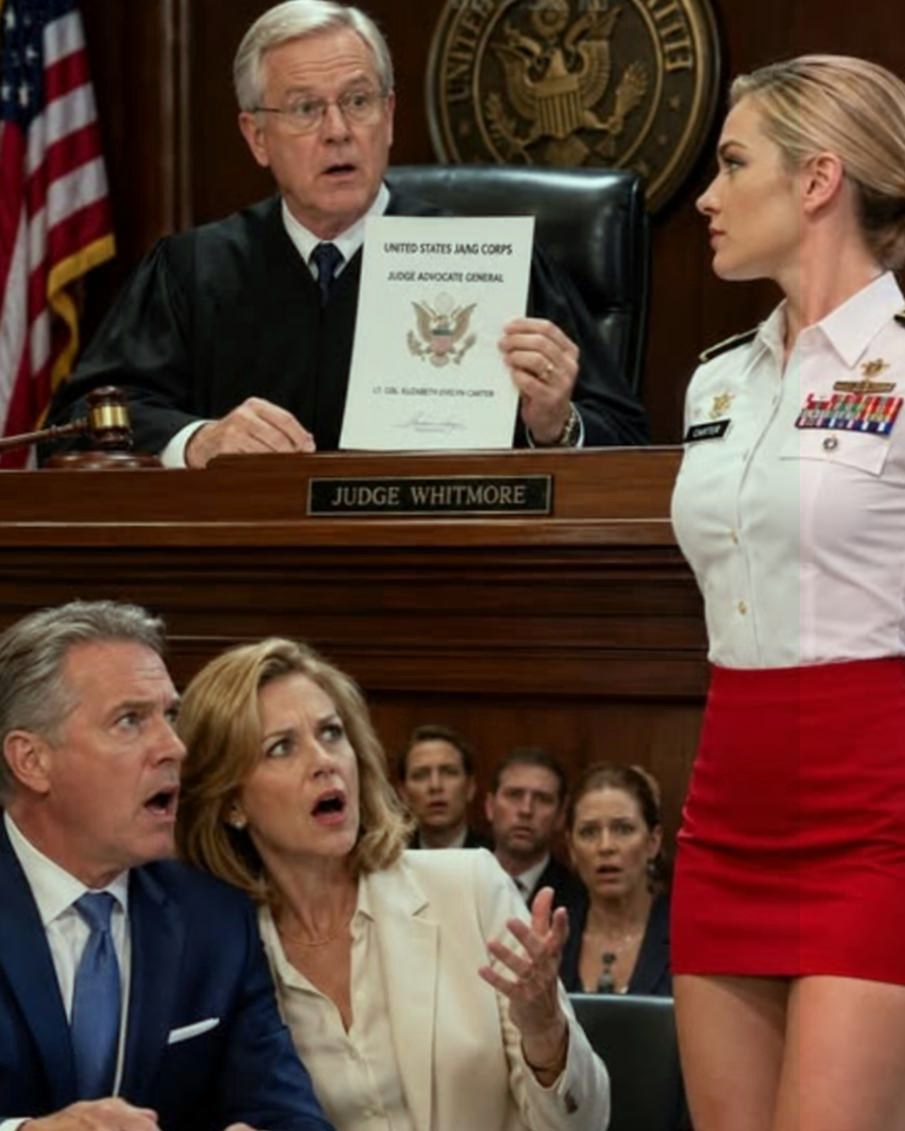

The notary’s last words were still in my ears when the call ended.
People were moving about in the courthouse corridor. Someone called my mother, someone grabbed the lawyer by the arm, while my father stood against the wall and seemed to be trying to hide his own body.
“Ana,” he said to me, “listen to me for at least one minute.”
“I listened to you my whole life, Father.”
“All of this was different.”
“No. Now it is simply being heard aloud.”
The lawyer pressed the folder against his chest.
“I am no longer participating in this case,” he said. “You concealed important information from me.”
My mother looked at him.
“We will pay you.”
“You have already paid me. Now I have to decide how to explain to the investigation why I submitted documents to the court whose authenticity I had not checked.”
He left.
My mother sat down against the wall. The black heel broke at her feet, and a small, sharp sound rang out on the floor.
And for the first time I felt not victory, but exhaustion.


I had worked in the military legal service for ten years and had helped countless people take responsibility for their own words. But in my family I had always avoided this rule. Probably because I hoped that one day my parents would at least acknowledge themselves.
That same evening I went to the notary.
Her office was on the second floor of an old theater. Dusty green curtains hung by the window, and on the table stood a glass bowl filled with lemon candies.
Evelyn’s notary, Mrs. Lomidze, was waiting for me silently.
“Your grandmother wanted me to give this to you only when your parents challenged her will.”
“Did she know they would do that?”
“She knew, because in recent years they asked her for money every month. Once they even tried to sell the apartment without telling you anything.”
She opened a wooden box. Inside were tax statements, bank transfers, and a small digital recorder.
“Everything is written here,” she told me. “Evelyn recorded the conversations herself.”

We turned on the recorder.
First my grandmother’s voice sounded, slightly hoarse, but firm.
“I have no more money for your debts to hasten my death.”
Then my mother’s voice.
“Ana does not need anything anyway. She receives a military salary.”
My father intervened.
“If you do not change the will, we will prove in court that you can no longer think.”
The recording continued.
My grandmother did not cry. She said only one word.
“Leave.”
I gripped the edge of the table. I felt coldness in my fingers.
“All of this will be handed over to the police,” Mrs. Lomidze told me. “Your parents face prosecution for financial fraud and forged documents.”

“I do not want them to be punished.”
“That is no longer up to you.”
At exactly that moment a message arrived on my phone. It was from the court. Judge Whitmore had officially confirmed that my parents’ lawsuit was unfounded, but the case materials had already been transferred to the prosecutor’s office.
The second message turned out to be from my mother.
“You can stop everything. We are only family.”
I stared at the screen for a long time.
Then I wrote back.
“Family is not someone who seeks your truth only when they need money.”

The next morning my father was waiting at my apartment. In his hand he held the old brown hat that he wore in childhood only on rainy days.
“Five minutes,” he asked me.
We stood in front of the elevator. The wall lamp flickered.
“Why did you hide your job from me?” he asked.
“Because I knew how you would act. You would turn even my achievement into your own benefit.”
“I am your father.”
“That is a title, not a right.”
He lowered his eyes.
“I did not want Grandmother’s money. I was in debt.”
“You still demanded it.”
“I thought that if you helped me even once, everything would be fixed.”
“You did not want to fix things; you wanted to break my boundaries.”

My father’s eyes grew wet. His voice sounded for the first time like the voice of a small man whom no one obeys anymore.
“Maybe you will forgive me someday?”
“Maybe. But that does not mean I will let you into my life again.”
He nodded and left.
A week later I received a notification from the court: the case had officially been closed in my favor, while the case concerning the forged documents continued as a separate investigation. My parents were arrested not at my request, but by their own signatures and words.
The hardest moment came when the investigator played their recording in the room.
“Ana does not deserve anything anyway.”
My mother’s voice was clearly heard.
“She was always problematic.”
My father’s voice followed.
They listened to their own words and could no longer say that someone else had distorted them. My mother covered her ears with her hands. My father froze in the chair.


I did not look at them.
My old room in my parents’ house was almost empty. They had taken down the only picture of me from school from the wall, but the small ivory-colored card that my grandmother had given me years ago was still on the bookshelf.
I picked up the picture.
On the back it said: “When everyone forgets you, believe yourself anyway.”
I put the card in my pocket and left the room.
Three months later I bought a small apartment in Tbilisi. I transferred part of the remaining money to a help fund in my grandmother’s name, which helped the children of military servicemen continue their education.
I changed my job as well. Now I taught young lawyers how to protect people who had difficulty using their own voice.
Every morning I drank coffee by the window. The city slowly woke up. The neighbor’s boy, Luka, knocked on the door and showed me his drawings. Once he drew a woman with a black folder, and behind her was a large sun.
“This is you,” he told me.
“Why do I have such a big sun?”
“Because you are no longer hiding.”

On the first snow my mother wrote to me again.
“Can we start over?”
I deleted her message. I felt neither anger nor joy. Only peace.
Sometimes forgiveness means not returning, but calmly closing the door.
I put my grandmother’s ivory-colored card on my desk. Its corner was slightly worn, but the words were still clearly visible.
That day I understood for the first time that my true identity was neither a rank, nor money, nor the fact that the judge recognized me.
I was the woman who finally believed her own voice.
And my grandmother’s card quietly shone in the window light.
Missed the beginning?
Related posts:
 My father promised my house and car to my sister as an inheritance, but the morning call immediately erased his smile
 At the Christmas Table, My Mother Started Humiliating My Sister, but After My Answer the Glass Froze in Vanessa’s Hand
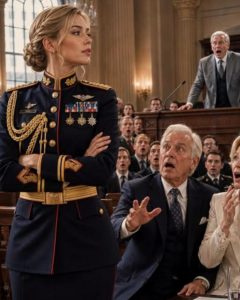 Because of My Grandmother’s Property, My Parents Took Me to Court, but the Judge Read One Sheet and the Smile Disappeared from My Mother’s Face
 After My Husband’s and Daughter’s Funeral, My Mother Asked Me for the Insurance Money, but the Bag on My Table Suddenly Erased Her Smile
 Mother gave my brother my grandmother’s money and held out a paper for me to sign — but her smile disappeared when the lawyer arrived
 A Flat Tire Stopped Me at a Desert Diner, but When the Waitress Heard My Name, the Color Drained from Her Face