
Part 4
Giorgi was still staring at the phone when the connection dropped.
— “What did she say?” I asked.
He couldn’t answer me.
Dr. Maka locked the doors and called security. The Child Protective Services officer stood in the corridor, as if he still possessed authority under his order, but now his hands were hidden in his pockets.
— “No one is taking this child,” Maka said, “until both mother and father are officially questioned.”
— “You don’t have the right to do this,” the man snapped.
— “And you no longer have the right to issue orders here.”
Giorgi brought the phone back to his ear. Ana’s number was switched off.
He immediately dialed someone else.
— “Davit, come to the hospital. Right now. Bring every document concerning Levan Kavtaradze. No, I don’t care if it’s nighttime. If that recording contains his voice, I need to know today what else he was hiding.”
His attorney, Davit, arrived forty minutes later. He was a tall, lean man, with rain dripping from his umbrella onto the floor.
He opened his briefcase and looked at several sheets of paper.
— “Giorgi, there is one thing you must know. I can no longer handle this case.”
Giorgi stared at him.
— “You’re telling me this now?”
— “Levan Kavtaradze is my firm’s biggest client.”
— “Is that why you ‘protected’ me from him for years?”
Davit lowered his eyes.
— “I genuinely believed the child had died. The documents filed against you were signed.”
— “With my signature?”
— “Under your name.”
Giorgi slammed his fist on the desk. The metal tray rattled.
— “So all these years I was mourning a child who was alive, and you’re only telling me this now?”
Davit had no answer to offer.
I placed the voice recorder on the desk.
— “There must be more to this.”
Davit looked at the device.
— “There is. A few weeks ago, Ana secretly brought me a memory card. She told me to hand it over to the police if anything happened to her. I couldn’t do it.”
— “Why?” I asked.
— “Because I was afraid.”
That was the first honest word I heard that night.
The memory card contained three videos. In the first, Levan Kavtaradze was speaking with a hospital employee. In the second, he was signing a false statement claiming that Giorgi was relinquishing his rights to the child. In the third, he said:
“If that girl stays with Giorgi, my family’s reputation will be ruined. You will take the mother away and register the baby as fatherless.”
Giorgi replayed the video several times.
Then something strange happened.
He listened to his own voice.
Embedded in the video was a fabricated telephone recording where Giorgi supposedly said: “I don’t want the child. Let the mother deal with her.”
Giorgi stared at the screen, slowly realizing how someone had pieced his voice together fragment by fragment.
— “Those are my words,” he said.
— “But you never said them like that,” I replied.
— “I know. That’s what makes it so terrifying. It’s my voice. It’s my breath. But I never said those words.”
His face grew tense. For the very first time, he heard himself the way others were meant to hear him.
At four o’clock in the morning, the police arrived. The videos, audio recording, and genetic report were officially logged into evidence. The uniformed officers stepped aside; their transfer order was revoked.
Yet Ana was still nowhere to be found.
Giorgi headed to the old train station, and I went with him. Rain outside turned the asphalt into small rivers. Near the back wall of the station, they found Ana’s bag. Inside was only a phone, a copy of the baby’s birth certificate, and a tiny white baby sock.
The sock was tiny. So small that Giorgi rested it in the palm of his hand.
— “She was here,” he said.
Just then, the phone rang.
It was Levan Kavtaradze.
— “If you want to see Ana, come alone,” he said. “Otherwise, you’ll only see Lili in photographs.”
Giorgi closed his eyes.
Standing beside him, I realized for the first time that this was no longer just about proving the truth. A child’s mother’s life was in danger.
— “Giorgi, don’t go alone,” I told him.
He hung up the phone and turned to me.
— “My whole life, I walked alone.”
— “This time, you don’t have to.”
The police traced the call location. Davit verified old records. Levan’s car was found on the outskirts of the city, near an abandoned warehouse. Ana was found inside a small room, her hands bound. Levan attempted to flee, but officers apprehended him on the road.
Ana was brought to the hospital at seven in the morning. Bruises marked her face, and her hair stuck to her skin from the rain.
Seeing her, Giorgi took a step forward, then froze.
— “Lili is alive,” Ana said.
— “I know.”
— “I didn’t abandon her.”
— “I know now.”
Ana burst into tears.
— “Tell me you’ll believe me just once.”
Giorgi nodded.
— “I believe you. But that doesn’t mean everything gets fixed right away.”
Ana leaned against the wall.
— “I know.”
It was their first peaceful conversation in years.
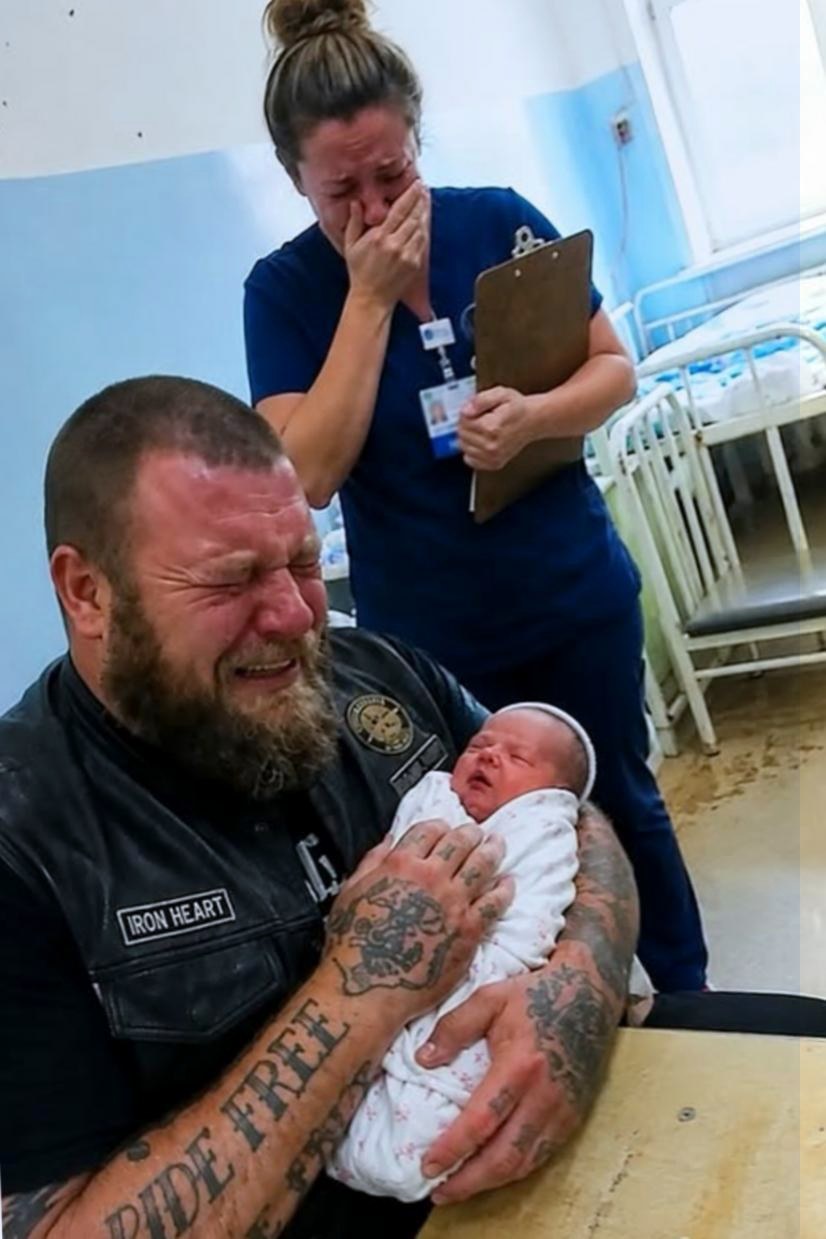
Lili remained in intensive care for another six weeks. Giorgi came every single day—this time officially, as her father. He held the baby carefully, but his hands no longer trembled. It was as if his body was slowly learning to accept a happiness he had been terrified to believe in.
Levan denied all charges, claiming the recordings were edited and that Ana was slandering him. But the videos, financial transfers, and forged signatures aligned seamlessly against him.
The heaviest moment in court came when the prosecutor played the audio recording.
Giorgi sat in the courtroom.
Levan sat behind him.
First, Levan’s cold voice echoed through the room, followed by the fabricated recording where Giorgi supposedly relinquished his daughter.
Giorgi lowered his head.
The entire courtroom fell silent.
Levan looked at him for the very first time.
— “You really didn’t want that child, did you?” he asked softly.
Giorgi turned around slowly.
— “Now I know what my voice sounds like when you control it.”
Color drained from Levan’s face.
— “I saved you.”
— “No. You stole my grief.”
That was all Giorgi had to say to him.
Levan was found guilty of child endangerment, document forgery, and extortion. The court formally confirmed full legal parental rights for both Ana and Giorgi. The Child Protective Services officer was suspended after investigation proved he had acted on forged documents and deliberately ignored warnings.
Giorgi walked out of the courthouse quietly.
He wasn’t smiling.
He didn’t look like a victor either.
He simply stood on the steps for a long time, looking up at the sky.
— “What will you do now?” I asked him.
— “First?” He smiled. “I’m taking my daughter home.”
Two months later, Lili was living in a small apartment where morning sunlight struck the window at exactly eight o’clock. Giorgi no longer revved his motorcycle in front of the building entrance. He switched off the engine ahead of time so he wouldn’t wake the baby.
A single photo hung on his bedroom wall: Lili lying in the incubator, with Giorgi’s massive hand resting beside her.
Ana was slowly starting her life over. She needed therapy to process the trauma. Sometimes she would wake up from nightmares, unable to draw breath. Giorgi would pour her a glass of water in the kitchen, ask no questions, and sit beside her in silence.
They didn’t try to get back together as a couple.
They simply became parents.
That was enough.
I visited them once a week. Lili was already taking a few steps. Every time I saw them, I remembered the giant sitting by the glass wall, terrified to touch that tiny body.
One evening, Giorgi stood on the balcony holding the small knitted cap with the yellow pom-pom—the one Lili had worn in the ICU.
— “Why do you keep that?” I asked.
— “Because that night was the first time I realized I could still be needed by someone.”
A few weeks later, Giorgi changed jobs. He opened a small motorcycle repair shop on the edge of town. Children’s drawings hung on the walls, and wooden toys rested on the floor. Lili would sometimes visit, curiously inspecting the dusty tools.
During the first snowfall, she drew three people on a small sheet of paper. One was big, one was small, and the third held a yellow ball in her hand.
— “Who is this?” Giorgi asked her.
— “You, me, and Nino,” Lili said.
Giorgi laughed softly.
— “Why am I drawn so big?”
— “Because you protected me back then.”
Lili was only four years old, but those words kept Giorgi silent for a long time.
A year later, a letter arrived from Levan, forwarded through his lawyer. He wrote that he was remorseful, that he wanted to see his granddaughter, and that he was ready to explain everything.
Giorgi read the letter.
Then he folded it.
— “Aren’t you going to reply?” I asked.
— “No.”
— “Why?”
He looked at Lili playing by the window.
— “Because I might choose to forgive him someday, but that doesn’t mean I will ever allow him back into our lives.”
He tossed the letter into the trash bin.
Then he picked up Lili’s knitted cap and hung it back on the shelf.
That same evening, the little girl fell asleep in her father’s lap. Giorgi lifted her carefully, pressed her to his chest, and sat down in the armchair.
Just like that very first night.
The only difference was that now there was no beeping monitor in the room, no glass wall between them, and no one waiting for Giorgi to lose his child ever again.
I paused at the doorway.
He looked down at the child, then at the name tattooed on his wrist:
“Lili.”
For years, that tattoo had felt like a tombstone to him.
Now, tiny fingers were touching those exact words.
Giorgi closed his eyes and drew a full, peaceful breath for the very first time.
Lili was alive.
And this time, she wasn’t going anywhere.
Missed the beginning?
Related posts:
 Every day, I saw a huge motorcyclist waiting for an abandoned infant—but a single question from me would make the smile vanish from his face.
 My wife saw something in the photo that I hadn’t noticed—and her voice suddenly cut off on the phone.
 Grandma accused me of swapping the newborns, but the second genetic test result wiped the smile off her face in an instant.
 My husband gave my summer plans to his mother, but his expression changed when he saw my calm smile.
 Part 4 — Every morning, I used to buy sixty kilograms of meat for the old man, but when the gate was opened, the policeman turned pale.
 My husband’s ex publicly humiliated me, but when the police chief greeted me, Vanessa’s smile vanished.





