
Part 1
My wife called me, crying as if our home had already burned down, even though everything seemed normal that morning.
I was fifty-six years old and had spent thirty years working as a train driver on the railway. My hands knew every lever individually, and my eyes could spot the smallest crack on a rail. From the train cab, I could sometimes see the red signal even before it lit up. Yet in my own home, I proved to be so blind that the heaviest sign was hidden on my daughter’s sleeve.
I had lived with Olga for thirty-one years. She was a cook in a school cafeteria and always brought home the scent of baked goods, cinnamon, and warm milk. Polina was our late-born child. Olga gave birth to her at thirty-eight, when doctors warned her that the pregnancy would be dangerous. Olga simply said:
— “This is my child. I already love her.”
Polina was now nineteen years old and in her first year at the university. When she came home on weekends, the apartment instantly came alive. Music echoed from her room, she talked to her friends on video calls, and she would walk into the kitchen to steal my coffee.
In October, she came for a ten-day stay. I took time off work, and Olga filled the fridge to the brim, but Polina seemed to have returned to an unfamiliar place rather than home. She kept her door locked. She ate little. She wouldn’t look us in the eyes.
— “Pol, are you alright?” Olga asked her on the third day over lunch.
— “I’m just tired, Mom.”
— “You’re nineteen. You sleep for ten hours and you’re still tired?”
Polina set her fork down on the plate.
— “I don’t want to talk about it.”
That was when I looked at her hands for the first time. At home, she always wore t-shirts, but now she wore long sleeves, even though the heating was turned up too high. Olga suggested she had probably caught a cold. I nodded along. The vigilance I had learned on the trains failed me with my own child.
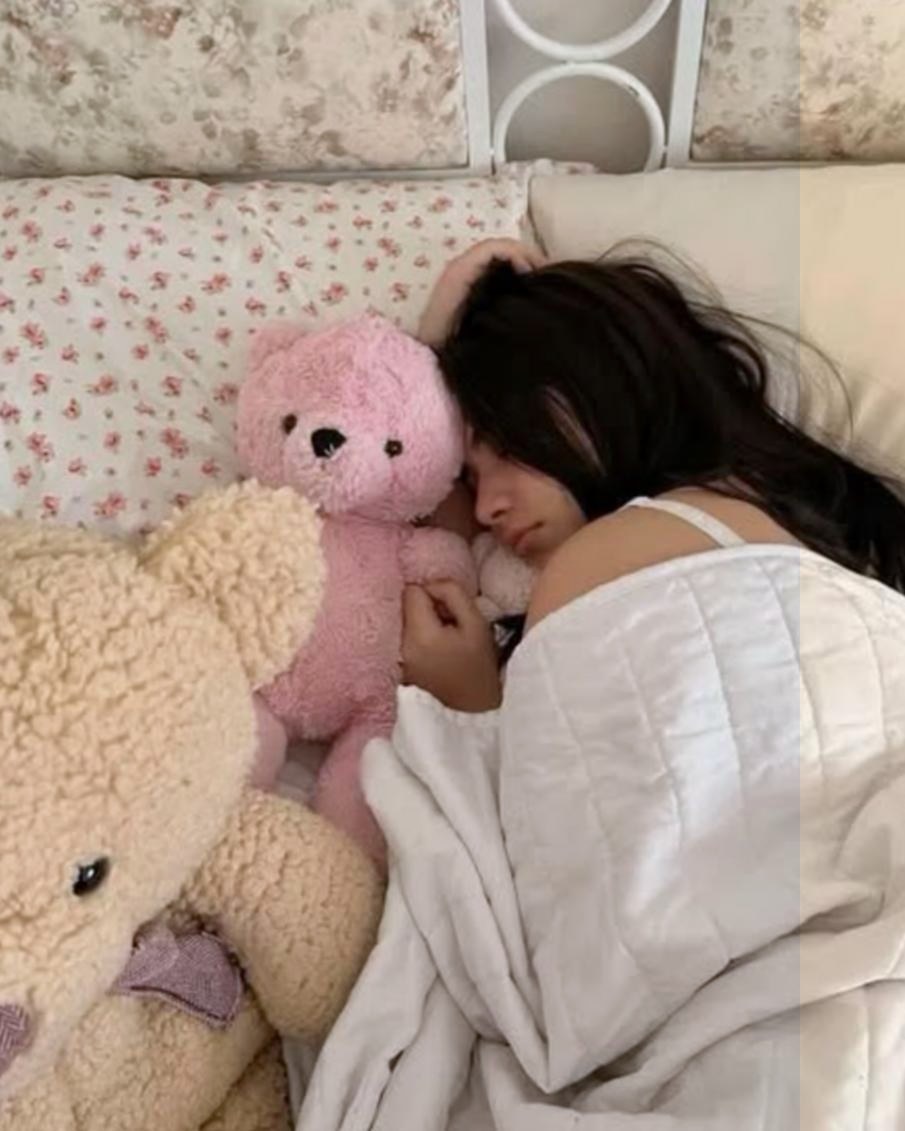
In the morning, at around eight o’clock, I went into her room to wake her up. Pale light filtering through the curtains fell across the floor. She lay curled up, holding her own shoulders with her hands, as if defending herself from someone even in her sleep. Beside her lay a childhood toy—a small wooden horse, to whose tail I had attached a red metal bell years ago. When Polina was five years old, she would ride that horse through the whole house, and I would follow the chiming of the bell.
Smiling, I took a photo.
“She’s sleeping like a little girl,” I texted Olga, sending her the picture.
The coffee maker was humming in the kitchen when the phone rang. It was Olga. I could hear her breathing so heavily, as if she had been running.
— “Giorgi, open the photo.”
— “I opened it. What happened?”
— “The sleeve… the right sleeve. Zoom in, please.”
— “Olga, don’t scare me.”
— “Zoom in!”
My fingers trembled. I tapped the photo. First Polina’s face blurred, then the pillow, the wooden horse, and her lowered hand appeared. The sleeve had shifted slightly at the wrist. There, above the skin, something dark and purple was visible.
The air in the house suddenly turned ice-cold.
— “What is that?” I asked.
Olga replied through tears:
— “I don’t know… but Polina told me yesterday that we shouldn’t call anyone.”
I rushed toward the room. The door was locked from the inside.
— “Polina! Open the door!”
Sounds of movement came from inside, followed by the creaking of mattress springs.
— “Dad, please, don’t come in.”
— “Open the door. Right now.”
Olga came up behind me and squeezed my arm.
— “She doesn’t know you saw the photo yet.”
— “I already know you two are hiding something from me.”
A long silence settled behind the door. Then I heard the turning of the lock. Polina opened the door just a few inches. Her face was pale.
— “If you come in, everything will change,” she said quietly.
— “That is precisely why I must come in.”
She shifted her gaze first to me, then to her mother. Finally, she opened the door wider and looked down at the phone resting on the bed. A new message from an unknown number was flashing on the screen.
Polina picked up the phone, but I could already see the fear written across her face.
— “Dad, please, before you read this, there’s one thing you need to know…”
At that moment, another message arrived on the phone, and Polina reached out toward the screen…
Part 2
Polina’s fingers reached for the screen, but I reacted faster, catching her wrist gently yet firmly.
— “You talk to us first,” I told her.
— “Dad, no.”
— “Who is texting you?”
— “Nobody.”
— “‘Nobody’ doesn’t terrify a person like this.”
Olga closed the door and stepped into the room. I brushed against a small ceramic bird standing on the window sill as I backed up. We had owned it since her childhood, and every time it made the same high-pitched sound. That morning, that sound felt unnervingly clear.
Polina clutched the phone to her chest.
— “If I tell you, he can destroy everything.”
— “Destroy what?” I asked.
— “You. Mom. My studies. My future.”
Olga lowered her eyes. That was when I realized this wasn’t the first time she was hearing this.
— “You knew?” I asked.
— “Giorgi…”
— “Did you know?”
Olga bit her lip and nodded.
— “I’ve known for two weeks.”
Those words fell heavier into the room than any confession.
— “Our daughter has been walking around like this for two weeks and I knew nothing?”
— “She begged me not to tell you.”
— “You’re her mother.”
— “You’re her father, but right now you’re shouting and still not helping!”
Her voice cut through me for the first time. Polina sat down on the bed and clutched the wooden horse. The small red metal bell chimed quietly between her fingers.
— “This is all my fault,” she said.
— “No,” I said immediately.
— “I believed I was special to him. And then… then I didn’t know how to escape.”
Olga sat down beside her.
— “Pol, tell Dad only as much as you can.”
— “It’s Davit,” Polina said.
I knew that name. Davit Makharadze was her classmate at the university, the dean’s son—a boy whose father often drove him in a car and about whom Polina had initially said was very arrogant.
— “What did Davit do?” I asked.
Polina pulled up her sleeve. A dark mark was visible on her wrist. It bore the shape of fingers. It wasn’t just one color—purple, brown, and yellowish at the edges.
My ears popped as if I were in a train carriage left behind at a station.
— “First he just grabbed my arm tightly,” Polina said. “Then he told me I was asking too many questions. In the end, he locked me in a room.”
— “Where?”
— “In the university’s old dormitory building. The cameras don’t work there.”
— “Did anyone see?”
— “His friend did. But he repeats everything to Davit.”
I clenched my teeth so hard my jaw ached.
— “We’re going to the police.”
Polina jumped up.
— “No!”
— “Why?”
— “Because he recorded a video. He told me if I report it, he’ll send it to everyone. To my classmates, to the lecturers, to you… to everyone.”
Olga burst into tears. And in that room, for the first time, I became aware of my own breathing.
— “Does he want money for that video?” I asked.
— “At first he wanted money. Then he demanded I write his assignments and bring him exam answers. When I refused, he hit me.”
— “What else?”
Polina looked away.
— “Last time, he told me he knew everything about my dad’s job. He said a single call would be enough to cause trouble for your employment.”
I had worked honorably on the railway for thirty years. Not for a single minute had I thought that some boy could use my fear to enslave my child.
— “Why didn’t you tell me right away?” I asked.
— “Because you solve everything with force. And I was afraid you would kill him.”
Her answer struck me as if I were seeing my own face in a mirror for the first time.
That same afternoon, Polina showed us an audio recording saved on her phone. The voice was raspy, but the words were crystal clear.
“If you tell your father, I’ll send the video first. Then I’ll call his boss. I will turn your family into ruins.”
At the end of the recording, something heavy fell. Then Polina’s muffled crying could be heard.
I gripped the armrest of the chair.
— “When was this recorded?”
— “Last night. Before I came home.”
— “Do you have anything else?”
Polina nodded and pulled a thin folder from the bottom drawer of the wardrobe. It looked plain on the outside, but dark stains showed at the corners.
— “Everything isn’t in here,” she said. “What matters most is at the university clinic. The doctor told me I should go there if I really decided to speak up.”
Just then, my phone rang. It was an unknown number.
— “I’ll answer,” Polina said.
— “No.”
The ringing stopped. Immediately, a text message arrived.
“If you want to make this public, come in front of the station tonight at eight. Alone. Otherwise, everyone sees that video tomorrow morning.”
I looked at the screen, then at Polina.
— “Don’t go,” Olga said.
— “I am going,” I replied.
Polina looked straight at me for the first time.
— “Dad, if you go there, he’ll know I told you everything.”
— “He already knows that we are no longer afraid of him.”
At six in the evening, I placed the folder in the car. Before I left the house, Polina slid a small memory card into my hand.
— “This is the last thing I have,” she told me. “But don’t listen to it yet.”
— “Why?”
— “Because if you listen to this, there will be no turning back.”
The wind was blowing outside the station. Announcements echoed over the platform as people came and went. It was five minutes to eight when a black car pulled up. Davit opened the door, and he wasn’t alone. Standing behind him was the university dean.
Davit smiled at me.
— “Mr. Giorgi, your daughter is very emotional. Perhaps you shouldn’t believe her version just yet.”
The dean held a folder in his hand.
— “We also have material,” he said. “If Polina makes a scene, we will officially prove that she took money to forge exam results.”
I stood between them, the wind pushing against the memory card tucked in my coat pocket.
— “While you’re threatening me,” I said, “there’s one thing you don’t know.”
Davit’s smile faded slightly.
— “What?”
I opened the folder. I placed my hand on the first page, but before I could pull it out, my phone vibrated. The clinic was calling.
— “Mr. Giorgi,” a woman’s voice said, “your daughter’s examination results are ready. However, I advise you to see what the doctor left at the door along with the results…”
The dean saw the sheet of paper in my hand, and for the first time, lost all his color…
Part 3
The dean’s face shifted. It was as if he realized for the first time that the man standing before his son was no longer a terrified father, but a person tasked for years with recognizing warning signals of danger.
— “That is private medical information,” he said.
— “Do you know what’s inside?”
— “Nothing that concerns your business.”
Davit looked at his father.
— “Dad, let’s go.”
— “Shut up,” the dean told him.
His voice startled even me. Polina’s account suddenly became clearer: this boy wasn’t acting alone.
We arrived at the clinic at eight in the evening. A strong scent of disinfectant filled the hallway, and the lights were cold and dim. Dr. Nino Kavtaradze met us at the door. She held a clear folder with Polina’s name written in the corner.
— “Doctor, what is this?” I asked.
— “Polina came to me for an examination herself. I can only speak with her consent.”
Polina nodded.
Nino handed me the first sheet.
— “The injury on her wrist was inflicted about four to five days ago. The handgrip marks match an older bruise on her left arm as well. And here…” the doctor pointed to the second sheet “…is a superficial burn below her neck. Polina stated it was inflicted with hot metal jewelry.”
Davit immediately shouted:
— “Nonsense! She’s doing all of this herself just to get attention!”
Nino looked at him.
— “I didn’t ask for your opinion here.”
Polina’s lips trembled.
— “He heated up his bracelet. He told me I had to obey him.”
Olga leaned against the wall. I looked back at the enlarged photo. There, beneath Polina’s sleeve next to the bruise, a small crescent-shaped burn was visible. That was precisely what I had failed to notice the first time.
— “Why didn’t you tell me you were at the clinic?” I asked.
— “I was afraid that if they made an official record, everything would become worse.”
The doctor opened a second folder.
— “She left one more thing with me. An audio recording and a written consent to hand it over to law enforcement if necessary.”
I recalled the memory card.
— “Will this be enough?”
— “Listen,” Nino said.
I played the recording. Room noise came through first, followed by Davit’s voice.
“If you don’t do this, I’ll show your father what you look like in the video. Then I’ll tell everyone at the university that you asked for everything yourself.”
Polina’s voice was barely audible:
“Let me go.”
“Apologize first.”
Then came the sound of a blow. Olga covered her mouth with her hand. Davit took a step back.
— “That’s edited,” he said.
The dean snatched the folder from me.
— “You don’t understand who you’re dealing with.”
— “Now I do,” I said. “You weren’t just acting against my daughter. You were covering all of this up.”
Nino said calmly:
— “The recording was automatically stored in the clinic’s secure system. Two doctors have access to it. Altering it is impossible.”
Davit looked at his father.
— “Tell me you were going to fix this.”
The dean couldn’t offer an answer.
At that exact second, my phone rang. It was the police. The duty officer told me that a complaint against Polina had already been registered at the university—claiming she had stolen exam answers and taken money.
— “They prepared their case in advance,” I told Olga.
— “And us?” she asked me.
I looked at Polina. In her hand was still that small wooden horse, its red bell no longer chiming.
— “We prepared in advance too.”
Nino pulled out a third document.
— “Polina didn’t know until now, but the camera at the university dorm entrance was working after all. The technician restored the footage today.”
The hallway appeared on the screen. The time stamp showed two in the morning. Davit opened the door to Polina’s room. A few minutes later, he stepped out. Polina followed behind him, holding her neck with her hands.
— “That is enough,” the officer said over the phone. “Now we must protect you.”
Davit backed away, but just then his phone lit up. A message appeared on the screen.
“If they are at the clinic, play the second recording.”
Davit read the text, and his entire expression changed.
— “Who is that?” I asked.
He gave no answer.
The dean snatched the phone from his hands and looked at the message. Then he turned to me.
— “This matter is much bigger than us,” he said.
— “What do you mean?”
For the first time, the dean wasn’t mocking me.
— “Whoever holds these videos is now threatening my family, not just Polina.”
Just then, a link to a video arrived on Polina’s phone from an unknown number. Only one sentence was visible on the screen:
“If you go to the police, the person in your house will pay.”
I looked at Olga. Then at Polina.
We were not alone at home that morning. And whoever that third person was, they had been watching all of this for a long time…
პოლინამ ბოლოს კარი თავად გააღო…
მე მეგონა, ყველაზე მძიმე სიმართლე უკვე გავიგეთ. მაგრამ სწორედ ამის შემდეგ დაიწყო ნამდვილი ბრძოლა.
ფინალმა ყველაფერი სხვა თვალით დამანახა.
„მე შენთან არ ვრჩებოდი. მე გაქცევას ვერ ვახერხებდი.“
ოთახში პირველად აღარავის შეეძლო ტყუილი.
👇 ისტორიის ფინალი უკვე გახსნილია
Related posts:
 Part 4 — Every morning, I used to buy sixty kilograms of meat for the old man, but when the gate was opened, the policeman turned pale.
 I returned home unexpectedly on New Year’s Eve, but my mother’s smile vanished the moment my wife gave her answer.
 My husband, lying in the hospital bed, accused me of abandoning him, but his smile vanished the moment he heard a single phone call of mine.
 Grandma accused me of swapping the newborns, but the second genetic test result wiped the smile off her face in an instant.
 I was breastfeeding my child on the plane when the woman sitting next to me humiliated me—but my daughter’s screen stopped her in her tracks.
 My spouse left for a student, then returned to pick up a suitcase, but the moment the door opened, the smile vanished from his face.