

Part 4
Inside my coat pocket rested that small recording device, which I kept switched on at the shop every single day.
I usually kept it for safety. The camera mounted above the shop register recorded everything: customer voices, orders, disputes, and sometimes the quiet things people murmured under their breath only to deny later.
That evening, when Davit Koberidze walked into the factory, I already knew I needed to capture his voice.
Yet I couldn’t have imagined back then just how dearly hearing his own words would cost him.
— “Give me the phone,” Davit demanded.
It was midnight. Faint moonlight filtered through the factory windows, while the dogs sat quietly against the walls. Steam rose from metal bowls filled with warm water near their paws.
— “Why?” I asked.
— “Because this is state business.”
— “I am a resident of this town. And you are the manager of this factory.”
— “You talk too much, Ostap.”
— “And you are far too calm in a place where your signature was found.”
Davit’s jaw tightened.
Irakli stepped forward.
— “That’s enough. Every single one of you is coming to the station with me now.”
Davit dialed a number on his phone. The call was answered immediately.
— “Chief, tell these people the case is closed,” he said.
Irakli switched his phone to speaker. A tense voice sounded from the receiver:
— “Merabishvili, leave the premises immediately. That is an order.”
Irakli lowered his eyes, but only for a brief second.
— “Send me that order in writing.”
— “This is insubordination.”
— “Then log down that you refused to investigate a potential murder.”
Davit stared at him, as if realizing for the very first time that control was slipping through his fingers.
That same night, Irakli contacted the municipal prosecutor. By morning, two investigators, a team from the veterinary service, and a court-issued search warrant arrived at the factory.
Davit was no longer smiling.
His attorney appeared at six o’clock, tall, wearing a dark coat and holding a leather briefcase.
— “My client will not remain in this building,” he declared.
— “He will remain until questioning concludes,” the prosecutor countered.
— “You can’t prove a thing.”
I placed my phone on the table and pressed play on the recording.
Davit’s own voice rang out:
“Kill them all and burn the building down. Anyone who sees the animals will think it’s just abandoned ruins. As for Maksim, an accident will happen to him on the road.”
The air vanished from the room.
The lawyer looked first at Davit, then at the recorder. Davit shook his head violently.
— “That is not my voice.”
— “It is your voice,” Irakli stated.
— “It’s fabricated.”
I paused the recording and rewound it. Then I played a second file retrieved from the shop’s security system. Davit’s face was clearly visible in the video. Two weeks prior, he had stood in my shop repeating the exact same words everyone had just heard.
Davit gripped the chair.
— “Turn it off!”
— “Why?” I asked. “Is this the first time you’re hearing what your voice sounds like?”
He couldn’t answer me.
Tears streamed down Lida’s cheeks. She looked neither at Davit nor at the investigators; her eyes remained fixed on Maksim’s photograph.
— “My son was telling the truth,” she said softly. “For four years, I believed it was just a tragic accident on the road.”
That very day, the investigation established that the truck involved was registered under Davit’s company. The driver had fled abroad, but Maksim’s final call was recovered from the backup logs of his old phone.
Davit was charged with illegal animal trafficking, document forgery, and concealing the circumstances of Maksim’s death.
Meanwhile, the dogs were temporarily transferred to the municipal shelter. Some leaped from the vehicle immediately, racing back toward Lida. The Shepherd with the burned collar broke a paw on the road as he slammed against the door with all his weight.
Lida reached her arms out to him.
— “I’m right here, Buba. They won’t take you away forever.”
The following morning at nine o’clock, a call from an unknown number came through to Lida’s phone. She answered and listened for a long time.
Then her face drained of color.
— “What happened?” I asked.
She handed the phone to Irakli.
— “The driver is alive. And he says he wasn’t sitting alone in the truck that night. Someone was beside him, speaking to Maksim in his final minutes.”
Irakli listened to the recording, then looked over at me.
— “This person could be the key witness.”
— “Who is it?” Mariam asked.
A woman’s raspy voice came through the speaker:
— “I know who killed Maksim. But I will only speak if Lida Stepanovna promises never to abandon those dogs.”
Lida lowered her eyes.
— “I promise.”
Everything moved rapidly after that.
The woman, whose name turned out to be Elene, provided a statement to the police. She had been Davit’s accountant and was inside his vehicle that night. She revealed that Davit had first threatened Maksim in the factory yard, then commanded the truck driver not to yield the road.
Elene had lived in fear for years. Davit had fired her brother from his job and threatened to evict her family from their home.
Now, her testimony was officially placed on record.
Davit attempted to regain control multiple times.
He called the city leadership.
He called the newspapers.
He demanded that I be declared a perjurer.
One evening, his lawyer visited me.
— “Ostap, my client is offering a substantial sum if you state that the recording was made accidentally and that you don’t recall its contents.”
— “How substantial?”
He named an amount.
It was enough to settle all my shop debts completely and purchase a new house.
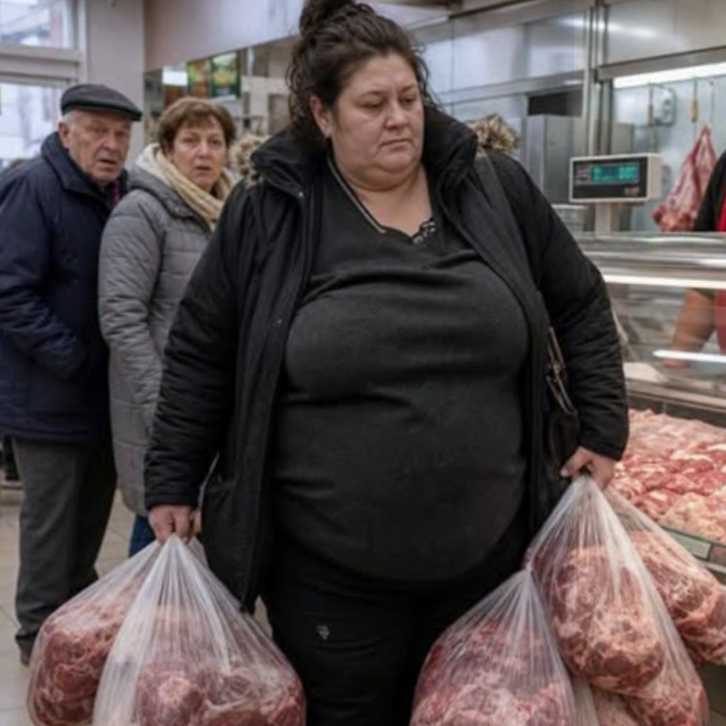
I looked out the window. At the end of the street stood Lida, carrying small parcels of meat for the dogs. In her hand she held that same old cart, its handle wrapped in black electrical tape.
— “You already know my answer,” I told the lawyer.
— “Think it over. No one will offer you this kind of money a second time.”
— “The truth is enough, even just once.”
He left.
Weeks later at the trial, Davit sat before everyone for the first time, listening to his own voice. In the recording, he declared threateningly that Maksim was an insignificant person whose death no one would remember.
Davit buried his head in his hands.
When the recording finished, he raised his eyes slowly.
— “I didn’t say that,” he whispered.
Yet everyone in the courtroom knew those words had come directly from him.
His lawyer no longer looked toward him.
— “There is nothing left for me to defend in this case,” he said, closing his briefcase.
Davit heard his own words through someone else’s mouth for the very first time.
And for the very first time, he realized he was completely alone.
The factory was officially sealed a few days later. A new sign appeared on its walls: “Temporary Animal Rescue Center.” Town residents raised funds—some brought food, some brought blankets, and others brought an old heating boiler.
Lida initially met everything with refusal.
— “I won’t raise them on charity,” she maintained.
— “This isn’t charity,” I told her. “This is a debt the town owes to Maksim.”
Three months later, Buba began walking again. Nala wagged her tail at a stranger for the first time. And Chito accepted food directly from Mariam’s hand.
Lida still came to see me every morning. She no longer needed sixty kilograms. Twenty-five kilograms was sufficient, as many dogs had been adopted into new families.
One morning, she set a small scrap of paper on the counter.
— “This is Maksim’s note,” she told me.
Only one sentence was written on it: “Mother, if you ever save them all, then know that I have returned home too.”
Lida pressed the paper against her heart.
— “He has returned now,” she said.
— “How so?”
She looked toward the window. Outside, the season’s first snow was falling.
— “When the town no longer whispers his name, but speaks it aloud.”
Months passed.
I reduced my working hours at the shop and began volunteering at the rescue center. In the mornings I chopped meat, in the afternoons I bathed the dogs, and in the evenings I taught children how to approach a frightened animal.
A small room was allocated for Lida beside the center. Maksim’s photograph hung on the wall. And near the window stood that old cart, its handle still wrapped in black tape.
One Sunday, Lida sat me down beside Buba.
— “Ostap, why weren’t you afraid?”
— “I was afraid.”
— “Then why did you stay?”
I thought about it for a long time.
— “Because that night, I understood for the very first time how a person can carry a lost life all the way to the end.”
Lida nodded to me.
— “You don’t have to carry it anymore.”
— “What do you mean?”
— “I’m not carrying Maksim alone anymore.”
That evening as I left the center, a message arrived on my phone. Davit’s lawyer was writing to me. He mentioned that Davit felt remorse, wanted to meet with me, and wished to apologize to Lida Stepanovna.
I stared at the screen for a few seconds.
Then I typed back calmly:
“We no longer need to carry his apology.”
No second message came.
The court sentenced Davit to a lengthy prison term. His company’s operations were suspended, and ownership of the factory transferred to the town. Elene found a new job and visited the center once a month to see Buba.
Lida did not go to court to hear the verdict.
She was feeding the dogs that day.
— “I can’t go back to that night,” she told me. “But I can make tomorrow morning different.”
The first snow fell that morning too, as I locked the center doors. Buba was already running about the yard. Lida stood by the window, wiping Maksim’s photograph clean.
I took hold of the old cart’s handle. The black tape was worn, but it still held the metal firm.
— “Shall we go?” I asked.
Lida smiled softly.
— “We’re going home.”
This time, no one was waiting for her in the darkness.
Home was already right here.
Missed the beginning?
Related posts:
 Every morning, I used to buy sixty kilograms of meat for the old man, but when the gate was opened, the policeman turned pale.
 Part 4 — After the accident on the coastal road, the police officer called my words a lie, but then suddenly turned pale.
After the accident on the coastal road, the police officer called my words a lie, but then suddenly turned pale.
Part 4 — After the accident on the coastal road, the police officer called my words a lie, but then suddenly turned pale.
After the accident on the coastal road, the police officer called my words a lie, but then suddenly turned pale.
 I returned home unexpectedly on New Year’s Eve, but upon seeing my wife’s face, my mother immediately stopped smiling.
 They were attributing my child’s pain to something else, until a doctor at the hospital saw his father and turned pale.
 I was humiliated for feeding an unwanted old man, but when a black car stopped outside, Beatriz suddenly stopped smiling