
…My signature was on the document, but the date was one when I had not yet arrived at the hospital.
Below it said that I supposedly refused the child and consented to her transfer to a guardian chosen by Melissa.
“This is not my signature,” I said.
Nino nodded to me.
“I knew it. That is why I kept the original.”
At that very moment the phone rang. It was a police officer. He told me that the clinic director and Doctor Sandro were trying to escape through the back exit. Ryan hugged the baby more tightly, while Melissa snatched the phone from me.
“You cannot prove anything,” she shouted. “I am his wife!”
“And I am his sister,” I answered. “But neither of us has the right to control this child’s life with lies.”
Melissa threw the phone onto the floor.
For the first time, Ryan did not try to calm her.
“My lawyer will come,” Melissa said.
“I have already called him,” Ryan replied.
A few minutes later the door opened and her lawyer, Levan, came in. He looked through the folder, listened to the recording, and turned to Melissa.
“I cannot defend you.”
“What are you saying?”
“You asked me to submit a false document to the court. And now there is a laboratory record, an audio file, and a witness here.”


Melissa’s face collapsed.
“Ryan, tell him that this is a misunderstanding.”
Ryan shook his head.
“I spent my whole life correcting your lies. Today, for the first time, I will not do it.”
The police officers arrived in ten minutes. They took a second memory card from Melissa’s bag, and stamped forms from the clinic’s storage room. No one shouted. The most terrible thing was the calmness.
Then the police officer played the recording.
Melissa’s own voice sounded in the room:
“Anna will give up the child anyway. She trusts Ryan. If necessary, we will tell her that the child is genetically unrelated.”
Melissa sat down on a chair.
For the first time I saw her face as others saw it—not as Ryan’s wife, but as a person who had turned someone else’s fear into a weapon.
“Am I saying this?” she asked in a whisper.
“Yes,” the police officer answered. “You recognize your own voice.”
Melissa hid her face in her hands.
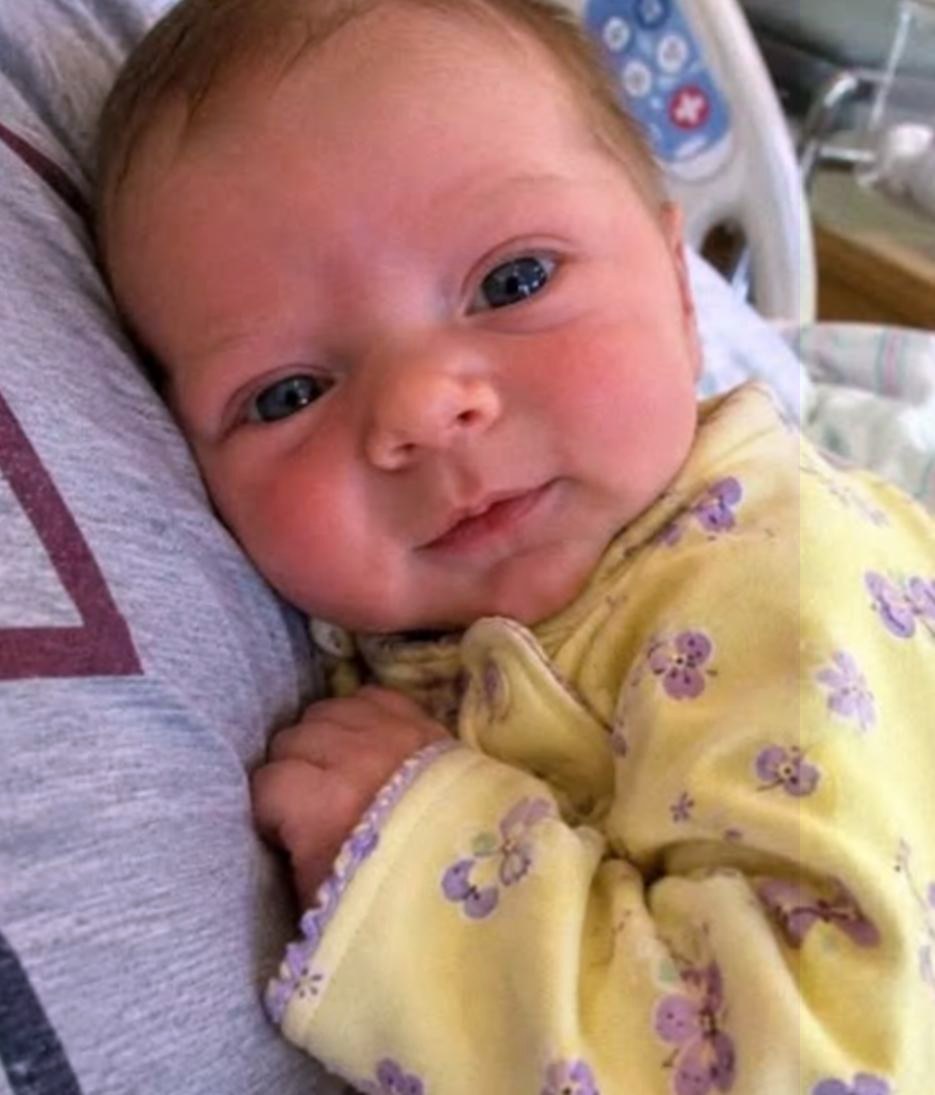
But I looked at the baby. The small pink blanket was still spread over her shoulders, and the sun embroidered on it seemed to move slowly in the rhythm of her breathing.

Ryan knelt before me.
“Forgive me.”
“Not yet,” I told him calmly. “Forgiveness takes time. But you can begin by telling the truth.”
“I want you to decide what happens to the baby.”
“No. We will decide together. Only without Melissa.”
That night the baby stayed with me. Ryan sat in the corridor and did not leave until five in the morning. Every few minutes he looked at the door, as if he were afraid that his daughter and I would disappear.
The next day the police arrested Melissa and the clinic director. Doctor Sandro confessed everything: Melissa’s father had paid him to create a child born in Ryan’s name in order to receive the inheritance. But when they found out that the first embryo actually carried Ryan’s genetic material, Melissa decided either to obtain the child or to hide her forever.
The trial continued for months. I testified. Ryan did too. He did not soften a single word.
Melissa was sentenced to imprisonment, and the clinic was stripped of its license. The forged document was declared invalid, and custody of the child was given to Ryan and me. I could not breastfeed her, but I still woke up at night, changed her diapers, and sang to her the same song I used to sing to my son.
Ryan removed all of Melissa’s things from the house, but left her golden watch on the table.
“Why aren’t you throwing it away?” I asked.
“Because I want to remember what I can never return to,” he answered.
Two weeks later he heard his own voice for the first time in the recording that Nino had saved for the court. There Ryan was quietly telling Melissa:
“If the truth comes out, we will lose Anna, but we still have to save the child.”
Ryan lowered his head.
“At that time I thought silence was protection.”
“Silence is sometimes only delayed betrayal,” I told him.
He did not argue with me.
I remembered the empty room in Melissa’s house for the longest time. Pink walls, a doll abandoned in the corner, and a small yellow hat lying on the cabinet, the one Ryan had been holding that first day. The room prepared for the baby seemed to be waiting for a person who would never live there.

Three months later my children and I moved to a small town near the coast. In the mornings there was the smell of the sea, my older son went to school, and the little girl already laughed loudly when she saw raindrops on the window.
Ryan came every Saturday.
He was learning to change diapers, warmed a bottle at night, and asked me every time:
“Am I doing better now?”
“Today, yes,” I answered.
One evening my son was sitting at the kitchen table and drawing four people on a sheet of paper. One had big ears, another a yellow dress, and the third was holding a little girl in his hands.
“Who is this?” I asked.
“Our family,” he answered. “I will draw Ryan too, because he is not alone anymore.”
At these words Ryan lowered his eyes so that the child would not see his tears.
Months later I received a letter from Melissa. It contained only one sentence: “Tell me how my girl is.”
I looked at the sheet for a long time.
Then I handed it to Ryan.
“Do you want us to send an answer?”
He shook his head.
“You decide.”
I folded the letter in half and put it in the folder.
“She may see the child only when the child herself wants it and when it is safe. But now there will be no answer.”
This was not revenge.
It was a boundary.

The first winter near the coast turned out to be warmer than I expected. One morning I saw snow on the windowsill. The little girl stretched out her hands and pressed herself to the glass with laughter. The crescent-shaped mark behind her ear was still visible.
I took the old pink blanket and draped it over her shoulders. The small embroidered sun came to rest exactly over her heart.
Ryan looked at us from the doorway.
“Are you ready?” he asked me.
“For what?”
“To begin a new life.”
I opened the window. Cold air came in. From far away in the town, children’s laughter could be heard.
I held the girl to my heart and for the first time did not think about the day Ryan refused her.
I thought about the day when he finally chose her.
The sun was still shining on the blanket.
And this time no one was taking it away from us.
Missed the beginning?
Related posts:
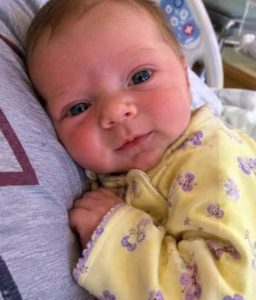 My Twin Brother Looked at His Newborn Daughter for the First Time, Refused Her, and His Wife Smiled Immediately
 My Five-Year-Old Daughter Was Slapped in the Face, but the Woman Who Came to the Christmas Tree on Christmas Eve Suddenly Stopped Smiling
 My Husband Stood Triumphantly Beside His Mistress, but When I Entered the Hall, the Smile Disappeared from His Face
 The Family Built My Cousin’s Career on My Failure, but My Mother Went Pale When She Turned Over One Sheet at Dinner
 On Thanksgiving Day, My Brother’s Girlfriend Slapped My Child, and by Christmas Her Smile Suddenly Began to Disappear
 On the Third Day After the Wedding, I Refused to Serve at the Table, but When My Husband Brought Unexpected News to His Mother’s House, My Mother Turned Pale