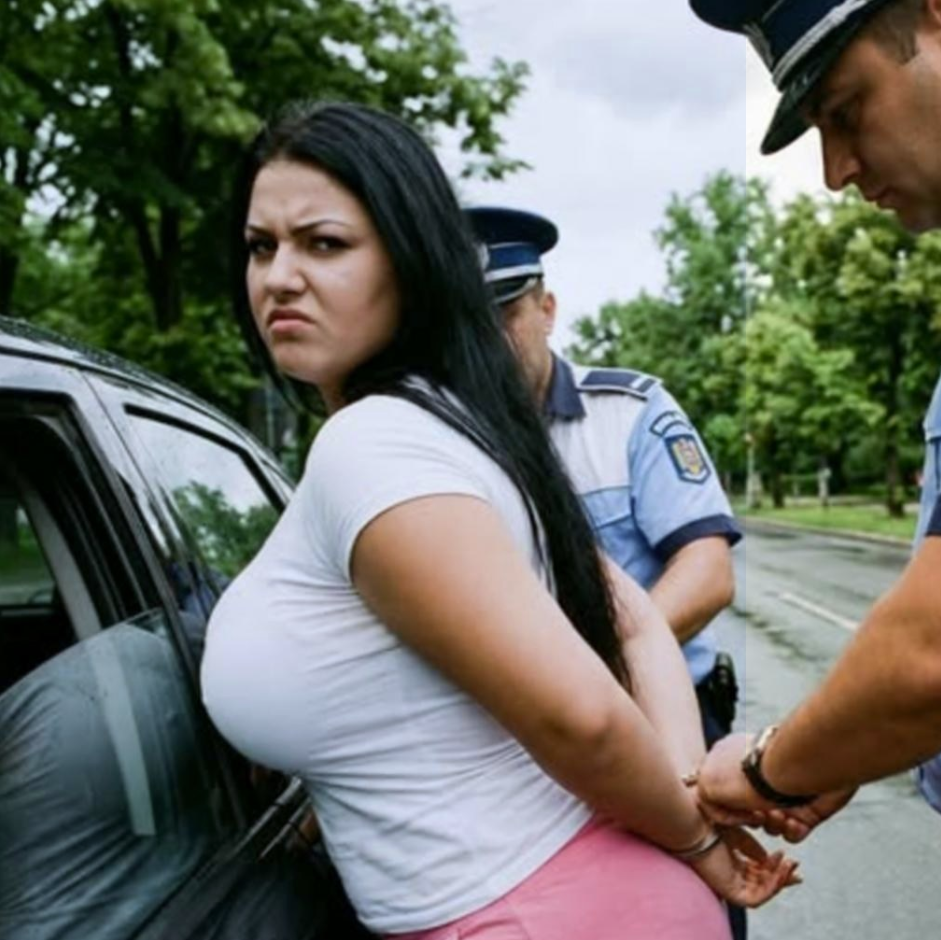


Part 4
When I heard Helen’s last words, the air in the room seemed to vanish.
— “Who is at my house?” I asked.
— “A neighbor mentioned a black van parked near your yard,” she replied. “The doors were wide open.”
David raised his head sharply.
— “I didn’t send anyone.”
— “Nobody asked you,” Helen cut him off.
— “Captain, this is starting to look like an attempted kidnapping,” I said.
— “Which is precisely why no one is leaving this building alone anymore.”
Mark reached for his phone.
— “I’m calling my lawyer.”
— “By all means,” I told him. “Call him. But let him know his client’s voice is already in a secured server.”
He glared at me.
— “You set this whole thing up on purpose.”
— “I didn’t force you to pull me over by the roadside.”
Helen signaled to two investigators. They confiscated David and Mark’s firearms, official badges, and radios on the spot.
That same night, my home was swept.
The van was gone.
However, fresh footprints remained in the dirt beneath the kitchen window, and the door handle bore marks from a sharp instrument. A single item had been taken from my living room: a folder holding secondary copies of three weeks’ worth of recordings.
— “Someone assumed you kept the primary evidence at home,” Helen noted.
— “And now they know I don’t.”
— “Which makes them even more dangerous.”
I stayed at a hotel that night. Orlando’s city lights flickered beyond the window, while my brass compass rested on the nightstand beside the bed. I had carried it with me since childhood—a gift from my father, who told me that if I ever lost my way, I should pause first, then find the path forward.
Helen called me in the morning.
— “The search of David and Mark’s residences is complete.”
— “Did you find anything?”
— “Receipts, unrecorded cash, altered citation logs… and one device we couldn’t account for.”
— “Which one?”
— “The dashcam that was supposed to be mounted near your car that day.”
That was the exact moment I realized why David had seemed so composed earlier. They assumed the only footage of the traffic stop was in their hands. But by the roadside behind my car stood a municipal transit camera mounted at the bus stop.
I informed Helen immediately.
— “If you pull that camera’s footage, you’ll see who issued the order to pull me over.”
The recording was recovered that same afternoon.
At five-twenty-one, David’s radio crackled: “That’s the woman. Pull her over.” Then another voice responded: “Don’t let her reach for her phone.”
The second voice belonged to neither David nor Mark.
It belonged to Deputy Chief Richard Blake.
Richard was the very man assigned to oversee my unit’s case files from day one.
Helen went dead silent.
— “Did he know I was conducting the audit?” I asked her.
— “Only I knew,” she answered softly. “Or so I thought.”
Blake walked into the station that evening, completely unbothered. He wore a tan overcoat and a heavy silver ring on his finger. He glanced at the folder and smirked.
— “Audio clips don’t prove a thing. They could easily be fabricated.”
Helen set a playback device on the desk.
— “Then listen to this one too.”
She pressed play.
Blake’s own voice echoed across the room: “We need Victoria off the road before she finishes the audit. David and Mark will simply apply the pressure.”
A heavy silence fell over the office.
Richard turned his gaze slowly toward me.
— “Is that supposed to be my voice?”
— “Yes,” I replied.
— “I would never say that.”
— “Yet you did.”
For the very first time, he heard his own words played back through someone else’s ears. His expression shifted, as if seeing his true reflection in a mirror for the first time.
David lowered his head. Mark clutched the edge of his chair.
All three were arrested that night—not out of a desire for vengeance, but because the consequences of their choices had finally caught up with them.
Richard’s defense attorney withdrew from representing him the very next day.
— “My ethical obligations and your interests no longer align,” he informed him over the phone.
Richard set the receiver down slowly.
— “I was in control of all of them,” he muttered.
— “You weren’t controlling people,” I replied. “You were controlling fear.”
— “Can you make all of this go away?”
— “No.”
— “Aren’t you human too? Everyone makes mistakes.”
— “Pulling over on the roadside was a routine check. Everything after that was a choice.”
Weeks later, I sat in the courtroom listening to the recordings of my own case. I sat before a large projection screen. David stood to the left, Mark behind him, and Richard sat with his head bowed.
My recorded voice played first:
“Please state your name and explain the lawful reason for this stop.”
Then David’s voice:
“Step out of the vehicle.”
Then Mark’s:
“They’ll teach you how to talk to law enforcement there.”
A low murmur rippled through the gallery.
David closed his eyes.
Mark heard that phrase for the first time from the outside—before a room full of people—rather than from his own mouth. His shoulders slumped.
Richard gripped his chair so hard his knuckles turned white.
— “Turn it off,” he rasped.
— “No,” the judge replied. “You will listen to it in its entirety.”
Finally, his own voice echoed through the courtroom speakers:
“We need Victoria off the road.”
Richard raised his head.
— “I didn’t say that.”
This time, no one in the room believed him.
Forensic experts verified the authenticity of the audio files. The transit camera confirmed the timeline. The financial audit verified the paper trail of cash bribes. Dozens of citizens who had previously been silenced came forward to testify.
The verdicts were handed down months later.
David and Mark received prison sentences for official misconduct, illegal arrest, and falsifying public records. Richard received a much heavier sentence for conspiracy, extortion, and attempted destruction of evidence.
I felt no joy in their punishment.
I simply no longer had to shield anyone from their lies.
When I returned home, I found an empty room. The evidence folders had been taken by prosecutors, but resting on the table was a single remaining photograph—my father placing that very same brass compass into my palm.
I picked up the photo.
The room felt unusually large.
Months passed.
I resumed my work in a new jurisdiction, joining a small specialized unit where investigators gathered concrete evidence before ever knocking on a door. In the mornings I walked my daughter to school, and in the evenings I cooked soup in the kitchen, taping her drawings to the refrigerator door.
One day she asked me:
— “Mom, are you still afraid of police officers?”
First snow was falling outside the window—a rare cold front dipping down into the region that winter.
— “Sometimes I am,” I told her. “But being afraid doesn’t mean you stay silent.”
— “Then why did you stay quiet by the car?”
I smiled gently.
— “Because I knew that sometimes, the truth doesn’t need screaming—it just needs patience.”
She thought about it for a moment, then drew a small circle on her new paper.
— “What’s that?”
— “A direction,” she answered.
That evening, a letter arrived from Richard, sent from prison. He wrote that he felt remorse, that his family had unravelled, and that speaking with me would change everything.
A final sentence was written at the bottom: “Give me a chance to explain.”
I stared at the paper for a long time.
Then I wrote a reply:
“I have already heard your explanation—in your own voice.”
I added nothing more.
I folded the note and dropped it into the trash.
Not because I took pleasure in his pain, but because his pain was no longer my responsibility to carry.
That night, I set the brass compass on the windowsill. Its needle wavered southward at first, then settled smoothly, holding steady in one direction.
My daughter took my hand.
— “Are we on the right path now?”
Outside, the snow fell silently.
— “Now we are on our own path.”
The compass needle didn’t waver.
Missed the beginning?
Related posts:
 Two police officers stopped me on the highway for no reason, but when they pulled an object out of my pocket, the expressions on both their faces changed.
 I brought my daughter to the Cole mansion for one dinner, but when Julian saw her sleeve, his polite smile vanished
 I signed my former father-in-law into emergency surgery while his own son called him too old to save—and then my ex stopped smiling
 My husband had kicked our child out of the house, but when the child returned—with a baby in their arms—the smile suddenly vanished from Richard’s face.
 I heard my daughter-in-law showering upstairs while my son said she had flown away, and the woman who entered my kitchen suddenly stopped smiling
 I was humiliated for feeding an unwanted old man, but when a black car stopped outside, Beatriz suddenly stopped smiling