
Part 4
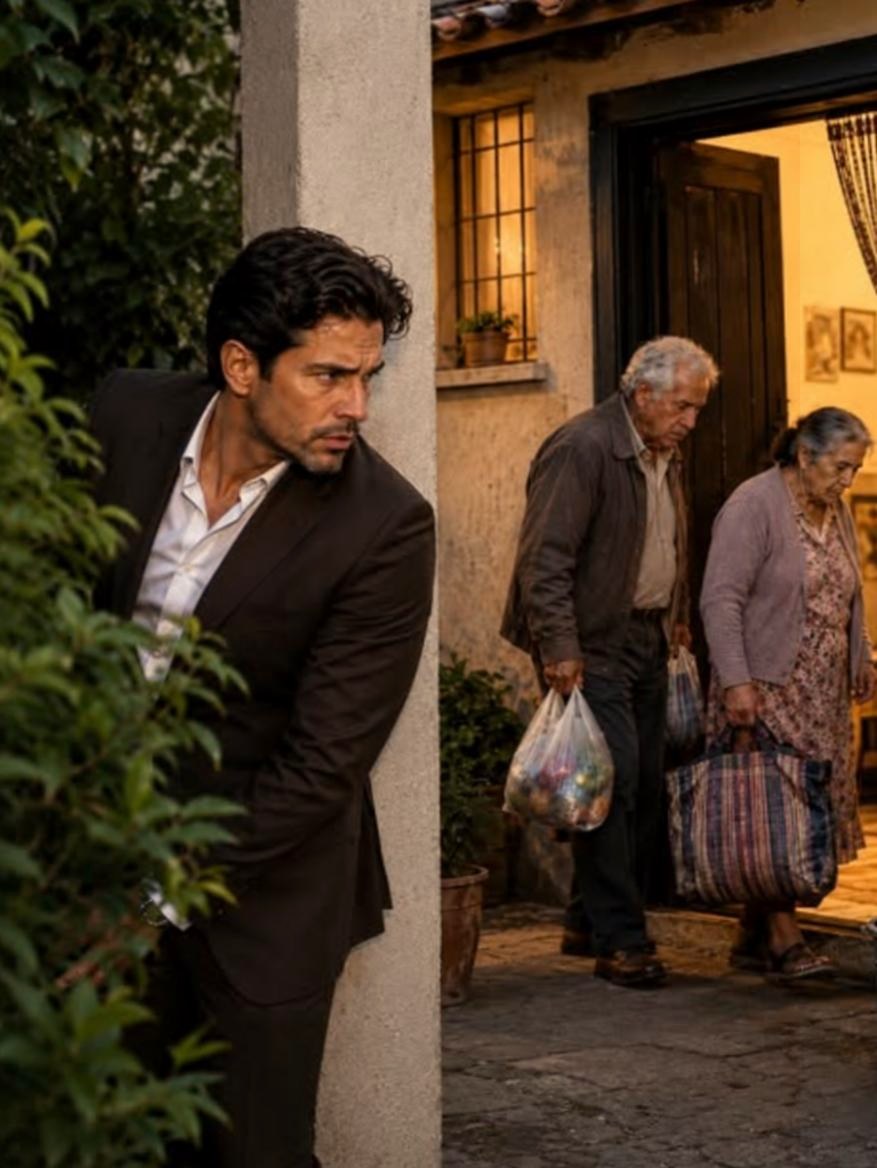
At Nino’s final words, the room seemed to shrink. Rain lashed against the windows, the tin roof hummed, and outside, the two men stood by the gate scanning the house.
Mark shoved his phone into his pocket.
— “Everyone back off,” he said. “I’ll handle this.”
— “You can’t handle anything anymore,” Nino replied.
She called the police. Her voice remained calm, but every word came through with absolute clarity: coercion, forged signatures, illicit wire transfers, and attempted property fraud.
Mark walked out of the room.
— “Mark!” Claire called after him.
He didn’t stop.
Claire covered her face with her hands. Seconds later, her phone began to chime continuously.
— “It’s the bank,” she stammered.
— “Answer it,” I told her.
— “I can’t.”
— “You need to answer it right now.”
She accepted the call.
— “Yes… yes, it’s me… What was canceled?”
All color drained from her face. The bank had frozen one of the primary accounts. The transfers made under my name were flagged as suspicious operations, and the attempted cash withdrawal was captured on security cameras.
Mark returned a few minutes later holding a stack of documents.
— “Nino, let’s make a deal,” he said. “I’ll leave the house, just don’t release that recording.”
— “I don’t bargain with criminal evidence.”
— “You’re a lawyer. You know this could drag on for years in court.”
— “And you know that throughout that entire time, our parents will be protected.”
Mark turned to our father.
— “Dad, tell her this is a misunderstanding.”
Paul squared his shoulders for the first time in years.
— “You told me yourself that my house belonged to you.”
— “I was angry.”
— “No. You planned every single detail in advance.”
My mother stood beside him.
— “We are your parents, but we will no longer protect you from your own lies.”
A heavy knock echoed from the front door. The police had arrived. Mark glanced at Nino and immediately dialed his own attorney, who arrived shortly after. He was a tall man carrying a black leather briefcase. He reviewed the folders and whispered quietly to Mark:
— “Stop answering questions at this stage.”
Mark nodded.
Then Nino pressed play on the recorder.
Mark’s own voice filled the room once again.
“Just sign it, or we will tell Elene that you lost the money.”
Mark snapped his head up.
— “Turn that off.”
The recording played on.
“This is my house until you sign.”
The officers watched intently. Claire backed against the wall. My mother’s lips quivered. Father lowered his eyes, as if the walls of his own home were shielding him from those brutal words.
Mark approached the table slowly.
— “I didn’t say that.”
Nino turned off the audio.
— “Listen to your own voice.”
Mark sank into a chair. For the very first time, he was left without a response.
That same evening, officers seized the forged documents, the recorder, and the bank records. The sale of the house was formally halted. Mark and Claire were ordered to vacate the premises pending the conclusion of the investigation.
No one was led out in handcuffs. I didn’t want it to end in a spectacle. I simply wanted them to witness, just once, what our family had suffered through.
Consequences don’t always require noise.
The next morning, Mark’s attorney informed him that he could no longer represent him if Mark made any further attempts to conceal evidence. The bank temporarily refunded a portion of the stolen funds, while the remainder hinged on the court’s final ruling.
Mark stood before me in the hallway.
— “Elene, I just wanted everything to be okay.”
— “Things are never okay when you strip away someone else’s freedom.”
— “I was in debt.”
— “Then you should have asked for help.”
— “I was terrified.”
— “I was terrified, too. But I didn’t lock my parents in a room because of my fear.”
He had no answer for me.
A few weeks later, the court formally voided the power of attorney. The handwriting expert confirmed the forgery. Bank records proved that my money was being funneled directly to cover Mark’s personal debts. Claire provided separate testimony, confirming that Mark had deliberately deceived his parents.
Mark was sentenced for property fraud and document forgery. Claire received probation along with an order to pay restitution. They lost the house, but no verdict could ever restore my parents’ lost years.
Yet the most painful revelation was something else entirely.
Mark confessed that he had installed the lock on the small bedroom door with his own hands.
One evening, I walked into the house alone. The living room was empty. A single square patch remained on the wall where their family photo used to hang. A thin line of dust traced the floor. My parents’ old bed was still in the tiny room, but the door now stood wide open.
My mother opened the window.
— “The air here smells just as sweet as it used to,” she said softly.
— “It’s the lemon tree,” I smiled at her.
Father stepped into the workshop. Old tools rested on the workbench. He picked up the rusted key, stared at it for a long moment, and extended his hand toward me.
— “Keep this.”
— “You don’t need it anymore?”
— “We don’t have anything left to hide.”
I took the key anyway. Its metal was rough and cold. When we first uncovered it, it represented fear. Now, it marked the end of that long night.
Three months later, I moved with my parents to a small coastal town. We didn’t sell the old house. We simply reclaimed it and rented out the upper floor to pay off the remaining debts. Father reopened his workshop. Mother began teaching sewing lessons to local children.
I left for work in the morning and returned to them every evening. Every day, I bought three loaves of bread from the same small bakery. On Sundays, we pruned the lemon tree in the yard, clearing away the dried branches.
One morning, after the first snowfall, Mother brought over a little girl holding a sheet of paper.
— “She drew this for you,” Mother told me.
On the paper was a drawing of our house. Four people stood in the yard beneath a bright yellow sun.
— “Why are there four of us here?” I asked her.
The girl shrugged her shoulders.
— “Because no one should be alone in their home.”
That day, for the first time, I cried without feeling ashamed.
Mark wrote to me months later. In his letter, he claimed he had changed, that he was assigned community service instead of prison time, and that he wished to see me just once.
At the very bottom, a single sentence was written: “I am still your brother.”
I stared at my phone for a long time. Then I typed my reply:
“You were my brother on the day you locked our parents in that room, too. Kinship doesn’t erase actions. A return is only possible when a person stops running from their own path. And right now, I am protecting our peace.”
I switched off my phone.
I felt no anger. No triumph.
Only the quiet peace I had spent years buying for others—and finally reclaimed with my own hands.
I stepped out into the yard that evening. A small cap of snow rested on a branch of the lemon tree. I pulled the rusted key from my pocket and buried it deep in the earth beneath the tree.
It didn’t need a lock anymore.
The house was open again.
Missed the beginning?
Related posts:
 I quietly returned to my parents’ house, but I saw them being forced out the back door, and my brother’s wife suddenly turned pale.
 When the dangerous mobster’s son reached out towards me, his father looked at the photo and went pale.
 My father grabbed my wrist in front of eighty guests and called me a deserter, but the face of an unknown officer suddenly turned pale.
 My parents wanted to throw my belongings out into the yard and keep my child, but the smile vanished from my father’s face the moment I gave my answer.
 My parents demanded twenty thousand dollars from my husband, then his quiet condition made my father stop smiling
 My father kicked me out of the house at the Thanksgiving dinner, but when I placed the car keys on the table, the smile vanished from his face.