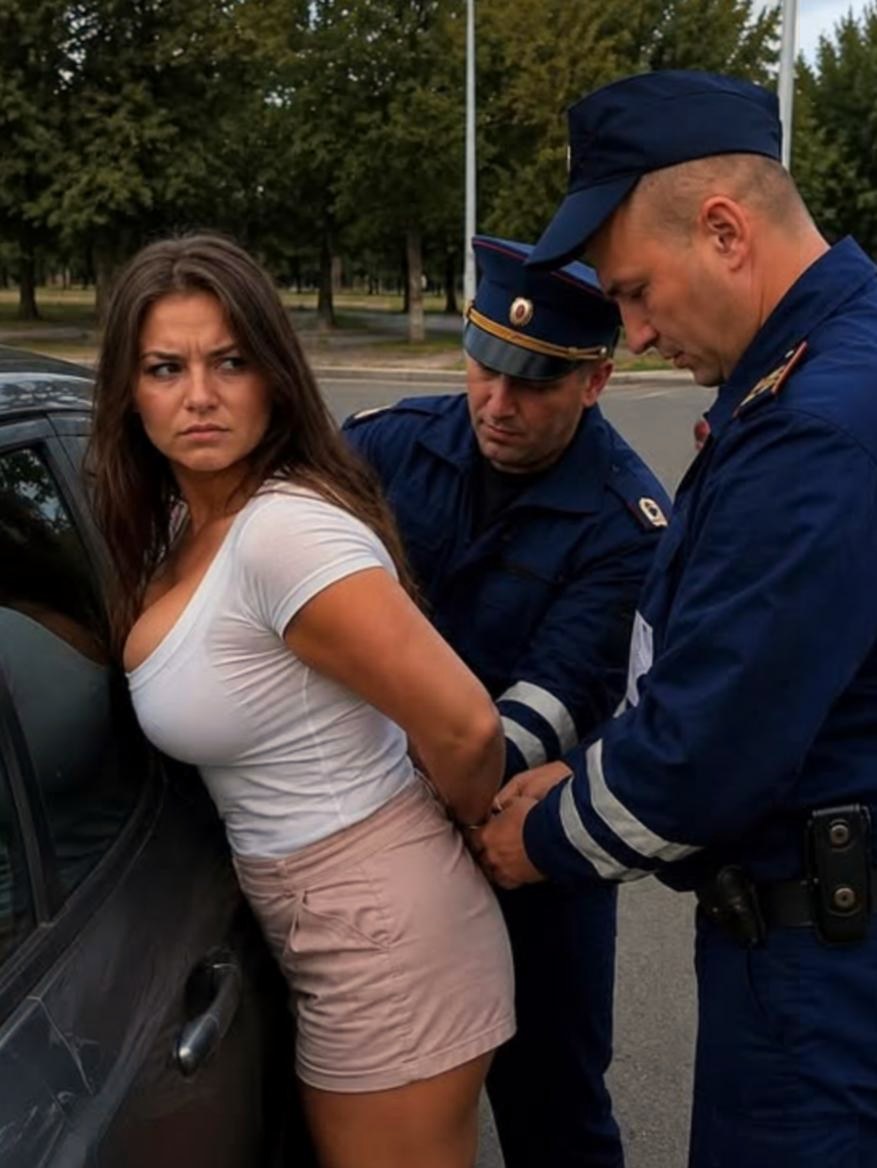
At the moment when the policeman took a small black wallet from the right pocket of my shorts, I saw such fear on his face, as if he had taken not a weapon from the car, but his sentence.
It all began that same day, at twenty minutes past five in the evening, on an empty road leading toward the village of Dari. The sun was still high, warm air came in through the window, and an old song played quietly on the radio. I was watching the speed-limit signs when the patrol’s flashing lights appeared in the rearview mirror.
I pulled over to the side of the road, turned off the engine, and lowered the window. A tall, broad-shouldered policeman came to my door. The other stood a few steps behind and folded his arms across his chest.
“Driver’s license and the car documents,” the first one told me.
“Of course.”
I handed over the documents. He examined them for a long time, as if he were looking for proof of guilt in every letter. Then he walked around the car, looked at the tires, and returned to me. He had my documents in his hand, but he was in no hurry to return them.
“Why did you stop me?”
“It’s a routine check.”
“What kind of check? I have not violated any rules. Besides, you have not told me your names or the reason for the stop.”
The second policeman chuckled. A small metal chain hung from his belt and struck against the side of the door with every movement.
“You have too many questions, girl. Sit quietly while we are speaking to you politely.”
Then for the first time I felt a cold contraction in my stomach. This was not a routine check. They had already decided that they could frighten me.
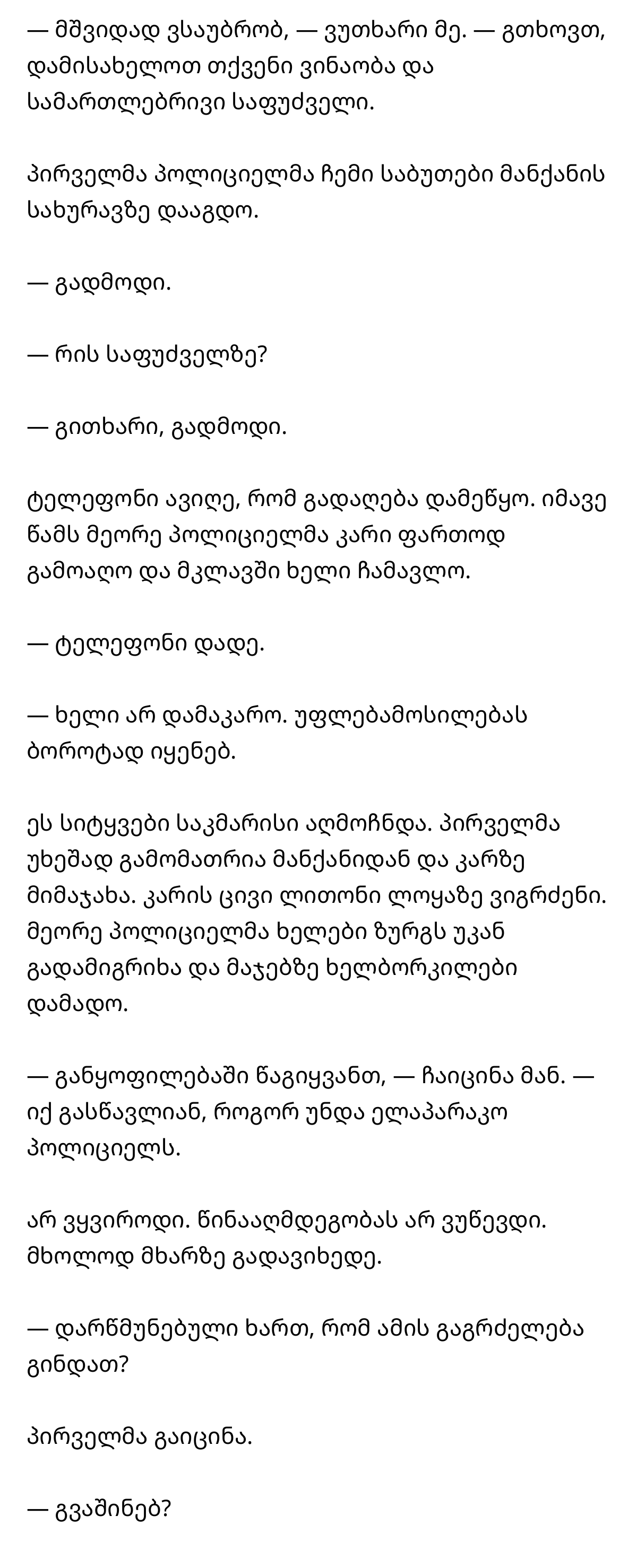
“I am speaking calmly,” I told him. “Please tell me your identity and the legal basis.”
The first policeman threw my documents onto the roof of the car.
“Get out.”
“On what basis?”
“I told you, get out.”
I took my phone to start recording. At that same moment the second policeman opened the door wide and grabbed me by the arm.
“Put the phone down.”
“Don’t touch me. You are abusing your authority.”
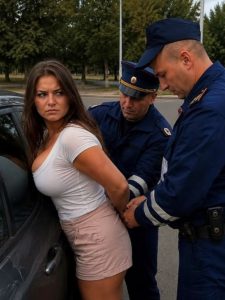
Those words were enough. The first one roughly pulled me out of the car and slammed me against the door. I felt the cold metal of the door against my cheek. The second policeman twisted my hands behind my back and put handcuffs on my wrists.
“We will take you to the station,” he chuckled. “They will teach you there how to speak to a policeman.”
I did not scream. I did not resist. I only looked back over my shoulder.
“Are you sure you want to continue this?”
The first one laughed.
“Are you threatening us?”
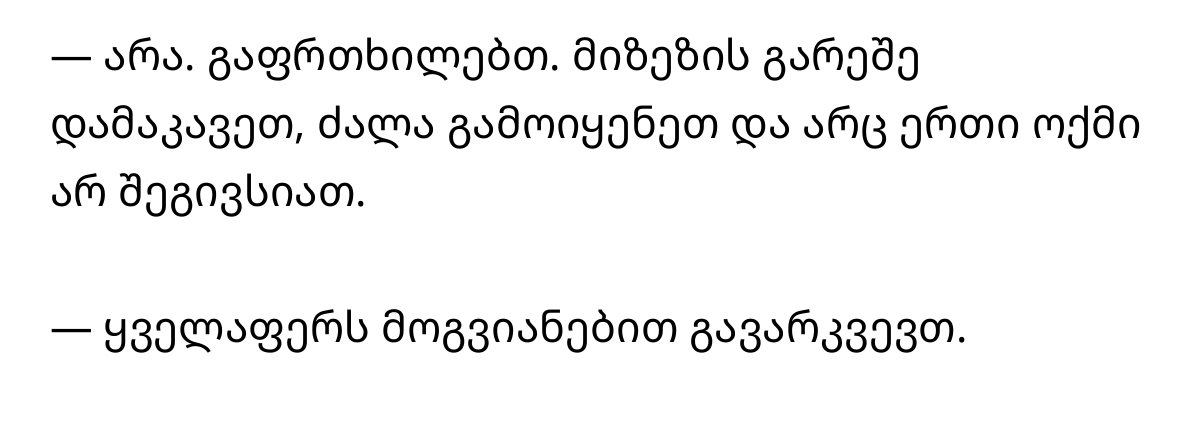
“No. I am warning you. You detained me without a reason, used force, and did not fill out a single report.”
“We will sort everything out later.”
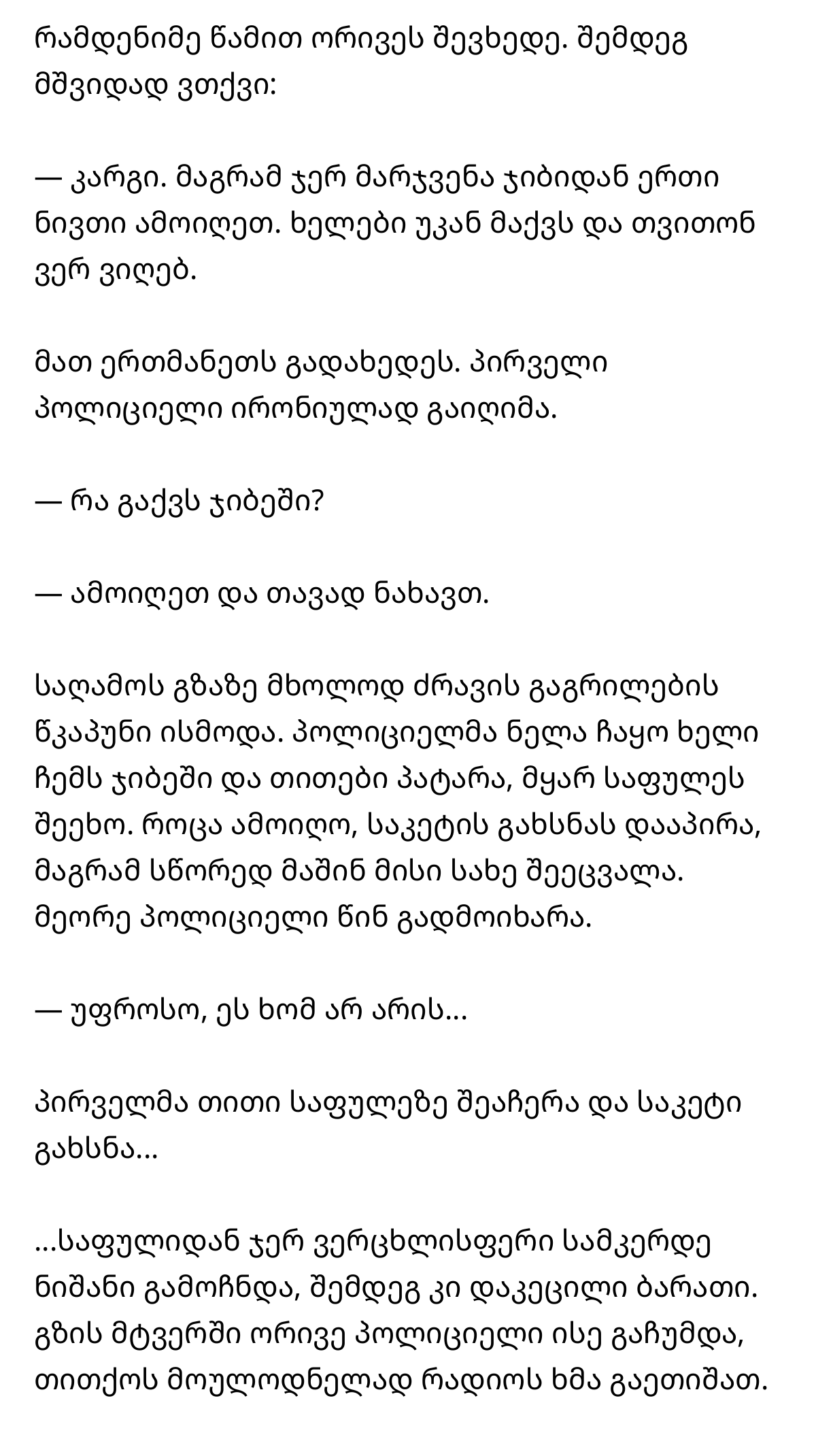
I looked at both of them for several seconds. Then I said calmly:
“Fine. But first take one thing out of my right pocket. My hands are behind me and I cannot take it out myself.”
They looked at each other. The first policeman smiled ironically.
“What do you have in your pocket?”
“Take it out and you will see for yourselves.”
On the evening road, the only sound was the clicking of the cooling engine. The policeman slowly put his hand into my pocket and his fingers touched a small, hard wallet. When he pulled it out, he was about to open the clasp, but at that very moment his face changed. The second policeman leaned forward.
“Chief, could this be…”
The first one stopped his finger on the wallet and opened the clasp…
…first a silver badge appeared from the wallet, and then a folded card. In the dust of the road, both policemen fell silent as if the sound of the radio had suddenly been switched off.
My name was written on the badge—Victoria Meladze—and below it the emblem of the investigative service shone. My position was indicated on the card: chief investigator for corruption and violence cases in the Ministry of Internal Affairs system.
The second policeman immediately stepped back.
“Is this real?” he barely muttered.
“What do you think?” I asked.
The first policeman held the card as if he were holding heated metal in his hand.
“Why didn’t you tell us who you were?”
“You did not ask.”
“Take off the handcuffs,” the second one told him.
“Not me—you should take them off.”
His fingers were trembling. For several seconds he could not even find the clasp. At last he removed the handcuffs and they fell to the ground. Red marks remained on my wrists. I rubbed them, but something else troubled me more than the pain—they still did not know that I had been recording all of this.
The small recorder hidden in my jacket had been working throughout the entire conversation. It was not in the wallet. The silver badge was only the first warning.
“Give me back my phone,” I said.
The first one silently handed it to me. The screen was not broken, but I no longer needed my hand to turn on the video. The recording was automatically sent to a secure server every ten minutes.
“Ms. Meladze, perhaps there has been a misunderstanding,” he said.
“A misunderstanding is when you accidentally enter the wrong street. You took my documents, forcibly pulled me out of the car, and put handcuffs on me.”
“We simply saw a suspicious car.”
“What was suspicious? The color? The number plate? Or the fact that the driver was asking questions?”
The second policeman looked at the road. I could now clearly see his name, Zurab, on a small plastic plate.
“Come on, let’s all forget this,” he told me in a low voice. “You have a job, and so do we.”
“That is exactly why I will not forget it.”
The first one took a step toward me.
“Don’t complicate things. We can charge you with resisting, insulting a policeman, and resisting detention.”
“You can. But first you will have to explain why you have neither a record of the stop, nor an activated camera light, nor a reason.”
He instinctively looked at the camera attached to his chest. The screen was black.
“The camera is technically broken,” Zurab said.
“Both of them?”
This time they had no answer.
I went to my car and took the documents from the roof. Just then a black minibus appeared in the distance. It stopped by the side of the road, but no one got out. The first policeman looked at it and his face tensed.
“You did not come alone,” I told him.
“I don’t know what you are talking about.”
“You do. And now I know why you stopped me.”
“You know nothing,” he said quietly.
A message arrived on my phone. The first part of the recording had uploaded safely. I looked at the screen and for the first time saw their real fear.
But at that same moment my phone lit up again. The message had no sender: “If you leave this road alive, you will never find your brother…”
…when I read the message, my breath caught for a moment. My brother Levan had died in an accident three years earlier. Only my family, the investigator, and the people who had handled his case file knew this.
“Who sent this to you?” Zurab asked.
“Why are you interested?”
The first policeman immediately looked toward the minibus.
“Give me the phone.”
“I will not give it to you anymore.”
“Victoria, this is no longer a game.”
“It was never a game.”
I took the recorder from my jacket and held it in front of them. A small red light was blinking.
“The entire conversation was recorded. Your voices, the threats, the handcuffs, and also how you said that you knew who my brother was.”
Zurab lost color.
“I said nothing.”
“You have not said it yet. But you soon will.”
In fact, I had not come to this road by accident. Levan’s death had officially been recorded as an accident, although in recent weeks I had found three connected cases in his old file: drivers who had been stopped, missing video recordings, and money confiscated by police on that same road. Every victim said the same thing—the two officers stopped them, frightened them, and then forced them to leave money.
Levan had been investigating these cases as a journalist. One day before his death he sent me a short message: “If something happens to me, look for the place on that road where the cameras never work.”
I went there as an ordinary driver. I had a badge and an emergency detention order in my pocket, but I was to use them only when they committed a crime.
Now I had enough evidence.
The phone rang. The number of investigative-service director Elene Kavtaradze appeared on the screen.
“Tell me that everything was recorded,” she said.
“Everything.”
“We are receiving it live from the server. I have already sent a team there.”
The first policeman heard the conversation and stepped back.
“You called the director?” he asked.
“Yes.”
“That cannot be. We had instructions from above.”
“From whom?”
He kept silent. Zurab lowered his eyes.
Elene said clearly into the phone:
“Victoria, we found the missing page from your brother’s case file. It is signed by Irakli Beridze, head of the regional police department.”
At the sound of that name, the first policeman raised his head.
“We have no connection with Beridze.”
“Then why is his personal number in your last eleven stops?” I asked.
He took a step back. The minibus door opened and a third man got out. He was wearing a black coat and his face was strangely calm.
“Enough,” he said.
Elene said quietly to me on the phone:
“Victoria, do not approach him. This is Irakli Beridze.”
Beridze looked toward me and smiled.
“You are not only an investigator in a corruption case,” he said. “You are Levan’s sister. That is why I wanted to hear how the same thing that happened to him would happen to you.”
The words fell onto the road and everything seemed to stop for one second.
“What happened to Levan?” I asked.
“It was an accident.”
“No. You know that is a lie.”
Elene shouted into the phone:
“Victoria, do not turn off the camera!”
Beridze moved his hand toward his pocket. I looked at the recorder, then at his hand. Just then my phone received a new file—Levan’s last recording, which someone had uploaded to the server right now, at this very moment.
Levan’s voice could be heard in the recording: “If you are listening to this, Beridze has already realized that Victoria has come close to the truth. But he does not know that I have a second copy with a living person…”
ბერიძემ საკუთარი ხმა მოისმინა და სახე შეეცვალა…
ვფიქრობდი, რომ სიმართლის აღმოჩენა დასასრული იქნებოდა. მაგრამ ყველაზე მძიმე პასუხი მაშინ მივიღე, როცა არჩევანი მხოლოდ ჩემზე დარჩა.
„ზოგჯერ ოჯახი საუკეთესო იარაღია.“
ბერიძემ თვალები დახუჭა.
👇 ისტორიის ფინალი უკვე გახსნილია
Related posts:
 The Mafia Boss’s Car Fell into the Abyss, and I Tried to Save Him—but His Guards Pulled Out Their Guns
 Part 4 — They stopped me on the road for no reason and put handcuffs on me, but when they took one thing from my pocket, both policemen froze
 On my sixtieth birthday, all six children disappeared, and when the policeman saw my name on the folded letter in his hand, he turned pale
 When the dangerous mobster’s son reached out towards me, his father looked at the photo and went pale.
 An Unknown Man Humiliated Me in Front of Everyone, but the Restaurant Owner Looked at Me Only Once — and His Smile Immediately Disappeared
 After my warning at the billionaire’s negotiation, the lawyer ordered the guards to remove me, but his smile suddenly disappeared