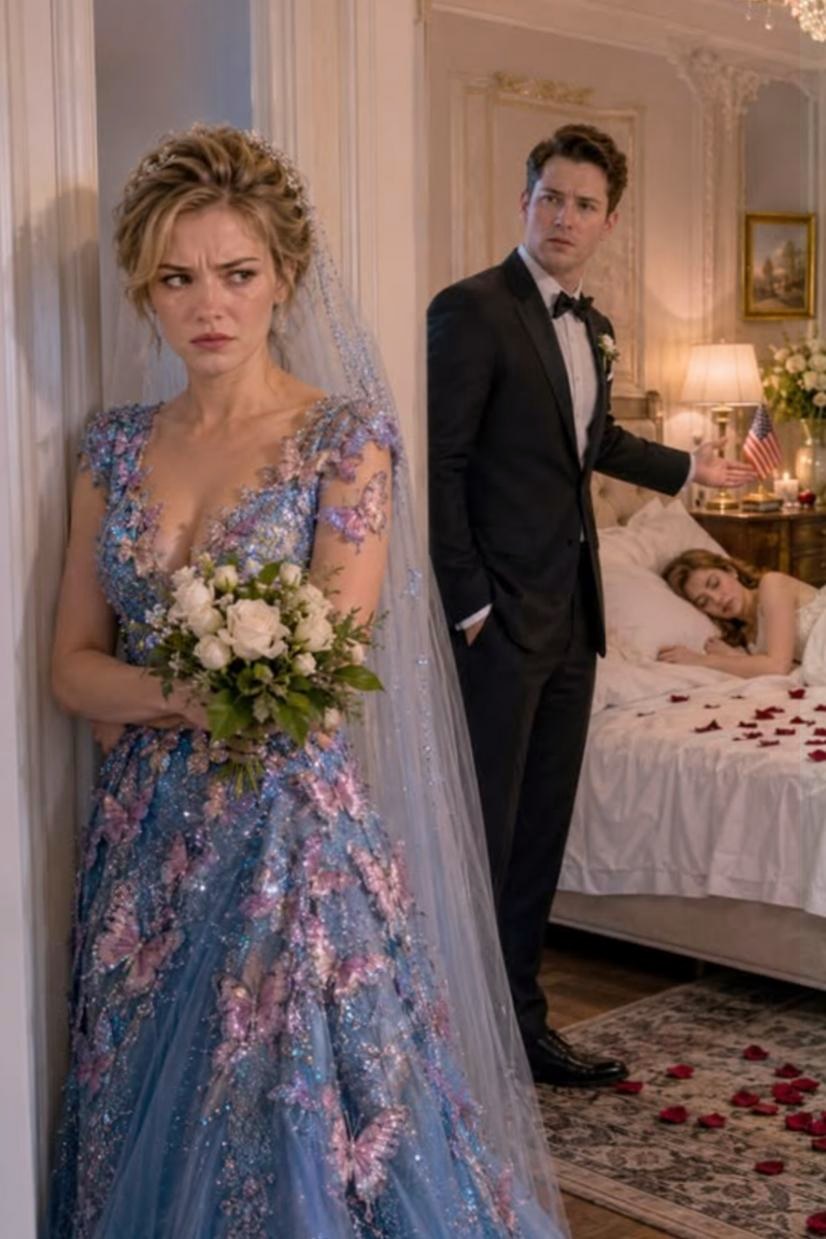

At six in the morning, Nolan’s phone rang again.
This time he answered.
“Yes?”
He listened for several seconds. Then he went to the window and pressed his forehead against the glass.
“No, those transfers were temporary… No, the audit conclusion cannot be final… I will take care of everything.”
For the first time, I heard in his voice what he had hidden from me for years—panic.
After the call ended, a second call came in. Then a third. The bank, the board of directors, his main investor, the company lawyer. Everyone was asking the same questions: why was their money in Lila Grant’s account, and why was Evelyn Hartwell’s electronic signature on forged documents?
Nolan walked back and forth through the hall.
“This is a family matter,” he kept repeating.
Ms. Mari answered calmly:
“Transferring company money for eighteen months is no longer a family matter.”

“You are my lawyer.”
“As of this moment, I am not.”
Nolan stopped.
“What do you mean, you are not?”
“I cannot perform my professional duty for a man against whom my client has evidence of an attempt to destroy evidence. This morning I am withdrawing from your case.”
Nolan covered his face with his hands.
Lila stood below the stairs. She had already taken off the wedding robe, but my thin silver bracelet was on her wrist—the one I had left on the bedroom table.
“You have to return that to me,” I said.
She immediately unfastened it.
“I didn’t know it would end like this.”
“Neither did I.”
“Nolan told me you would never lose him. He told me money was more important to you than anything.”
“He told both of us whatever was easiest to believe.”

Lila lowered her eyes.
“You are finding that out now.”
“And you knew what he was like for years.”
That answer made her cry, but I could no longer go to her. I felt compassion, yet saving her from her pain was no longer my responsibility.
At seven o’clock, the chairman of the board arranged a video call. Nolan sat at the table. A glass full of water stood in front of him, but his hand was trembling so much that the water splashed over the edges.
Ms. Mari played the audio recording.
His voice sounded in the room again.
“Tomorrow, when Evelyn signs, everything will pass to us.”
Nolan closed his eyes, but the voice did not stop.
“If she doesn’t leave, I’ll tell everyone that she is jealous and unstable.”
The crystal glass cracked between his fingers.
One of the board members asked:

“Did you say this?”
Nolan raised his head.
“It was taken out of context.”
“Is that your voice?”
He fell silent.
“Answer me,” the man repeated.
Nolan listened to himself. For the first time, he was forced to see from the side the man whom I had trusted for three years. The man who took my love in the name of trust, called my money an opportunity, and put a former woman in my house to prove his own power.
“Yes,” he said at last. “It is my voice.”
Those two words were heavier for him than any shouting.
The meeting ended in twenty-eight minutes. Nolan was suspended from his position, the accounts were temporarily frozen, and an independent group took over management of the company. That same day, investigators arrived concerning the forged signatures, the transfers of money, and the illegal use of data.
When I returned home, I opened the bedroom door.
The room looked strangely empty.


The blanket had been removed. On my bedside table, only two small strips of dust remained where Lila’s perfume and charger had been. And at the head of the bed stood my small copper bell. Nolan had left it on the table.
I picked it up.
I shook it once.
Its sound scattered through the room—thin, but clear.
That day Nolan’s belongings were taken out of the house. His coat, books, sports bag, and the frame containing our wedding photograph. In the photograph, we were both smiling. I put the picture in a box, but left the wall empty.
A week later, the court held Nolan responsible for the company’s financial affairs. Two months later, charges of forged documents and misappropriation of funds were officially brought against him. Lila testified to the investigation and admitted that she had been part of the plan. She returned part of the money, and the rest was to be reimbursed by court decision.
I did not smile at a single hearing.
His downfall was not my victory.
My victory was that I no longer carried its consequences on my shoulders.

Three months later, I was working in a small, bright office in Chicago at a family-wealth-management company. I began work in the morning, drank coffee by the window, and no longer hid my phone under the bed in the evening, as if I constantly had to be ready for someone’s mood.
Mother called me often. Uncle Grant asked me every week how I was. I turned the guest room in my house into a study. I attached new shelves to the wall and arranged my grandmother’s letters there.
One morning, my little nephew, Noah, came to me. He sat at the table and drew a house on a sheet of paper. A large yellow sun rose from the roof, and three people stood by the windows.
“Who lives here?” I asked.
“You, Grandma, and me,” he answered.
“Where is my father?”
Noah thought.
“If he didn’t know how to be in the house, then he stayed outside.”
The child’s simple answer went deeper into my heart than any court document.

“It may be so,” I told him.
The first snow came that same evening. Noah stood by the window and counted the snowflakes. I put the kettle on in the kitchen. The house was quiet. So quiet that at first this peace seemed like emptiness to me.
Then I realized it was not emptiness.
It was a place where fear no longer lived.
Four months later, I received a letter from Nolan. It was written by hand. The envelope was white, my old address was written on it, and his initials were marked on the back.
There were only a few sentences in the letter.
“I lost everything, but I still believe that what we had was real. If you come even once, I will explain everything. Lila is no longer in my life. You are the only person who truly knew me.”
I looked at the sheet for a long time.
Then I called my mother.
“Should I answer?” I asked.

“Only if you want to.”
I went to the window. Snow lay in the yard, and a small copper bell hung at the entrance of the house. The bell my grandmother had given me and which I had heard for the first time on the night of the wedding.
“I don’t want to,” I told my mother.
I folded the letter and sent it to the lawyer so that it would be kept with the case. I did not write to Nolan again. I did not call either. I no longer needed an explanation from him, because he had already heard his own words himself.
That evening Noah sat down beside me.
“Are you happy now?” he asked.
“Not every day,” I answered. “But now my life is mine.”
He nodded, as if this were the most understandable answer.


I went into the bedroom and placed the small copper bell on the bedside table. White light from the snow came through the window. The bell moved slightly when I took a step on the floor.
Its sound was warmer this time.
I was no longer waiting for anyone.
For the first time, the house rang not in silence, but in freedom.
Missed the beginning?
Related posts:
 On the night of our wedding, my husband threw me out of my own house with his ex, but his face lost its color when he saw how calm I was
 During a Three-Year Marriage, My Pregnancy Was Denied, but the Family’s Most Trusted Man Lost Color When He Reached the Locked Drawer
 At eight thousand meters, the commander asked for a combat pilot, and when I stood up, everyone on board fell silent
 Part 4 — During a Three-Year Marriage, My Pregnancy Was Denied, but the Family’s Most Trusted Man Lost Color When He Reached the Locked Drawer
 An Unknown Man Humiliated Me in Front of Everyone, but the Restaurant Owner Looked at Me Only Once — and His Smile Immediately Disappeared
 I lived with my child in a shed for two years, but when I came to the gate of my own house, Andrei lost color