
Dr. Mira’s message was still flashing on the screen when the back door opened.
Gideon burst into the house.
Harvey put a chair in front of him.
“Stop.”
“No one listens to you anymore, old man,” Gideon told him.
I led Ryan and Lily to the wall. Brandy stood in front of them, baring his teeth.
“One more step and the dog will attack you,” I said.
Gideon smiled ironically.
“You are still mine, Elias.”
These words fell into the room and changed everything.
Lily raised the phone.
“I am speaking to the police. The entire conversation is being recorded.”
Fear appeared on Gideon’s face for the first time.
“Put the phone down.”
“No.”
Sirens sounded outside.
Gideon stepped back, but Harvey locked the door. Two minutes later the police officers came in. No one used a weapon. Gideon raised his hands, although until the end he still tried to regain control.

“This is a family matter,” he repeated. “The boy is sick. He remembers the past incorrectly.”
The policeman put handcuffs in front of him.
“You are suspected of kidnapping, making threats, and covering up a murder.”
“You do not know me.”
“We know you well enough from the recordings.”
The next day the lawyer told me that Gideon’s old defender no longer represented him.
“He refused,” the lawyer explained. “He said there was so much evidence in the case that it would be impossible even to defend his own name.”
The evidence accumulated quickly. Beneath the forest cemetery the police found an old room. There were boxes, children’s documents, records of money transfers, and photographs. Beside my photograph were photographs of four more children.
All the children had different names.
Every family thought that their children had disappeared by accident.
The hardest thing was that I was now hearing Gideon’s voice with my own ears. The police played a recording found in the house. He said there:
“Tell people that Elias is dead. An empty coffin will be enough. No one will return a child to his mother.”
I sat on a chair and watched my own fingers tremble.
“Did he say this?” I asked.
“Yes,” the investigator answered.
“Himself?”
“Himself.”
At that moment I realized for the first time that I had lived my whole life inside a sentence invented by another person. My name, my birth story, the emptiness of my childhood—everything had been sewn together by his voice.

Several days later I went to the forest again.
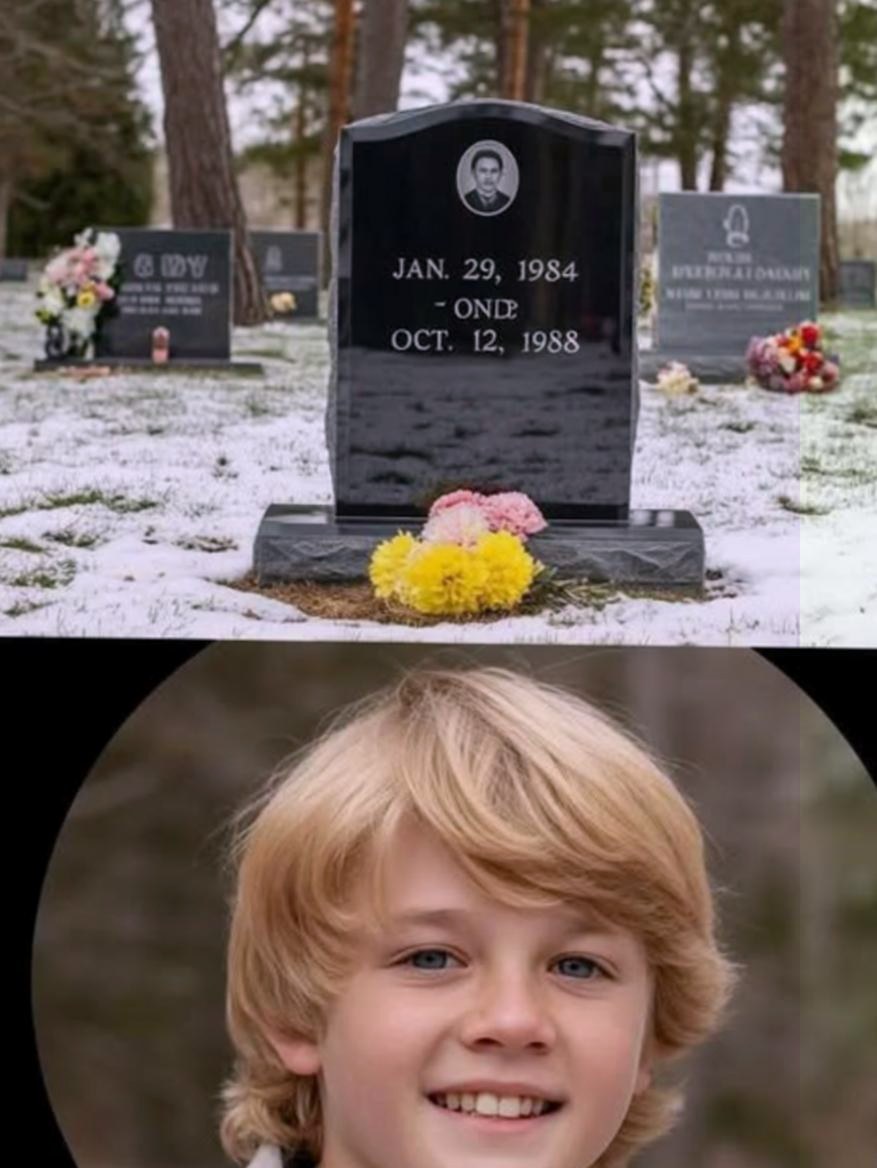
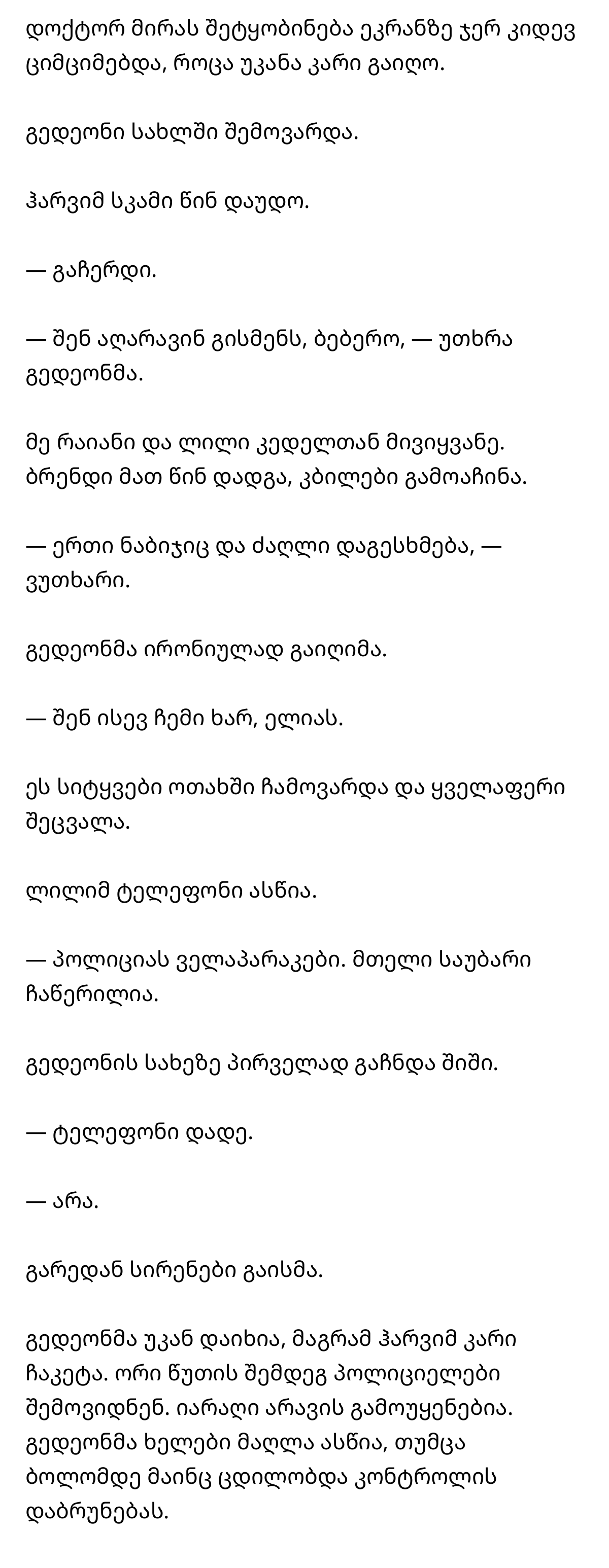
Lily and Ryan were waiting for me at the cemetery. The police had opened the area because there was nothing left to hide there. I stood in front of the stone on which my face had been placed.
I removed the photograph.
Behind the stone I found a small letter from Nora, which the rain had almost destroyed.
“If you ever return, my son, know that I never reconciled myself to losing you.”
Lily took my hand.
“Do you want us to leave this stone?”
“No,” I told her. “Let the stone remain. I will take the photograph.”
When I returned home, I opened the empty room from my childhood. For years we had used that room as storage. An old box stood in the corner. Inside I found only one thing—a faded yellow shirt, the same one I was wearing in the photograph.
I did not know how it had survived the fire. Perhaps Mother hid it. Perhaps the person who knew the truth then, but chose silence.
I took the shirt in my hands and could not let it go for a long time.
Ryan stood at the door.
“Was this yours?”
“Yes.”
“Is it yours again now?”
“Now it is truly mine for the first time.”

Several weeks later the court accepted Gideon’s case for proceedings. Lily and I did not go to every hearing. Some things had to happen without my constant presence. The investigators found the remaining families. Some children were already adults. Some no longer had parents to whom they could return.
This story was no longer only mine.
Three months later I began working in Portland, in a small archive where I organized old documents. Every day I touched papers that preserved people’s lives. Earlier, something like that suffocated me. Now it seemed to me that I was returning lost names to their places.
Lily taught music at a local school. Ryan drew on our kitchen table every evening. In one drawing four people stood at the edge of the forest, and in the middle there was a large yellow sun.
“Who is this?” I asked, pointing at the small figure.
“Grandmother Nora,” he answered. “She is watching us from above.”
That night I cried for my mother for the first time in the way I should have cried in childhood, but did not have time to.
The first snow came at the beginning of December. The roofs of the city turned white. Ryan stood by the window and pressed his hands against the glass.
“Dad, are you still afraid of the forest now?”
“No.”
“Why?”
“Because now I know what was hidden there.”
“And if someone calls us again?”
I looked at him.
“Then together we will find out who it is.”

I received the last letter from Gideon in January. It had been sent from prison. It contained a short text: “I can explain why I did this. Come and listen to me.”
Lily read the letter and put it on the table.
“Do you want to answer?”
I thought for a long time.
Then I folded the paper in half.
“No.”
“Are you sure?”
“I lived my whole life in his explanation. Now my life must no longer be his last word.”
I did not burn the letter in the fire. I simply put it in an archive folder, together with the documents needed for the court. His words had to be preserved, but they no longer had to live in my house.
I hung my mother’s photograph beside the bed. Beneath it I left my childhood picture—the one I had removed from the stone. I hung the yellow shirt on a small wooden hanger.
Every morning, when I left the house, I looked at it first.
One evening Ryan brought me a small wooden box. He had made it himself at school. Rough letters on the lid read: “Dad’s real name.”
Inside lay my wooden medallion.
“Keep it here,” he told me. “So that no one takes it away from you again.”

I took the medallion in my hand. The wood still held the same warmth that I remembered from childhood.
Lily called to me from the kitchen:
“Travis, tea is ready.”
Then she added, more softly:
“Elias too, if you want.”
I smiled.
“I am both.”
Outside the window snow was still falling. Far away, in the direction of the forest, the stones of the old cemetery were being covered with a white blanket. The stone on which my childhood face had lain was now empty.
And for the first time I did not feel that something was missing from me.
I hung the wooden medallion on the hanger, beside the yellow shirt.
This time no one would take my name away from me.
Missed the beginning?
Related posts:
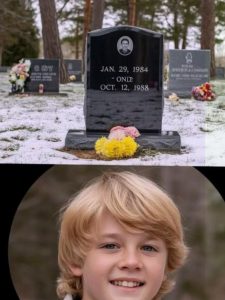 They Found a Photo of My Childhood on a Stone in the Forest, but When I Saw the Date, Lily’s Smile Disappeared
 Am găsit sânge sub biroul șefului și un simbol legat de sora mea, iar când el a văzut cicatricea, a încetat să zâmbească
 The Family Built My Cousin’s Career on My Failure, but My Mother Went Pale When She Turned Over One Sheet at Dinner
 I was left alone at home with a newborn, while my husband disappeared at night — at the abandoned house his face lost its color
 On Thanksgiving Day, My Brother’s Girlfriend Slapped My Child, and by Christmas Her Smile Suddenly Began to Disappear
 My Husband Was Marrying My Sister When My Nine-Year-Old Daughter Went on Stage and Asked Her Father a Strange Question





