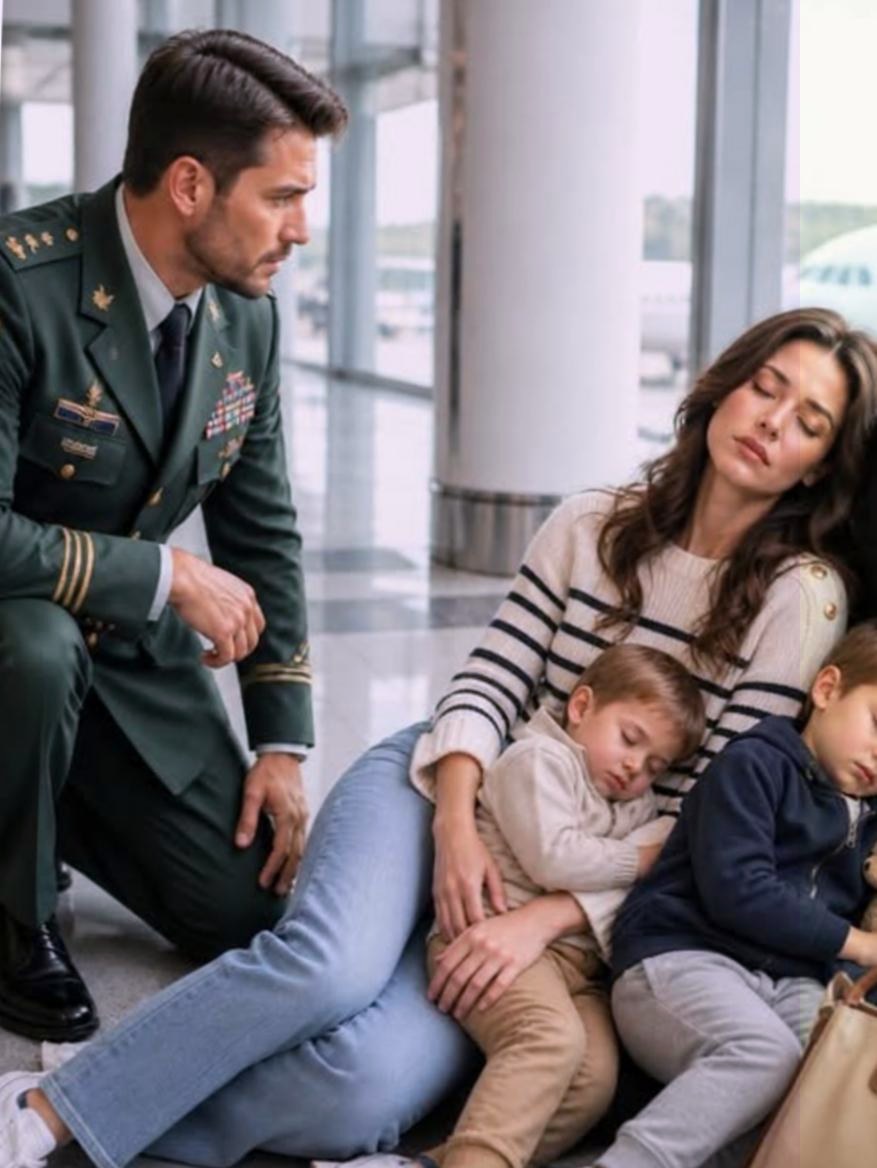

After Raymond’s words, the first thing I did was put the children behind me.
The second was to call airport security.
The third was to look at my mother.
“We are not going to the old house alone.”
“You have no idea what you are doing,” she told me.
“For the first time, I know exactly what I am doing.”
I took Evelyn’s hand. Her fingers were as cold as ice.
“I trust you,” I told her.
She nodded, although the shadow of that six-year night still stood in her eyes.
Raymond called the lawyer, and then the chief investigator of the police. He received an answer only a few minutes later.
“They will send help,” he said.
“How long?”
“Fifteen minutes.”
Sometimes fifteen minutes is the length of an entire life.

My mother took out her phone and called someone.
“Everything has changed,” she said quietly. “Marcus found out.”
I stood in front of her.
“Who are you talking to?”
“My lawyer.”
“No. Daniel Cross.”
Her hand stopped.
At that exact moment, a man’s voice sounded from the phone.
“Eleanor, if the children are not here in ten minutes, the agreement is over.”
Everyone heard the voice.
My mother quickly hung up, but it was already too late.
Raymond switched on the recorder and played the voice once more. Daniel’s words sounded clearly in the cold airport waiting area.
“The children will not be here in ten minutes.”
My mother froze.
“I did not say that,” she whispered.
“Not you,” I told her. “He said it. And now everyone has heard us.”
This was the first time my mother heard the sound of her own lie from the side. Her face slowly emptied. It was as if she understood for the first time that words could return against her independently of people.

The police arrived with flashing lights. Raymond took two investigators aside and handed them the documents from the folder. They also requested my mother’s phone.
“You cannot do this,” she said.
“We have a temporary court order,” the investigator answered.
My mother looked toward me.
“Everything is collapsing because of you.”
“No, Mom. Everything collapsed on the day you decided that my life was your property.”
We did not go to the old house that night. The police arrested Daniel there. Later we learned that he had planned to take the children and file a false complaint against Evelyn. They found a second folder, three phones, and the children’s new travel documents in his car.
I did not open them.
I saw only one thing—a small bag resembling the green suitcase, with a metal clasp hanging from its handle.
That night all four of us were together in a hotel room. There were two beds in the room. Leo sat by the window, while Toby played with the wooden bird.
“Why does this knock?” he asked me.
“So that it does not get lost on the way,” I told him.
“Do birds remember the way?”
“Some birds do.”
Evelyn smiled for the first time.

The next day my lawyer called me. The court gave temporary custody of the children jointly to Evelyn and me. My mother was forbidden from approaching the children. Daniel was charged with fraud, document forgery, and attempting to take the children away illegally.
Raymond resigned from his position.
“I came six years late,” he told me. “But in the end I still had to tell the truth.”
“Why now?”
He looked out the window.
“Because yesterday I saw that recording again and realized that silence is participation too.”
Several weeks later my mother finally lost the right to manage the company. The audit discovered hidden accounts. The money transferred from them, the forged signatures, the letters, and the payments made to Daniel came together into one complete picture.
I neither celebrated at the trial nor wanted my mother’s humiliation.
When the judge asked her whether she had anything to say, my mother looked toward me.
“I did everything for you,” she said.
I answered calmly:
“You may have thought so. But love that takes away your right to choose is no longer love.”

That evening I entered our old house, where I had spent my childhood. My room was emptied. Only rectangles of dust remained on the bookshelves. On the table lay a framed photograph of me from my childhood, belonging to my mother.
I picked up the photograph.
On the back was a small inscription: “My boy will always be mine.”
I left the photograph there.
For the first time, the empty room seemed free to me.
Three months later we moved to a small seaside town. One of the old houses of my hotel chain was there. Its upper floor had been closed for a long time, so Evelyn remade it for the children.
Every morning Leo sat by the window and counted the ships.
Toby put the wooden bird beside his bed.
Evelyn began working in a small library. And I stopped checking my phone throughout the entire day for the first time. At five in the evening I left work because I promised the boys that I would have dinner with them.
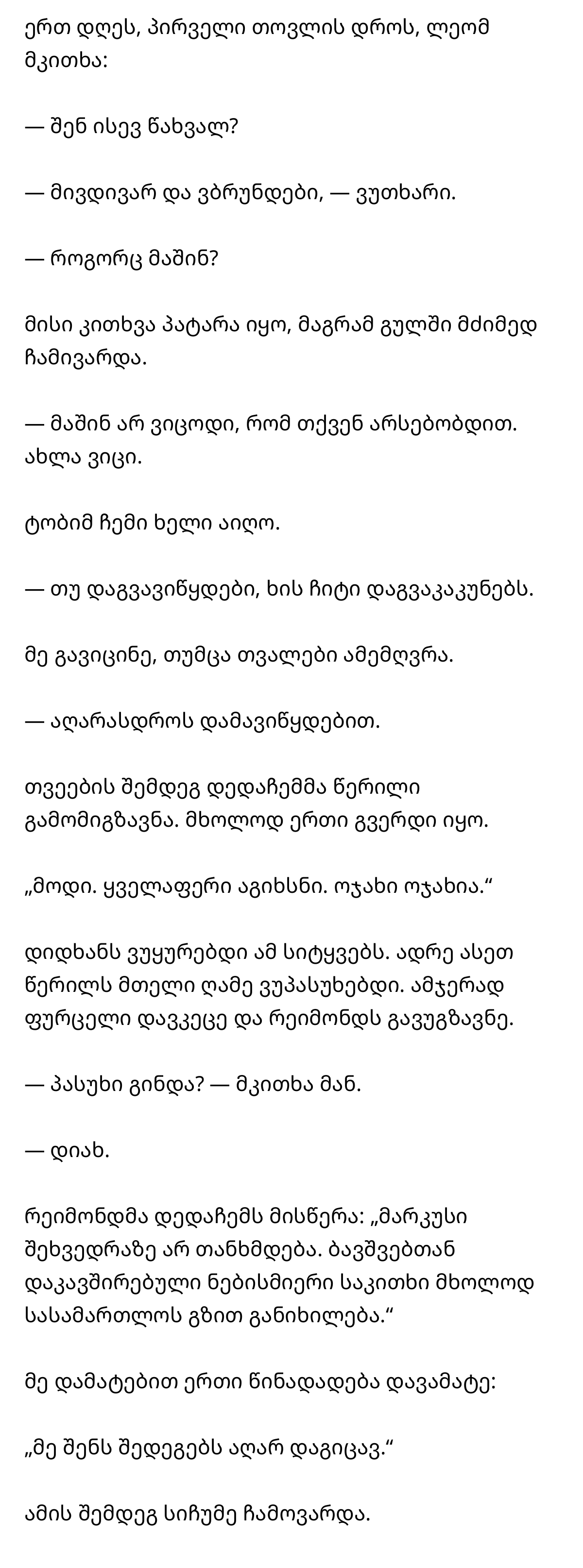


One day, during the first snow, Leo asked me:
“Will you go away again?”
“I am going and coming back,” I told him.
“Like then?”
His question was small, but it fell heavily into my heart.
“Back then I did not know that you existed. Now I know.”
Toby took my hand.
“If you forget us, the wooden bird will knock for us.”
I laughed, although my eyes filled with tears.
“I will never forget you.”
Months later my mother sent me a letter. It was only one page.
“Come. I will explain everything. Family is family.”
I looked at these words for a long time. Earlier I would have answered such a letter all night. This time I folded the paper and sent it to Raymond.
“Do you want an answer?” he asked me.
“Yes.”
Raymond wrote to my mother: “Marcus does not agree to a meeting. Any matter connected with the children will be considered only through the court.”
I added one sentence:
“I will no longer protect you from your consequences.”
After that, silence fell.
A silence that did not frighten me for the first time.


That same evening Leo and Toby built a small wooden house in the yard. The roof turned out crooked, and the door locked only when you knocked on the handle twice. Toby hung the wooden bird there.
When the wind blew, the bird made the same sound again.
Knock.
Knock.
Knock.
I stood at the door and watched the boys laughing in the snow. Evelyn stood beside me.
“Will you ever regret it?” she asked me.
“What?”
“That you have to build everything again from the beginning.”
I looked toward the children.
“No. For the first time I am building what is mine.”
She rested her head on my shoulder.
Far away, the sea was darkening. Lights were coming on in the town’s windows. Another message arrived on my phone, this time from an unknown number.
“Dad, look what we made!”
It was from Leo. A photograph was attached too—the wooden house, the snow, and the small hanging bird.
I saved the message.
I put the phone in my pocket.
The wooden bird knocked once more.
This time it was no longer a warning.
It was the sound of returning home.
Missed the beginning?
Related posts:
 My Flight Was Delayed and I Found Two Boys with the Woman Who Disappeared Six Years Ago, but Raymond’s Face Changed When He Saw My Mother
 The Widow Working in My House Needed Twenty-Eight Dollars, but the Family Lawyer Turned Pale at the Sight of an Old Letter
 Ich folgte meiner Haushälterin wegen 28 Dollar bis vor ihre Wohnungstür, doch als sie den Umschlag öffnete, erstarrte mein Anwalt
 I Was Carrying an Engagement Ring for Another Woman When I Saw Three Unknown Children in the Rain and the Smile Disappeared from Grace’s Face
 Tatăl meu vitreg a spus că sora mea și cu mine am căzut pe scări, dar când am pomenit telefonul, a încremenit
 Am dispărut după ce soțul meu s-a căsătorit în direct, iar când s-a întors, a înghețat în fața casei