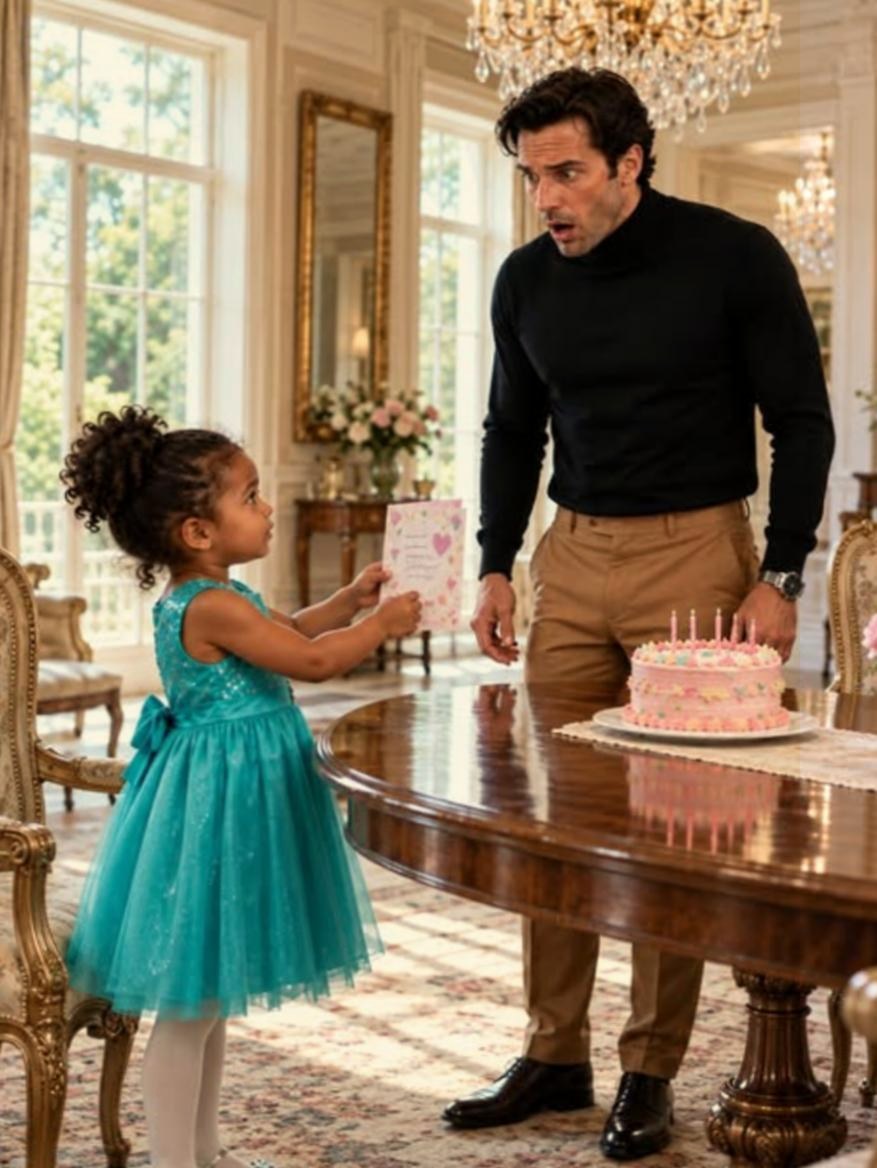

“If you want the child to remain alive, prepare all the documents by morning…”
Ethan slowly lowered the phone from his ear.
“Who was it?” I asked.
“Claire’s father. Alistair Wayne.”
Mira immediately dialed another number.
“I’m calling the police.”
“No,” Ethan said.
Mira turned sharply.
“He threatened to kill the child.”
“If we call the police, Nia will become the first target.”
“If we don’t call, he will think he frightened us.”
I pressed Nia’s head against my chest. The paper of her crown touched my chin and folded.
“Call both,” I said.
Ethan looked at me.
“Sarah…”
“No one will make decisions without me anymore. Neither you, nor Mira, nor your family.”
For the first time, he agreed without resistance.

Mira called the police. Ethan ordered security to stand by the child’s room, but then his own phone rang.
It was his financial director.
“Mr. Reeves,” a frightened voice said, “the foundation board has temporarily suspended your authority. They say that if Nia’s existence is confirmed, part of the shares belongs to her.”
Ethan lowered his eyes.
“Who else called?”
“Your bank. They froze all transfers.”
“And Mira’s law firm?”
A long silence fell over the line.
“They said they would no longer participate in this case.”
Ethan ended the call.
For the first time I looked at him as others looked at him—not as a billionaire, not as an inaccessible man, but as a person whose control was slipping from his hands.

At two o’clock at night, the police came. They transferred the recordings from the house cameras. The recordings showed that a man of Alistair Wayne had already stood in front of the house several times, in the rain, with a black umbrella.
In the morning Alistair came himself.
He was a tall, thin man with white hair and a cane. He looked as if he were a sick old man and not a person who had threatened us with a child’s life.
The police officers brought him into the living room.
“I want my granddaughter,” he said.
“She is not your property,” I answered.
Alistair snickered.
“You consider yourself her mother only because she lived with you for three years?”
Ethan stood in front of him.
“Threaten my child one more time and you will go to prison.”
“Your child?” Alistair tilted his head. “You did not know your own child existed for three years.”
Ethan clenched his hand.
I saw how his fingernails pressed into the skin.
Mira put the recorder on the table.
“We have an old recording of Martin Reeves.”
The smile disappeared from Alistair’s face.
The recorder spread a man’s voice through the room. The voice was calm, cold, and thoughtless.
“The child died. Ethan must never learn the truth. And Sarah will be so tired that she will believe everything.”

I heard these words and the floor disappeared beneath my feet.
Martin had been saying this beside me. He had been speaking about me as something that had to be easily deceived.
Ethan listened to the recording and his face turned gray.
“That is my father’s voice.”
“Yes,” Mira said. “And the recording is already with the police.”
For the first time Alistair could say nothing.
Then he slowly sat down.
“I only wanted my daughter’s child.”
“You brought her fear,” I said. “Not a family.”
That same day Alistair was arrested for threats and attempted child abduction. A case was also opened against Martin, although he was no longer alive. His money could not be punished, but the truth would no longer remain attached to his name.

Two weeks later, the court left Nia in my custody, while it granted Ethan parental rights only with my consent and supervision.
One evening Ethan asked to meet me.
I entered the small room where we watched the camera recordings. The recording was still ready on the screen.
Ethan turned it on.
He heard his own voice when he first said: “May sixteenth.”
Then his own voice when he told Nia: “I am your father.”
He buried his head in his hands.
“I remembered nothing,” he said.
“I know.”
“But that does not excuse me.”
“No.”
He looked at the screen.
“I lost three years.”
“I also lived three years in a lie.”
This time he did not defend himself. He did not say that Martin was guilty or that he too had been a victim.
He simply said:
“I’m sorry.”

I could not answer immediately.
When I returned home, I entered Nia’s room. Her drawings hung on the wall. In one I was drawn, in another Nia, while in the corner stood a small man with a large black umbrella.
Her bed was empty, because that night Nia slept with me.
And on the table lay the small blue blanket that I had brought from the clinic three years earlier. All this time I had thought it was my child’s first possession. Now I knew that on that night I had held another child against my chest, but it still became my daughter’s blanket from the moment Nia first squeezed my finger.
One week later the first snow came to Boston.
I changed jobs and began working as an administrator at a children’s clinic. I no longer woke up in an expensive house according to someone else’s schedule. In the morning I braided Nia’s hair myself. Her purple crayons lay in every kitchen drawer.
One evening she asked me:
“Can Mr. Ethan come to us now?”
“If both of us want it.”
“Do you want it?”
I stood by the window. The snow looked like dust fallen onto the blue blanket.
“I want you to be at peace.”
Nia thought for a while.
“Then he can come. But he will not cut the cake himself.”
I laughed.
“Agreed.”

Three months later Ethan sent me a letter. Inside there was no expensive gift, no check, and no lawyer’s document. There was only one sentence:
“If you ever think it will be better for Nia for me to be in her life, I will be ready, but I will no longer disturb your peace.”
I looked at the sheet for a long time.
Then I answered:
“You can be in her life only if you never again treat her as a right that you have to reclaim.”
His reply came the next day.
“I understand.”
This time I believed him.
Nia met Ethan once a week. He read books to her, but never told her that he was her father until she herself asked. Nia still called him “Mr. Ethan” and gave him a new drawing at every meeting.
One evening, after returning home, Nia put a small piece of paper on the table.
Three people were drawn on it. Me, Nia, and Ethan. Above them was a large sun, and below was a blue blanket.
“Is this our family?” I asked.
Nia shrugged.
“A family is whoever does not lie to you.”
Her answer struck me more strongly than any court.
That night I placed the old hospital bracelet in a small wooden box. Beside it I put Nia’s first purple crayon.
For three years this bracelet had been a symbol of someone’s lost life. Now it reminded me that truth may be deprived of a name, a document, and a date, but it cannot be taken away from the person whom a child calls mother every night.
Snow was still falling by the window.
Nia was smiling in her sleep.
I closed the box.
This time nothing was buried there.
Our truth lay there.
Missed the beginning?
Related posts:
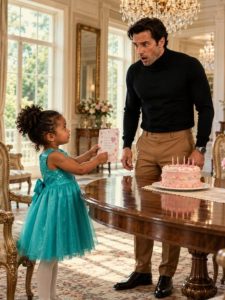 The Billionaire Quietly Uttered My Four-Year-Old Daughter’s Date of Birth — Then the Smile Disappeared from His Face
 Two Hours Before the Wedding, the Groom Threatened My Family, but the Sound of the Helicopter Drained the Color from His Face
 Miliardarul m-a concediat după unsprezece minute, dar când am scos plicul gri din geantă, mâna lui a început să tremure
 I told my former love the child in my arms was his, and when he saw the letter, his fiancée stopped smiling
 When the dangerous mobster’s son reached out towards me, his father looked at the photo and went pale.
 My husband threw me out of the house in the eighth month of pregnancy, but when an unknown man heard his name at the bus stop, he stopped