
That Tuesday morning, my key no longer entered my own house, and my daughter-in-law told me from the threshold that she was no longer expecting me there.
I held the key in my hand and turned it in the lock once, twice, a third time. The old brass key was warm between my fingers, and its edges were so worn from thirty-one years of use that it seemed to have grown old together with the house.
It did not open.
I had carried this key through two jobs, three trucks, a major operation, the births of my grandchildren, and Eleanor’s funeral. But now the lock no longer recognized me.
The door opened from inside.
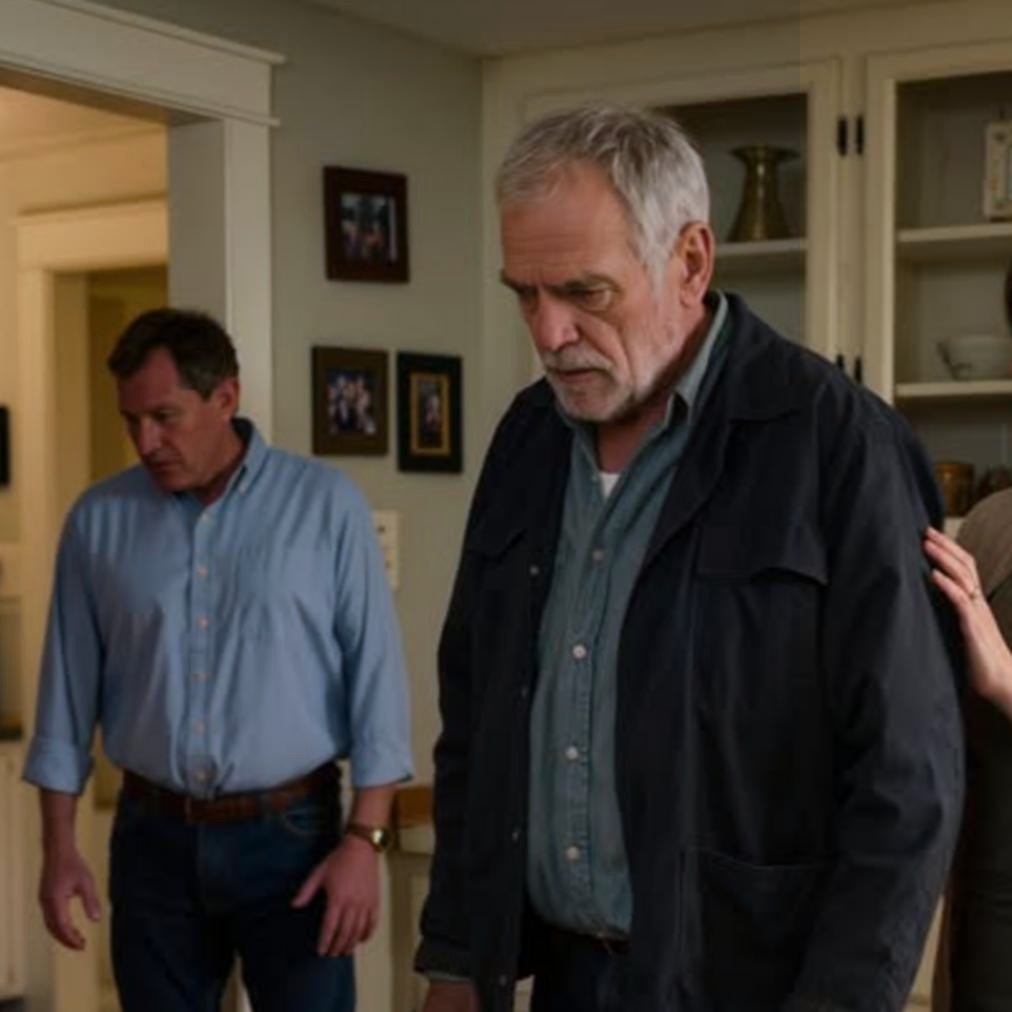
Melissa was standing there. Thirty-nine years old, always neat, always polite with that particular caution that never resembles sincerity. That morning she was not surprised.
She was prepared.
That was what frightened me first.
“Why doesn’t it work?” I asked and raised the key.
Her eyes moved first to the key, then to my face.
“We changed the locks.”
I waited for an explanation.
She said nothing.
I looked into the hallway. The old wooden coat rack Eleanor had bought was gone. Her photograph near the stairs had disappeared. The small ceramic bowl in which I had put the keys for years was no longer there either.
“Where is Eleanor’s photograph?”
Melissa folded her arms.
“It’s in the boxes.”
“Why?”
“We’re starting to remodel the house.”
“Where did you put it?”

“Richard, now is not the time for this.”
It was as if I had come to someone else’s house and not to the place where my wife had lived for thirty-one years.
“Give me a new key.”
“You don’t need one.”
“What did you say?”
“Daniel said you should no longer be able to come in and go out here whenever you want.”
For several seconds I could not make a sound.
This was the house where Daniel had taken his first steps. On the kitchen doorframe Eleanor had marked his height on every birthday until, at sixteen, he asked us to stop. I myself had built the back porch twice. Sophie had learned to ride a bicycle in this very yard.
Now Melissa was telling me that I no longer had the right to enter my own house.
“Where is Daniel?”
“At work.”
“Call him.”
“He’s busy.”
“Call him, Melissa.”
Her jaw tightened.
“Please, don’t put me in a difficult position.”
“I haven’t made anything difficult.”
“You’re angry.”
“Of course I’m angry.”
“Go back to your apartment and calm down.”
The word apartment cut through me strangely. Six months earlier, after Eleanor’s death, I had moved into a small apartment because every room in this house repeated her voice. But the house was still mine. At least, that was what I thought.
“I am standing in my house,” I told her.
Melissa did not answer.
I could have shouted. I could have called the neighbors. But the thirty-five years I had spent on construction sites had taught me one thing: when a wall sways strangely, you do not immediately destroy it with a hammer. First you find out what has changed.
I stepped back.
“All right.”
Relief appeared on Melissa’s face.
I remembered that too.
I stopped as I was going down the stairs.
“Melissa.”


“Yes?”
“Don’t throw anything away.”
Her fingers tightened around the door handle.
“What do you mean?”
“I mean what you heard.”
“Richard, I don’t know what you’re talking about.”
“Don’t throw anything away.”
I walked silently to the truck. I did not slam the door. I did not call Daniel from the yard. I simply left.
They thought my silence meant defeat.
They did not know that that morning I had begun to look carefully for the first time.
Twenty minutes later, I stopped in an old corner booth at Miller’s Diner. Eleanor and I used to sit there on Saturdays. I turned off the engine and placed my hands on the steering wheel.
The phone rang.
Daniel’s name appeared on the screen.
Before hearing his voice, I first felt relief, then anger.
“Dad?”
“I’m listening.”
“Melissa told me you came.”
“I came.”
“You were angry.”
“Why did you change the locks?”
Silence fell on the other side of the line.
“It was necessary, Dad.”
“For what?”
“For safety.”
“From me?”
“No.”
“Then from whom?”
Daniel sighed.
“Everything became complicated.”
“How much?”

“Financially.”
At that word, my back straightened.
“How much?”
“About seventy thousand.”
The first drops of rain fell on the diner window.
“What does my house have to do with this amount?”
Daniel was silent for a long time before answering. Then he told me very quietly:
“Dad, we can’t talk about your house on the phone. Come to the bank this evening, but don’t come alone…”
That same evening I stood in front of the bank, turning Eleanor’s small brass key in my hand. Daniel arrived ten minutes later, together with Melissa.
“Why the bank?” I asked.
“We just need to talk,” Daniel told me.
“Then why didn’t you talk to me until now?”
Melissa looked away.
Inside there was cold air and the smell of paper. The manager, Mr. Harris, locked the door and drew the curtains.
“There is an issue concerning your house documents,” he said.
“My house?”
“We received a certain document.”
Daniel interrupted him immediately:
“Dad, listen to me until the end first.”
“I have been paying for and protecting this house for thirty-one years, and you are telling me to listen first?”
Melissa tapped her fingers on the table.
“If we don’t resolve this, we will lose everything.”
“What are you losing?”
This time Daniel looked at me. His eyes held the kind of exhaustion he had shown in childhood only when he was hiding something.
“They already have the right to sell the house,” he said.
Harris lowered his head.
“I would not put it that way.”
“Then how would you put it?” I asked.
He opened a thick folder of documents, but before showing the first page, the phone rang.
Harris looked at the screen and went pale.
“It’s the police,” he whispered. “And someone has just entered your house…”
Melissa grabbed the chair. Daniel turned toward me as if he had understood for the first time that this was no longer only about debts…

Harris put the phone on the table and turned on the speaker. On the other end, a frightened woman’s voice could be heard.
“Mr. Harris, the police said that the people who entered the house arrived with documents. They claim that the house belongs to them.”
The color drained from Melissa’s face.
“That’s impossible,” she said.
“That is exactly why you need to see this,” Harris replied.
He pushed the folder toward me. My fingers were not trembling, but my heart was beating in my chest as if someone were striking a wall from the inside.
My name was written on the first page. Below it was a signature that was supposed to be mine, but I immediately recognized the difference: the letter “r” was too short, and I never finished the final line with an upward curve.
“I did not write this,” I said.
Daniel rose from his chair.
“Dad, please…”
“No. Now you listen to me. This is not my signature.”
Harris turned over the second page.
“This is a power of attorney according to which your son had the right to dispose of the house in your name and take out a loan.”
Melissa shook her head.
“Daniel said that his father knew.”
Daniel turned toward her.
“You knew I was doing this temporarily.”
“Temporarily?” My voice broke. “Selling my house is temporary?”
Harris took out a third page.
“There is one more thing. A recording from the notary’s camera.”
He turned on a small screen. At first the rustling of paper sounded in the room, then a man’s voice.
“Richard will sign everything if we tell him, using Eleanor’s name, that it is about taxes.”
I gripped the chair.
It was Daniel’s voice.
Melissa lowered her eyes.
“That recording should not exist,” Daniel muttered.
“But it exists,” Harris said. “And even more importantly, the real notary confirmed in writing that he was not with you that day.”
Daniel walked to the window.

“I was drowning in debt.”
“So you used my mother’s name too?” I asked.
For the first time he looked at me.
“Mother was no longer alive.”
That answer hurt more than any confession.
Harris took the last document from the folder.
“Mr. Bennett, you had a protective mechanism in place beforehand. Six years ago, when you fully paid off the house loan, you left the original ownership document in the bank safe and registered an additional restriction. This power of attorney has no legal force.”
Melissa raised her head.
“Then why did we change the locks?”
I looked at Daniel.
“Because you needed time to enter the house and destroy all the evidence.”
He fell silent.
Harris added quietly:
“The police are already at your house. But this is still not the worst news.”
“What else happened?” I asked.
He picked up the phone. He looked at a new message and his expression changed.
“The lending company has filed an urgent claim in court. They submitted a second document signed in your wife’s name. If this is forged, someone also stole Eleanor’s medical records.”
Silence settled over the room.
Daniel slowly turned around.
“Dad, I didn’t make that document.”
For the first time Melissa also looked at him as if he were a stranger.
A message from an unknown number came to my phone: “If you want to find out who helped you, come to the old warehouse tonight. Alone.”
Daniel saw the screen and immediately went pale.
“Don’t go there,” he told me.
“Why?”
He had not yet said his answer when Harris’s phone rang again.
This time it was not a call from the police…
დანიელმა საკუთარი ხმა პირველად უცხო ადამიანისგან გაიგო…
მეგონა, ყველაზე მძიმე საკეტის შეცვლა იყო. მაგრამ ფინალში მივხვდი, რომ ნამდვილი კარი სულ სხვაგან იკეტებოდა.
„ახლა შენი ჯერია, საკუთარ ნაბიჯებს გაუძლო.“
მე კი მის გვერდით მშვიდად ჩავუარე.
👇 ისტორიის ფინალი უკვე გახსნილია
Related posts:
 When my daughter-in-law took over my house for Christmas, she made only one mistake — she thought I would still open the door for her, and Daniel turned pale
 My son demanded that I open the door of my house on Christmas morning, but he heard something on the phone and his voice suddenly fell silent
 I Locked My House for Christmas and Flew to Portugal — My Son Stopped Shouting for the First Time When He Reached the Door
 My Fiancé Gave His Sister Her Seat on the Train, and I Asked Him One Question—and His Face Immediately Changed
 I Didn’t Make It onto the Flight to London and Unexpectedly Returned Home — The Smile Immediately Disappeared from My Sister’s Face
 Part 4 — My daughter-in-law locked the house door in the morning, but when I asked one question, her smile immediately disappeared