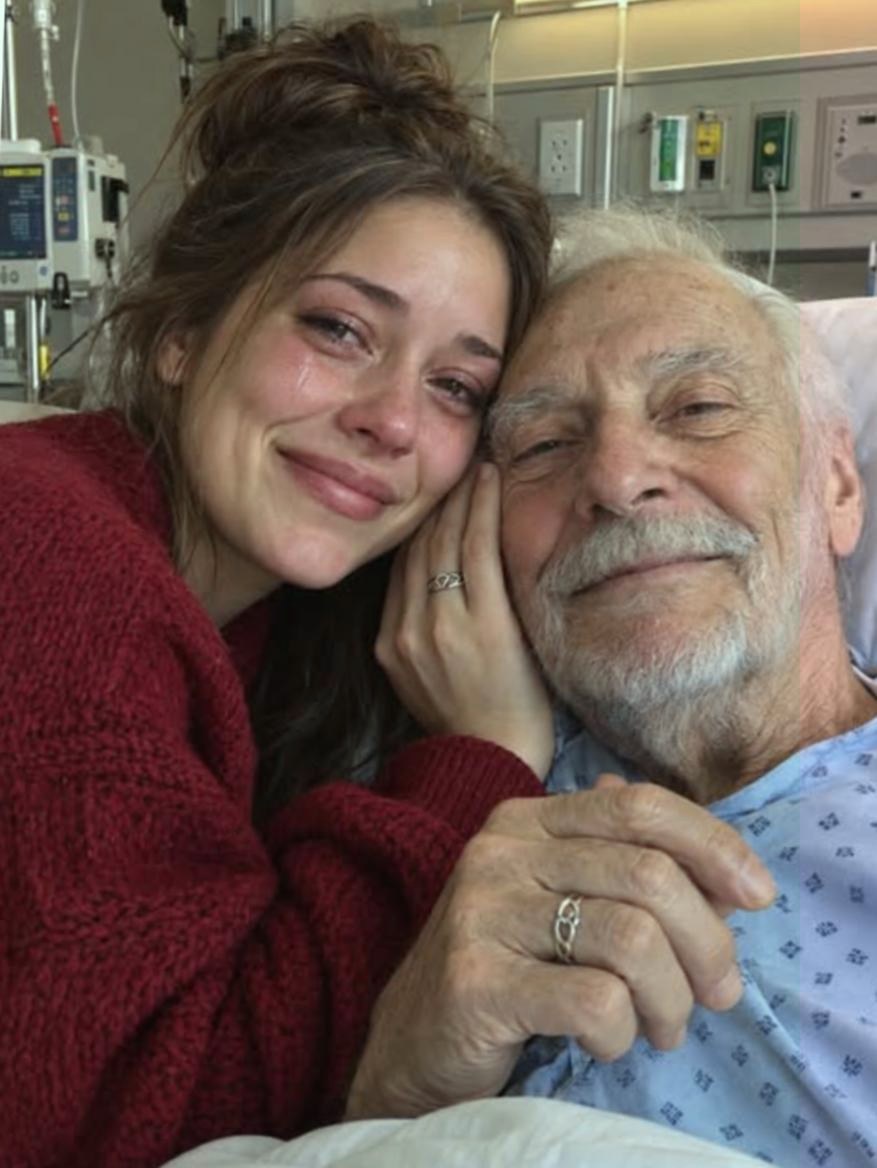

A few minutes after Julian’s death, his lawyer locked the door to the room and told me that what he had heard in the hospital corridor about our marriage was supposed to change my whole life.
I was twenty-nine years old and, after losing my mother, I still did not understand how I was supposed to continue living. For almost a year I had worked as a volunteer in the city hospital, on the third-floor wards, where people often waited alone for their last breath.
I first saw Julian there on a cold evening in November. He was seventy-two years old, very thin, and weakened by respiratory failure. He sat by the window, a white blanket spread over his knees, and an old copper watch hung from his fingers on a chain.
“You came today too?” he asked me when I straightened the curtains.
“As long as you are here, I will come.”
“That is a dangerous promise. A person gets used to words.”
His smile was so peaceful that, for the first time in a long while, when thinking about my mother I felt not only pain. We talked every day. Sometimes he told me about his childhood, sometimes about books, and sometimes we simply stared at the ceiling and silently listened to the even sound of the machine.

On the fifth day, Wednesday, at six o’clock in the evening, Julian squeezed my hand. His fingers were cold.
“Nora, marry me.”
I laughed, but there was no room for laughter left in his eyes.
“Julian, you barely know me.”
“That is exactly why I am asking you. You expect nothing from me.”
“You are dying.”
“I know. I do not want my last hours to disappear in the files of strangers. I want someone to hold my hand and tell me that I am here.”
It was raining when I left the hospital that night. I was wearing my mother’s small yellow sweater, which had remained among her belongings and had a wooden-colored button hand-sewn at the collar. I ran my fingers over that button as if I were touching my mother.
Two days later the hospital chaplain married us. We had no ring. Julian slipped the silver pull-tab from a carbonated-drink can onto my finger and quietly told me:
“A real ring is easier to lose anyway.”

I spent seven days beside him. I fed him, read books to him, and at night counted his breaths. At four o’clock on the morning of the seventh day, his hand suddenly became heavy.
“Do not go,” he barely said.
“I am here.”
Those turned out to be his last words.
Gray morning light was coming into the room when an old man with a green backpack entered. He was holding a small key.
“Nora? I am Julian’s lawyer. He left this for you.”
He held out the bag to me. It was so heavy that my wrist tightened.
“What is inside?”
The lawyer first looked at the door, then at the silver ring on my finger.
“Julian was not the man you thought he was,” he said quietly. “And he said that you had to understand the truth…”

The lawyer slid the key into the lock, but did not turn it immediately. A small spot of black ink could be seen under his fingernail.
“If you do not want to, you can open it now,” he told me.
“I was his wife for a whole week. I already knew more than enough.”
“That is exactly why he chose you.”
“Who chose me? Julian, or the people he was hiding from?”
The old man’s eyes tensed.
“Possibly both.”
That answer made the room colder. The lock opened. On top lay a folded yellow paper on which only one sentence was written: “Nora, if you are reading this, they already know that I have died.”
Below I found a small voice recorder. My hands were trembling when I switched it on. Julian’s hoarse voice sounded:
“Nora, trust no one connected with my surname. Especially the man who will come to your door tomorrow.”
“Who did he mean?” I asked.
The lawyer did not answer me. Footsteps sounded in the corridor, and then someone knocked on the door three times.
“This is impossible,” he whispered.
The door handle slowly went down. In the recorder, Julian’s voice sounded again:
“When he comes, tell him that the bag is empty…”
The door opened, and a tall, gray-haired man appeared on the threshold…


The man standing on the threshold looked astonishingly like Julian, only his face was stricter and his eyes were cold. He held leather gloves in his right hand, and an expensive watch gleamed on his left.
“Are you Nora?” he asked me.
“Who are you?”
“Daniel Hart. Julian’s son.”
The lawyer immediately stepped in front of me.
“You have no right to enter here.”
Daniel smiled bitterly.
“I came about my father’s funeral arrangements. And because of the bag he should not have left behind.”
I folded the paper in my hand.
“You knew about the bag?”
“I knew that Father had been confused in his last days. And you, apparently, took advantage of his condition.”
“I held his hand before he died.”
“And what are you expecting now for that? His property?”
His words struck me as if a window had opened in the room and ice had rushed in. The lawyer took a black, flat box from the backpack.
“Enough, Daniel. At Julian’s instruction, Nora must hear this recording today as well.”

He placed a small device on the table. Julian’s face appeared on the screen. He was sitting in the ward, wearing the same copper watch on his wrist.
“If Nora is seeing this video, I am already dead,” he said. “Daniel, you are not losing your father. You are losing the lie with which you lived for years.”
Daniel’s face went pale.
“This is forged.”
“The video was recorded six days ago,” the lawyer replied.
Julian continued:
“Daniel stole the money from my foundation, but that is not the gravest sin. He knows what happened to my wife, Elena, and why he hid her last letter.”
My breath caught. Elena was Julian’s deceased wife—the name he had not mentioned even once.
“Nora, I did not choose you by accident. Your mother, Marina, worked in the hospital where you are now volunteering. Her death was not an accident.”
The recorder fell from my hand. Daniel stepped back.
“No,” he said. “You cannot open this.”
The lawyer took a sealed document from the black box.
“This is the independent audit’s conclusion, Julian’s letter, and a recording that changes everything.”
I looked at the letter. My mother’s full name was written on it.
At that very moment my telephone rang. The hospital director’s number was on the screen. When I answered, I heard a frightened woman’s voice:
“Nora, the police are here. But they did not come to arrest you. They said that someone erased all of Julian’s files this morning…”
And among those files was one recording that Daniel most of all should not have seen…
მისმა საკუთარმა ხმამ ყველაფერი მის წინააღმდეგ შემოატრიალა…
მე მეგონა, რომ ყველაზე დიდი საიდუმლო ჩანთაში იმალებოდა. მაგრამ ფინალმა დამანახა, რატომ დამტოვა ჯულიანმა ეს ყველაფერი სწორედ მე.
„ნორას არაფერი უნდა დარჩეს.“
დანიელმა საკუთარი სიტყვები ვეღარ აიტანა.
👇 ისტორიის ფინალი უკვე გახსნილია
Related posts:
 My husband humiliated me in front of everyone on his birthday, but the moment I took the microphone, his smile disappeared
 My Former Partner Accused Me of Selling the Song on Stage, but One Calm Question from Me Would Drain the Color from His Face
 I Went to the Cemetery with Five Children, and My Ex-Husband’s Gaze Suddenly Froze
 The Video Sent on Our Wedding Anniversary Revealed My Husband’s Betrayal, but One Reflection Suddenly Erased His Smile
 Part 4 — One Week After the Funeral, the Lawyer Handed Me My Husband’s Heavy Bag and Quietly Told Me Something That Changed His Face
 On the Night of My Mother-in-Law’s Death, I Called My Husband Thirty Times, But After He Answered, an Unknown Woman’s Laughter Rang Out in the Room and Fell Silent