
The worst news for Grant was still on its way.
I could hear the voice of the lawyer, Mira Hale, on the phone.
“Evelyn, do not give the notebook to anyone. The police will be with you in ten minutes.”
“What did you find in the archives?”
“A letter sent by Kali. Not one. Three.”
Grant read the answer from my face.
“Turn off the phone,” he told me.
“Why?”
“Because this is a private matter.”
For the first time Nolan stepped between Grant and me.
“Grant, leave.”
Grant looked at him as if he had become an enemy.
“You got involved too?”
“I signed the loan documents I should not have signed.”
“You were only doing what I told you.”
Nolan lowered his eyes.
“That is exactly the problem.”
Grant took the phone from his pocket and called someone.
“Send me a lawyer. Right now. No, I do not want morning. Right now.”
No one heard the answer, but his face slowly changed.
“The lawyer is not coming?” I asked.
“This is none of your business.”
“Now it is.”
A few minutes later the sound of cars was heard outside. Two police officers and Mira entered. Mira held a long blue folder in her hand, its corner worn.

“Grant Bellamy,” one police officer said, “you are under arrest on suspicion of fraud, use of false documents, and unlawful appropriation of property.”
Grant laughed, but the laughter came out empty.
“You believe the word of a widow?”
Mira opened the folder.
“No. We trust your signatures, bank records, the letters kept in the archives, and your own voice.”
“My voice?”
Mira placed a small recorder on the table.
Grant’s voice sounded in the room. The recording was from the day he had made Nolan change the loan account on my farm.
“If Evelyn cannot withstand one more season, the land will remain ours. Let us leave the boxes in her yard too. When the debt presses, she will give us everything herself.”
Grant struck the table with his hand.
“This was recorded illegally!”
“Perhaps,” Mira replied. “But your handwriting, letters, and bank transfers were obtained legally.”
I watched Grant’s face. For the first time he was hearing his own words the way others heard them. For the first time he could not hide them with laughter.
Nolan sat down on a chair.
“I did not know this,” he said.
“Did you not know, or did you not want to know?” I asked.
He could not answer me.
They put handcuffs on Grant. When they crossed the door, he looked back.
“You still will not be able to build that business.”
“Maybe not,” I told him. “But you will no longer decide what I am capable of.”

The next morning the village was unusually quiet.
No one mocked me in the grocery store. People avoided my eyes, as if their laughter had also remained in the recording.
Mira told me that Grant’s company was being investigated. Several farmers admitted that they too had strange debts and had been forced to give up their land at a low price. Nolan gave testimony and left his job.
Grant was awaiting trial, but I was no longer dependent on his sentence. The bank halted the process of taking my farm. In the very first week of sales, two nearby farms became interested in Kali’s folding boxes.
I entered the warehouse to receive the first order.
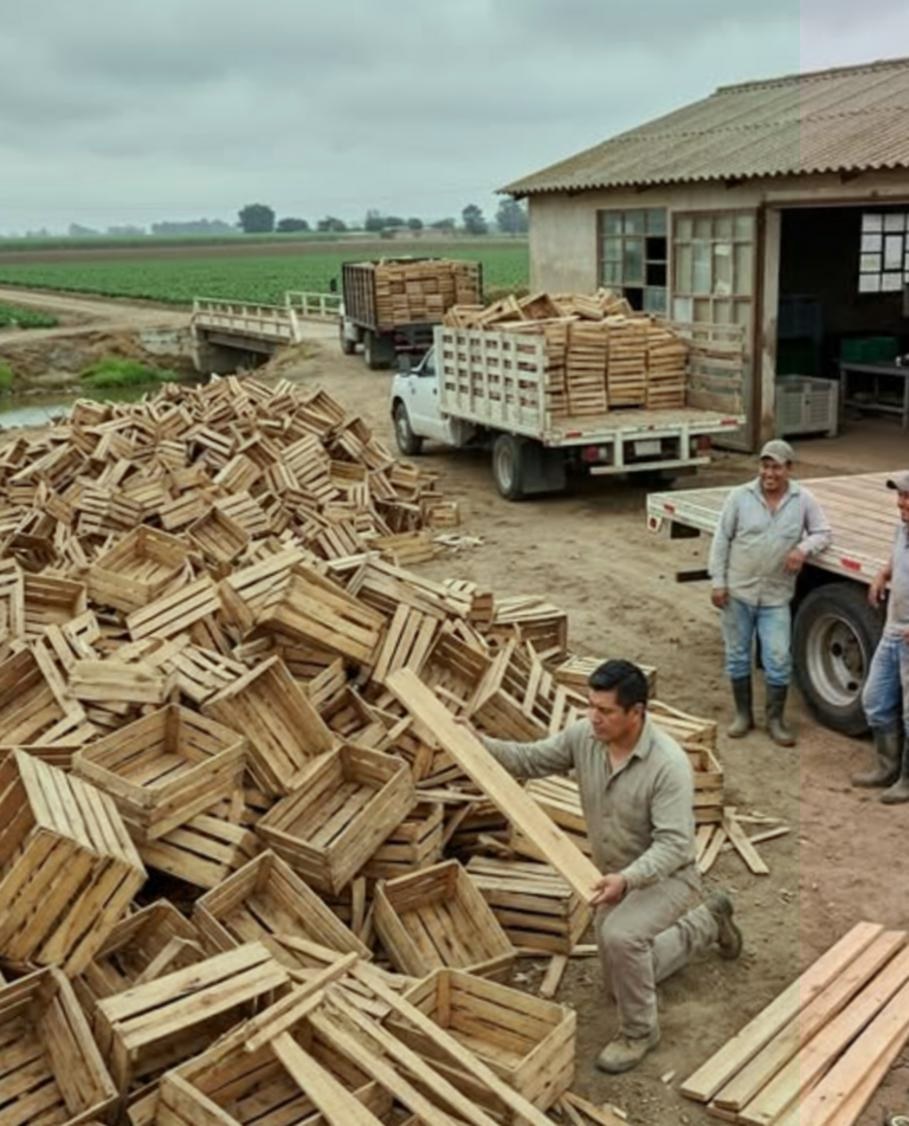
There I found only the empty place where the pile of broken boxes had stood. A small rusty nail lay on the mud. I picked it up and closed it in my palm.
That evening Lila asked me:
“If Dad had been alive, would he have been proud?”
Her question sounded in the kitchen at eight o’clock, against the quiet clicking of the stove.
I looked at the wooden table. It was Kali’s table. Mikaia’s pencils and my order sheets lay on it.
“He would have been proud that we did not stop,” I told her.
“Were you afraid?”
“Every day.”
“Then how did you continue?”
“Fear did not decide instead of me.”
Mikaia drew a picture of the farm on a sheet. The warehouse was huge, and small boxes were drawn in front of it. A large sun could be seen above.
“This is our new workshop,” he said.
“Does it have a name?”
“‘Kali’s Boxes.’”
I smiled, but my eyes filled with tears.

Three months later we converted half of the old warehouse into a workshop. Lila wrote down orders and checked measurements. Mikaia counted nails, although he always left two extra for himself, because he said he needed them for “important matters.”
I worked on the farm in the morning, and assembled wooden boxes in the afternoon. The neighbors also began bringing their own materials. One man told me that we had saved him from losing his farm.
I corrected him.
“You saved yourselves. We only opened the door.”
Winter came early. The first snow fell at the beginning of December and left a white layer on the roofs. The smell of pine stood in the workshop. From the window I could see Lila attaching a small wooden mark to a new box—the three crossed lines.
That evening I received a letter by mail.
It was from Grant’s lawyer.
They wrote that Grant was ready to resolve “all misunderstandings” if I changed my statements and agreed to the termination of the case. At the end there was one sentence written by Grant’s hand:
“We could have ended this better for both of us.”
I read the letter twice.
Then I asked Lila:
“Do you want to know what he is offering me?”
She shook her head.
“If you already know the answer, there is no need.”
I knew too.
I folded the letter and sent it to the lawyer. The only answer I left for Grant was short:
“You made your choice when you dumped the boxes in my yard. Now I am making mine.”
Years passed. The farm was no longer only our family’s land. Every day people worked there who had started new businesses from their own old materials. We no longer sold only boxes. We sold time, space, and the possibility that a discarded thing need not be discarded completely.
Kali’s leather notebook remained with me.
On the last page, on the same dusty shelf, I added one new sentence:
“Begin, even when others already see the end.”
I fastened the nail I had found in the empty place into the notebook’s cover. It was small, rusty, and uneven, but every time I ran my fingers over it, I remembered that morning when everyone saw garbage.
But I was the first to hear that wood really spoke.
And this time its voice was mine.
Missed the beginning?
Related posts:
 The Video Sent on Our Wedding Anniversary Revealed My Husband’s Betrayal, but One Reflection Suddenly Erased His Smile
 My pregnant husband gave our honeymoon to another woman, but after my calm response his face turned pale
 Two Hours Before the Wedding, the Groom Threatened My Family, but the Sound of the Helicopter Drained the Color from His Face
 After my warning at the billionaire’s negotiation, the lawyer ordered the guards to remove me, but his smile suddenly disappeared
 My husband gave me a choice in front of the family, but one message suddenly erased his smile
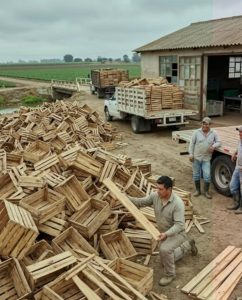 Eight Thousand Four Hundred Broken Boxes Were Left at My Farm and They Mocked Me, but When They Heard My Answer, Grant Turned Pale