
Part 4
Following Brooks’s words, Mother nearly dropped her phone from her hands.
— “An asset freeze on the account?” Father repeated.
The phone rang again. This time, Father’s attorney was calling.
— “Don’t answer it,” Mother said.
— “Why?”
— “First, we need to figure out who owns what.”
However, they had already lost control of the situation.
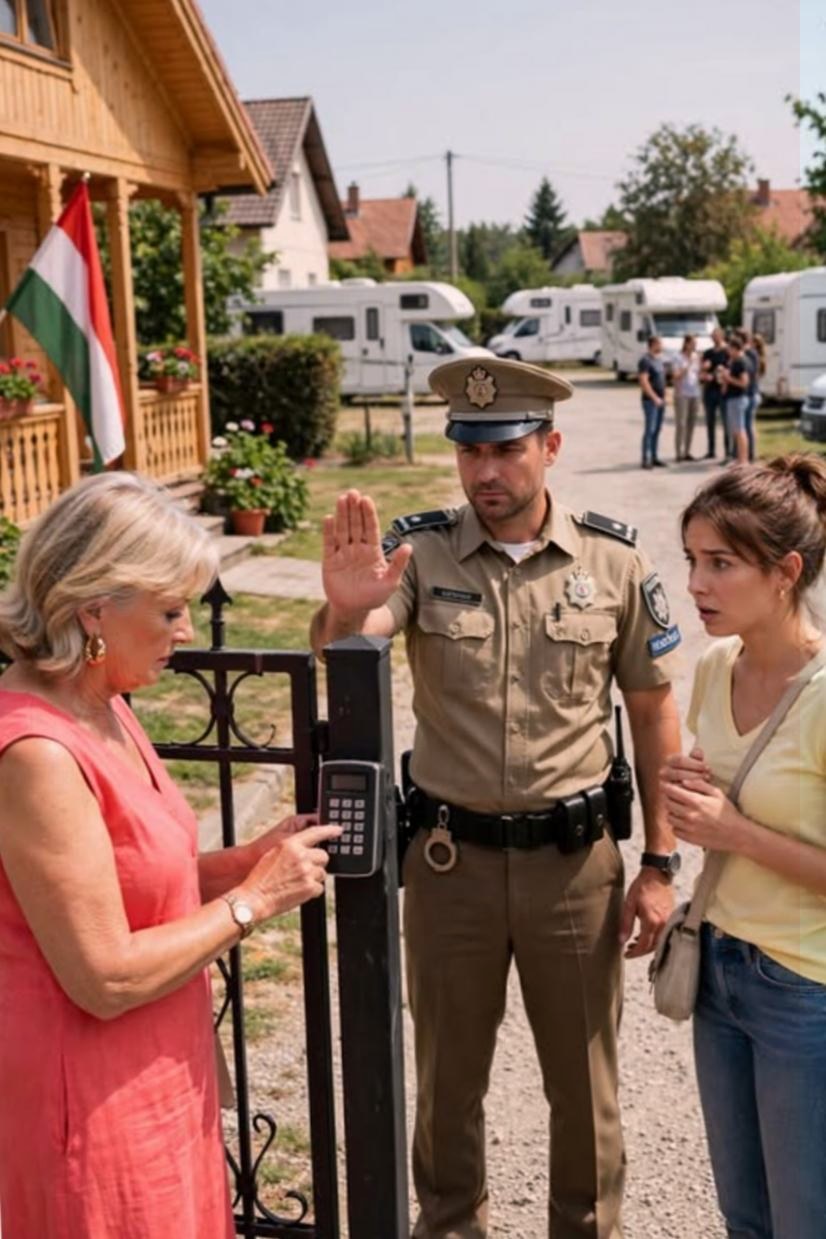
Brooks called two deputies, while clearing the guests off the farm’s access road. The catering truck turned around, the floral arrangements were left abandoned in the dirt, and the musicians of the string quartet packed away their instruments in silence.
I walked upstairs.
Lily was sitting on her bed, looking up at me from behind her medical mask.
— “Is Grandma still angry?” she asked.
— “No. Now she simply has to leave.”
— “Did I do something wrong?”
I dropped to my knees before her.
— “You didn’t do anything wrong. You came home. That is all.”
Her hand felt cold in mine.
We headed to the clinic. Brooks escorted us to the car, while Mother and Father remained standing by the gate. Their vehicle had not moved an inch.
Ten minutes later, Father called me.
— “Emily, the attorney says the audio recording is illegal.”
— “I didn’t enter your house. You left that voicemail on my phone yourself.”
— “We only wanted to host an event.”
— “You planned to forcibly break into my home.”
— “Your mother was angry.”
— “And you quietly agreed with her.”
Silence fell on the other end of the line.
At the clinic, the doctors checked Lily’s lab results. I sat in the hallway, watching the clock mounted on the wall. With every passing second, I felt as though I were losing something.
Unexpectedly, Brooks sent me a new update. Our neighbor, Mrs. Harper, had brought him surveillance camera footage. It captured Father approaching the back kitchen door the previous night, trying to pick the lock, and leaving a piece of paper behind.
The next morning, the investigator confirmed that the signature on that document was forged. For several years, Mother and Father had been trying to take out a loan secured against the farm. The bank had put their request on hold only because I was listed as the sole owner in the county registry.
That was why they needed the party.
They wanted to demonstrate to relatives and business partners that the farm belonged to them. If guests entered the property and took photographs, their lie would have appeared far more convincing to the bank later on.
When Mother learned this, she sat down silently instead of flaring up in anger.
— “You can’t prove that,” she said.
The investigator pressed play on the audio recording in front of her.
“If Emily resists us, we’ll enter through the kitchen. She won’t dare make a scene in front of everyone.”
Mother listened to her own voice.
Her lips froze.
Father lowered his eyes.
— “Did I say that?” Mother asked.
— “Yes,” the investigator replied. “You did.”
Mother listened to the recording as if another woman were speaking in the room. For the first time, she confronted her own spoken words from the outside. For the first time, I felt that I was no longer obligated to justify myself to her.
The investigation lasted several weeks. The bank canceled the loan application due to the use of a fraudulent document. Mother and Father were formally charged with attempted fraud and conspiracy to commit illegal entry. They were offered a settlement agreement: to reimburse all expenses they had burdened me with over the years, and never to approach the farm again without explicit permission.
At the courthouse, Mother tried to talk to me.
— “Emily, we are family.”
— “Family is a place where a sick child isn’t put in harm’s way.”
— “Perhaps we made a mistake.”
— “A single mistake can ruin a life. You two have been doing the exact same thing for years.”
Father looked at their attorney.
— “Tell her we never thought poorly of her.”
The attorney shook his head.
— “That won’t help you now.”
That evening, when I returned home, Mother’s belongings were no longer in the guest room. Only a single photograph remained on the dresser: me as a little girl, Grandmother, and my parents standing in front of the old gate. The corner of the photo was creased, as if someone had stopped mid-way through throwing it away.
The farm was strangely quiet.
Instead of guests, only the wind moved through the cornfield. Standing in the empty living room, I realized that for the very first time, the house was no longer afraid.
The tiny copper windmill key still hung on the door. I touched it with my finger. Its light chiming was exact to how I remembered it.
Three months later, Lily was able to return to school.
On her first day, a small drawing hung from her backpack: a green house, wide-open windows, and a gate with the words written beside it: “It is safe here.”
I started working part-time at the town clinic, while managing the farm’s accounts in the evenings. I built a small greenhouse in the garden for Lily. Every morning, she checked on the tomato seedlings while I brewed coffee, without asking anyone for the first time if I was acting correctly.
During the first winter snow, Lily stepped out into the yard. Her steps were cautious, but her expression was calm.
— “Mom, can we leave the gate open now?”
— “We can.”
— “Then why is it still locked?”
— “Because safety and fear are not the same thing.”
She thought about it and nodded.
A few weeks later, Mother sent me one final message:
“Let’s forget everything. We can still be a family.”
I stared at the screen for a long time.
Then I typed a single reply:
“I don’t want to forget. I want what happened to never happen again.”
She sent no further reply.
It pained me, but it no longer broke me.
That night, I stepped into Lily’s room. She was asleep. Snow fell against the windowpane, while Grandmother’s tiny copper windmill key swayed gently on the door.
A quiet chime echoed through the room.
This time, the sound didn’t feel like a warning.
For the very first time, the house was truly mine.
Missed the beginning?
Related posts:
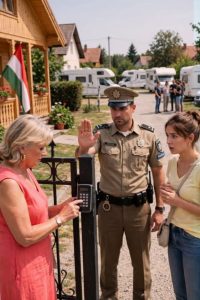 Mother ordered me to leave the farm with the sick child, but her smile suddenly vanished at the closed gate.
 My parents wanted to throw my belongings out into the yard and keep my child, but the smile vanished from my father’s face the moment I gave my answer.
 They didn’t invite me to their country house, but after my calm reply, the daughter’s smile suddenly vanished.
 My father kicked me out of the house at the Thanksgiving dinner, but when I placed the car keys on the table, the smile vanished from his face.
 He locked me in at the dacha, and I spread my things out on the fence, but when he got out of the car, he suddenly fell silent.
 A fourteen-year-old waiter read a single sentence from a rich man’s diary, and the foreigner sitting in the room instantly turned pale.