Part 1
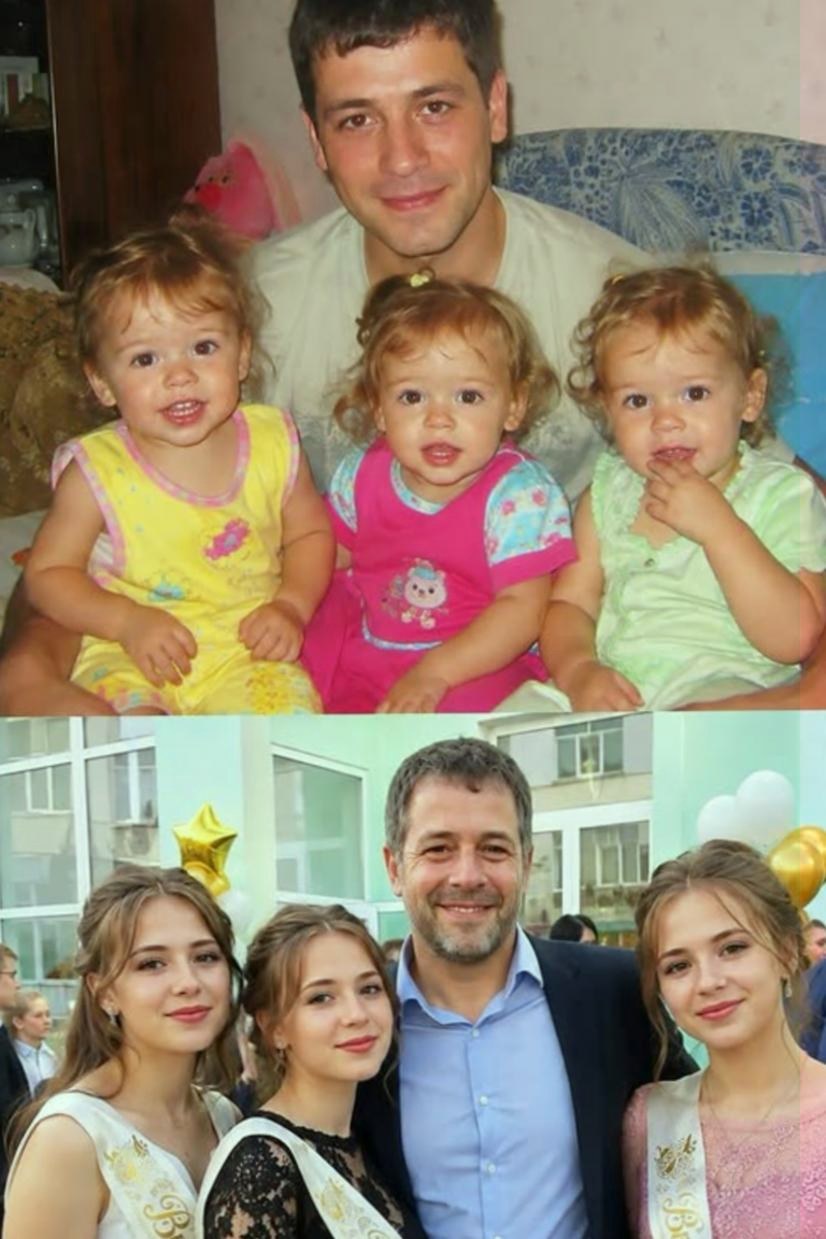
That evening, when my brother left three six-month-old infants at my door, I didn’t yet realize that I was looking at the end of my own life and the beginning of a new one all at once.
I was twenty-seven years old. I lived in a rented one-room apartment with two eggs and half a loaf of bread in the fridge, and my paycheck always ran out a few days before the end of the month. But that evening, the doorbell rang. When I opened it, Giorgi was already heading down the stairs.
— “Giorgi, wait!” I shouted.
He didn’t turn back.
In front of the door stood three car seats. In each of them, a baby girl was breathing peacefully. Beside them lay a small bag, three bottles, and a folded piece of paper. Only one sentence was written on it: “I’m sorry, Niko. I can’t live like this anymore.”
My hands were shaking so hard that the paper almost slipped to the floor. The girls’ mother had passed away eleven days prior. Giorgi had stood at the funeral with a face like stone, but back then, I thought he was simply grieving.
Now, he was gone.
— “What am I supposed to do with you?” I whispered to the babies.
One of them opened her eyes. It turned out to be Alina. She reached out her tiny fingers and gripped mine so tightly, as if she already knew that I had no choice left.
That night, I called the police, checked with hospitals, and phoned Giorgi’s friends. Nobody knew anything. Or nobody wanted to know. At four in the morning, all three babies were wrapped in towels laid out on the kitchen table, while I sat on the floor staring at that single sentence.
— “I won’t abandon you,” I told them. “I won’t abandon you.”
The first few years felt like survival. In the morning, I worked at a bakery; in the evening, at a warehouse. At night, I washed diapers. When they started school, I checked all three backpacks at once. Alina was afraid of needles, Vera hid every sadness behind a smile, and Yulia, whenever she got nervous, pressed her left thumb against her thumbnail.
I knew all of this.
One day, in October 2012, when they came home from school, Alina noticed the old piece of paper hanging in the kitchen.
— “Did Dad leave this for you?” she asked.
— “Yes.”
— “Why did he leave?”
I had no answer. All I knew was that every year, on the anniversary of Giorgi’s disappearance, I put the paper into a new transparent sleeve. Its corner had turned slightly brownish, and there was a small ink stain on the upper left side—a stain that had become a mark of eighteen years of pain for me.
The graduation ceremony hall was filled with the scent of flowers and the flashing of cameras. I sat in the third row, holding their small silver card with all three of their names printed on it.
Alina, Vera, and Yulia walked onto the stage one by one. As they accepted their diplomas, all three of them looked at me. It was then that I realized for the first time that those tiny fingers had already turned into the hands of women.
As the ceremony was winding down, the principal returned to the microphone.
— “We have one last presentation today,” she said.
All three girls walked back onto the stage.
Yulia took the microphone.
— “Our father is not here today,” she said.
The hall fell silent.
Vera pulled a folded sheet of paper out of her bag. I recognized it instantly. The same brownish corner. The same ink stain.
Alina looked over at me and said quietly:
— “Uncle Niko, everyone needs to know now.”
Vera unfolded the paper. The principal took a step back. Near the back door of the hall, someone switched on a phone.
As Yulia began to read the first line, Vera pulled a thick folder from her bag and reached out to open it…
Part 2
The latch of the folder clicked open, and the dry sound of paper filled the room. Vera pulled out a photocopy from the top, its corners rounded from being folded over many times.
— “Before we read this,” she said, “please, let no one stop us.”
The principal, Mrs. Marina, walked over to the edge of the stage.
— “This is a school event, children. Personal matters should not be discussed here.”
Alina looked right at her.
— “For eighteen years, it was a personal matter. Today, it is our life.”
My chest tightened so hard it was difficult to breathe. The little card held in my hand doubled over.
Yulia held up the paper.
— “I’m sorry, Niko. I can’t live like this anymore.”
That was exactly what was written. That sentence I had known by heart for eighteen years. But then Vera pulled out a second piece of paper.
— “This was found that very same night,” she said. “Not in the house. In the wall of an old garage, taped to a brick.”
I pushed myself up from my chair.
— “What did you say?”
Alina stopped me.
— “We know you didn’t know.”
— “What didn’t I know?”
Vera handed the paper to me. Giorgi’s handwriting was on it, but the ink had faded. Only a few words were legible: “If Niko tells you that I simply left, don’t believe it.”
Someone in the audience gasped softly.
— “Where did you find this?” I asked.
— “Three months ago,” Yulia said. “The old house was up for sale. We went there because we wanted pictures of Mom. We found this behind the wall.”
— “Why didn’t you tell me anything?”
Alina’s eyes lit up.
— “Because we didn’t fully know yet whether you had the right to know the truth.”
Those words struck me like a knife. For eighteen years, I was both a father and a stranger to them. I made breakfast, signed report cards, walked them to exams, but I knew nothing about their birth or their abandonment.
Mrs. Marina walked quickly onto the stage.
— “That is enough. Step down immediately.”
— “Why are you nervous?” Yulia asked her.
The principal gave no answer. Her fingers gripped the black microphone cable so tightly that her knuckles turned white.
Just then, a man standing by the hall door stepped forward. He was in his fifties, wearing a brown jacket, with an old camera strap around his neck.
— “Nikoloz,” he said to me, “my name is Irakli. I once worked with your brother.”
— “Where is Giorgi?”
The man lowered his head.
— “You asked me that question for the first time eighteen years ago. Back then, I didn’t have the right to answer.”
— “Do you have it now?”
— “Now, nobody is stopping me anymore.”
He handed me a small memory card. It had a white scratch on its plastic corner.
— “There is a recording on there from the night Giorgi disappeared. But listening to it will be difficult for everyone.”
Alina asked into the microphone:
— “Is Dad alive?”
Irakli closed his eyes.
A silence fell over the hall so profound that I could hear the ticking of the clock behind the stage.
— “The answer to that question is on the recording,” he said.
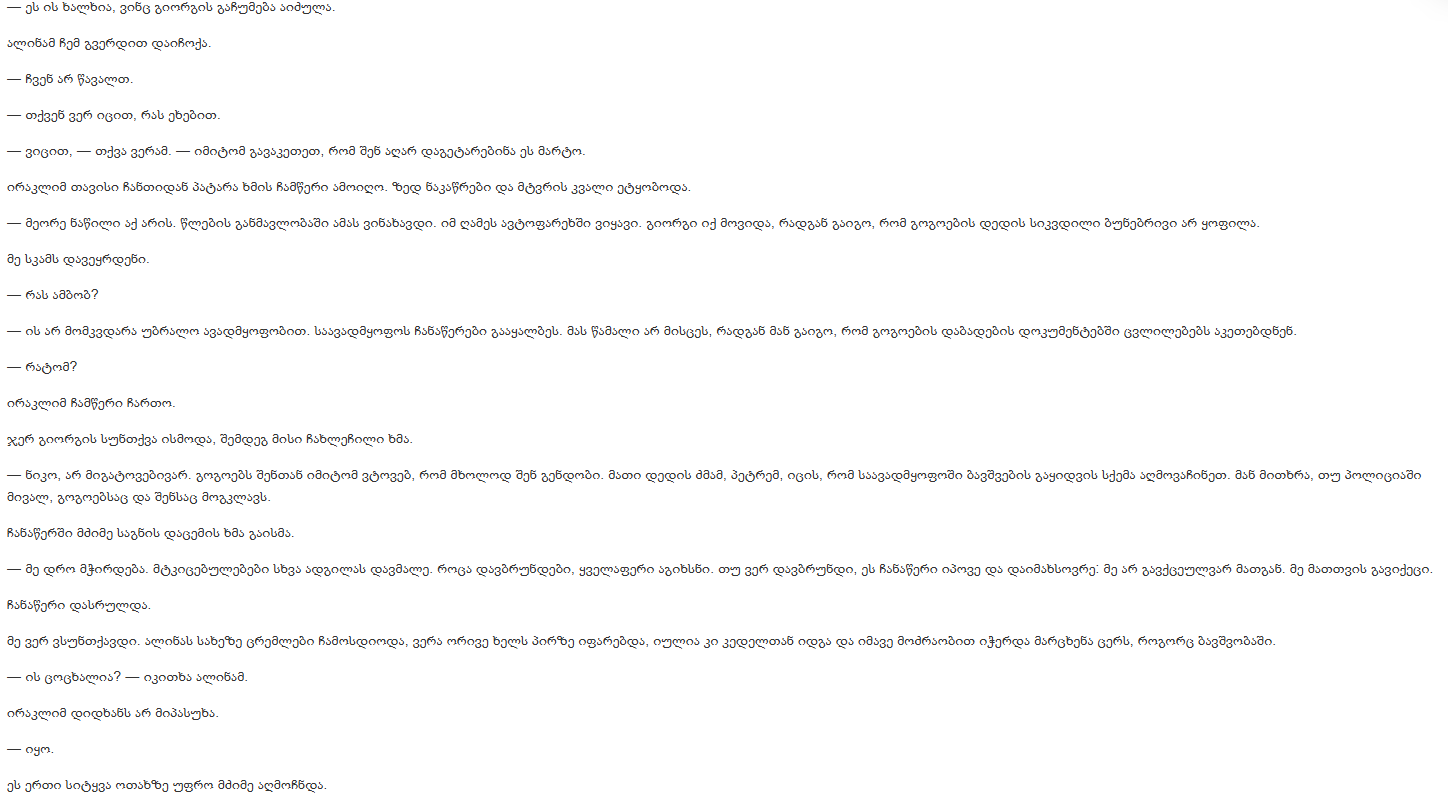
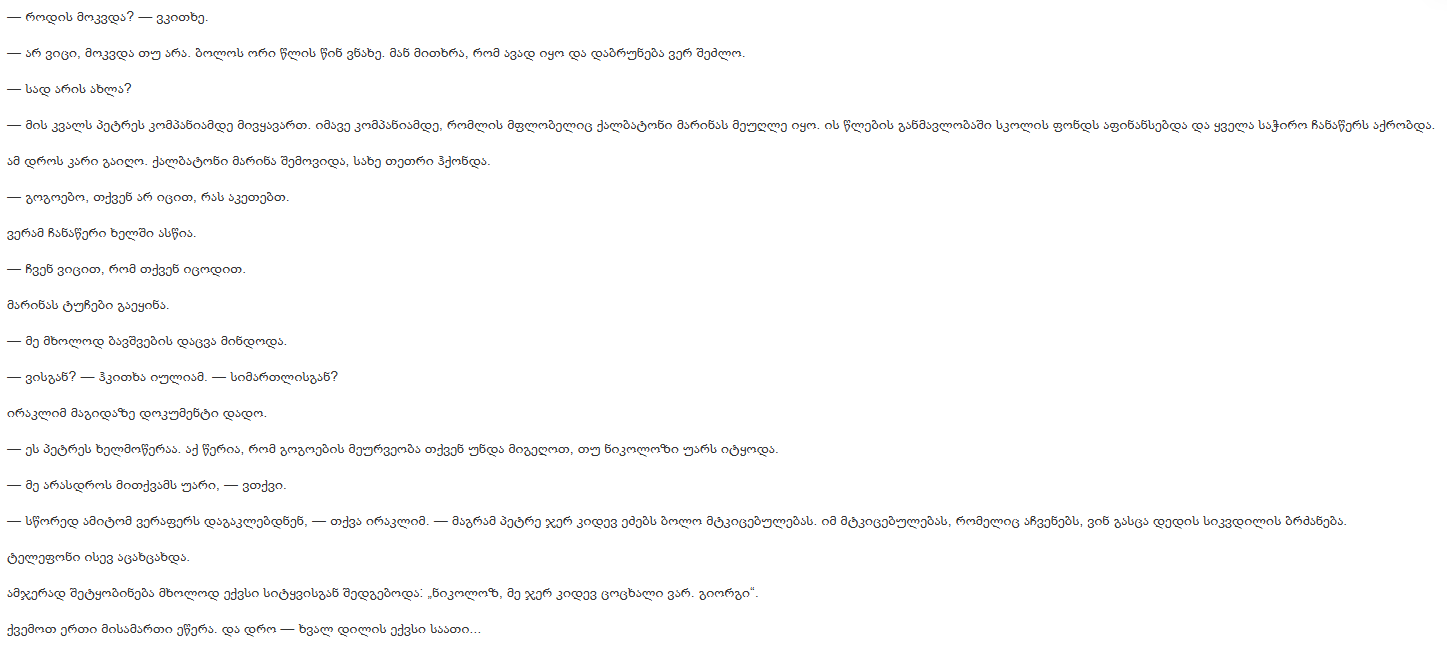
We moved to the school’s small conference room. An old computer sat on the table, and children’s drawings hung on the wall. Irakli inserted the card, and a single audio file appeared on the screen.
For the first few seconds, only the sound of wind was audible.
Then, Giorgi’s voice rang out.
— “Niko, if you ever hear this, it means I couldn’t make it back home. I left the girls with you. Do not call the police until…”
The recording cut off abruptly.
Irakli looked at the screen.
— “The file isn’t complete. The second part is held by a person who still thinks the truth depends on keeping it hidden…”
At that moment, my phone vibrated. It was an unknown number. Only one message was visible on the screen: “If the girls truly love you, you will leave them alone tonight…”
Part 3
After the message appeared, all sound in the room vanished. I was still holding the phone in my hand, but my fingers wouldn’t obey me anymore.
— “Don’t answer,” Irakli said.
— “I waited eighteen years for someone to give me an answer. And now you’re telling me not to reply?”
— “These are the people who forced Giorgi into silence.”
Alina knelt beside me.
— “We aren’t going.”
— “You don’t know what you’re touching.”
— “We do,” Vera said. “We did this so you wouldn’t have to carry it alone anymore.”
Irakli pulled a small voice recorder from his bag. Scratches and traces of dust were visible on it.
— “The second part is here. I’ve kept this for years. I was in the garage that night. Giorgi came there because he learned that the girls’ mother’s death wasn’t natural.”
I leaned back against the chair.
— “What are you saying?”
— “She didn’t die of a simple illness. The hospital records were forged. They withheld medication from her because she found out they were making alterations to the girls’ birth documents.”
— “Why?”
Irakli switched on the recorder.
First, Giorgi’s heavy breathing was audible, followed by his raspy voice.
— “Niko, I didn’t abandon you. I’m leaving the girls with you because you are the only one I trust. Their mother’s brother, Petre, knows that we uncovered a scheme of selling babies at the hospital. He told me that if I go to the police, he’ll kill both the girls and you.”
The sound of a heavy object falling echoed in the recording.
— “I need time. I hid the evidence elsewhere. When I return, I’ll explain everything to you. If I don’t make it back, find this recording and remember: I didn’t run away from them. I ran for them.”
The recording ended.
I couldn’t breathe. Tears streamed down Alina’s face, Vera covered her mouth with both hands, and Yulia stood against the wall, holding her left thumb with that same motion from her childhood.
— “Is he alive?” Alina asked.
Irakli didn’t answer for a long moment.
— “He was.”
That single word felt heavier than the room itself.
— “When did he die?” I asked.
— “I don’t know if he died or not. I saw him last two years ago. He told me he was ill and couldn’t return.”
— “Where is he now?”
— “His trail leads to Petre’s company. The very company owned by Mrs. Marina’s husband. He funded the school foundation for years and erased every necessary record.”
At that moment, the door opened. Mrs. Marina walked in, her face pale.
— “Girls, you don’t know what you’re doing.”
Vera held up the recorder.
— “We know that you knew.”
Marina’s lips froze.
— “I only wanted to protect the children.”
— “From whom?” Yulia asked her. “From the truth?”
Irakli set a document on the table.
— “This is Petre’s signature. It states that you were supposed to receive custody of the girls if Nikoloz refused.”
— “I never refused,” I said.
— “Which is precisely why they couldn’t touch you,” Irakli said. “But Petre is still looking for the final piece of evidence. The evidence that shows who gave the order for their mother’s death.”
The phone vibrated again.
This time, the message consisted of just six words: “Nikoloz, I am still alive. Giorgi.”
Below it was an address. And a time—six o’clock tomorrow morning…
დილით კართან ის ადამიანი იდგა, ვისაც აღარ ელოდნენ…
მე მეგონა, ყველაზე მძიმე უკვე გავიგეთ. მაგრამ იმ დილამ ყველაფერი თავდაყირა დააყენა.
„მე მათთვის გავიქეცი.“
დარბაზში სრული სიჩუმე ჩამოვარდა.
😱 გაიგე, რას მალავდნენ ისინი →
👇 ისტორიის ფინალი უკვე გახსნილია
Related posts:
 My husband gave my summer plans to his mother, but his expression changed when he saw my calm smile.
 My husband asked me to donate an organ to his ex-mistress, but the doctor turned pale after my calm response.
 My husband ordered me to leave the apartment, but when I smiled calmly, the color drained from his sister’s face.
 My husband’s ex publicly humiliated me, but when the police chief greeted me, Vanessa’s smile vanished.
 Part 4 — After the accident on the coastal road, the police officer called my words a lie, but then suddenly turned pale.
 Zwei Tage vor meiner Hochzeit wurde ich einer gefürchteten Familie versprochen – doch als mein Bräutigam die Schlafzimmertür schloss, erstarrte er