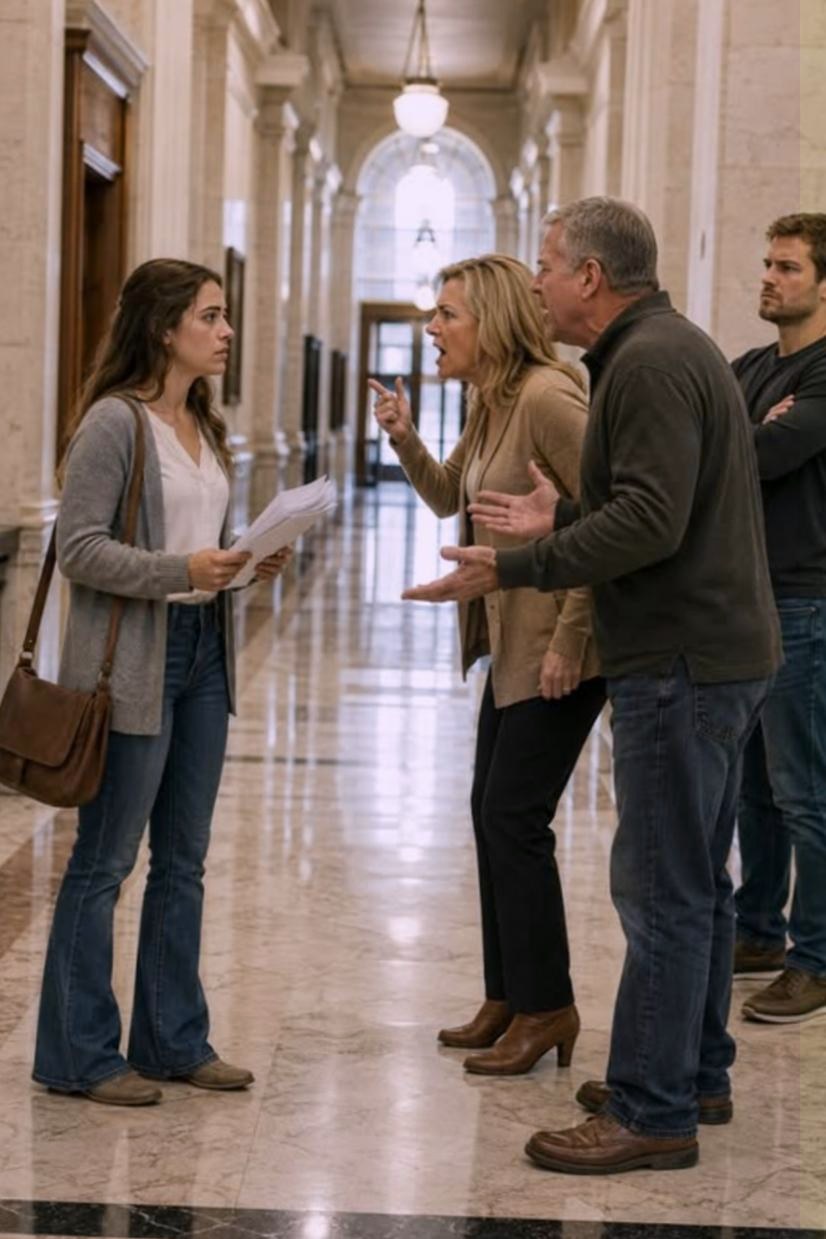

That day, when my mother shouted at me in the courthouse corridor, “You stole my brother’s future,” I thought for the first time that I did not know my family at all.
Several months earlier, on a Tuesday evening in the outskirts of Nashville, I stood in front of my small house, turning a bag of wall fasteners in my hand. I had white paint stains on my jeans, and plaster dust had settled under the nail of my left hand. The house was old, but it was mine. Two bedrooms, a sloping floor, creaking cabinets in the kitchen, and one cracked red ceramic tile on the front steps that I touched with my foot every day.
I had worked for it for eight years.
That evening, the street smelled of hot asphalt and freshly mowed grass. That was when I saw a man in a dark green shirt enter the yard.
“Evelyn Carter?”
“Yes.”
He handed me a thick folder of documents.
“You have been served with a court summons.”
At first I thought he had confused me with another Evelyn. Then I saw my parents’ names on the very first page.
Thomas Carter and Linda Carter against me.
And on the next line was my name.
The case concerned fraud, unjust enrichment, interference with economic opportunity, and something called “breach of family obligation.” They were demanding two hundred and fifty thousand dollars from me and the house. The lawsuit stated that transferring ownership of my house to my brother would be “compensation for lost opportunities.”


I was still holding the folder when my phone rang.
It was my mother.
“What is this?” I asked.
“Watch your tone, Evelyn.”
“You sued me.”
“You know why.”
“No, Mom. I really don’t know.”
My father took the phone from her. His calm voice frightened me more.
“I advise you to resolve this matter reasonably.”
“What am I supposed to resolve? You did not build my house.”
“You took away Mason’s chance to begin his life.”
“I offered to help him write a business plan.”
“Exactly. You hid knowledge and used it for yourself.”
My brother’s shouting could be heard in the background.
“That house should have been mine!”
“Mason, you are twenty-six years old and still live in your parents’ basement.”
“You received Grandma’s money!”
“We both received two thousand dollars.”
“You’re lying to me!”
My mother took the phone again.
“You stole his future. You always knew he was the real entrepreneur in our family.”

“His business failed three times and you gave him one hundred thousand dollars.”
“He needed support!”
An old question rose in my throat.
“Didn’t I?”
Silence fell.
Then my father said:
“You never needed anything.”
Those words took me back to when I was fourteen and asked for forty dollars to enroll in a robotics club. My father told me that money did not grow on trees. That same week they gave Mason five hundred dollars for a business camp.
I looked after children, mowed lawns, repaired old computers, and saved every dollar.
When I won an academic scholarship, my mother simply told me, “Good, sweetheart.” When Mason got into an expensive private college, they set a table for him.
That night I called my friend Naomi.
“My parents are suing me because I have lived better than my brother.”
“You’ll fight, right?” she asked.
I entered the house and looked at the summons lying on the table.
“Yes.”

The next morning I contacted attorney Daniel Mercer. He listened to everything: the money, the failed companies, my jobs, and the house.
At the end he asked me:
“Do you simply want to win, Evelyn?”
“No.”
“Then what do you want?”
I looked through the window at the sloping floor.
“I want the court to understand what they did to me.”
Three months later I stood at the courtroom door. My father nervously rubbed his hands, my mother avoided my eyes, and Mason had a smile as if the key to my house were already in his pocket.
Then Daniel leaned toward me.
“Whatever you hear, trust me until the end.”
The judge seated everyone in the courtroom. Their attorney stood up, opened a folder, and pronounced the first accusation. At that very moment Daniel slowly stood up, holding a small brown folder, and looked at my father…

…Daniel carried the folder to the judge’s table and said in a calm voice:
“Your Honor, before we respond, please have Exhibit Seventeen attached to the case.”
The color drained from my father’s face.
I noticed it, and my heart began racing as if I were running up the stairs in the old house. The corner of the folder was worn, and written on it in black pen was only one word: “Family.”
Their attorney immediately jumped up.
“We do not know this document.”
“That is exactly why it is important,” Daniel replied.
The judge adjusted his glasses.
“What does Exhibit Seventeen represent?”
“Copies of financial records, written correspondence, and one signed statement that the defendant’s parents prepared themselves.”
My mother looked at me for the first time. The confidence with which she had told me several months earlier that I had stolen her brother’s future was no longer in her eyes.
The judge nodded to Daniel.
“Continue.”

He displayed the first table on the screen. The columns listed amounts, dates, and purposes. Mason’s tuition, a new pickup truck, housing rent, credit cards, and the starting capital of three businesses. The total exceeded three hundred thousand dollars.
Naomi sat beside me and gripped the leather strap of her bag so tightly that her knuckles turned white.
“All of that was support,” my mother said.
“And for the defendant?” Daniel asked.
“Evelyn had a scholarship.”
“A scholarship was not assistance. It was her achievement.”
The judge raised his eyes from the documents.
“Mr. Carter, do you agree to these transfers?”
My father cleared his throat.
“The money was spent in the family.”
“In the family, or on your son?”
My father could not answer.



Daniel picked up the next sheet. It was a printout of an email my father had sent Mason six months before filing the lawsuit.
“Evelyn has made a good life for herself. Maybe we can convince her to help you get back on your feet.”
Mason’s reply was written below.
“I am owed more than help. She has the life I should have had.”
A quiet whisper passed through the courtroom.
Mason leaned forward.
“That is taken out of context.”
“Then let us hear the full context,” Daniel said.
He turned on a small device. Mason’s voice filled the courtroom, hoarse and angry:
“If she does not transfer it, we will force her in court. Our parents cannot stand on her side anyway. They know I should have the house.”
My mother looked at her son in fright.
“You were not supposed to record this conversation.”
Daniel immediately answered:
“Mr. Carter himself provided the recording to us when he considered your family conversations evidence. He did not know that the second part of the file also existed.”


My father’s jaw tightened.
“I did not give you this.”
“Then I will explain how it came to us. An automatically sent backup copy from your email went directly to the owner of the bank account.”
I looked at Daniel.
“The owner of the bank account?”
He nodded at me, but did not answer yet.
The judge said in a stern voice:
“I wanted to understand the real purpose of this case. Now I need to hear more.”
Daniel took out the last sheet from the folder. My parents’ signatures were visible on it. In the lower corner of the paper was an old notarial seal.
“This is the document that explains why the plaintiffs are demanding precisely my client’s house,” he said.
My mother grabbed the chair.
“No, Daniel, you must not read that.”
The judge looked at her.
“Mrs. Carter, the court itself will decide what must be read.”
I looked at the paper clenched in Daniel’s hand. For the first time I realized that they did not simply want my house. They were hiding something.
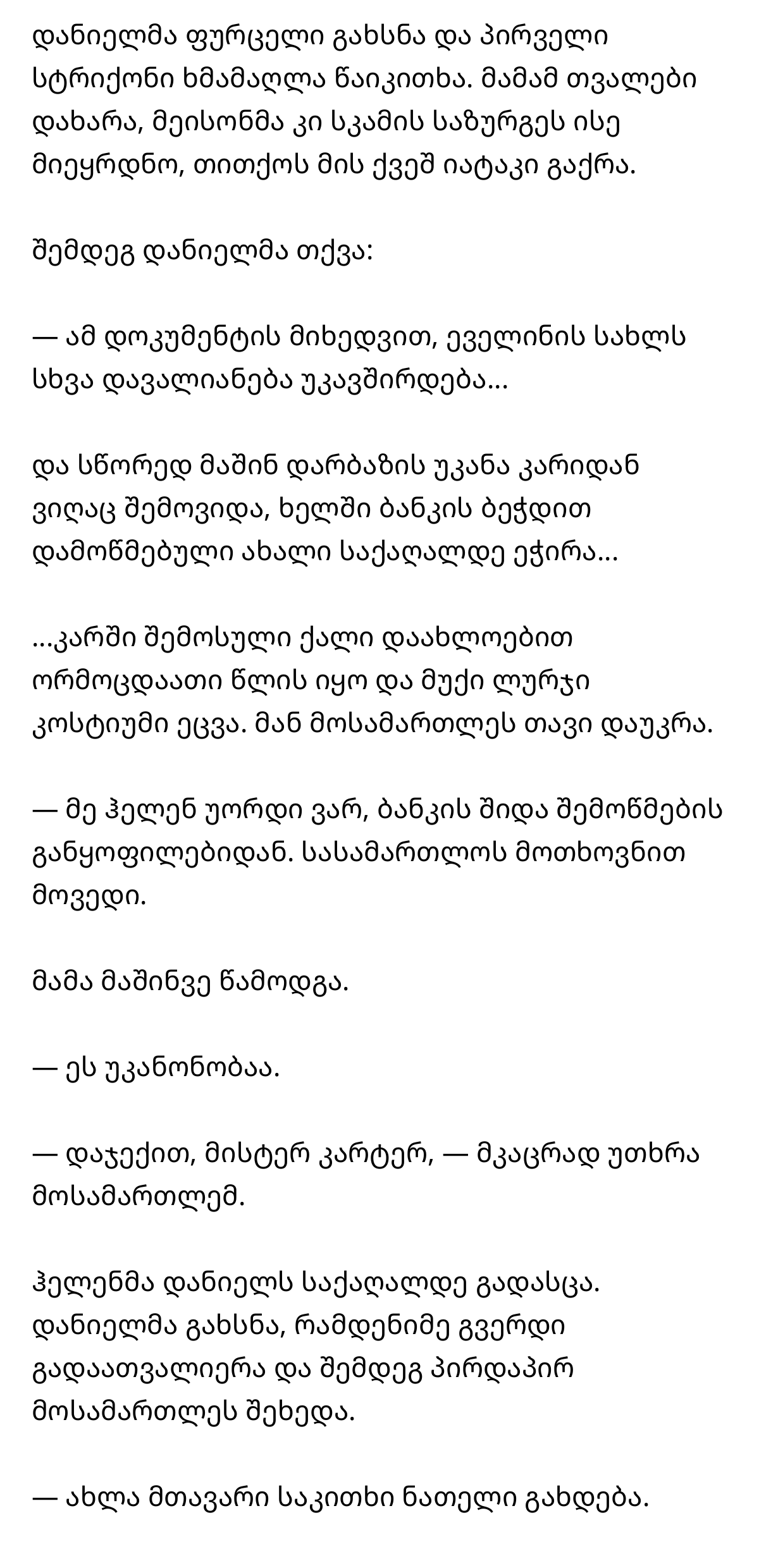

Daniel opened the paper and read the first line aloud. My father lowered his eyes, while Mason leaned back against the chair as if the floor beneath him had disappeared.
Then Daniel said:
“According to this document, Evelyn’s house is connected to another debt…”
And at that very moment someone entered through the rear door of the courtroom, carrying a new folder certified with a bank seal…
…the woman who entered through the door was about fifty years old and wore a dark blue suit. She nodded to the judge.
“I am Helen Ward, from the bank’s internal audit department. I came at the court’s request.”
My father stood up immediately.
“This is illegal.”
“Sit down, Mr. Carter,” the judge told him sternly.
Helen handed the folder to Daniel. Daniel opened it, looked through several pages, and then looked directly at the judge.
“Now the central issue will become clear.”
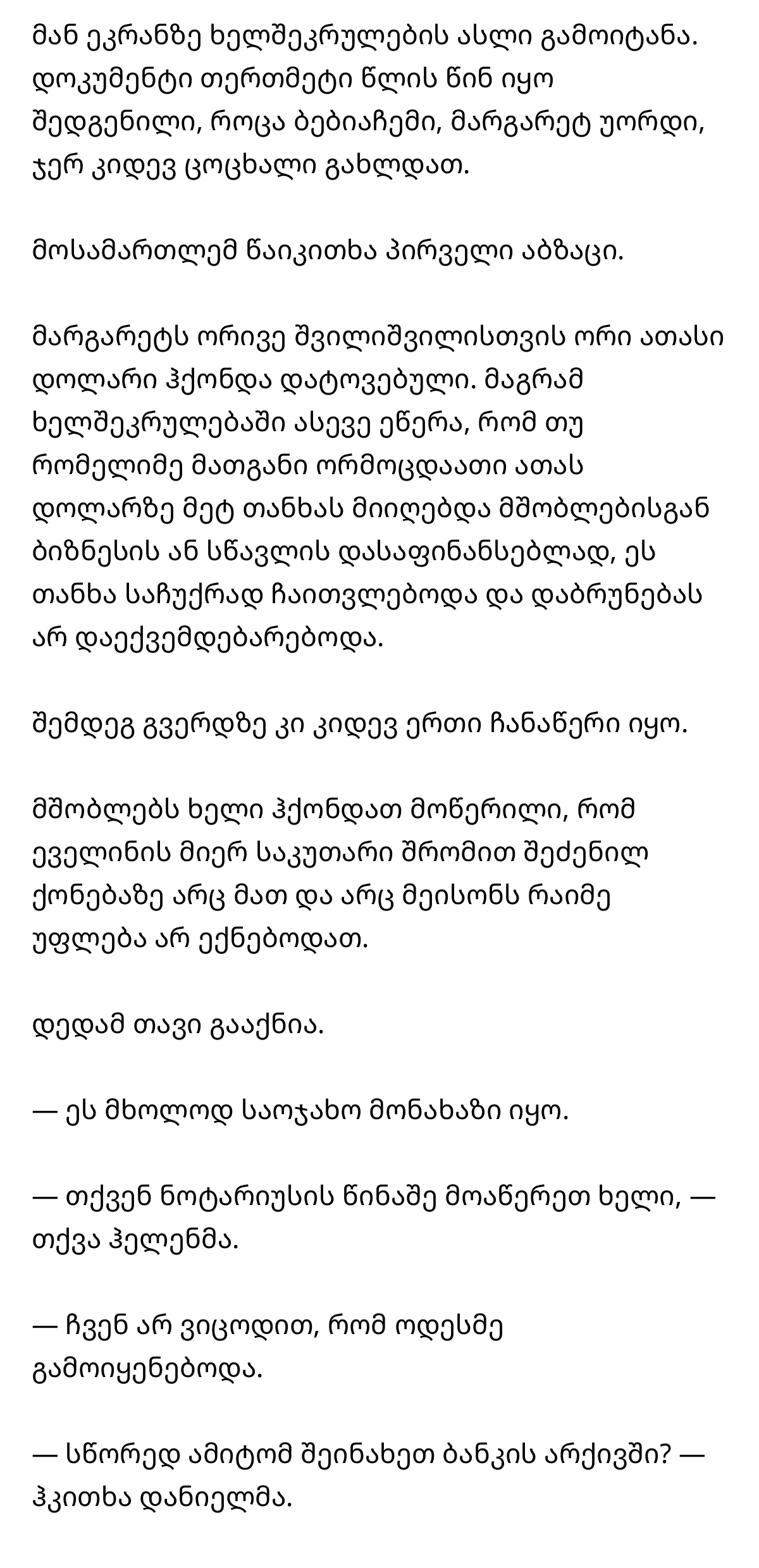


He displayed a copy of the agreement on the screen. The document had been drawn up eleven years earlier, when my grandmother, Margaret Ward, was still alive.
The judge read the first paragraph.
Margaret had left two thousand dollars for each of her two grandchildren. But the agreement also stated that if either of them received more than fifty thousand dollars from their parents to finance a business or education, that money would be considered a gift and would not be subject to repayment.
On the next page there was another entry.
My parents had signed that neither they nor Mason would have any rights to property Evelyn acquired through her own labor.
My mother shook her head.
“It was only a family draft.”
“You signed it before a notary,” Helen said.
“We did not know it would ever be used.”
“Is that why you kept it in the bank archives?” Daniel asked.
A heavy silence fell over the courtroom.
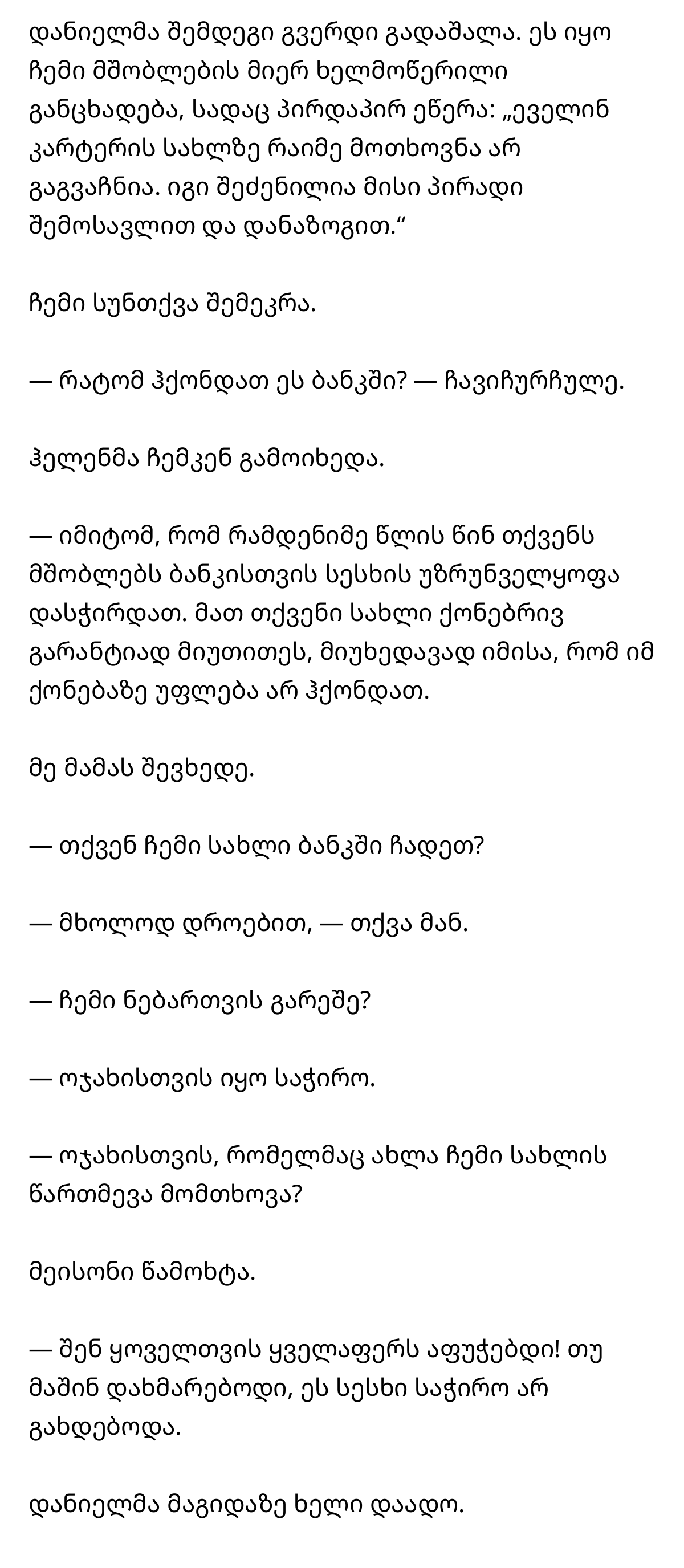


Daniel turned to the next page. It was a statement signed by my parents, which directly said: “We have no claim whatsoever to Evelyn Carter’s house. It was purchased with her personal income and savings.”
My breath caught.
“Why did they have this at the bank?” I whispered.
Helen looked at me.
“Because several years ago your parents needed collateral for a loan from the bank. They listed your house as property security, even though they had no rights to that property.”
I looked at my father.
“You pledged my house to the bank?”
“Only temporarily,” he said.
“Without my permission?”
“It was necessary for the family.”
“For the family that has now demanded that my house be taken from me?”
Mason jumped up.
“You always ruined everything! If you had helped then, this loan would not have been necessary.”
Daniel put his hand on the table.
“Enough. You have admitted yourself that you used my client’s house to cover your debt.”
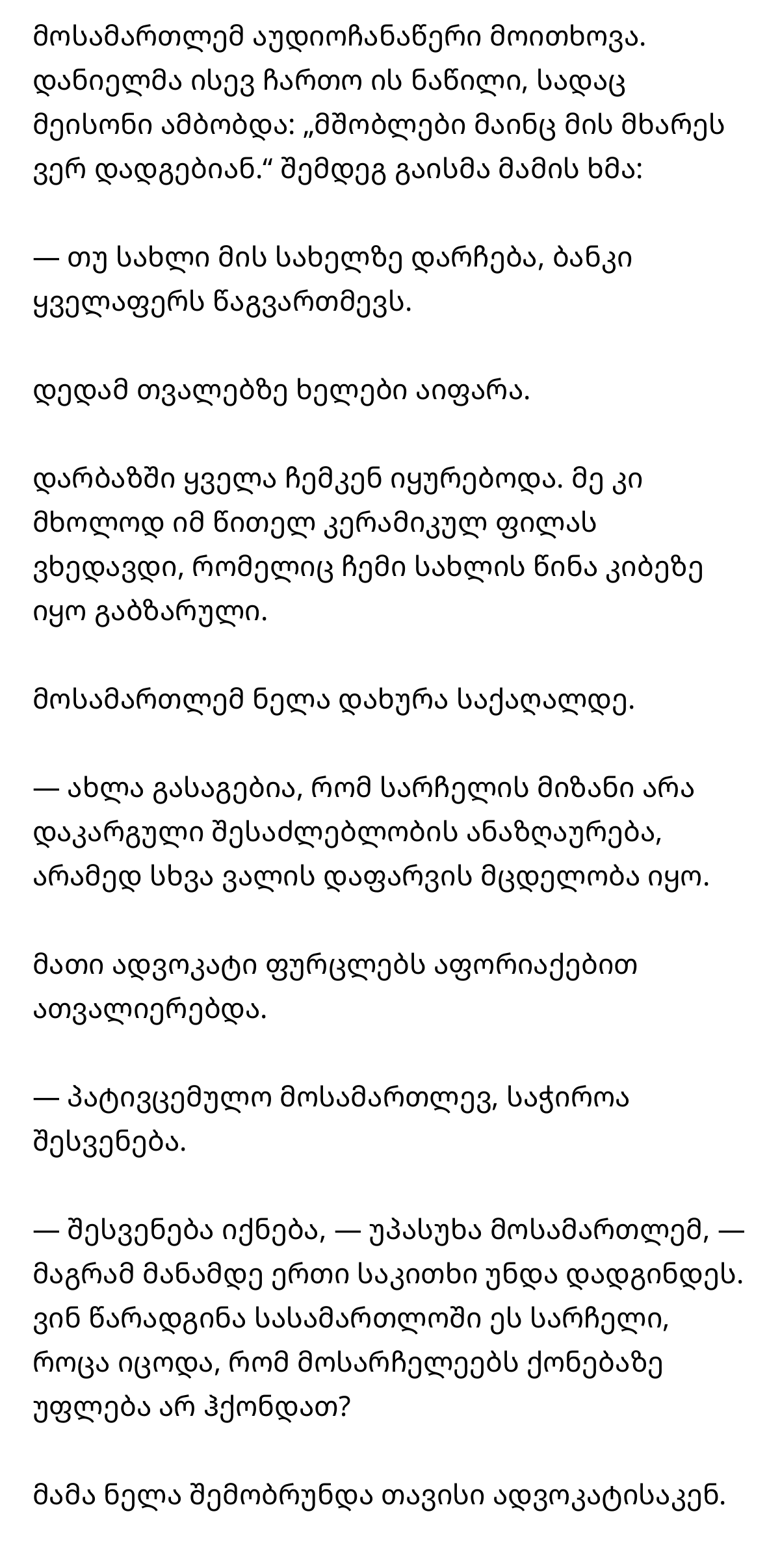


The judge demanded the audio recording. Daniel played again the part where Mason said, “Our parents cannot stand on her side anyway.” Then my father’s voice was heard:
“If the house remains in her name, the bank will take everything from us.”
My mother covered her eyes with her hands.
Everyone in the courtroom was looking at me. I could see only the red ceramic tile cracked on the front steps of my house.
The judge slowly closed the folder.
“It is now clear that the purpose of the lawsuit was not compensation for a lost opportunity, but an attempt to cover another debt.”
Their attorney anxiously flipped through the papers.
“Your Honor, a recess is necessary.”
“There will be a recess,” the judge replied, “but first one issue must be established. Who filed this lawsuit in court while knowing that the plaintiffs had no rights to the property?”
My father slowly turned toward his attorney.
“You said this case would be simple.”
The attorney closed his briefcase.
“I did not know about this document.”
“But you prepared the lawsuit!”
“On the basis of the information you gave me.”


At that moment Helen’s phone rang. She answered, listened for several seconds, and her expression changed.
“Ms. Ward?” I asked.
She looked at me.
“The bank has just confirmed that your parents’ loan is already overdue. If a payment plan is not approved today, the secured property will go to auction.”
My father struck the chair.
“No. No, this cannot be.”
Daniel said quietly to me:
“Evelyn, now they will try to trap you again through your own compassion.”
I looked at my mother. She was crying, but for the first time I could not tell whether she was crying from regret or because of a lost plan.
The judge temporarily adjourned the hearing and ordered everyone to leave the courtroom.
At the door my father stepped in front of me.
“You cannot do this.”
“Do what?”
“You cannot allow us to be destroyed.”
I did not have time to answer. At the end of the corridor a police officer appeared, holding a second summons.
He looked directly at my father and said:
“Mr. Carter, we need to speak with you about the audio recording and the bank documents…”
ბოლო დოკუმენტმა მთელი ოჯახის სიმართლე გამოაჩინა…
მეგონა, ყველაზე რთული უკვე დასრულდა. მაგრამ ნამდვილი ფასი მაშინ გამოჩნდა, როცა არჩევანი მხოლოდ მე დამრჩა.
„შენს თანაგრძნობას ისევ შენს წინააღმდეგ გამოიყენებენ.“
ამჯერად უკან არ დავიხიე.
👇 ისტორიის ფინალი უკვე გახსნილია
Related posts:
 The Morning After the Wedding, My Husband Humiliated Me in Front of Everyone, but His Mother Turned Pale When She Saw My Calm Smile
 Father Left Houses to My Brothers, but Burdened Me with Mother’s Life — Yet My Brother’s Smile Suddenly Disappeared
 Mi esposo se burló de nuestro matrimonio ante sus socios, pero cuando me vio entrar al salón, dejó de sonreír
 Part 4 — They Demanded That I Be Evicted from My Own House Because of My Brother, but My Father’s Smile Suddenly Disappeared at the Judge’s Question
 When Margaret was suffocating an unconscious patient lying in a hospital with a pillow, someone suddenly shouted beyond the door
 After my warning at the billionaire’s negotiation, the lawyer ordered the guards to remove me, but his smile suddenly disappeared