Part 1
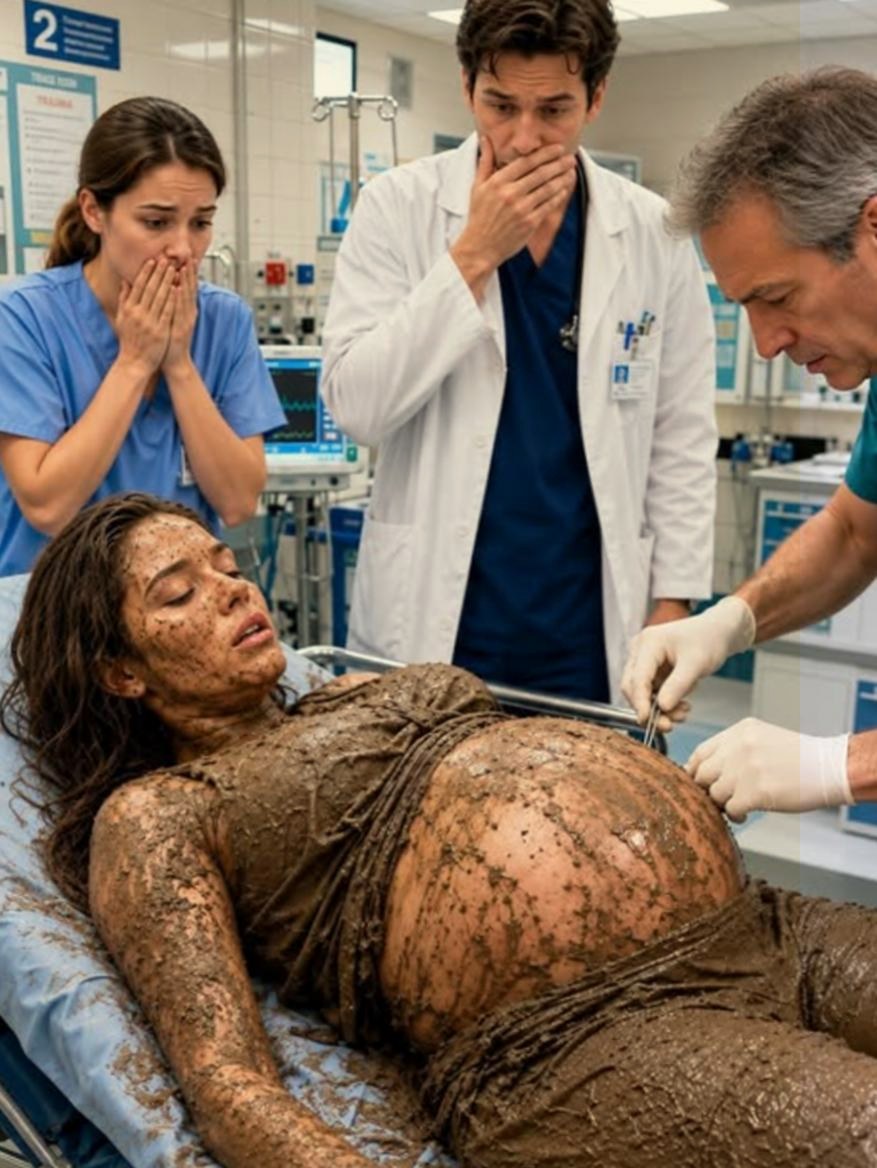
When the doctor removed the dirty dressing from my leg, a scream erupted in the room as if everyone there were preparing for a death, while I kept repeating only one thing: “Check my baby’s heartbeat!”
All of this was happening in the emergency department of the Kutaisi hospital, at four-fifteen in the morning. I was seven months pregnant; my body was trembling, my lips were cracked, and such a heavy odor was coming from my right leg that the nurse covered her mouth with a mask. My old pickup had spent five days in a swamp. Me along with it.
— “Ma’am, first we need to save your leg,” the young doctor told me, adjusting his glove at his wrist.
— “No,” I barely managed to breathe out. “First the heartbeat. Please.”
The intern standing behind him removed the bandage. Then he froze.
Things were moving inside the wound on my leg.
Small, white bodies were crawling over one another, as if it were a living wave. The intern bumped against a chair and stepped back. As for me, I stared at the cold lamp hanging from the ceiling and pressed my hand to my stomach. I could still feel the baby, but its movements were weak.
— “This is impossible,” the doctor whispered.
— “It is possible,” I replied. “And they are not my enemies right now.”
Those words brought an even heavier silence over the room.
Three days earlier, on Friday at seven in the evening, the phone rang in my small home near the village of Tskaltubo. An unknown number appeared on the screen. I answered on the second ring.
— “Is this Nino Beridze?” a woman’s raspy voice asked.
— “Yes.”
— “Your mother had a stroke. She was taken to the hospital. The doctors say she might not wake up.”
I hadn’t seen my mother for sixteen years.
I was twenty years old when I left home. That night, she threw my bag down the stairs and told me I was no longer a daughter to her. And as I closed the door, I shouted back: “From today on, consider me dead.”
Since then, those words had followed silently behind me.
That evening, I placed my hand on my stomach and grabbed my medical bag, having just returned from my shift. I decided I would see my mother anyway. I didn’t know that the road to the city would be washed away by the next morning.
On Saturday at six in the morning, I got into my old pickup truck. Under the seat, I always kept a folded red wool sock that kept my feet warm during my pregnancy. Mother had knitted that sock for me when I was still a child. On the day I left, it was left in my bag by mistake. I couldn’t throw it away over the years.
The rain suddenly intensified on the road. In a forested section, a tire skidded, the truck turned sideways, and fell directly into dark water covered with grass. The door opened only once. I crawled out, but a piece of iron scrap slashed my right leg.
I spent the first day sitting on the hood. On the second day, the cell phone lost reception. On the third day, a fever began. On the fourth morning, the skin around the wound turned black, and I smelled the odor.
I was a paramedic. I knew what that meant.
If an infection entered the bloodstream, my child and I would die together.
On the evening of the fifth day, I had almost no water left. I ran my hand over my stomach, then looked at the surface of the swamp and realized I had no choices left. I pulled a small tool out of my bag, removed the bandage, and did what a sound mind would never choose to do.
Now, in the hospital, the doctor leaned over my bed, trying to understand why I wouldn’t let them immediately remove everything from the wound.
— “Nino, who taught you this?” he asked me.
— “No one. I just knew I didn’t have clean cloth left.”
At that moment, a middle-aged man appeared at the operating room door, holding a folded folder. My name was written on it. The doctor looked at the man, then at me.
— “Do you know this woman?” he asked him.
Instead of answering, the man began opening the folder. His fingers trembled so much that the first sheet fell to the floor. I caught sight of a single printed word from there and immediately realized that my mother’s stroke might not have been an accident at all…
Part 2
The doctor picked up the page that had slipped from the folder onto the floor, but the man immediately snatched it back. His face wasn’t pale; it was worse—it looked completely void of emotion, as if after all these years he feared seeing me most of all.
— “Levan?” I barely uttered.
The man avoided my eyes. Levan Kavtaradze was my mother’s attorney. As a child, I often saw him at our house. Mother used to say he was a family friend, but sixteen years ago, on the night of that fight, it was Levan who pushed me toward the door and told me never to return.
— “Why are you here?” I asked.
— “At your mother’s request.”
— “My mother is in a coma.”
— “She prepared all of this a day before her stroke.”
The doctor looked at him, irritated.
— “The patient needs surgery. Discuss the documents later.”
— “No,” Levan spoke up for the first time. “She needs to see this document now.”
He placed a small, copper-colored memory card on the table. Written on it in black ink was a single date—the day I left home.
My stomach churned. The monitor mounted in front of the operating room beeped rapidly, my baby’s heartbeat growing stronger one moment and fading the next.
— “What is this?” I asked.
— “A recording your mother hid for years.”
— “Why now?”
Levan bit his lip.
— “Because someone found out you are alive, and the truth about your mother’s estate might come out.”
At that very minute, a tall, dark-haired man appeared in the hospital hallway. He was wearing a suit, though rain droplets were visible even on his expensive shoes. He was Irakli Makharadze—my mother’s second husband’s son, and a person who had always hated me during childhood, because Mother defended him in front of me in a way she had never defended me.
— “Where is Nino?” he asked.
— “Who are you?” The doctor blocked his way.
— “A family member.”
— “She needs quiet right now.”
Irakli looked into the room and saw my stomach.
— “You’re pregnant?” he said with a laugh. “Were you waiting for my mother’s death just to demand something again?”
Those words cut deeper than the iron scrap stuck in my leg.
— “Your mother was never my mother,” I told him.
— “Yet you still want her property?”
Levan stepped between them.
— “Take one more step and I will call security.”
Irakli leaned down and said softly to me:
— “You sat in a swamp for five days and still didn’t realize you were left there.”
My blood ran cold.
— “What do you mean?”
He smiled, but his eyes were not smiling.
— “Who tampered with the truck’s brakes, Nino?”
The doctor called for security, and Irakli backed away. But he had already said enough. I replayed the whole drive from the beginning: the strange noise under the pickup, the sudden stiffening of the steering wheel, how I tried to hit the brakes and found the pedal completely soft.
They began preparing the medications for surgery. I grabbed Levan’s hand.
— “Play this card.”
— “Not here.”
— “If my mother knew someone was trying to kill me, I need to know.”
Levan lowered his head.
— “You are still too weak.”
— “I spent five days in a swamp. Don’t tell me now what I can’t handle.”
He brought out a small screen. The recording opened. At first, there was only static, then my mother’s faint but clear voice.
“Nino, if you are listening to this, then either I can no longer speak to you, or you have already realized that what I told you sixteen years ago was a lie.”
My heart began beating so hard that even the baby’s monitor emitted a rapid alarm signal.
Mother’s voice continued:
“You didn’t leave home that night of your own free will. I sent you away because Levan told me they wanted to kill you. But today I know who was lying to me. And I know who belongs to that baby you are carrying inside your belly…”
The recording cut off abruptly.
Levan looked down at his phone. A new message appeared on the screen. He read it, drained of color, and tried to hide it from me.
— “What happened?” I asked.
He gave no answer.
At the end of the hallway, a nurse began screaming as a continuous alarm sounded from my mother’s hospital room…
Part 3
I couldn’t rush into my mother’s room. I was being dragged toward the operating room; my leg felt heavy, and the baby shifted strangely inside my belly. Levan stood in the hallway, holding his phone, his eyes fixed on the small glass window of the door.
— “What happened to her?” I asked.
— “Her heart rate dropped.”
— “Is she alive?”
— “For now, yes.”
Irakli slammed his fist against the wall.
— “This is all your fault, Levan! You should have burned that recording.”
A silence fell over us.
I looked at him.
— “You knew about the recording, too?”
Irakli stepped back. For the first time, his confidence vanished.
— “I don’t know what you’re talking about.”
— “Then why did you say it should have been burned?”
Levan closed his eyes. Then he came over to me and dropped to his knees, despite the hallway floor being smeared with blood and mud.
— “Nino, your mother was sick, she was terrified. Years ago, she signed a document under which the entire estate was to be transferred to Irakli. But that document was forged.”
— “Who forged it?”
Levan looked at Irakli.
Irakli laughed bitterly.
— “Now you’re shifting everything onto me?”
Levan inserted the card back into the screen. He replayed the recording from the start. My mother’s voice sounded clearer this time.
“Nino, after you left, I found out that Irakli knew everything. He overheard my conversation with Levan. He knew that you were my sole legal heir, because before your father passed away, he left half of the property under your name. That’s why he separated you from me. He wrote letters against you, sent them under my name, and convinced me that you no longer wanted to see me.”
The sound of rushing blood echoed in my ears.
— “No,” I whispered. “Mother told me she no longer wanted to see me.”
In the recording, Mother was crying.
“I never said that. I went to your room that night, but the door was already locked. Irakli told me that if I resisted, your life would be in danger. I became a coward. And I let you go alone.”
Irakli stared right into my face.
— “This is the invention of a sick woman.”
— “Then what about the truck’s brakes?” Levan asked him.
Irakli’s jaw tightened.
Levan opened a second file. A surveillance camera clip from an auto repair shop appeared on the screen. Two days earlier, Irakli was standing there under my pickup. His hands were touching the brake line.
I moved closer to the screen as much as I could on the gurney.
— “Why?” I asked.
Irakli raised his head.
— “Because your mother was leaving everything to you. The house, the land, the clinic. And you hadn’t shown up for sixteen years. I thought you were dead.”
— “And when you found out I was alive?”
— “Then I had to strike first.”
The doctor called for security guards. This time, Irakli no longer resisted. But before they could lead him away, my phone rang. The number was unknown.
— “Mrs. Nino Beridze?” a man asked.
— “Yes.”
— “I am your father’s old attorney. An additional codicil of his will was opened at the notary’s office this morning. It states that if your life were ever threatened, the inheritance would transfer entirely to a child protection fund, and you would become its director.”
I looked toward my mother’s room. Beyond the door, the monitor was still beeping continuously.
— “What else does it say?” I asked.
The man maintained silence for a few seconds.
— “It says that in the event of your mother’s death, one sealed folder must be handed over to the fund. But someone removed that folder from the hospital today.”
— “Who?”
— “Levan Kavtaradze can be seen on the camera.”
I looked at Levan.
He stood in place, his hands empty, but his face carried the same fear I had seen earlier in Irakli’s eyes.
— “Levan, where is the folder?”
He looked toward me.
— “Nino, if you open that folder, you won’t just leave an inheritance to your child. You might also take away the father’s name from them.”
ლევანმა საკუთარი ხმის ჩანაწერი მოისმინა და გაჩუმდა…
ფინალში ყველა დამალული სიტყვა თავის პატრონს უბრუნდება. მაგრამ ყველაზე მძიმე პასუხი არც ფულში და არც ქონებაში აღმოჩნდა.
„მე შენ არ მიგატოვე, ნინო.“
მისი სახე პირველად დაინგრა.
👇 ისტორიის ფინალი უკვე გახსნილია
Related posts:
 When the dangerous mobster’s son reached out towards me, his father looked at the photo and went pale.
 My husband asked me to donate an organ to his ex-mistress, but the doctor turned pale after my calm response.
 My husband ordered me to leave the apartment, but when I smiled calmly, the color drained from his sister’s face.
 The day before our fifth anniversary, I overheard my husband’s secret conversation, and when I entered the room, his smile vanished.
 No one could stop the mafia boss’s son until I approached him—and the color instantly drained from Rico’s face.
 I asked the woman on the beach to dress modestly, but her laughter suddenly made everyone there stop.