Part 1
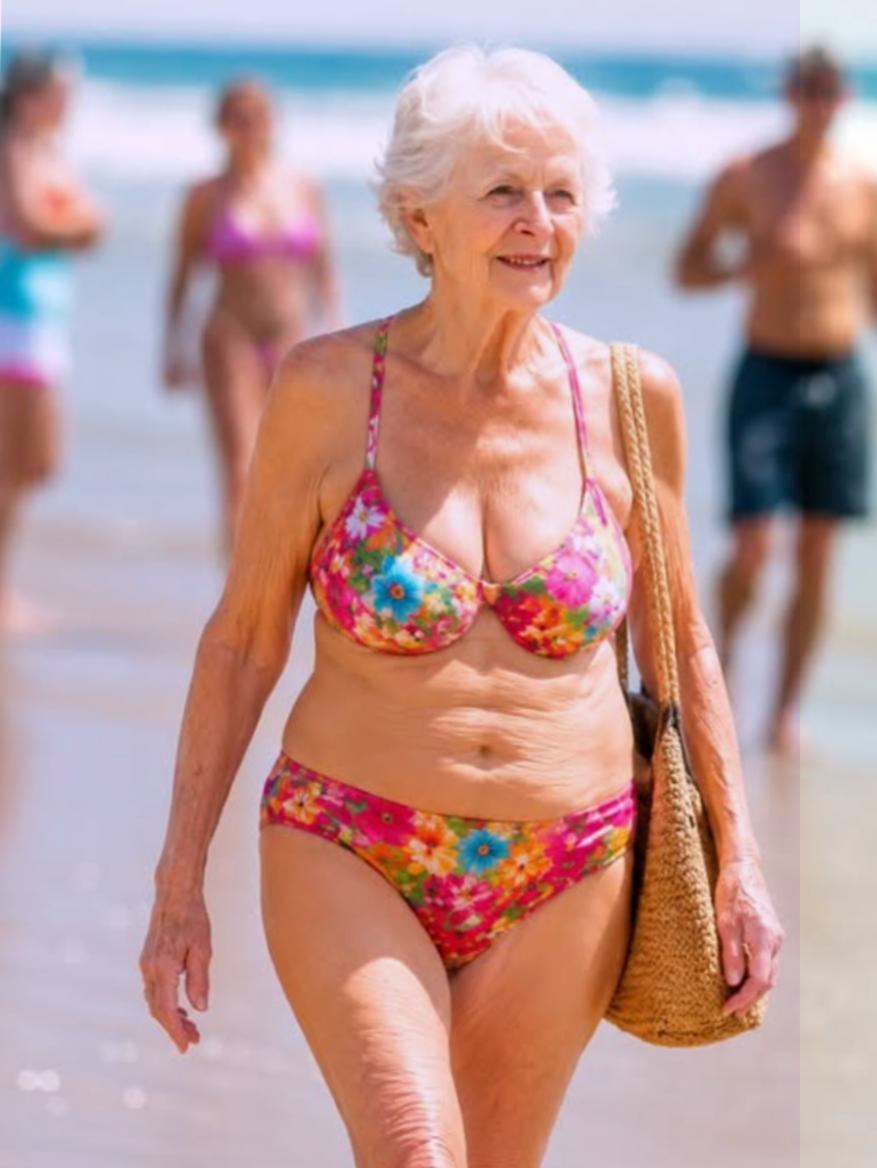
The woman still had laughter in her eyes when she turned to me on the beach and asked: — “Do you truly believe that my age imposes an obligation on me to hide my body?”
There was no offense in her voice. That made it even more dangerous—as if my single sentence had fallen onto the sand and cracked right there.
It was noon. The sea swayed gently, and in front of the café, there was a scent of dried lemon and sun-heated wood. I was holding a folded piece of newspaper, but I was no longer reading. The woman wore a small copper bracelet engraved with two letters: “N. M.” Every time she moved her hand, the bracelet gleamed in the sun.
— “I only said it out of goodwill,” I tried to justify myself. “At our age, certain things should be handled with more care.”
— “At our age?” She smiled. “I wonder who you mean. Me, or you?”
— “Both of us, of course.”
— “Then why are you sitting here without a shirt?”
I instinctively looked down at my chest. My stomach certainly wasn’t what it used to be at thirty. My t-shirt hung over the back of my chair, and my hands rested on my knees. The woman didn’t mock me, nor did she raise her voice.
— “Because it’s hot,” I replied.
— “That’s why I’m wearing a swimsuit, too.”
Nearby, two women glanced over at us quietly. A boy rolling a ball stopped beside us. I felt my ears turn red. A few minutes ago, I considered myself a guardian of decency. Now, I looked like nothing more than an old man stitching his own rules onto a stranger’s body.
— “I didn’t mean to offend you,” I said softly.
— “In spite of that, you did.”
She said those three words very calmly. That was precisely why I remembered them.
The woman looked out toward the sea. A wave left white foam on the shore, and it was then I noticed a long, barely visible scar stretching across her left shoulder.
— “Do you know why I’m wearing this?” she asked.
— “Probably because it’s hot.”
— “No. Because five years ago, this body was pronounced dead. The doctors told me I had metastases and wouldn’t see the summer. I saw it anyway. Then another one. And another.”
My throat went dry.
— “I’m very sorry,” I said.
— “Don’t be sorry. Just don’t bury me while I’m still alive.”
At that moment, her phone rang. A name appeared on the screen, but she immediately covered it. She took the call to the side.
— “Yes, Elene?” she said. “Did you bring the document? No, don’t tell him yet. He has to find out himself.”
I instinctively glanced her way.
— “Who has to find out?” I asked.
The woman ended the call and, for the first time, her smile faded.
— “You, Giorgi.”
Hearing my own name from her sent a sharp chill through my chest.
— “Do we know each other?”
She wrapped her fingers around the bracelet. On the back, where I couldn’t see the sun hit, there had to be another inscription.
— “You might not remember. But I never forgot the day you decided my body no longer deserved respect.”
— “That’s impossible. Today is the first time I’m seeing you.”
— “Today is the first time you are looking at me,” she corrected me. “Those are not the same thing.”
The beach supervisor, Irakli, walked up to us quickly. He held a yellow folder in his hand, his face tense.
— “Marina, we need to go,” he said. “We can’t argue here.”
— “I’m not arguing, Irakli. I’m merely waiting for an answer.”
Irakli turned his gaze to me.
— “Sir, please do not interfere. Ms. Marina is violating the rules.”
— “What rules?” I asked.
He held up the folder.
— “Such attire is forbidden on this beach.”
Marina let out a short laugh.
— “That rule was written this morning. Specifically against me.”
A muscle twitched in Irakli’s jaw. Then he leaned down toward me and whispered:
— “If you want us to escort this person away quietly, sign the witness statement. Just write down that her attire was inappropriate.”
Marina went silent. My hand instinctively crumpled the newspaper sheet.
The folder was placed in front of me. Irakli pulled out a pen, while Marina squeezed her fingers around her bracelet so tightly that her skin turned pale.
— “Before you sign,” she told me, “there’s one thing you need to see.”
She pulled a dark green folder from her bag and reached her hand to unlatch the clasp…
Part 2
Marina’s fingers touched the lock, but she didn’t open the folder all the way. Irakli snatched at it immediately.
— “This is private material,” he said.
— “Then why are you afraid for others to see it?” Marina yanked her hand back.
A gust of wind swept across the beach. My newspaper flew onto the sand, and the word “Complaint” settled right at my feet.
— “Ma’am, I am warning you one last time,” Irakli’s voice hardened. “If you don’t leave, I will call the police.”
— “Call them,” Marina replied. “This time, I’ll make them listen, too.”
— “Listen to what?”
— “To your voice.”
Irakli drained of color.
I looked at him. A few seconds ago, I had taken his side. Now, for the first time, I felt that he had deliberately placed me in the middle just to use my own words against someone else.
— “What recording are you talking about?” I asked.
Marina turned to me.
— “This morning, before you arrived, Irakli was telling my friend that older women were ‘ruining’ the beach. Then he said that if they collected a few complaints, they could turn this entire section into a private club.”
— “That’s a lie!” Irakli shouted.
— “Then why don’t you claim the audio recording doesn’t exist?”
He went quiet.
The café owner, Mr. Davit, stepped outside. He held a brown towel in his hands, nervously wiping his neck.
— “Irakli, maybe we should leave,” he suggested.
— “You shut up.”
Those two words were enough. Davit lowered his eyes. I realized that many people here knew something, but preferred to remain silent.
Marina opened the folder. Inside lay several photos, signed documents, and a small memory card.
— “This is the old lease agreement for our beach,” she said. “This land was handed over to the city on the condition that it remain public. But in recent months, Irakli forced people to sign complaints to alter the rules.”
— “Who are you to be doing this?” I asked.
Marina looked me straight in the eyes.
— “The woman who drafted that agreement.”
— “You were the city attorney?”
— “I was. And more than that.”
She pulled an old photograph from the bottom pocket of the folder. In the photo stood a twenty-five-year-old woman by the sea, holding a child. The woman was Marina. The child’s face was hidden from the sun, but on her wrist, the same copper bracelet was visible.
— “My daughter, Nana,” Marina said. “This bracelet belonged to her. Before she turned seven.”
— “What happened to her?” I asked, though I feared the answer.
— “She went missing on this very beach. Back then, everyone told me it was my fault. That I was too busy working. That a mother should have watched more carefully.”
Her voice didn’t tremble. Mine, however, was crumbling inside.
— “Was Nana found?” I asked.
— “They found her. But not that day.”
Irakli took a step back.
— “Marina, that’s an old story.”
— “No. That is the reason why this beach still belongs to everyone. A lifeguard found Nana here. A person who wasn’t afraid to break the rules.”
She raised the memory card in her hand.
— “Do you think I came here today just because of my swimsuit?” she asked me.
— “I don’t know what to think anymore.”
— “That’s exactly what I wanted. For you to think at least once before judging someone else.”
Irakli reached into his pocket and pulled out his phone.
— “Enough. I am calling the police now.”
— “Call them,” I said.
My own voice surprised me.
Irakli looked at me.
— “You are a witness. You will sign the statement.”
Marina nodded toward me.
— “Only write the truth. Write that I was not ashamed of my body. Write that you were ashamed to look at me.”
At that moment, her phone rang again—this time from inside Marina’s bag. She looked at the screen, her expression shifting.
— “Elene, what happened?”
She listened for a few seconds.
— “No. Don’t open it. Don’t give it to anyone.”
She ended the call and looked at me.
— “Giorgi, Irakli isn’t the main person behind this.”
— “Then who is?”
Marina squeezed the memory card in her palm.
— “The person who began dismantling our family twenty-two years ago, starting with you. And now he intends to take everything from you again…”
At that exact second, a black car pulled up to the beach entrance. The door opened. My son, Lasha, stepped out of the vehicle.
Part 3
Lasha stepped out of the car as if the entire beach belonged to him. He wore a crisp white shirt, a luxury watch gleaming on his wrist, but his face was pale.
— “Dad, what are you doing here?” he asked me.
— “I should be asking you that,” I replied.
Marina inserted the memory card into her phone. A recording played over the speaker. First came the sound of wind, followed by Irakli’s voice:
“If a few old women leave, the rest won’t return either. People need to feel like this place isn’t for them anymore. Lasha says the new club opens next month.”
The recording cut off.
Silence settled over the beach.
Lasha looked at Irakli first, then at me.
— “That’s edited.”
— “There’s more,” Marina said.
In the second recording, Lasha’s own voice came through:
“I won’t tell my father anything. He thinks I’m just managing the beach. If the old agreement surfaces, everything is over.”
My knees felt heavy. I was still holding the crumpled newspaper. In that very newspaper last week, I had read an interview with my son where he claimed that “developing” the beach would benefit everyone.
— “Lasha, is that your voice?” I asked.
— “Dad, you wouldn’t understand.”
— “Then explain it to me.”
— “The city is changing. It needs money. You were always standing in my way.”
Marina stood quietly, her copper bracelet shining in the sun.
— “No, Lasha, your father wasn’t standing in your way. He simply didn’t know you were preparing to sell his own home.”
— “What are you talking about?” I asked.
Marina pulled a sheet of paper from the folder.
— “Your apartment and your summer house have been pledged as collateral. Lasha signed for a loan without your consent. If the club project fails, the bank will seize both properties.”
Lasha shook his head.
— “That’s just a technical formality.”
— “That signature isn’t mine,” I said.
— “Dad, I was going to pay everything back to you.”
— “When? After I ended up on the street?”
There was no anger in my voice—only emptiness. That was what frightened me most of all.
Marina pulled out another sheet.
— “This is the forensic report. The signature was forged. And this is the letter dispatched to the police this morning.”
Irakli backed up against the wall. Davit dropped the towel from his hands.
— “Did you plan all of this in advance?” I asked Marina.
— “No. I merely prepared for the truth. And today, your own words helped ensure everyone else listened.”
Lasha approached me.
— “Dad, please, don’t do this here.”
— “I’m not doing anything. For the first time, I’m just listening.”
At that moment, two investigators appeared at the entrance. Behind them came Elene, carrying another folder.
— “Giorgi,” she told me, “this is the notary’s confirmation. The contracts Lasha used were declared illegal.”
Lasha pulled out his phone.
— “I’m calling my lawyer.”
— “I already called him,” Elene said. “He stated he’s withdrawing from the case.”
For the first time, Lasha lost his composure completely.
— “Dad, tell them this is a misunderstanding.”
I looked at him. When he had a fever as a child, I sat by his bed all night. Now, for the first time, I realized that love must sometimes have boundaries.
— “This is no longer a misunderstanding, Lasha.”
The investigator took the documents. The door of Irakli’s car shut with a heavy click. Marina walked up to me and said quietly:
— “Now comes the hardest part. You will have to decide whether you remain a father to the man you loved, but no longer recognize.”
I was about to answer when my phone rang. An unknown number appeared on the screen.
— “Answer it,” Marina told me.
— “Who is it?”
— “The person who found Nana that night. He wants to speak with you.”
I accepted the call. A tired voice came through from the other end:
— “Giorgi? I know everything about your son’s dealings. And Lasha knows that I know…”
Then the voice cut off, leaving only heavy breathing on the line…
ლაშამ საკუთარი ხმა მოისმინა და პირველად გაჩუმდა…
მეგონა, ყველაზე მძიმე უკვე გავიგე. მაგრამ ნამდვილი არჩევანი მაშინ დამრჩა, როცა სიმართლე ჩემს ოჯახს შეეხო.
„მე აქ ვიქნები, მაგრამ ის თავად უნდა მოვიდეს.“
ამ სიტყვებმა ჩემში რაღაც სამუდამოდ შეცვალა.
👇 ისტორიის ფინალი უკვე გახსნილია
Related posts:
 My husband asked me to donate an organ to his ex-mistress, but the doctor turned pale after my calm response.
 When the dangerous mobster’s son reached out towards me, his father looked at the photo and went pale.
 My husband ordered me to leave the apartment, but when I smiled calmly, the color drained from his sister’s face.
 No one could stop the mafia boss’s son until I approached him—and the color instantly drained from Rico’s face.
 After the accident on the coastal road, the police officer called my words a lie, but then suddenly turned pale.
Part 4 — After the accident on the coastal road, the police officer called my words a lie, but then suddenly turned pale.
After the accident on the coastal road, the police officer called my words a lie, but then suddenly turned pale.
Part 4 — After the accident on the coastal road, the police officer called my words a lie, but then suddenly turned pale.