
“Luka is not with you,” came from the telephone. “He is already with us.”
I stared at the screen.
Then Haley snatched the phone from my hand and turned on the speaker.
“Who are you?” he asked.
In answer, the woman chuckled.
“The person who knows where Mara Dalton’s son is.”
I immediately understood that this was a lie. Luka was not traveling with me, but he was in London with my aunt, Elena. A stranger could have learned his name. Yet there was such certainty in the voice, as if she had spent years in my life.
“Tell me what he is wearing,” I said.
Silence fell.
“What do you mean?”
“My son. Tell me what he is wearing now.”
The woman was no longer laughing.
“You do not have time for riddles.”
“Nor do you have time for lies.”
Haley looked at Nolan. Nolan was already standing against the wall, with both hands raised.
“This was not part of the agreement,” he said.
“Who are you talking to?” I asked.
“My nephew. Or the woman acting in his name.”
The security officers outside broke down the door. Two men rushed in, forced Nolan onto the floor, and put handcuffs on him.
“Turn off the device!” Haley shouted.
I was already at the console. Years of working on military aircraft are remembered by the body. My fingers moved by themselves. I could not turn off the main system, but I found the receiver’s backup channel.
I opened the small silver aviation insignia on its back. I took out the thin metal latch inside and inserted it into the slot on the side of the device.
Nolan raised his head.
“What are you doing?”
“What I should have done seven years ago. I am stopping what someone else started.”
I turned the latch.
The screens went dark simultaneously. For several seconds the aircraft seemed to fall into an abyss. Then Haley took manual control. The nose slowly straightened.
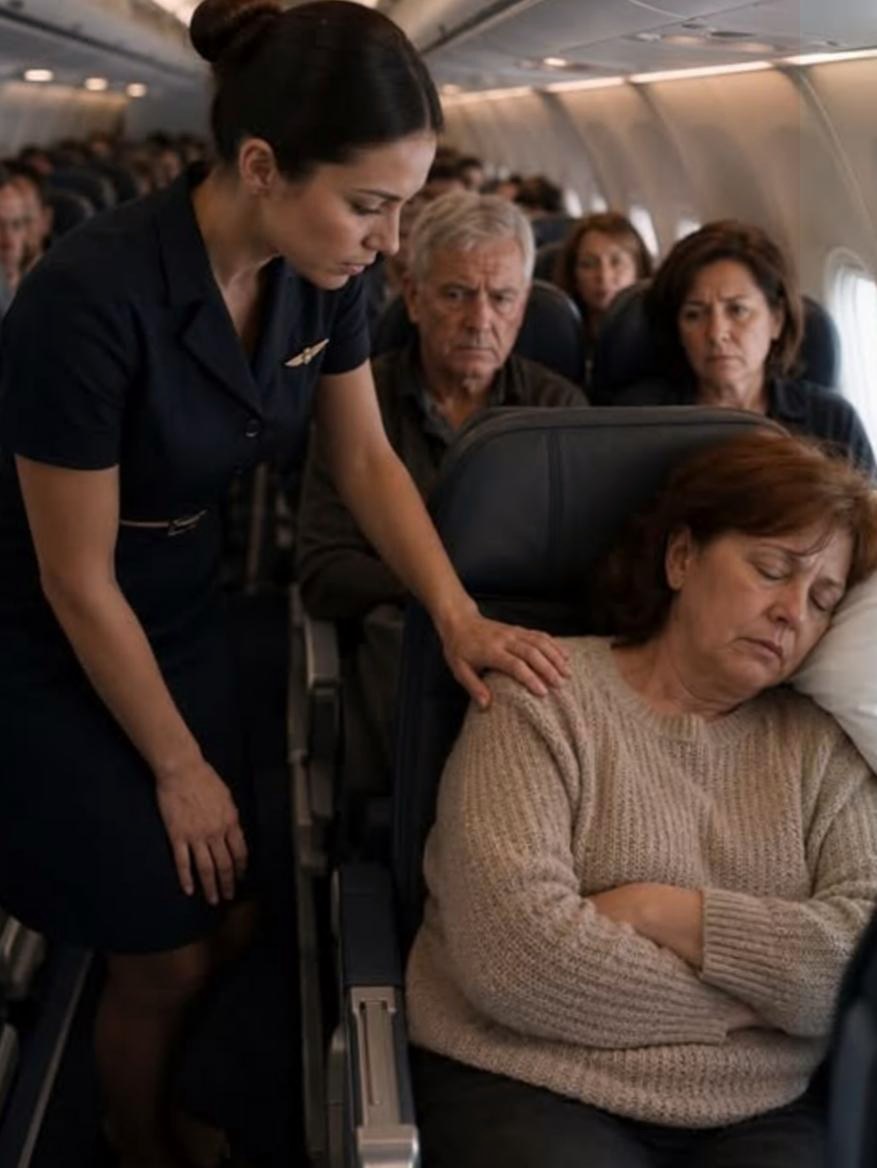
People in the cabin were crying, some were praying, and some were clutching one another’s hands. I knelt and pressed my hands against the console until the cold penetrated my skin.
“How long until London?” I asked.
“Forty-eight minutes,” Haley answered.
“Then we must use every minute correctly.”
Security officers were taking Nolan out of the cockpit. He looked back at me.
“You do not know what will happen when the recording is made public.”
“I know what happened when it remained hidden.”
His eyes became wet.
“I wanted to save my family.”
“I also wanted to save someone. But saving people does not mean killing them.”

When we landed at London Airport, the sky was already turning gray. Fire trucks, police, and ambulances were waiting for us by the runway. As soon as the door opened, the passengers began getting off one after another. Some stopped by me, squeezed my hand, and said nothing.
At the end Haley extended his hand to me.
“You saved this aircraft.”
“No,” I answered. “We all saved it. I simply remembered in time who I was.”
The police took Nolan away. In his bag they found a hidden backup device, false technical cards, and a letter belonging to his brother. Several hours later investigators confirmed that the military recording was genuine.
For the first time in seven years, my name appeared in an official document not as a criminal, but as a witness.
But the hardest moment was still ahead.
An investigator led me into a small room and placed a copy of the recording on the table. Then he turned on the speaker.
My old voice sounded.
“Daniel, move to the right. We are losing the signal.”
Then Daniel’s voice:
“Mara, I did not receive an order.”
My voice sounded again, this time clearly:
“Do not fire. It is a trap.”
After that, the sound of an explosion was heard on the radio. Then Daniel’s last words:
“I trust you.”
I sat down on the chair. For years I had repeated to myself that Daniel had followed my order and therefore died. Now I heard my own voice asking him to stop.

Commander Haley entered the room.
“Mara…”
“Do not tell me that this was not your fault,” I said.
“I only wanted you to hear the truth.”
“Does the truth always help?”
“No. But lies kill slowly.”
That same evening Nolan’s lawyer refused to defend him when it became clear that Nolan had planned not only to seize control of the aircraft, but also to conceal his brother’s crime. Nolan’s family tried to speak with journalists, but the recordings were already in the investigators’ hands.
Several days later he was charged with attempting to hijack the aircraft, deliberately endangering the lives of the passengers, and conspiring to destroy military evidence. I went to court only once. When Nolan heard my voice in the courtroom, he lowered his head.
The prosecutor played the recording.
Nolan’s own words were heard:
“If the evidence reaches London, the aircraft will not land.”
For the first time he heard himself from the outside. He covered his face with his hand. I did not look at him.
For me, the true loss was waiting in another room.
I went to Elena’s apartment in London. The door to Luka’s room was open. His red backpack lay on the bed, and on the floor was a half-finished drawing — an aircraft with small yellow stars by the windows.
On the table lay an old photograph of me. In the photograph I was standing in uniform, and Daniel was smiling beside me. On the back of the photograph Luka had written: “Mom, when you arrive, I want you to be the way you are here again.”

I sat in the empty room for a long time.
Then the telephone rang.
It was Elena.
“Luka is with me,” she told me. “He did not sleep all night. He saw your face on television.”
“Send me his voice.”
After several seconds I heard Luka’s quiet voice.
“Mom?”
“I am here, my boy.”
“Did you fly the aircraft?”
“A little.”
“Were you afraid?”
I looked outside through the window. The first light of morning was falling on the airport runway.
“Very.”
“Then why did you not run away?”
“Because you were waiting for me.”
Silence fell on the other side of the telephone.
“I will always wait for you,” he told me.

Six weeks later I rented a small room in Washington and began working at an air-safety training center. I no longer flew combat aircraft. I taught new pilots what to do when all the systems lie at the same time.
In the mornings I drank coffee by the window. Luka’s drawing lay on my desk. Every week he added a new detail — sometimes the moon, sometimes a small red house, sometimes two people standing beside the aircraft.
Luka moved in with me in the summer. On the first day of school he himself attached a small paper wing to his bag. In the evenings we prepared dinner together, and he tried to fit my old military words into everyday conversation.
“Mom, my homework was difficult today.”
“Every difficult task begins with one step.”
“Did you say that on the aircraft too?”
“No. There you must remember to breathe first.”
The first snow came in November. Luka stood by the window and caught snowflakes on his palm. And I took an old item from the kitchen cabinet — the small silver aviation insignia with whose help I had switched off the emergency receiver that night.
Its surface was scratched. A dark stain had remained on the edge. Despite this, for the first time it no longer seemed to me like a heavy remnant of the past.
It was a reminder that a person can return even to a lost life, only not in the same form.
Three months later I received a letter from Nolan. It was delivered through his lawyer. There was only one sheet of paper in the envelope.
“Mara, now I understand that you were not obligated to save me. But if you ever can, tell me how to endure what I did.”
I held the letter in my hand for a long time.
Luka entered the room.
“Who is it from?”
“From a person who hurt very many people.”
“Will you answer?”
Outside the window, snow was falling silently.

“No.”
“Why?”
“Because sometimes forgiveness does not mean sending an answer. Sometimes it means stopping carrying another person’s guilt.”
I folded the letter and put it in an empty drawer. I did not tear it up or burn it. Its existence no longer threatened me.
That night Luka hung my old photograph on the wall. The young woman standing beside Daniel was still there — frightened, but looking straight ahead.
I looked at her for a long time.
Then I placed the silver insignia below the photograph.
Luka asked me:
“Are you a pilot again now?”
I smiled.
“Now I am home.”
Outside, the snow began falling more heavily. In the room, only the old aviation insignia was shining.
That night, for the first time, I did not fly away from the past — I landed at home.
Missed the beginning?
Related posts:
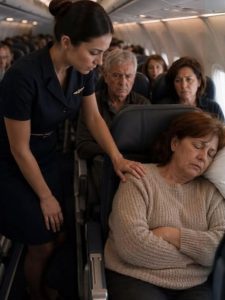 At eight thousand meters, the commander asked for a combat pilot, and when I stood up, everyone on board fell silent
 On the night of our wedding, my husband threw me out of my own house with his ex, but his face lost its color when he saw how calm I was
 During a Three-Year Marriage, My Pregnancy Was Denied, but the Family’s Most Trusted Man Lost Color When He Reached the Locked Drawer
 Mi exmarido me vio cenando con mis hijos después de años de silencio, y su esposa dejó de sonreír
 My Stepfather Locked Me in a Room Because of a Loan, but When I Reached the Stranger by the Black Car During My Escape, He Suddenly Stopped Smiling
 My mother-in-law took me to the hospital, but my husband demanded that I apologize — he turned pale for the first time at my answer





