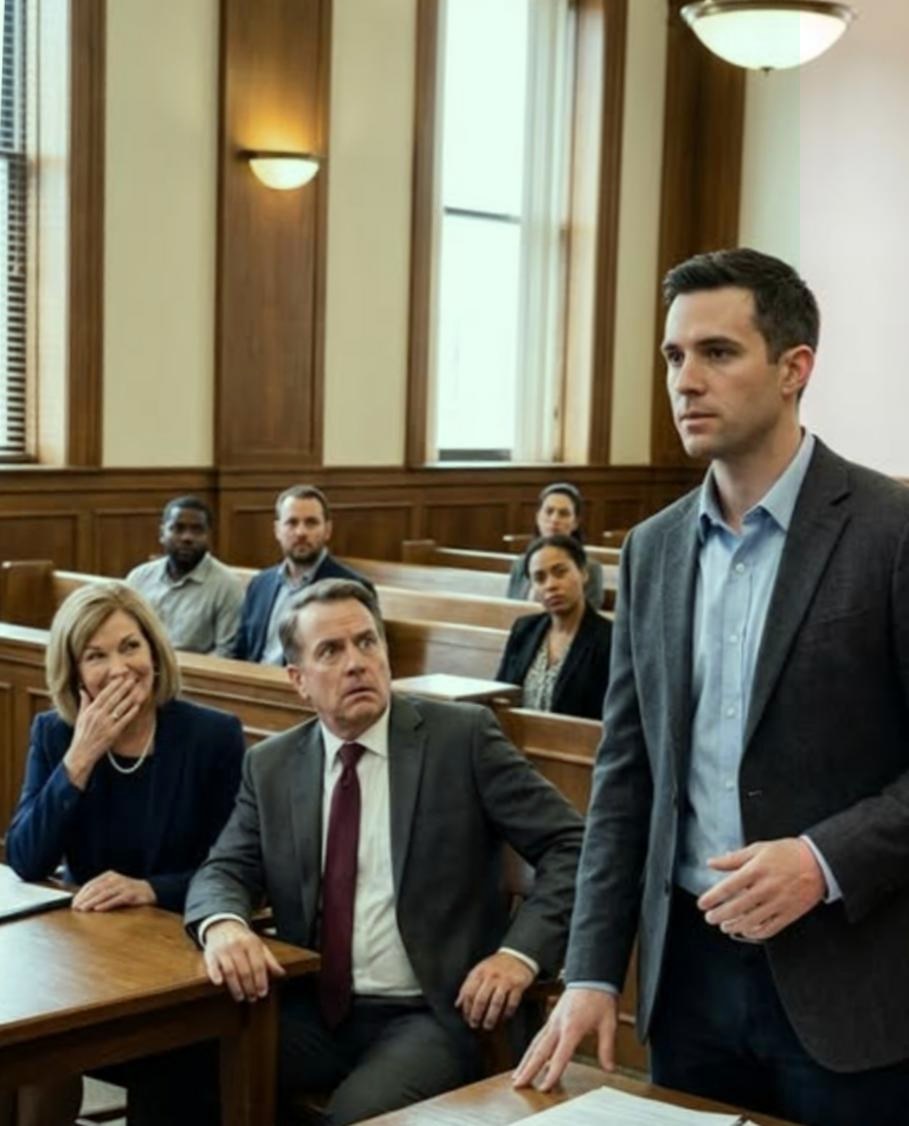

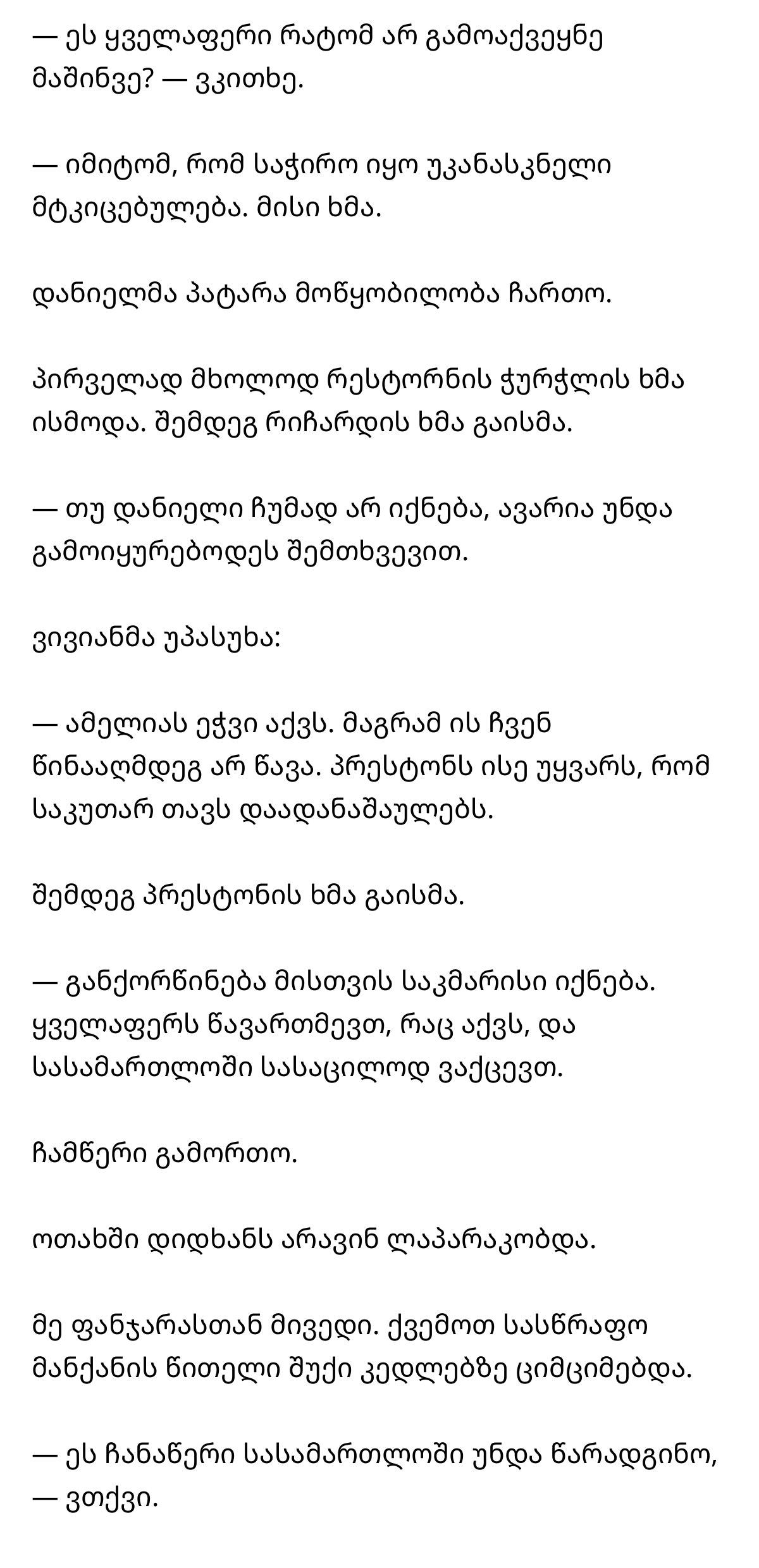
In the courtroom, my father-in-law loudly said that I did not even have money to hire a lawyer, and my mother-in-law could barely hold back her laughter.
The laughter was not loud. Vivian Hale simply brought her manicured fingers to her lips and exhaled lightly, as if she smelled not something funny, but an awkward odor. The diamond bracelet on her wrist gave off a white gleam.
I stood directly opposite her.
In front of me there was only one black leather bag, one glass of water, and a folded notebook. On the other side, Preston’s table was covered with folders, tablets, and three expensively dressed lawyers.
“Mrs. Hale,” Judge Rebecca Morrison looked at me over her glasses, “do you understand that you have the right to hire representation?”
“Yes, Your Honor.”
“And you are choosing to defend yourself?”
“Yes.”
A quiet snicker came from the back rows.
My father-in-law, Richard Hale, leaned his head toward me and said so that everyone could hear:
“Defend herself? She cannot even afford a lawyer. Stubbornness is free, apparently.”
Beside him, Vivian tapped her fingers on the table.
Preston did not look at me.
For seven years, his family had slowly taught me how insignificant I was. At dinners they interrupted my words, at charity evenings they introduced me as a stranger, and in family photographs I always found my place at the very end.
But this courtroom was different.
Here, their humiliation had already become evidence.
“Mr. Voss,” said the judge, “do you have any formal objection to Mrs. Hale representing herself?”

Preston’s lead lawyer, Martin Voss, slowly rose. He had silver hair and such a calm expression, as if he already knew who would win.
“No formal objection, Your Honor. The case is simply straightforward. The property belongs to my client, while the defendant made no significant contribution either to the business or to its development.”
“Straightforward.”
The word struck my throat.
The case was simple only for those who had failed to notice for seven years who wrote Preston’s contracts at two in the morning, who checked foreign partners in his company, and who warned him when transfers made in his name violated military procurement rules.
But they did not know this.
Not one of them had ever asked what I did before I met Preston. They thought I simply sat at home, ironed his shirts, and lived in the shadow of his success.

Three weeks earlier, at seven in the morning, rain struck the tall windows in our home’s breakfast room. The copper clock Vivian had given us on our fifth wedding anniversary ticked monotonously.
Preston entered the room in a dark gray suit. I had ironed that suit the night before.
Instead of a kiss, he placed a white envelope beside my plate.
“What is this?” I asked.
“You know what it is.”
I opened the envelope. I read the first page of the divorce petition twice.
Seven years had turned into several numbered clauses.
“Irreconcilable differences.”
“Separate property.”
“Absence of a significant contribution by the defendant.”
“You are writing that I did nothing?” I raised my head.
Preston stood by the window and checked his phone.
“You took care of the house, Amelia.”
“I managed your life.”
His jaw tightened.
“This family lived on my money.”
I looked at the copper clock. A small scratch could be seen on its lower edge, which I had made years earlier when I installed a hidden miniature recorder inside it. At the time, I still believed it was only a precaution.
Now the judge was waiting for my first word.
I stood up, took an old folder from my bag, and began opening its clasp. Preston looked at me for the first time. Voss stopped his pen. Richard knitted his brows.

My fingers touched the folder’s clasp, and such silence fell over the courtroom as if everyone simultaneously remembered that I knew more than they did.
The clasp opened.
I did not take out any colorful dividers from the folder. I placed only one small black memory card on the table and looked at the judge again.
“Before we discuss the division of property, I want to draw the court’s attention to the fact that several key documents in this case have been deliberately made incomplete.”
The smile disappeared from Voss’s face.
“Mrs. Hale, that is a serious accusation.”
“That is why I am not making it without confirmation.”
“You are not a lawyer,” Richard interrupted. “Do not try to play the role of someone you have never been.”
That was the first mistake he made that morning.
The judge looked at him sternly.
“Mr. Hale, if you interrupt the proceedings once more, I will ask you to leave the courtroom.”
Richard leaned back against the chair. The leather surface creaked.
I drank water, but my throat was still dry. Seven years had been like carrying silence about myself. Now every sentence meant opening the door behind which their entire life stood.
“Mr. Voss,” I continued, “the petition says that I never participated in Preston’s company.”
“That is a fact.”
“Then why is my personal email address listed as the author of two amendments concluded with the Ministry of Defense?”

Preston shifted in his chair.
“That is probably an administrative error,” he said.
“An error that was repeated seven times and concerned a contract worth millions of dollars each time?”
The court clerk stopped typing on the keyboard.
Voss quickly opened the folder.
“The materials you brought were not disclosed in advance.”
“Because you did not know they existed.”
“You cannot teach court procedure to an experienced lawyer.”
“No,” I said, “but I can show the court how you taught my husband to circumvent the law.”
The pen Vivian was holding broke in her hand.
Fear was still in my heart, but something else had appeared that was stronger than it: clarity. For the first time in a long while, I was not trying to make anyone like me.
The judge requested the records. Voss objected. I answered each question with a specific date, account number, and signature. Gradually, no one in the courtroom moved anymore.
“Where did you get this information?” the judge asked at last.
I looked at Preston for one second.
“From the same place I know that the financial report submitted by my husband is false.”
Preston’s face turned pale.
“Amelia, stop.”
It was the first time he had said my name with fear.
“For seven years you told me that I represented nothing,” I said calmly. “Now I ask you not to stop me until the court hears the complete truth.”

The hearing continued until noon. The judge accepted several documents as temporary evidence and ordered an additional financial audit. But the main question was still hidden: why did I have access to defense contracts, and why was I checking the documents of Preston’s company?
Preston caught up with me in the corridor.
There, the old marble floor gleamed coldly beneath our feet. The light coming through the window divided his face into two parts.
“Who are you?” he asked me.
“A person you cannot erase with a divorce petition.”
“Where did you get all this?”
“Ask your lawyers. They have been paid for years to hide the truth from you.”
Voss came over to us and took Preston by the arm.
“Not here,” he told him quietly.
“No, here and now,” Preston waved his hand. “I want to know what my wife did.”
I took a small voice recorder from my bag. Its red light was blinking.
“First you need to understand what you did.”
That same evening I moved into a hotel room. The room smelled of lavender cleaning product, and the phone beside the bed had already rung three times from an unknown number.
I answered on the fourth ring.
“Mrs. Hale?” It was a man’s voice. “If you do not come to the clinic tomorrow morning, the documents will be published publicly.”
“Who are you?”
“A person who knows that you were not working alone.”
My breath caught.
“What do you mean?”
Several seconds of silence fell on the other end of the line.
“Your former supervisor is alive. And he says that Preston Hale arranged his death…”

“Your former supervisor is alive. And he says that Preston Hale arranged his death…”
The call ended immediately.
I sat down on the bed and gripped the phone so tightly in my hand that my fingers turned white. My former supervisor, Colonel Daniel Ward, had died three years earlier in a car explosion in Afghanistan. His name was in the official report. I had seen his funeral with my own eyes.
The next morning, at fifteen minutes past nine, I entered the city military medical center. The sharp smell of disinfectant hung in the corridor, and photographs of wounded soldiers hung on the walls.
A woman on duty stopped me at a white door.
“Mrs. Hale, they are waiting for you.”
“Who?”
She only opened the door.
A man stood by the window in the room. He had a deep scar on the left side of his face, and his right hand rested on a metal support.
I recognized his way of walking before he turned around.
“Daniel?”
“Hello, Amelia.”
My knees gave way.
“You are dead.”
“That is what everyone was supposed to think.”
A brown folder lay on his desk. This time it was of a different color. Only one signature could be seen on it: Daniel Ward.
“What happened?” I asked.
“After the explosion, the enemy took me. Then several people from my own service decided that my return would be more dangerous for them than my death.”
“Preston?”
Daniel lowered his head.
“Preston Hale was an intermediary in the defense procurement system. You knew this when you began investigating him. But you did not know that he was stealing more than money.”

He opened the folder and handed me a photograph.
In the photograph, Preston, Richard, and two military contractors were sitting at one table. On the back wall, the number of an old warehouse could be seen.
“This meeting took place six days before my ‘death,’” Daniel said. “They knew that I had discovered false deliveries and secret accounts.”
“Why did you help me?”
“Because you were the only person I trusted completely. You were a military lawyer. At that time, the youngest, but the most precise.”
The words left a strange coldness in my body. This was my secret, which I had hidden from the moment I met Preston. I told the family that after military service I was doing only consulting work. In reality, I was secretly working on an investigation into fraud in military procurement.
Preston found this out by accident. Then he began using my fingerprints, accounts, and contract notes.
“Why did you not publish all this immediately?” I asked.
“Because the final piece of evidence was needed. His voice.”
Daniel turned on a small device.
At first there was only the sound of dishes in a restaurant. Then Richard’s voice was heard.
“If Daniel does not keep quiet, the accident must look accidental.”
Vivian answered:
“Amelia has suspicions. But she will not go against us. She loves Preston so much that she will blame herself.”
Then Preston’s voice was heard.
“The divorce will be enough for her. We will take everything she has and make her look ridiculous in court.”
He turned off the recorder.
For a long time, no one spoke in the room.
I went to the window. Below, the red light of an ambulance flashed on the walls.
“You must submit this recording to the court,” I said.
“We will. But first you need to know one thing. Preston’s company was involved in selling state-secret documents. They used the authorization issued in your name. If this comes out, everyone will be arrested.”
“They did it in my name.”
“I know. That is why you will need protection.”
At that very moment my phone rang. They were calling me from Judge Morrison’s office. I realized that the case had already become an official investigation.
But before I could answer, Daniel’s phone rang.
He listened, lost the color in his face, and said quietly:
“The warehouse is on fire.”
“Which warehouse?”
Daniel looked at me.
“The one where the original documents are. And your child is there…”
როცა პრესტონმა შეტყობინება წაიკითხა, სახე შეეცვალა…
ფინალში ყველაფერი, რაც მათ დამალეს, ზედაპირზე ამოვიდა. მაგრამ ყველაზე მძიმე პასუხი სასამართლოში კი არა, ჩემს სახლში მელოდა.
„შენ უბრალოდ ჩემი ცოლი ხარ.“
მის სახეზე თავდაჯერება სამუდამოდ გაქრა.
😱 გაიგეთ, რას მალავდნენ ისინი →
👇 ისტორიის ფინალი უკვე გახსნილია
Related posts:
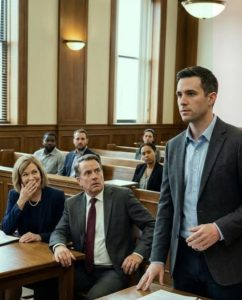 Part 4 — My Spouse’s Family Mocked Me in Court When I Stood Without a Lawyer, but After My First Words My Father-in-Law Turned Pale
 My husband’s fiancée used my surname on her wedding invitation, but when I mentioned one stolen bracelet, his face went white
 Llevó a su amante a la gala más exclusiva, pero al verme bajar la escalera su sonrisa desapareció por completo
 Mein Schwiegervater erklärte mich im Gericht für mittellos, doch als ich allein aufstand, verlor sein Anwalt plötzlich jede Farbe
 Mi futuro cuñado me humilló delante de doscientos invitados y exigió que peleara, pero al verme descalza dejó de sonreír
 Meu noivo se casou escondido e exigiu que eu salvasse o pai dele — então o advogado parou de sorrir