
On the morning of my wedding, my father neither called me nor congratulated me nor even asked whether I was alive — he only left two empty chairs in the front row.
Small olive branches and name cards lay on the chairs: Patricia Herrera and Roberto Herrera. Beside them, on a white tablecloth, lay a little copper bell lifted by the wind. The coordinator told me she was supposed to ring it when the ceremony began, but that morning I heard her thin voice only once — as if someone had deliberately warned me that this day would not be peaceful to the end.
Three months earlier, my mother had called me.
“Mariana, we need to talk about the wedding date.”
There was already such a tone in her voice, as if they had made the decision and were calling me only for approval.
“What happened?”
“Camila booked a trip to Bali.”
I waited for her to laugh. She did not laugh.
“And?”
“It is that exact week. So we want you to move the wedding.”

I got up from the chair and went to the kitchen window. It was raining outside. Santiago was sitting at the table and looking at me silently.
“Mom, everything is booked. The venue, the photographer, the music, the hotels. Guests are coming from other cities.”
“The money will be returned.”
“Time — no.”
At that moment I heard my father’s voice.
“Put it on speaker.”
The next second, his calm, heavy voice sounded in the room.
“A family must learn to make sacrifices.”
“Excellent. Then Camila should change the date of her trip.”
Silence fell.
“Don’t act like a child,” my father said.
“My wedding has been planned for more than a year.”
“Your sister’s trip is important too. For her, it is a professional opportunity.”
Camila filmed advertisements for social networks, and my father believed that in Bali she would meet influential people. For me, as always, only one word remained: endure.

“And my wedding is not important?”
“Don’t twist words,” he warned me. “If you do not change the date, we will not come.”
“You will not come to your own daughter’s wedding?”
“Perhaps you need to understand at least once that your decisions have consequences. Learn humility.”
I waited for my mother. For at least one sentence. She said nothing.
The call ended.
In the following weeks I still maintained a small, awkward hope. I left their places in the table plan. I told the coordinator not to take away the chairs. On the morning of the wedding, I checked my phone every few minutes.
Nothing.
Neither a congratulatory message. Nor a call.
My friend Fernanda fastened the back of my dress, and her fingers were trembling so much that the hook slipped twice.
“You can cry,” she told me quietly.
“Later.”
“Mariana…”
“Later, Fernanda.”
I did not want to devote even tears to them on this day.

When the music began, I held the bouquet with both hands and walked alone toward the altar. Santiago’s jaw was tense. I knew he was angry, but not because of me.
I said the vows. I smiled for the photographs. I cut the cake. I danced. Every time a guest looked at the two empty chairs standing in the front row, I pretended not to notice.
In the evening, among two hundred guests, Santiago stood up and lightly tapped his glass with a spoon. The conversation quieted.
First he looked at the empty chairs, then at me.
“The people who should have been beside Mariana decided that they did not want to come here. Therefore I think everyone should hear the real reason.”
My heart clenched.
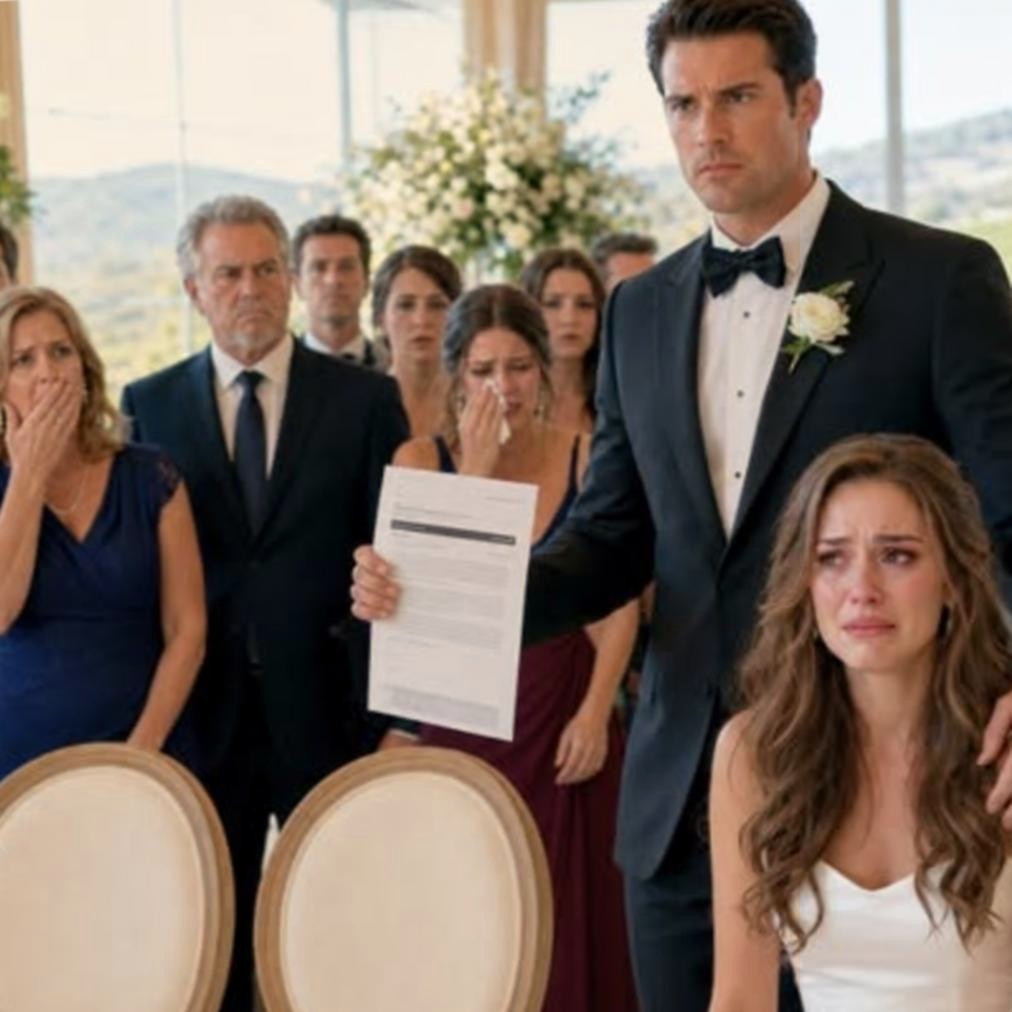
Santiago put his hand into the inner pocket of his jacket and took out a folded sheet of paper. The guests leaned forward. He slowly unfolded the paper, placed his finger on the first line, and opened his mouth…
Santiago never spoke impulsively. As a lawyer for large companies, he could sit for hours before angry people and never raise his voice once. Therefore, when he unfolded the paper in front of two hundred guests, I understood that he had thought about this moment for a long time.


Five days earlier he had asked me:
“Are you sure you are leaving your relationship with your parents like this?”
We were standing in the kitchen. The golden edges of my wedding invitations lay on the table, while a small scratch from the dress clasp was still visible on my hand.
“I am tired,” I told him. “I no longer want to compete for love.”
“What if I tell them something?”
“Don’t interfere. Please.”
Santiago nodded. Now I understood that agreement meant not silence, but speaking at the right time.
In the wedding hall he raised the paper high.
“I received this letter five days ago from Mr. Roberto Herrera.”
Several heads turned toward the empty chairs. I had my hands clasped so tightly beneath the table that the ring dug into my skin.
Santiago began to read.
“Mariana must understand that the world does not revolve around her plans. Camila’s trip may have greater financial and professional value than an excessive, expensive ceremony.”
Someone exhaled quietly.

My aunt Lucia covered her mouth with her hand.
Santiago paused for a moment.
“And then it says: ‘Perhaps getting married without her parents in front of everyone will finally teach her that her sister is no less than she is.’”
I heard the sound of blood in my ears. In childhood, my father used to tell me that I was strong. Now I understood that by this word he often meant: endure it yourself, we are with Camila.
“There is more,” Santiago said.
He took out a second sheet. This time it was a message from my mother.
“Convince Mariana to postpone the wedding. She turns one day into a dramatic performance, while Camila risks losing social connections by not being in Bali.”
Something collapsed inside my chest. I remembered my mother’s tone of voice. Flexibility. Family. Sacrifice. All these words suddenly meant the same thing: you must give way.
Santiago came to me and placed his hand on my shoulder.
“Mariana has made herself smaller all her life so that her sister could have more room. But from this evening on, as long as I am beside her, no one will be able to demand this of her anymore.”
Aunt Lucia began the first applause. Fernanda stood up immediately. Then Santiago’s parents. Applause filled the hall, but it was not happy wedding applause. It was something heavier. As if everyone had simultaneously decided that they had already heard the truth.

The phone lit up on the table.
Mother.
Then Father.
Father again.
Santiago leaned down.
“There is no need to answer.”
I looked at the screen. For thirty-one years I had always been afraid that I would upset my father. At that moment, for the first time, I felt that perhaps I no longer wanted to betray myself either.
I picked up the phone and went to the middle of the hall.
“Mariana,” my father said immediately, “what has your husband done?”
“He only read what you wrote.”
“That was a private letter.”
“Was my wedding private when you were trying to destroy it?”
Silence fell on the other side.
Then my mother cried out:
“We are your family!”
For the first time, those words sounded to me not like a threat, but like empty noise.
“Family is the one who does not use your happiness as punishment,” I answered.

Fernanda squeezed my hand. Santiago stood several steps behind me, but he did not take his eyes off me.
My father lowered his voice.
“If you do not deny all this now, I will not bring you back into our family.”
“Father, I was never there.”
I ended the call.
It was as if the air in the hall had changed. I thought I had already done the hardest thing. But Santiago did not smile at me immediately. He looked at the phone vibrating in his hand, and for the first time I saw real fear on his face.
“What happened?” I asked.
He turned the screen toward me. A message from an unknown number said: “If Mariana says this publicly, she does not know what is in the wedding-expenses folder.”
Santiago looked away from me.
“This folder concerns your parents,” he said. “And if I am understanding correctly, they have more to hide than one cruel letter…”
At Santiago’s last words, the noise in the hall quieted again. The phone trembled in his hand, although he kept his voice calm.
“Who sent you this letter?” I asked.
“My father’s former accountant. He contacted me this morning.”
“Why now?”


Santiago took a small black folder from his pocket. Its edges were covered with golden dust, as if it had lain for a long time in some old cabinet.
“Because I noticed something in the wedding expenses. Your parents paid part of the money, but not as a gift.”
Fernanda said quietly:
“Mariana, sit down.”
I could not sit. My legs were trembling, but my body stubbornly remained standing.
Santiago opened the folder.
“These are bank transfers. Your parents thought they were covering part of your wedding expenses. In reality, the money came from a charitable foundation that existed in Roberto Herrera’s company’s name.”
“What does that mean?”
“It means that their money was not spent at your wedding. Money that should have been used for the foundation’s beneficiaries was spent.”
My aunt Lucia grabbed the chair.
“Roberto has his own foundation?”
“He had one,” Santiago replied. “And money from it also went toward Camila’s advertising trips.”
Someone in the hall stopped whispering. Everyone was now looking only at us.

Santiago took a printed letter from the folder.
“But that is not the main thing. The main thing is that Mariana’s parents knew how the wedding payments were covered. They sent a letter to their lawyer and demanded that if Mariana did not move the wedding herself, they would return the transfers. With this, the ceremony would collapse in that same week.”
“They wanted to cancel my wedding?” I barely said.
“Not only cancel it,” he said. “They wanted this to be a punishment for you.”
Santiago put his hand into the folder again and took out the last sheet.
“And this is their signed statement that the money was assistance intended for you and was not subject to return. That means they cannot now say that they did not know how the money was used.”
I imagined my mother’s face before my eyes. Her words: “The money will be returned.” She knew.
My phone trembled again. This time my father’s voice was recorded in a message. Santiago played the audio.
“If she does not postpone it, let not a single peso remain from that foundation in her wedding. Let everyone see how an ungrateful daughter lives.”
Several guests in the hall lowered their heads. And I could no longer recognize my own voice.
“Did you record this?”
“No. Her father’s accountant did. He kept the evidence because he was afraid that in the end they would blame every crime on him.”
Santiago took my hand.
“Mariana, you could not understand why they were so sure they would defeat you. Now you know.”

At that moment the hall doors opened. A woman I had never met before entered. She was holding a box of documents.
“I am Elena Morales,” she said. “I was the foundation’s auditor.”
My father stopped calling. My mother also fell silent.
Elena placed the box on the table.
“This contains not only the wedding expenses. It contains all transfers from the last three years. And one hour ago these materials were already sent to the tax service.”
Santiago slowly raised his head.
“One hour ago?”
“Yes. But this is still not the worst news.”
Elena looked toward me.
“Your father has not yet told you that your name was also listed as the foundation’s director. If the documents are published, he can blame everything on you…”
იმ ღამეს ზარმა პირველად თავისუფლების ხმა გამოსცა…
მეგონა, ყველაზე მტკივნეული უკვე გავიგე. მაგრამ ბოლო სიმართლემ ყველაფერი სხვა თვალით დამანახა.
„მარიანა ყოველთვის უკან იხევს.“
დარბაზი დადუმდა.
👇 ისტორიის ფინალი უკვე გახსნილია
Related posts:
 At My Sister’s Wedding, My Father Poured Wine Over Me and Mocked Me, but the Man Who Entered the Hall Suddenly Turned Pale
 Thirteen Years Later, My Former Husband Humiliated Me Publicly, but the Two Boys Who Went Up on Stage Suddenly Erased His Smile
 My Mother Exchanged My Wedding for a Rich Man, but When the Door Opened, My Mother’s Smile Suddenly Disappeared
 Part 4 — My father asked me to postpone my wedding because my sister wanted to go to Bali — when he saw the two empty chairs, his face changed
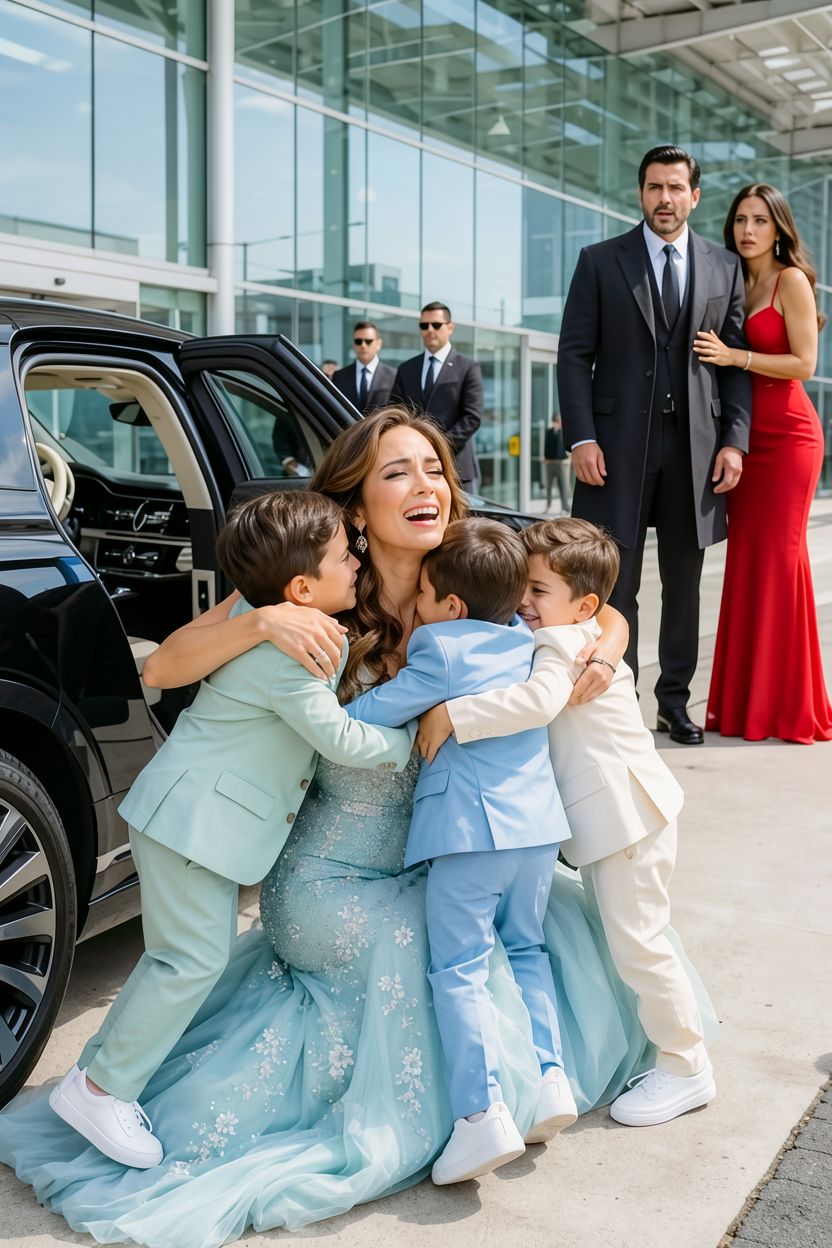 My ex-husband sat beside me to mock my ruined life, but at the airport three children ran toward me and his smile vanished
 Eight Years Later I Found My Ex-Wife and Child on the Street, and My Mother Lost Her Color When She Saw Them