Zura’s face changed immediately.
He looked at the phone and stepped back.
“It is fabricated,” he said.
“Then why were you on the camera?” Levani asked him.
Zura could not find an answer.
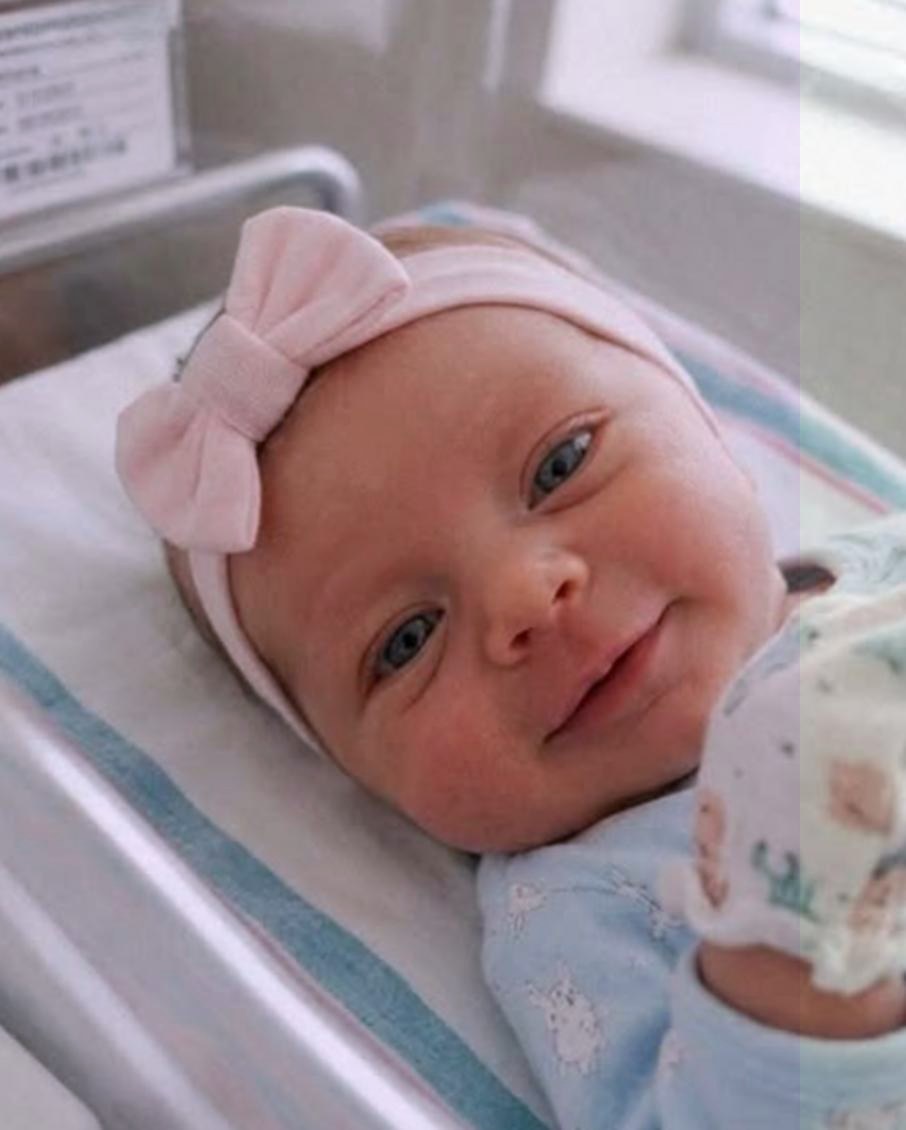
Everyone in the room began speaking at once. Doctor Marika was calling the director. Ketevan was repeating Irine’s number. And I was looking at my child and thinking of only one thing: her little arm was still unprotected.
Levani lifted the girl from the crib.
“No one will take her,” he said.
“This is no longer your decision,” Zura replied coldly.
Levani turned toward him.
“Touch my family one more time and I will have the police here immediately.”
Zura brought the phone to his ear.
“You do not know what you are doing.”
“For the first time I know exactly what I am doing,” Levani said.
A few minutes later police officers appeared in the hospital corridor. But no one was arrested yet. They only sealed all the documents, took the camera recordings, and restricted Zura from leaving.
The chief detective, Sopho Makharadze, came to me.
“Mrs. Nino, you should know that both an old crime and a new attempt are becoming clear in this case.”
“Did they try to abduct my daughter?”
“We cannot call it that yet. But Doctor Marika had already prepared the papers for transferring the baby before everything was explained to you.”
The doctor lowered her head.
“I thought it was a medical procedure.”
“And it was not?” the detective asked.
Marika looked at Zura.
“He told me that the family posed a danger and that transferring the baby was necessary.”
Zura gnashed his teeth.
“You signed it yourself.”
“Because you deceived me.”
This was the first blow to Zura. His own ally stepped back.
Then Sopho played the old recording once more. We were all sitting in the small hospital conference room. The clock hanging on the wall clicked loudly every second.
Avtandil’s voice came from the recorder:
“Tell the family that the baby did not survive.”
Then the voice of the young Ketevan:
“Please, Avtandil, do not do this.”
“If you tell anyone, they will take Levani away from you too.”
In the room Ketevan hid her head in her hands.
Levani sat like stone.
His own childhood years had suddenly been filled with someone else’s lie.
Sopho turned off the recording.
“Ketevan, you did not report it then. Why?”
Ketevan looked at her son with tearful eyes.
“I was afraid. Your father was violent, controlled the money, and threatened me. But that is not an excuse. I lost your sister, and I raised you in a lie too.”
Levani said nothing for a long time.
Then he whispered:
“I thought I was alone. In fact, all my life I had been waiting for someone.”
That same evening we met Irine for the first time.
She stood in the hospital garden beside a tree wet with rain. She was a woman of about fifty, with short hair and a small scar on her left cheek. In her hands she held an old cloth doll.
She did not come toward me.
“I do not want to take your child away,” she said.
“Then why did you call us like that?”
“Because for years they convinced me that my family did not exist. When I learned that a child had been born, I was afraid someone would deceive me again.”
Levani stopped in front of her.
“Are you really my sister?”
Irine nodded.
“If you want, we can take the test again.”
“I do not want another paper,” Levani told her. “Just tell me what your name was in childhood.”
Irine lowered her eyes.
“Mother called me Irine. Before they took me away.”
Levani began to cry.
They embraced as if the lost years had to be measured between their bodies.
I watched them and understood for the first time that my child was not the end of someone’s secret, but the beginning of the return of two families.
But that night we learned one more thing.
Zura had taken not only Irine’s records from the hospital archive. One week before the baby’s birth, he had also changed the data of our clinic. His goal was to erase Levani’s surname from the child’s documents and hand her over to a foreign guardian.
That was precisely what the camera recording proved.
Sopho took Zura to the interrogation room. Levani and I stood there behind the glass.
“Why were you doing all this?” Sopho asked.
Zura smiled for the first time.
“Because Avtandil had to repay his debt. He left everything to me.”
“Avtandil died twenty-nine years ago.”
“But his affairs remained.”
Sopho spread the documents on the table.
“And you continued?”
Zura shrugged.
“Some families pay money, and some lose children. That is how the world works.”
When he heard this, Levani did not smash the glass with his fist. He simply stepped back.
Then I understood that the greatest victory was not loud shouting, but also the refusal of a person who had been forced all his life to carry someone else’s lie.
The following weeks were difficult.
The police arrested Zura. Doctor Marika gave testimony. The hospital director resigned because no one had checked the old archives for years.
Ketevan admitted her guilt and gave the investigation every letter Avtandil had ever written to her.
They contained the sums paid for selling children, names, and addresses.
Ketevan often came to us, but she no longer tried to hasten forgiveness.
Once she quietly told me in the kitchen:
“I am not asking you to believe me. I only want you to know that this time I will not run away.”
I nodded.
“Then stay. That is enough.”
We heard another recording of Zura’s interrogation several months later. Sopho told us that we had to see how his confession worked.
There was a speaker in the small room. Zura’s voice sounded lower and more helpless from it.
“I only changed the documents,” he was saying.
“You said that children were being lost,” Sopho answered.
“Those were simply words.”
“No. Those are your words.”
Zura fell silent.
When he heard his own voice in the recording, it was apparent for the first time that he understood his own cruelty from the outside.
“Turn it off,” he said.
Sopho answered:
“You said it yourself. Now listen.”
I took Levani’s hand.
He was not smiling. He was not celebrating either.
“For all these years he thought words had no value,” he told me. “Now he has paid for the first time.”
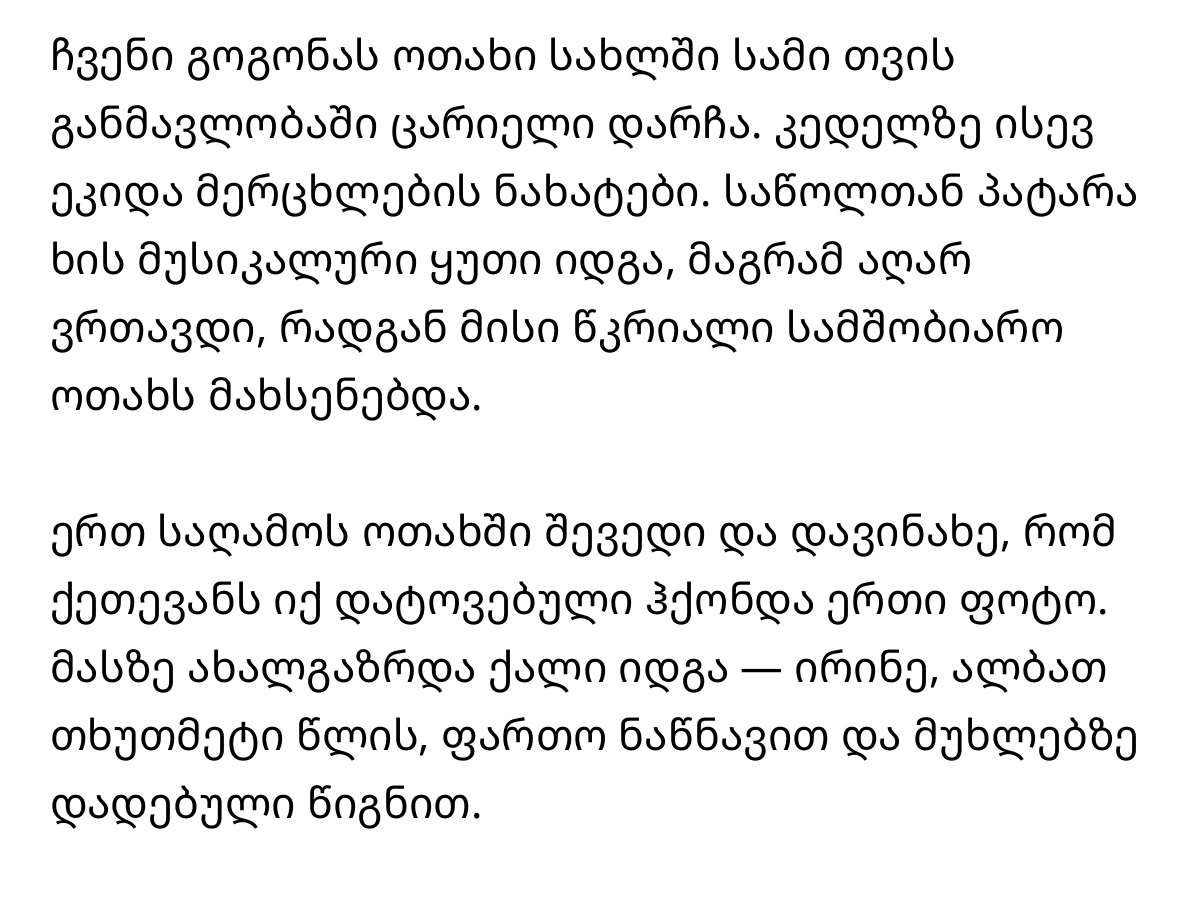
Our girl’s room remained empty for three months. The drawings of swallows still hung on the wall. A small wooden music box stood beside the crib, but I no longer turned it on, because its ringing reminded me of the maternity room.
One evening I entered the room and saw that Ketevan had left a photograph there. It showed a young woman—Irene, probably fifteen years old, with a thick braid and a book resting on her knees.
On the back of the photograph was written: “If you ever return, the door will be open.”
Ketevan had kept these words for twenty-nine years.
Four months later we moved to another city. I began working in a children’s library, while Levani opened a small workshop for wooden toys. We named our girl Elene, in honor of the old nurse who kept the truth when everyone was afraid.
Irine came once a week.
At first she stayed only ten minutes. Then she read fairy tales to Elene and played with her little fingers.
Elene soon understood that Irine meant “aunt” to her. She sometimes still called Levani “buddy,” because the word “uncle” was too ordinary for her.
One morning, when the first snow came, Elene drew four people on a sheet of paper. I, Levani, Irine, and Ketevan stood in front of a small house. Everyone held a swallow in their hands.
“Mother, everyone must be in the picture,” she told me.
“Everyone who stayed,” I answered.
That evening I received a message from Zura.
“Nino, I know that a lot has happened. When everything is over, I want to explain it to you. To Levani too. At least one meeting.”
I looked at the screen for a long time.
Earlier, I would have gone immediately after such a message, saved everyone, listened to everyone, and once again carried someone else’s guilt myself.
But that day I simply wrote back:
“I no longer need an explanation. I have already heard the answer.”
Then I blocked the number.
In the evening I took Elene’s bracelet off so she could be washed. A small swallow on the silver shone under the warm light. When I first saw it, the object had seemed to me a sign of danger.
Now it lay peacefully in my hand.
Levani entered the room and asked me:
“Are you ready?”
I looked at Elene, who was already asleep, while clutching her colored pencil in her fist.
“Yes,” I told him.
Snow was falling outside the window. Instead of the music box, the child’s peaceful breathing could be heard in the house.
I fastened the bracelet around her wrist again.
This time her mark no longer meant fear.
It meant returning home.
Missed the beginning?
Related posts:
 My Mother-in-Law Looked at the Newborn, Turned Pale, and Asked Us to Give Up the Baby Immediately — Her Strange Reaction Frightened Me
 I Didn’t Make It onto the Flight to London and Unexpectedly Returned Home — The Smile Immediately Disappeared from My Sister’s Face
 Part 4 — I Didn’t Make It onto the Flight to London and Unexpectedly Returned Home — The Smile Immediately Disappeared from My Sister’s Face
 An Unknown Man Humiliated Me in Front of Everyone, but the Restaurant Owner Looked at Me Only Once — and His Smile Immediately Disappeared
 Rowan seated a secretary in my place and told me, “Remember your place” — but he turned pale at the sight of my calm smile
 A Flat Tire Stopped Me at a Desert Diner, but When the Waitress Heard My Name, the Color Drained from Her Face