As soon as my mother-in-law looked at the newborn’s hand, her face changed, and she told me that we should not take this baby home.
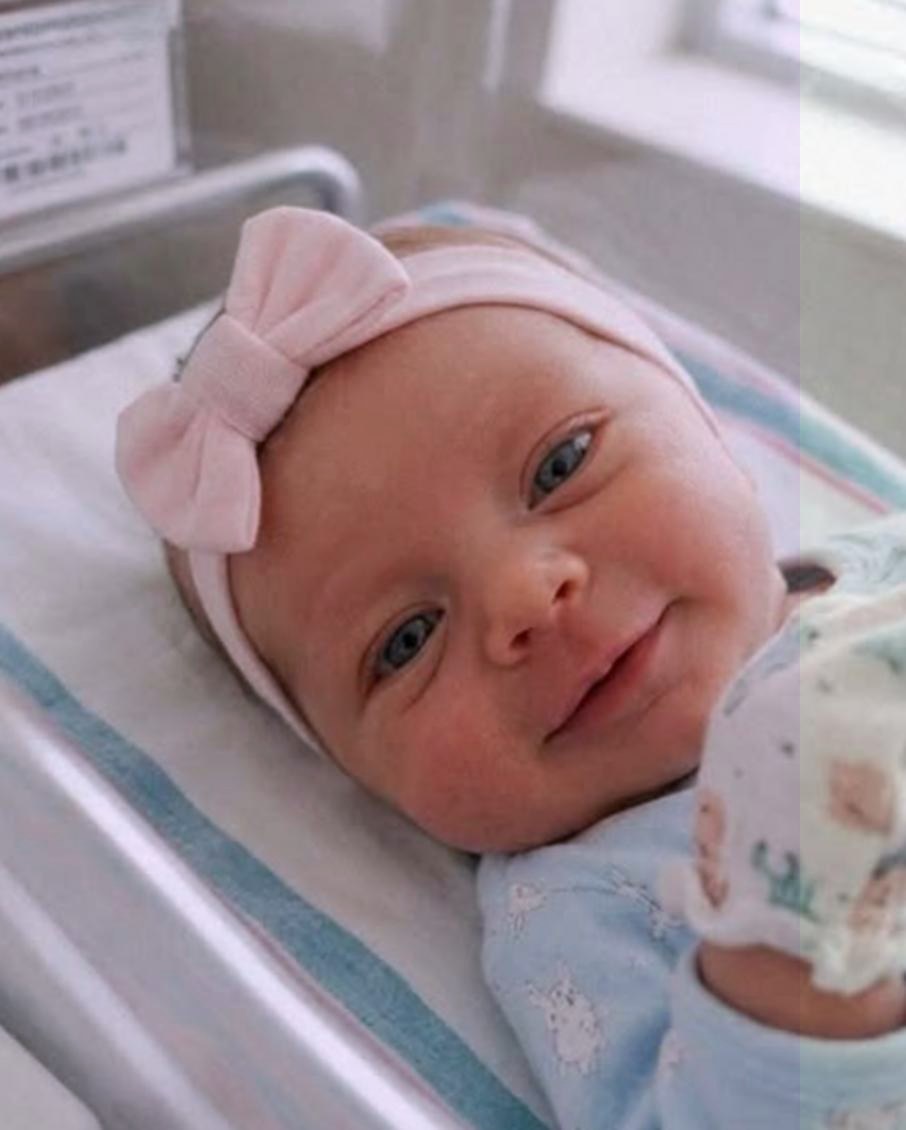
This happened in the maternity room, around ten in the morning. February snow was falling silently outside the window, while the radiator was so hot that the glass of water placed beside it was steaming. Our daughter lay in a small crib and wore a thin silver bracelet, inside which a swallow had been engraved by my husband’s grandmother.
Ketevan was looking precisely at that bracelet.
Yesterday, when I could barely breathe after the Caesarean section, I thought I had already endured the hardest thing in my life. But when you become a mother, it seems the most painful moment is always waiting behind you.
Ketevan had never been merely a mother-in-law to me. Six years earlier, when Levani and I were planning to marry, she came to me every day after my mother’s death. She left me food, brushed my hair, and told me that a family was created not by blood, but by staying.
When I told her about the pregnancy, she cried as if her own child were being born for the second time.
“I will arrange the pink room for you,” she told me then. “You only need to rest.”
She really helped us. She assembled the baby’s crib herself, painted little swallows on the wall, and brought us the bracelet two weeks ago.
“All the newborns in our family wore this,” she explained. “Now it is my grandchild’s turn.”
That morning Levani came in with flowers. He was holding the white roses so tightly that their stems left red lines on his palm.
“Nino, look what a nose she has,” he whispered, touching the baby’s finger. “It is exactly like yours.”
I laughed, although the incision in my abdomen hurt.
An hour later Ketevan arrived. She was carrying three bags: a blanket, a small pillow, and a wooden music box. She stopped at the door, as if she did not dare enter the room.
“Come in, Mother,” Levani said to her. “Your granddaughter is waiting for you.”
Ketevan approached the crib. At first she smiled. Then her gaze fell on the baby’s left arm.
The smile disappeared.
She brought her fingers to her throat and took a step backward.
“Ketevan, are you all right?” I asked.
She did not answer. She stared at the baby’s arm, where a brownish, crescent-shaped mark could be seen beneath the bracelet.
“Did she always have this?” she asked at last.
“I don’t know,” I said. “The doctor told me at birth that it was simply a mark.”
Levani knitted his brows.
“Mother, what is happening?”
Ketevan looked at the baby and said in such a voice that it seemed she herself was afraid of the words:
“You cannot take this baby home.”
Only the quiet ringing of the music box could be heard in the room.
“What are you saying?” Levani bent toward her.
“She cannot remain with you. Please, believe me.”
My heart began beating strangely. I gripped the crib because the room was slowly spinning.
“This is my child,” I said. “I carried her in my womb for nine months.”
Ketevan bit her lip and tears came to her eyes.
“I know, Nino. That is precisely why everything is more frightening.”
Levani raised his voice:
“Either explain to us right now, or I will call the doctor!”
Ketevan did not touch the baby’s bracelet. She only pointed to the mark hidden beneath it.
“I have seen this sign once before. Twenty-nine years ago. In this same maternity hospital.”
The door opened and a nurse entered, but Ketevan suddenly raised her hand.
“No, do not call anyone yet,” she said. “Not until you find that folder.”
“Which folder?” I asked.
Ketevan took a small copper key from her bag and held it out to Levani.
“It is kept in the hospital archive. If it says what I think it does, they will take this baby away from you before you have time to take her home.”
Levani reached for the key. At that same moment heavy footsteps sounded in the corridor, and the door handle slowly went down. Ketevan, meanwhile, reached toward the black folder…
Ketevan’s hand touched the edge of the black folder, but the door opened before then. A tall woman in a white coat entered the room, with a badge hanging on her chest. A young nurse stood behind her, and both had expressions as if their coming here had been planned in advance.
“I am Doctor Marika,” the woman said. “We must conduct an additional examination of the baby.”
Ketevan immediately stepped in front of her.
“Not now.”
The doctor looked at her coldly.
“Madam, who are you?”
“Her grandmother.”
“Then you know that decisions are made by the parents.”
Levani took his place beside the baby’s crib.
“What examination are you talking about? The pediatrician has already seen her.”
The doctor shifted her eyes toward me.
“Your daughter has a rare skin mark. A blood sample and genetic analysis are necessary.”
Cold poured through my body. The baby’s crying seemed to reach me from far away.
“Why did no one tell us this immediately after the birth?” I asked.
The doctor shrugged.
“I am telling you now.”
Ketevan gripped my arm. Her fingers were cold as ice.
“Do not sign anything for this woman,” she whispered to me.
“Mother, be quiet,” Levani told her, although fear had appeared in his voice too.
The doctor opened the folder and took out several sheets of paper.
“If the baby’s condition is confirmed, she will need special observation.”
“What condition?” Levani was almost shouting at her.
The woman did not answer. Her gaze stopped on the silver bracelet, then quickly moved aside.
It was an insignificant movement, but I saw it.
Ketevan saw it too.
“You know about this,” she said.
The doctor’s face hardened.
“I do not know what you are talking about.”

Ketevan opened her bag and took out a folded newspaper clipping. The paper was yellowed, and its edges were worn from fingers.
“Twenty-nine years ago a baby disappeared from here,” she said. “She had exactly such a mark on her arm.”
Levani froze.
“Which baby?”
Ketevan looked at him.
“Your sister, Irine.”
It was as if the air disappeared from the room.
I looked at Levani. His face first reddened, then completely lost its color.
“I have never had a sister,” he said.
“That is what they told you.”
“Who told me?”
Ketevan lowered her eyes.
“Your father. And I believed him too, because I was afraid then.”
The doctor quickly picked up the clipping.
“That is an old story. It has no connection with today’s baby.”
“Then why do you want her blood?” I asked.
For the first time it was difficult for the doctor to answer.
At that moment a man entered the room. He was wearing a dark coat and holding a plastic folder. When Ketevan saw him, her cheeks tightened.
“Zura,” she said.
“Mrs. Ketevan,” the man replied. “You should not have been here.”
Levani stood in front of him.
“Who are you?”
“The hospital’s lawyer.”
“And why do you know my mother’s name?”
Zura looked at the baby.
“This matter is no longer only a family affair. The procedure for transferring the baby must begin.”
My knees began to tremble.
“My daughter is going nowhere.”
“Madam, if a medical danger is confirmed, you will not have the right to resist.”
Ketevan suddenly took out her phone.
“I have already called the person who witnessed everything twenty-nine years ago.”
Zura lost his composure for the first time.
“Who?”
“The archivist. He still has the sealed record.”
Levani looked at his mother.
“What have you been hiding from me all my life?”
Ketevan wiped away her tears.
“Your sister did not die. She was taken from here. And today I saw her mark on your daughter’s arm.”
Footsteps quickened in the corridor. An old woman entered the room, holding a thick cloth bag.
“I recorded everything that night,” she said. “But the recording will prove only one thing.”
“What?” I asked.
The old woman took a small recorder from the bag and placed her finger on the start button. A hoarse voice came from the device:
“Do not touch the baby. The real family is still being searched for…”
Then the recorder suddenly switched off. The old woman looked at me pale-faced.
“But this voice still works today. And the person who took the baby then now knows that your daughter has shown the mark…”
At the old woman’s last words, someone knocked hard on the door. Zura immediately took out his phone, but Ketevan grabbed him by the wrist.
“You will not call anyone,” she told him.
“Let me go.”
“First they must hear the truth.”
The old woman came to the crib and placed the recorder on the table. Her name was Elene. Twenty-nine years ago she had worked as a night nurse in that same maternity hospital. Her hands were trembling so much that it took her two attempts to turn the device on.
A clicking sound was heard in the room.
Then an old voice recording began.
“The baby is a girl. She has a crescent-shaped mark on her left arm.”
A second voice, that of a young man, immediately answered:
“Tell the family that she did not survive.”
I clung to the baby’s crib. Levani closed his eyes.
“Who is that?” he asked.
Elene looked at Zura.
“His father, Avtandil. At that time he headed the hospital’s maintenance service. He had babies sold to rich families.”
Zura’s face turned to stone.
“This is slander.”
Ketevan placed another object on the table: a copy of an old birth certificate, with the imprint of the child’s left hand visible in the upper corner.
“This is Irine’s document,” she said. “It says here that the child was born healthy and had such a mark.”
Levani stared at the sheet.
“Then why did you tell me that I was your only child?”
Ketevan lowered her head.
“Because that night Avtandil told me the baby had died. Two days later I saw someone take the infant out through the back door. I did nothing. I was a coward.”
There was such pain in her voice that for the first time I could not be angry. Only fear remained.
“And our girl?” I asked. “Why do you think this is the same family?”
Elene slowly took out a small card.
“Because Irine’s biological sign is not merely a mark. It is a rare hereditary sign. In her bloodline it appears almost always.”
Doctor Marika said sternly:
“This proves nothing.”
Ketevan looked at her.
“Then take samples from everyone. From Nino, Levani, and me. But not with your secretly taken blood. Officially.”
Levani blocked the doctor’s hand.
“You will not take my daughter out of the room.”
Zura quietly took out another paper.
“You do not understand whom you are opposing.”
“Now we do understand,” I said. “You are afraid that the baby will reveal someone’s secret.”
Old Elene called the hospital director. Two hours later laboratory representatives arrived and took samples from everyone in front of all of us. When the needle touched the baby’s little finger, I clenched my teeth so hard that my lip split.
We waited three days for the result.
On the evening of the third day, in the cold hospital corridor, Levani stood by the window. He was still holding that bracelet.
“If this is my sister, then who is our girl?” he asked me.
“She is your daughter,” I said. “We do not know the rest yet.”
Ketevan came out of the doctor’s office. She was holding a white folder. Her fingers gripped the cover so tightly that her nails had turned white.
“The result has come,” she said.
Doctor Marika raised her head.
“The genetic comparison shows that the baby definitely has a marker from Avtandil’s family. But Levani is not her father.”
My breath stopped.
“What does this mean?” I asked.
The doctor turned the sheet around.
“The baby is yours. But she has no biological connection with Levani.”
Levani leaned against the wall.
Ketevan began to cry.
The doctor took out another sheet.
“The baby’s real father is Irine’s son. Irine is alive, and she already knows that a child from her bloodline was born here.”
The telephone rang in the room. The number was unfamiliar.
Levani answered.
A hoarse woman’s voice came from the other side:
“I am Irine. And if you do not get my child out of there today, I will release the recording that will destroy your family forever…”
Levani slowly lowered the phone. A second message appeared on the screen: footage taken from the hospital cameras, showing Zura standing in front of the baby’s room on the night when I was still waking from anesthesia…
ზურამ საკუთარი ხმა მოისმინა და პირველად გაჩუმდა…
ბოლო ნაწილი ყველა საიდუმლოს თავის ადგილას დააბრუნებს. მაგრამ ყველაზე მნიშვნელოვანი პასუხი დოკუმენტებში არ აღმოჩნდა.
„ეს უბრალოდ სიტყვები იყო“
მის სახეზე პირველად გამოჩნდა შიში.
👇 ისტორიის ფინალი უკვე გახსნილია
Related posts:
 Part 4 — My Mother-in-Law Looked at the Newborn, Turned Pale, and Asked Us to Give Up the Baby Immediately — Her Strange Reaction Frightened Me
 My husband left me for another woman before childbirth, but my sister’s call suddenly erased his smile
 Before her husband died, he gave something to the doctor, but when I needed to open it, the doctor’s face suddenly turned pale
 After My Son’s Fight at School, I Saw the Other Boy, and His Guardian Looked at Me, Stopped at the Door
 My Father Was Fed by a Poor Woman at Night, but When I Followed Her Trail, a Stranger’s Face Suddenly Turned Pale
 An Unknown Man Humiliated Me in Front of Everyone, but the Restaurant Owner Looked at Me Only Once — and His Smile Immediately Disappeared