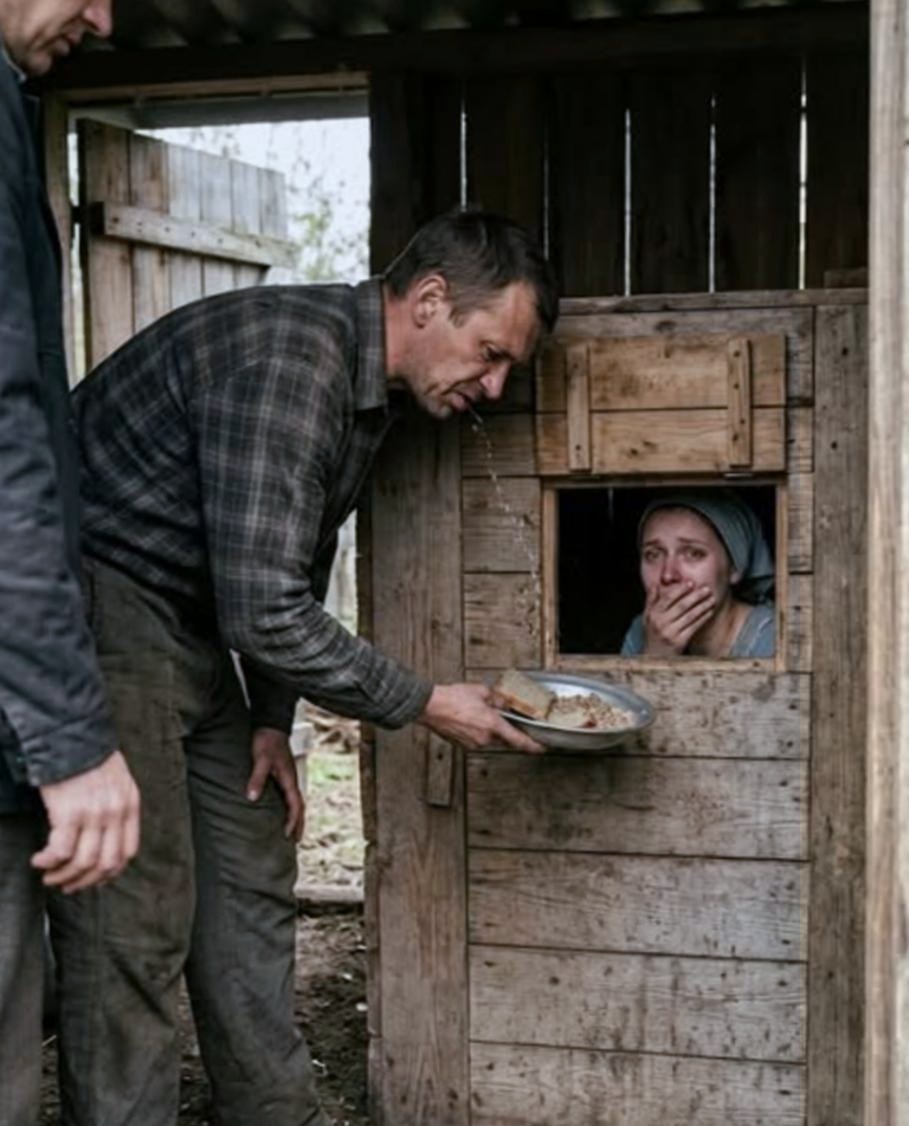

After Tamar’s last words, such silence fell over the room that it seemed as if the wooden box were still standing around me.
The doctor did not hand me the paper. He immediately put it in a file.
“No one will touch this,” he said. “Until we establish the authenticity of the signature.”
The police officer sitting in the corridor took out his phone and called.
“A suspicious document has been found in the hospital. We need an investigator here.”
Tamar stood beside my bed. Her broken watch was still on her wrist. The glass was completely cracked, but she still did not take it off.
“Do not be afraid,” she told me.
“I am afraid,” I answered. “It is just that now, for the first time, I know what I am afraid of.”
“None of this was your fault.”
The words were simple, but during those forty days, hearing exactly them was what I needed.
That same night Levan called six times.
On the first call, his voice trembled.
“Nino, let us talk.”
On the second, he became angry.
“You drove me crazy yourself. Will you believe everyone you see?”
On the third, he began crying again.
“I was trying to save you.”
Tamar turned off the phone.
“You should not listen to him,” she told me.
“I want him to hear for himself what he is saying.”
“He will hear it. Just not from you.”

The next day the investigator recorded all of Levan’s calls in his office. When Levan’s lawyer came to the hospital, he held a stack of documents and had an expression on his face as if he were already victorious.
“My client says that his wife was in a severe emotional state,” he began.
“Your client also says that a pregnant woman should be left in a wooden box for forty days,” the investigator replied.
The lawyer cleared his throat.
“Perhaps it was a metaphor.”
Tamar turned on the phone.
Levan’s voice sounded in the room.
“Forty days will be enough. Then I will tell everyone that she was ill.”
The lawyer lowered his eyes.
“My mother will sit in front at the funeral.”
The recording continued. Laughter could be heard in Levan’s voice. The laughter I had heard so many times in front of my box.
The lawyer looked at the phone.
“This must be examined in court.”
“Of course,” the investigator replied. “And until it is examined, I am withdrawing from this case.”
“What do you mean?”
“I am no longer going to defend a lie.”
This was Levan’s first real blow. He thought money would solve everything. He thought every person would believe his word. But now his own voice opposed him.


Several days later, the investigator brought me the recording and asked whether I was ready to listen.
I told him I was.
Only Tamar, the investigator, and I sat in the room.
In the recording, Levan was talking to his brother.
“If she does not survive, the doctor will say it was a complication. Tell no one about the baby’s existence. We will sell the house afterward.”
His voice was calm. Almost businesslike.
I listened and understood for the first time that he was not angry about my death; he was planning it.
The recording ended.
I looked out the window.
“Did I really hear this?” I asked.
“Yes,” Tamar said.
“It sounds as if another man is saying it.”
“No, Nino. You have now heard for the first time the man we were seeing.”
These words proved more painful than any court.
After Levan’s arrest, his family tried to take things from the house. The police did not open the door for them. Everything inside the house was sealed.
I still went there when the investigator gave me permission.

There was silence in the house. The box had remained at the end of the yard. Scratches from my fingernails were visible on the wooden surface.
In the small room, I found the bed empty. Only one photograph hung on the wall—a photograph from our wedding, in which I was smiling while Levan was looking behind the camera.
I took the photograph down.
But something else troubled me most.
In the corner of the box, they found the torn strip of my dress. The words scratched with a splinter were still readable on it: I am alive. I am pregnant.
I held that strip in my hand.
I left the house and did not look back again.
Three weeks later, the baby was born.
It was a boy.
Small, red, and angry, as if he himself knew how far he had traveled to reach me. The doctor placed him on my chest. His fingers wrapped around my finger and my whole body trembled.
“What will you name him?” Tamar asked me.
“Luka,” I answered. “Because he found the light anyway.”
Tamar fell silent, then smiled at me.
“You found it.”
“No,” I told her. “Both of us did.”

Levan’s trial took place several months later. I could not stay there until the end. My testimony was broadcast from a screen. I spoke about the wooden box, the drops of water, the baby’s movement, and how I folded the small pieces of paper.
Levan sat on the screen.
His head was bowed.
When they played the recording, he heard his own laughter in the courtroom for the first time. His shoulders slackened. He hid his face in his hands.
I did not rejoice at his pain.
I simply realized that I could no longer protect a person from his own words.
The court deprived him of his freedom and also separately investigated the forged signatures. His brother and the employee who submitted the document at the hospital were also prosecuted.
But for me, the most important thing was that Luka was growing safely.
Five months later, I moved into a small apartment. The roofs of the city could be seen from the window. In the mornings I worked in a café, and in the evenings I bathed Luka and dried his tiny socks on the radiator.
I could no longer bear the smell of wood in the house, so I chose furniture made of metal and glass. But I still kept one small wooden box.
It was no longer a prison.

I put my notes, copies of the court documents, and Luka’s first sock inside it.
One morning, when the first snow began outside, Luka was already standing and drawing by the window. He drew a large yellow sun on the paper. Under it stood a small person holding a red strip.
“Who is this?” I asked.
“Mother,” he told me.
“What is the red thing?”
“A door.”
“Where does it lead?”
Luka looked at the window.
“Outside.”
That evening I received the last letter from Levan. It contained only one sentence:
“Come, let us start everything over again.”
I looked at these words for a long time.
Then I folded the paper in half and put it in the small wooden box, where it belonged—with my past, not in my life.
I entered Luka’s room. He was already asleep. His drawing lay on the windowsill. The yellow sun illuminated the entire wall.
I closed the box, but did not put the lock on it.
For the first time in my life, I left the door open myself.
Now only my past was breathing in the wooden box.
Missed the beginning?
Related posts:
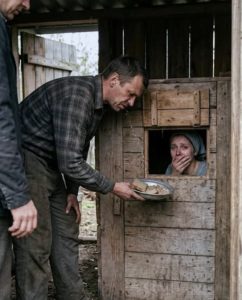 They locked a pregnant woman in a wooden box, while her husband loudly began planning the funeral and one woman suddenly could not hide her paling
 An Unknown Man Humiliated Me in Front of Everyone, but the Restaurant Owner Looked at Me Only Once — and His Smile Immediately Disappeared
 My Father Was Fed by a Poor Woman at Night, but When I Followed Her Trail, a Stranger’s Face Suddenly Turned Pale
 I helped an injured man in an abandoned building, but after my six words, the smile disappeared from his face
 The Video Sent on Our Wedding Anniversary Revealed My Husband’s Betrayal, but One Reflection Suddenly Erased His Smile
 After My Husband’s and Daughter’s Funeral, My Mother Asked Me for the Insurance Money, but the Bag on My Table Suddenly Erased Her Smile