
The knocking on the door could still be heard when a uniformed policewoman entered the room.
Another investigator stood behind her.
“Mr. Ernesto, we have several questions for you,” the woman said.
Ernesto stood up, but immediately sat down again.
His lawyer, who had been sitting silently until then, closed the folder.
“At this stage I can no longer continue defending him,” he said. “You hid information about the debt and the false document from me.”
Ernesto looked at him.
“You are abandoning me now?”
“I am a lawyer, not someone who will cover up your lies.”
Diana took a phone from her bag and called someone.
“I need money for Melissa. Right now. We have to pay for something.”
Melissa took her hand.
“Mom, stop asking people for money to pay Elene.”
Diana stopped her fingers.
“You are my daughter.”
“And she was also a member of the family when you decided to drive her out of her house.”
These words struck Diana harder than the police’s appearance.
The investigator placed a recording on the table in front of Ernesto.
“This is your telephone conversation, which was handed to us by the person who contacted you about the false power of attorney.”
The color left Ernesto’s face.
The recording began.
His own voice was heard:
“Elene will not check anything. She thinks she is doing everything for the family. By the time she realizes it, the house will already be in another name.”
No one moved in the room.
Inside, my own voice seemed to reach me from very far away. For years I had told myself that Ernesto was simply weak, confused, buried in debt. But now, for the first time, I heard his real thoughts.
He was not helpless.
He was certain that I would not dare resist.
The recording continued.
“If a problem arises, I will say that she agreed herself. After all, she is my wife.”
Ernesto lowered his eyes.
“I did not want it this way,” he whispered.
I looked at him.
“But you said it this way.”
That was all I answered him.

That evening the police took him for questioning. Eventually a case was opened for using false documents, attempted fraud, and illegal use of another person’s financial data. The sale of the house was stopped, the bank blocked all applications submitted in my name, and the court prohibited Ernesto from approaching the house and my accounts.
I did not celebrate.
When a person with whom you have lived for nine years gets into a police car, you do not feel victory. You feel only exhaustion.
The next morning the house was empty for the first time.
Diana took her medicines and some clothes from the kitchen. Melissa moved the children to a friend’s place. Their rooms, which a week earlier had been considered their future home, were now empty.
In the children’s room, the sheets from the bunk bed remained on the floor. On the wall hung a colorful drawing: a small house, a large sun, and four figures in front of it.
Melissa’s daughter, Ana, had not written my name on the drawing. But in the corner she had drawn a small woman holding a blue bag. I had had that bag on the day I first came to this house.
“You can take it,” Ana told me when I went for the drawing.
“Are you sure?”
“Yes. You will need it more.”
That evening my thin blue folder was again on the breakfast table. Its corner was still chewed by the old cat. But inside it there were now not only my documents. There was also the court’s protective order, the bank’s letter, and a new extract showing the house registered entirely in my name.
For the first time the folder no longer meant a fight.
It meant my freedom.
Three weeks later I rented a small apartment on the other side of the city, although this house was no longer a place of escape. It had a large window, the morning sun came directly into the kitchen, and the smell of cinnamon rose from a small bakery below.
I reduced my working hours. On Friday evenings I gave financial consultations to women who covered all the expenses in their families themselves and were still told that they did nothing.
At the first meeting, one woman asked me:
“How do I understand that help is no longer help?”
I was silent for a while.
“When your kindness seems like a right to someone, it is time to stop.”

Melissa often called me.
In the first months she had difficulty starting a conversation. Once she called me at midnight and said only this:
“I am very ashamed.”
“You did not lie to me,” I answered. “You were simply made to believe.”
“But I came to you with the children.”
“And you went back when you learned the truth. That means a lot.”
Little by little our relationship changed. Melissa rented a small apartment, found a job, and no longer promised the children a house that was supposed to be given to her by deceiving someone else.
Four months later Ana came to my apartment. Snow was falling by the window. She placed a new drawing on the table.
This time the house had a door.
“Is this your house now?” she asked.
“Yes.”
“Who lives here?”
“I do.”
She thought for a little while.
“Then draw it for the first time so that the windows can be seen too.”
“Why?”
“So that the person inside can look outside.”
Her words resembled none of the court’s verdicts, but they went deeper into me.
That same evening I received a message from Ernesto.
“I want to talk to you. Everything will be fixed. We are still a family.”
The second message came five minutes later.
“I need your help. The lawyer told me that if you change your statement, the case may be made lighter.”
I did not open the third one.
I looked at the screen for a long time. Before, at such a time I would certainly have called him, asked whether he had eaten, whether he had paid the bills, and how he could be saved.
Now I put the phone on the table.
In reply I sent only one sentence:
“I will no longer protect you from your decisions.”
Then I blocked his number.
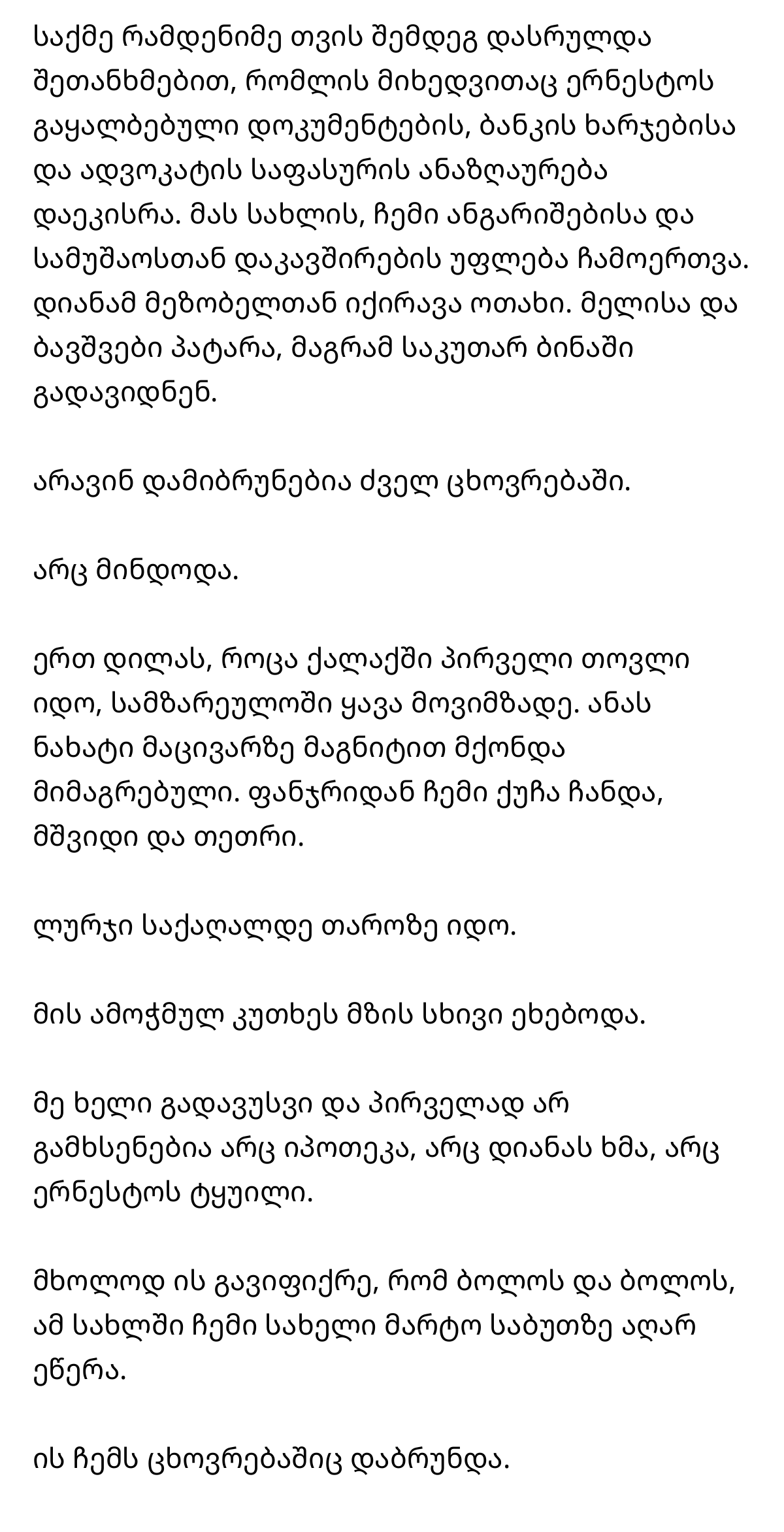

The case ended several months later with an agreement according to which Ernesto was ordered to reimburse the cost of the forged documents, the bank expenses, and the lawyer’s fee. He was deprived of the right to contact the house, my accounts, and my work. Diana rented a room from a neighbor. Melissa and the children moved into a small but own apartment.
I brought no one back into my old life.
Nor did I want to.
One morning, when the first snow lay in the city, I made coffee in the kitchen. I had attached Ana’s drawing to the refrigerator with a magnet. From the window I could see my street, peaceful and white.
The blue folder stood on the shelf.
A ray of sunlight touched its chewed corner.
I ran my hand over it and, for the first time, did not remember the mortgage, Diana’s voice, or Ernesto’s lie.
I only thought that, at last, my name was no longer written only on a document in this house.
It had returned to my life as well.
Missed the beginning?
Related posts:
 My mother-in-law gave me two weeks to leave the house, but when my husband saw the truck, he suddenly turned pale
 When my daughter-in-law took over my house for Christmas, she made only one mistake — she thought I would still open the door for her, and Daniel turned pale
 My son demanded that I open the door of my house on Christmas morning, but he heard something on the phone and his voice suddenly fell silent
 I Locked My House for Christmas and Flew to Portugal — My Son Stopped Shouting for the First Time When He Reached the Door
 Twenty Years Later I Found My Parents in a Chicken Coop, but the Whole Village Fell Silent at My Brother’s Answer
 My mother-in-law told me that I had to leave the house in two weeks, but Eric’s face changed when he saw the truck