
And do not tell anyone that Marina is not with us.
I read the message again and again until the letters blurred before my eyes.
“She never came to me,” I whispered.
Dmitri took the phone from my hand.
“Or they forced her to call in your name.”
“It was not her voice.”
“I know.”
Andrei locked the door and drew the heavy curtains over the windows. The shouting of Melnik’s men could still be heard below, but now their voices sounded like distant, useless noise.
Dmitri went to the table and placed three phones next to one another.
“No call can get out of this house,” he said. “But they already know that we have the recording.”
“What happened to Marina?”
“We will find out.”
“You always say that. ‘We will find out,’ ‘we will solve it,’ ‘guard the door.’ But I want answers.”
Dmitri turned toward me.
“Then listen to my words. Your friend is alive, because if she were dead, they would not threaten you with a message. They need you.”
“Why me?”
“Because your father left everything in your name.”

Andrei put a copy of a document on the table. The lower corners of the sheet had water stains.
“We received this from the court archive five minutes ago,” he said. “Vakhtang Shevchuk established a charitable foundation in your name. Behind the foundation are shares in the companies from which the money was taken.”
I looked at the document.
My name was written there.
Elene Shevchuk.
Not as the daughter of a dead accountant, but as the owner.
My knees gave way.
“Father never told me this.”
“He did not have time,” Dmitri said.
“And you knew?”
“I knew that evidence existed. I did not know that you were its heir.”
A heavy удар sounded from outside. The door handle shook.
Andrei drew his weapon.
“They have broken through the door.”
Dmitri stood in front of me.
“Go down by the rear stairs.”
“No.”
“Elene, there can be no arguing now.”
“For ten years everyone has told me that I cannot. Father was killed, my business was destroyed, and today I discovered a foundation existing in my name. If I run away again, they will write my life to the very end.”
Dmitri looked at me for a moment. Then he put the weapon into his belt.
“Then stand beside me.”

The door was smashed in.
Then everything happened quickly. Andrei knocked the first man who entered to the ground. Dmitri twisted the second man’s arm. And I took my father’s copper thermometer from the table and threw it at the third man’s face.
He fell backward.
Dmitri looked at me in amazement.
“A pastry tool?”
“It is heavy and I know exactly how to use it.”
After several minutes, only hoarse breathing could be heard in the room.
One of the intruders groaned through his teeth:
“You cannot win. Viktor owns half the court.”
“The court belongs to no one,” I said.
Dmitri nodded.
At six in the morning we left through the house’s secret tunnel. Fog covered the city. I, Dmitri, and Andrei sat in the car. I held the copper thermometer in my hand and touched its scratches with my fingers.
“Marina’s number belongs to the same old network from which my father’s files were stolen,” Andrei said.
“So Marina is in danger?”
“No,” Dmitri replied. “She is already in a safe place.”
“How do you know?”
Dmitri played a recording on his phone.
Marina’s voice sounded:
“Tell Elene not to trust the man who appears to her as a way of rescue. And tell her that in the Kovalenko family every truth is told halfway.”
The recording had been made several hours earlier.
“Did she know everything?” I asked.
“Not everything,” Dmitri said. “But enough to begin protecting you.”

We arrived at the old station at seven forty-nine in the morning. The police were already there. In front of them stood Viktor Melnik, two lawyers, and Marina.
When Marina saw me, she ran toward me.
“God, Elene, did you really come out in that dress?”
“Are you more worried about the dress than about me?”
“When I arrange a person’s kidnapping, details matter.”
Then she hugged me and did not let me go for a long time.
Viktor looked at Dmitri.
“Did you arrange all this?”
“No,” Dmitri replied. “Your fear arranged all this.”
The police chief opened a folder.
“Melnik, we have a recording, money-movement documents, witnesses, and a court order against you. You are under arrest.”
Viktor tried to laugh.
“Dmitri, there is enough material against you too.”
“I know,” Dmitri said. “That is why today I will hand over all the accounts to independent investigators.”
The lawyer grabbed him by the arm.
“Mr. Kovalenko, you are destroying yourself like this.”
“No. For the first time I am stopping covering up someone else’s crime.”
The police put handcuffs on Viktor. But he looked at me.
“Your father could not protect you.”
I answered calmly:
“That is why he left me the truth.”

Several weeks later, in the courtroom, I heard my own voice in the recording for the first time.
Viktor’s lawyer said that the recording could have been edited. Then the judge turned on the microphone, and my father’s last words were heard by the entire courtroom.
“If something happens to me, a copy will go to my daughter.”
Everyone heard it.
Viktor too.
He raised his head and listened to his own words, which he had said ten years earlier: “You will find a place under the bridge.”
His face slowly turned pale.
The lawyer quietly told him:
“That is your voice.”
For the first time Viktor could not answer.
I did not feel his joy. Only exhaustion. As if I had finally put on the floor the heavy bag that had hung on my back for years.
The next day I opened the door of my pastry shop.
The glass had been replaced, the walls painted, and the oven completely changed. The old sign still hung there, although paint had peeled off one of the letters.
In the middle of the shop stood my father’s little worktable.
There was only one thing on it—the old leather holder for the thermometer.
I picked it up and tears came to my eyes.
Not because it hurt.
Because for the first time this object meant not danger, but home.
Dmitri no longer came every day. He did not promise me that he would solve everything either. He investigated his own companies, made several directors leave their positions, and reorganized the foundation named after his father under open rules.

One evening we were sitting in a café.
“Then why did you not wake me that night?” I asked.
Dmitri stirred his tea with a spoon.
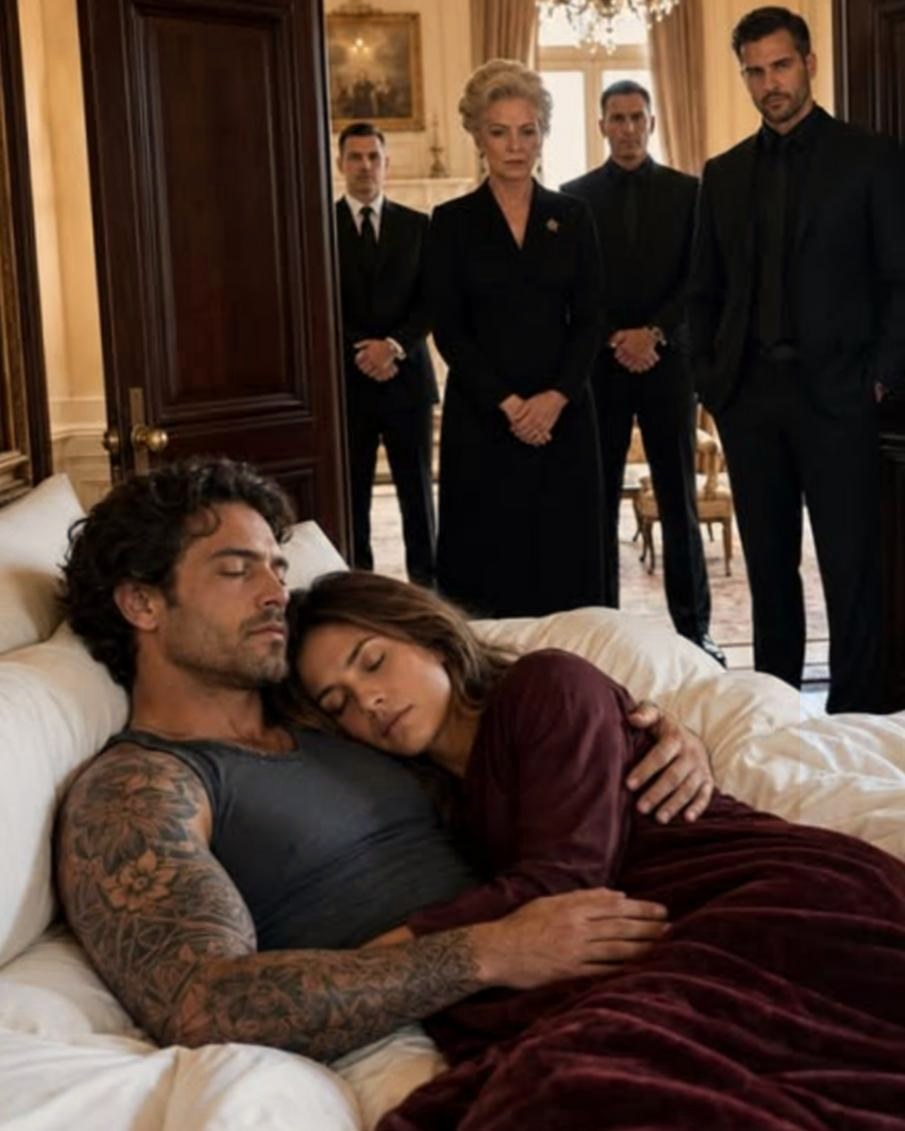
“Because you were sleeping peacefully.”
“Is that enough of a reason?”
“It was for me.”
“And why did you call me ‘my queen’?”
He smiled for the first time.
“Because Nadia has been calling everyone who turns out to be stronger than me in this house that for years.”
“So you knew from the beginning that I was strong?”
“No. But when a sleeping person cannot be driven out of your own bed, you still have to treat her carefully.”
Winter ended.
Three months later I placed a small bench in front of the pastry shop. Marina came every morning and drank coffee as if planning a kidnapping were an ordinary job.
And I acquired a new habit: every evening I checked the final temperature, turned off the oven, and hung my father’s thermometer beside the door.
One day a little girl named Sofia left me a drawing while buying a cake. On the paper I was drawn in a large red dress, holding a golden object, with a small house beside me.
“Is this a queen?” I asked.
“No,” Sofia told me. “This is a woman protecting the house.”
Then I understood why I did not want to remain in Dmitri’s palace. I had to protect my own little house.
Several days later I received a letter from Dmitri. Not from a lawyer, not from an assistant, but written in his own hand.
“Elene, if you ever want, the old wing of the house will be open to you. Not as my queen. As a woman who took her own life back.”

I looked at the sheet for a long time.
Then I wrote a short answer:
“Thank you. Now I know where my home is.”
I folded the letter and put it in a drawer.
I was not angry.
Nor did I want to return.
Some doors do not close in order to throw someone out from there. They close because you no longer need to hide there.
That night the first snow came. I was standing by the pastry shop window when the streetlamp cast a warm glow on the surface of the copper thermometer.
It hung beside the door where everyone entered and left.
My father told me that one degree changes the entire day.
Now I knew that sometimes one small object changes an entire life.
I touched the thermometer.
And locked the door from the inside.
Missed the beginning?
Related posts:
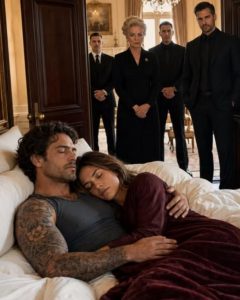 I Accidentally Entered a Billionaire’s House, and in the Morning I Woke Up in His Bed—and the Security Stopped Silently on the Threshold
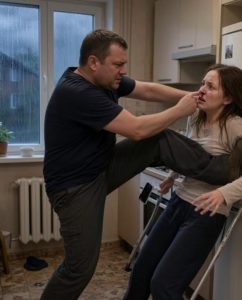 My Disabled Sister’s Fall Was Followed by Violence, but When I Entered the House, My Mother’s Smile Suddenly Disappeared
 Mi yerno obligó a mi hija a inclinar la cabeza frente a todos, pero cuando me levanté, su madre dejó de sonreír
 My Father Was Fed by a Poor Woman at Night, but When I Followed Her Trail, a Stranger’s Face Suddenly Turned Pale
 Mein Mann schickte mich hochschwanger zur Gartenarbeit, doch als seine Mutter die Wahrheit hörte, verschwand sein selbstzufriedenes Lächeln
 Mi marido anunció una misteriosa ausencia en Nochevieja, pero una llamada inesperada hizo que su sonrisa desapareciera