
…at that moment such silence fell over the room that I could hear every tick of the wall clock.
The first call was made by my bank.
The second — by the company lawyer.
The third — by the police.
Everyone had the same question: did I know that money had been moving for years through an account opened in my name?
“I did not know,” I repeated. “I neither opened the account nor signed anything.”
Ernesto was still trying to regain control.
“All of this was Julian’s idea,” he told the investigator. “The money belongs to him. Now he simply wants to avoid responsibility.”
“Then why did you call him every month and tell him that the parents were fine?” Teresa asked.
Ernesto fell silent.
“Because I was protecting the family.”
“The family?” Rogelio’s voice hardened for the first time. “You forced Father to put down his finger.”
Ernesto lunged at him, but the investigator stepped in front of him.
“One more step and I will put handcuffs on you.”
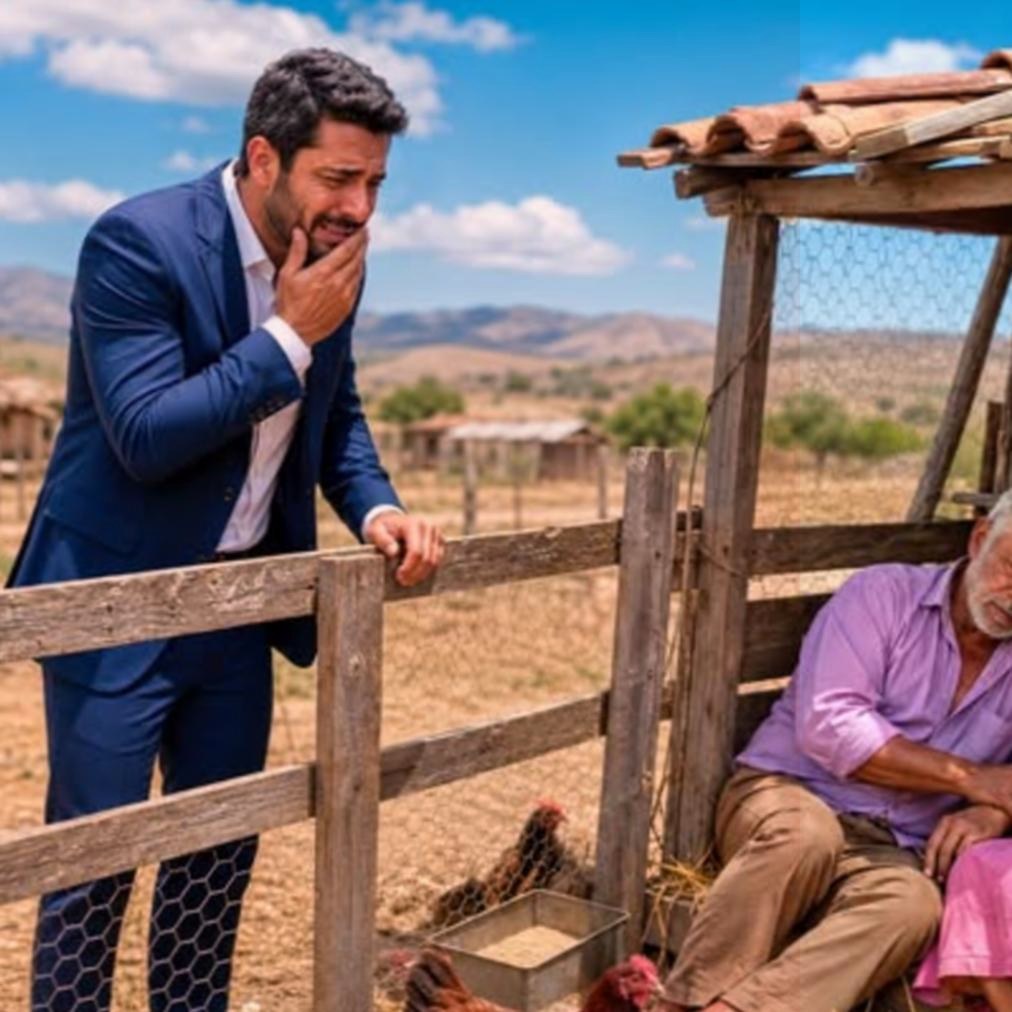
Ernesto stepped back. For the first time, fear appeared on his face, the fear Mother should have had in that chicken coop when her children closed the door.

That same evening my lawyer, Lucia, came to the clinic. She was holding three folders.
“Your signature on the account-opening document was forged,” she told me. “The bank compared the old samples. The difference is obvious.”
“But the account was in my name.”
“In your name. Not under your control.”
She looked at the investigator.
“Ernesto used an old copy of your identity document. We also found a letter with which he changed the contact address at the bank.”
“Where did the money go?”
Lucia handed me a paper.
“Partly to the store, partly to his fuel station. But the largest transfer happened three days before your parents were found in the coop.”
“For what?”
“To purchase a share of the cattle from the former owner of the ranch.”
Then I understood why Father had been silent. His share had not disappeared. Ernesto had sold it with money borrowed in my name, and then hidden the truth from the entire family.
The next morning the investigators sealed Ernesto’s store.
The surname written on the sign had faded under the sun.
His lawyer withdrew from the case when he saw the copies of the accounts.
“I cannot try to conceal criminal charges,” he told him. “If you want, find another defense attorney.”
“I paid you money!”
“My money is not my conscience.”

Later Ernesto was seated in a small room where the interrogation recording was played. There was his voice, recorded from my old telephone calls.
“Your father no longer hears you.”
“Your mother gets nervous because of your voice.”
“Do not worry, I am taking care of everything.”
Ernesto first kept closing his eyes. Then he buried his head in his hands.
For the first time he was hearing his own words through someone else’s voice.
“Turn it off,” he whispered.
“Why?” the investigator asked. “Isn’t this the truth?”
Ernesto could not answer.
I rented a small house for my parents in town. On the first night Mother did not occupy the bed in the room. She spread an old blanket on the floor.
“It is clean here, Mother,” I told her.
“I know. I simply do not want someone to throw me out in the morning.”
Father hung his hat beside the door. A small piece of straw from that coop was still caught inside the hat.

The next day I returned there to collect their belongings.
The coop was empty. We had moved the chickens elsewhere. The broken bucket lay in the corner, while Mother’s only photograph remained on the wall: a young woman holding a white chicken, with Father standing beside her and smiling.
I took down the photograph.
Only its shadow remained on the nail.
Three weeks later a case was officially opened against Ernesto. The forged documents, fraud, and appropriation of my parents’ property were confirmed. Rogelio gave testimony. Teresa handed over all the notebooks. Eusebio certified copies of the archives for the court.
Father did not curse any of them.
“They are my children,” he told me.
“Will you still forgive them?”
He looked at the yard beyond the window for a long time.
“Forgiveness does not mean that I have to let them into the same house again.”
It was the strongest answer he had ever given.

Two months later I decided to manage my company from Monterrey. I sold the one truck left in the village and bought a small van instead, so that I could take my parents to the doctor and to the market myself.
In the mornings I sat in the yard with Father. He watched the movement of the sun and remembered the names of the cows, as if he were counting lost friends.
Mother planted a small garden. She put wooden sticks beside the tomatoes and checked every day whether they lacked water.
Four months later my niece, little Mariana, came to us. She was holding a sheet of paper.
“Uncle, this is your new house,” she told me.
Four people stood on the paper. Above them was a sun, and beside them a small chicken.
“Why is there only one chicken here?” I asked.
“Because chickens do not live in the house now,” she answered. “Grandmother says everyone should have their own place.”
I laughed and at the same time my eyes filled with tears.

The first snow rarely came to Monterrey, but that year a white layer appeared on the roofs on a December morning. Mother stood by the window and watched the yard in amazement.
“It is as if the earth has started everything over again,” she said.
That evening I received a letter from Ernesto. His lawyer had sent it. Several lines were written: “We are family. Come, let us forget everything. I need your help.”
I put the letter on the kitchen table.
Mother looked at me.
“Will you answer?”
“Yes.”
On the back of the paper I wrote only one sentence: “I will no longer cover up your consequences, but if you tell the truth, I will not stop you.”
I wanted neither revenge nor to watch him suffer. I simply was not going to save him for the first time at the expense of my own parents.
I folded the letter and sent it to Lucia.
Then I went out into the yard. I hung the old copper whistle, which had been in my pocket that day, on a nail beside the door. I cleaned its surface, but left the small scratch — as a memory of the road that brought my parents’ voice to me.
Father called to me from a distance.
“Julian, dinner is ready!”
Mother added:
“Wash your hands first, my son!”
I touched the whistle once.
This time I did not need its sound to return home.
Missed the beginning?
Related posts:
 Twenty Years Later I Found My Parents in a Chicken Coop, but the Whole Village Fell Silent at My Brother’s Answer
 At My Sister’s Wedding, My Father Poured Wine Over Me and Mocked Me, but the Man Who Entered the Hall Suddenly Turned Pale
 Powerful Men Threatened My Family, But an Old Man Stood Up to Them and Hector Stopped Smiling for the First Time
 My Father Was Fed by a Poor Woman at Night, but When I Followed Her Trail, a Stranger’s Face Suddenly Turned Pale
 My mother-in-law gave me two weeks to leave the house, but when my husband saw the truck, he suddenly turned pale
 I took my mother from the house, but when my brother opened her room with a duplicate key, the color drained from his face