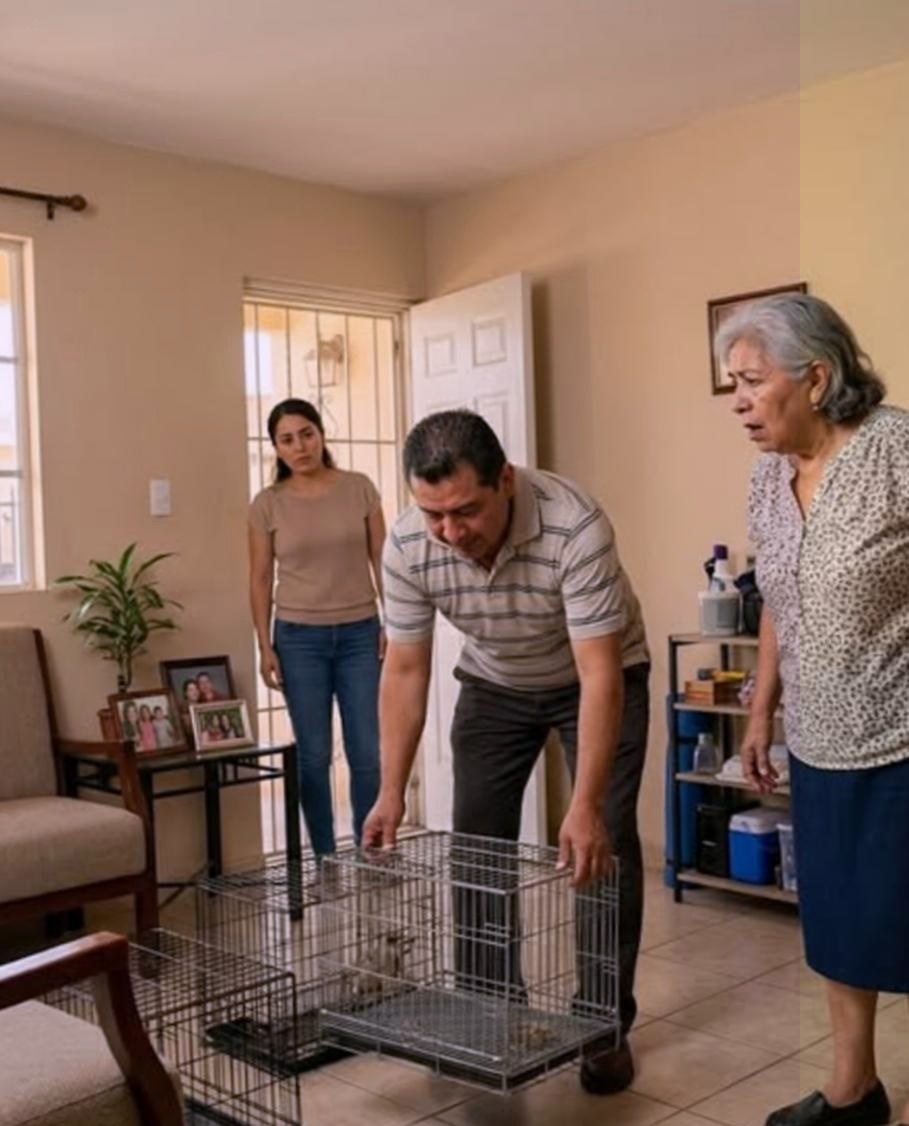

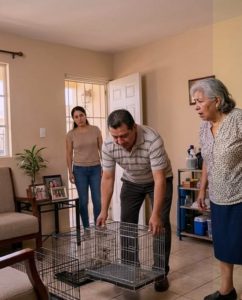
On the eighth day after Ernest’s funeral, my son left three cages in my living room and looked at me as if my grief were an awkward object standing in the way.
It was ten o’clock in the morning. Autumn rain could be seen through the window, and Ernest’s black shoeprints were still visible on the carpet. His photograph hung on the wall — from that trip he always said we should take again someday. Beneath the photograph I had placed a small copper luggage tag, with his initials engraved on it. He had had that object in his pocket on the day he went to the hospital and did not return.
Austin put the first cage on the floor.
“Be careful, Mom. You have to change the birds’ water twice a day.”
Chloe came in behind him, holding a plastic bag and wearing an expression as if she were doing me a kindness.
“The care instructions are in the bag,” she told me. “Don’t give the rabbit a lettuce leaf. And the cat gets nervous from noise.”
In the three cages were two noisy parrots, a frightened white rabbit, and a cat curled up inside an old carrier. Chloe placed the carrier directly beside Ernest’s photograph. She had brought neither flowers nor asked whether I had slept at night.
“Austin,” I said quietly, “I buried your father a week ago.”
He did not raise his eyes from his phone.
“I know, Mom. But everyone loses something. Life goes on.”
“When is your vacation?”
“We’re leaving tomorrow morning. You’ll take care of the animals.”
It was not a question. It was a decision.

Chloe shrugged.
“You’ll be alone anyway. Taking care of them will keep you occupied a little.”
At that moment I understood for the first time that, for everyone, my life in this house was a service. For forty years I had washed, cooked, treated, driven, and paid other people’s bills. I sold my earrings when money was needed for Ernest’s treatment. I gave Austin money from my savings when he lost his job. After Chloe gave birth, I slept on their sofa for three months, looked after the baby, and cleaned the house.
I thought this was family.
And now my son was arranging animal cages beside his father’s photograph.
“All right, son,” I said, smiling. “Leave them.”
Austin looked at me for the first time.
“I knew you would understand us.”
I said nothing. That same evening I took out my blue suitcase. I put in several dresses, the perfume Ernest had bought, and my passport. I kept the documents prepared weeks earlier in a small black folder. I called my neighbor Marina and asked her to move the animals to a temporary shelter.
At eleven at night, the cages had already been taken away. But on the table I left the keys and one sheet of paper.
“Austin, when you find out what happened, don’t call me to reproach me. Call your lawyer.”
At half past four in the morning, I got into a taxi. For the first time in decades I held neither shopping bags, medicines, nor someone else’s problems in my hands. I had only my suitcase, on whose handle Ernest’s copper tag struck the metal with a buzzing sound.
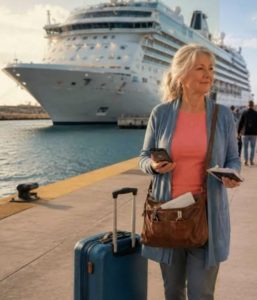
The ship was already waiting at the harbor. A one-year journey, a private cabin, a place I had quietly booked the very next day after the funeral.
The telephone rang.
First it was Austin. Then Chloe. Then Chloe again.
I answered none of the calls. Finally a message came: “Mom, we found something in the house. Come back immediately.”
I looked at the screen and headed toward the harbor gate. At that same moment, Austin, who had remained at home, bent toward the black folder and placed his fingers on its first page. Then he tried to open the lock…


Austin’s fingers pressed the little button on the lock, but the lock did not open at once. It was midday in the house. Only the hum of the refrigerator and the sharp ticking of the wall clock could be heard in the room. Chloe stood behind him, nervously biting her fingers.
“Open it,” she told him. “Maybe they’re the house documents.”
“I know they’re documents.”
“Then why won’t it open?”
Austin tried again. On the third attempt the lock opened, and several documents slid out of the folder. On top lay a sheet certified with a notary’s stamp. Below were the house ownership extract, bank statements, and a small envelope on which, in Ernest’s handwriting, there was only one word: “For listening.”
Chloe reached toward the envelope, but Austin grabbed her by the wrist.
“Wait.”
“Why? These are your father’s things.”
“Mom wrote to call the lawyer.”
“Teresa always dramatizes everything.”
“Maybe not this time.”
At that time I was boarding the ship. Wind blew beneath the harbor’s long bridge, and the copper tag on my suitcase struck the handle. That little sound calmed me strangely. As if Ernest were telling me, continue on, do not look back.

At home, Austin unfolded the first document. It said that the house was solely my property and that its sale, mortgaging, or transfer required my signature.
“This is impossible,” he said.
Chloe snatched the sheet from his hand.
“Didn’t his father tell you that the house would someday be left to you?”
“A promise is not ownership.”
“Austin, we already spoke with the bank.”
“About what?”
Chloe fell silent.
Austin looked at her, and for the first time that fear appeared on his face which I had seen for years in his life, whenever he asked me for money or help.
“About a loan on the house,” Chloe said at last. “We needed a small amount. Selling our house was planned.”
“You told me you were only checking the options.”
“Because I knew you would resist.”
A heavy silence fell over the room. On the same carpet where the animal cages had stood a few hours earlier, a green food receipt fell from Chloe’s bag. Austin pressed his foot on it, as if evidence could be hidden.
Then he opened the second document. Five months before his death, Ernest had registered a family trust. Its income was used to maintain the house and provide for me until the end of my life. Austin could receive money from it only if he had my written consent.
“Father hid this from me,” he whispered.
“No,” Chloe replied. “Not from you. From us.”

At the bottom of the folder lay the last page. Ernest’s signature could be seen in its upper corner, but even to me the text was unfamiliar. Austin turned the page over and saw the date written there — the night before his death.
At that moment my telephone rang in the cabin. The ship’s administration told me that someone remaining in the harbor wanted to contact me. When I heard the name, a chill ran down my back.
At home, Austin opened the envelope and his eyes froze on the last sentence.
“Mom knew,” he said.
Chloe leaned over his shoulder.
“Knew what?”
Instead of answering, Austin picked up the phone and called my number. This time I answered.
“Teresa,” his voice broke, “Father told me everything that night. Did he tell you too?”
The ship’s horn sounded. The sea moved beneath me.
“No, Austin. Your father only told me that if I ever had to make a choice, I should choose myself.”
Breathing could be heard on the line.
“Then why does it say here that the greatest danger to our family is still ahead?”
I looked toward the harbor. An unfamiliar woman stood on the shore, holding a brown folder and looking directly toward my ship.
She called my name.
“Teresa, I am Ernest’s lawyer. You need to know who entered your house on the night before his death…”

The female lawyer managed to board the ship before the gangway was raised. She was around sixty, had a stern face, and held a dark brown folder in her hand. Her name was Elena Moro.
“Ernest told me to look for you only when you left the house,” she told me in the ship’s quiet, empty corridor.
I opened the cabin door. I placed the suitcase beside the bed, and again hung the copper tag on its handle.
“What happened on the night before his death?”
Elena placed the folder on the table.
“Your son came. He was not alone.”
My telephone vibrated again. Austin was on the line and was listening to the conversation. Elena opened the document.
“Ernest recorded the conversation. That night you were at the hospital because you had gone for his medicines. Austin asked him to transfer the house to him. In exchange, he told him that you could no longer manage finances and would soon have to be moved to a nursing home.”
My hands went cold.
“He said that?”
“You will hear it yourself.”
Elena turned on the recording. First came the movement of a chair, then Austin’s voice.
“Father, Mother can no longer take care of such a large house. Just sign, and we will take care of everything.”
Then Ernest’s tired but clear voice:
“‘We’ means your debt, Austin?”
Silence.
“The house will still go to you.”
“Not if you and Chloe are now copying my signature.”

My breath caught. Elena looked toward me.
“Ernest already knew that someone had copied his signature onto a loan application.”
Austin’s frightened voice could be heard from the telephone.
“Mom, I didn’t sign it. Chloe told me everything was legal.”
Chloe, who was standing with him at home, joined in with a scream:
“Don’t lie! You told me that Father would never let his son be ruined!”
Elena played the recording to the end. At the end Austin’s voice was heard clearly:
“If Mom doesn’t sign, she still won’t find out anything. Her wallet, her money, her house — everything will someday become ours.”
The recording stopped.
The sound of the sea entered the room. I sat down on a chair and felt the anger accumulated over the years empty out. It was no longer fire. It became a heavy stone.
“Why didn’t Ernest tell me immediately?” I asked.
“Because he intended to speak with Austin himself. But that night his condition worsened. The next day he was taken to the hospital.”
Elena handed me the final document.
“This is his statement. If you ever refused to provide free help to the family, you were to protect your property and your life. He knew that Austin regarded your kindness as a right.”
Austin was crying quietly on the telephone.
“Mom, I didn’t know about the recording.”

“But you knew you wanted to sell the house.”
“Chloe convinced me.”
“You are a grown man.”
At these words, silence fell on the other side of the line.
Elena took out another sheet.
“This is the most important thing. Ernest contacted a financial investigator. It turned out that Chloe had filled out several loan applications in your name, and Austin had begun using them. The police already have copies.”
I lowered my eyes. Just then the ship’s captain passed through the corridor and told me that we were leaving the harbor.
“Teresa,” Austin said, “please come back. I’ll explain everything.”
“For the first time in my life, Austin, I don’t need an explanation anymore.”
I ended the call.
Elena looked at the telephone. A new message appeared on the screen. The sender was Austin’s number, but the text did not belong to him: “If you tell Mother the truth, you will make us both lose everything. I can still stop her.”
There was only one message from Chloe.
Elena slowly exhaled.
“This is a threat. And she does not yet know that the message has already been sent to the police…”
The ship left the harbor. I stood by the window and watched from afar the city where I had spent my whole life for others. Behind me, Austin was left alone for the first time with the truth in whose concealment he himself had also participated…
ოსტინმა საკუთარი ხმა პირველად სხვისგან მოისმინა…
მე მეგონა, რომ ყველაზე რთული უკვე გადავიტანე. მაგრამ ფინალმა მაჩვენა, რამდენი სიმართლე იმალებოდა წლების განმავლობაში დუმილის უკან.
„სიმართლეს მიეცი საშუალება, თვითონ ილაპარაკოს.“
ოსტინმა პირველად დახარა თვალები.
👇 ისტორიის ფინალი უკვე გახსნილია
Related posts:
 On the eighth day after becoming a widow, my son left three cages in the house, but his face changed when he saw my calm smile
 Part 4 — On the eighth day after becoming a widow, my son left three cages in the house, but his face changed when he saw my calm smile
 Part 4 — I Buried My Husband, but My Son Brought Animal Cages into My House — Austin Turned Pale After My Calm Response
 Hét év után a volt vőlegényem családja el akarta venni tőlem a fiamat, de amikor megjelent a férjem, Austin elsápadt
 My Father Was Fed by a Poor Woman at Night, but When I Followed Her Trail, a Stranger’s Face Suddenly Turned Pale
 A férjem a kórházból is hazaküldött főzni, aztán a válással fenyegetett — amikor felnéztem, hirtelen elhallgatott