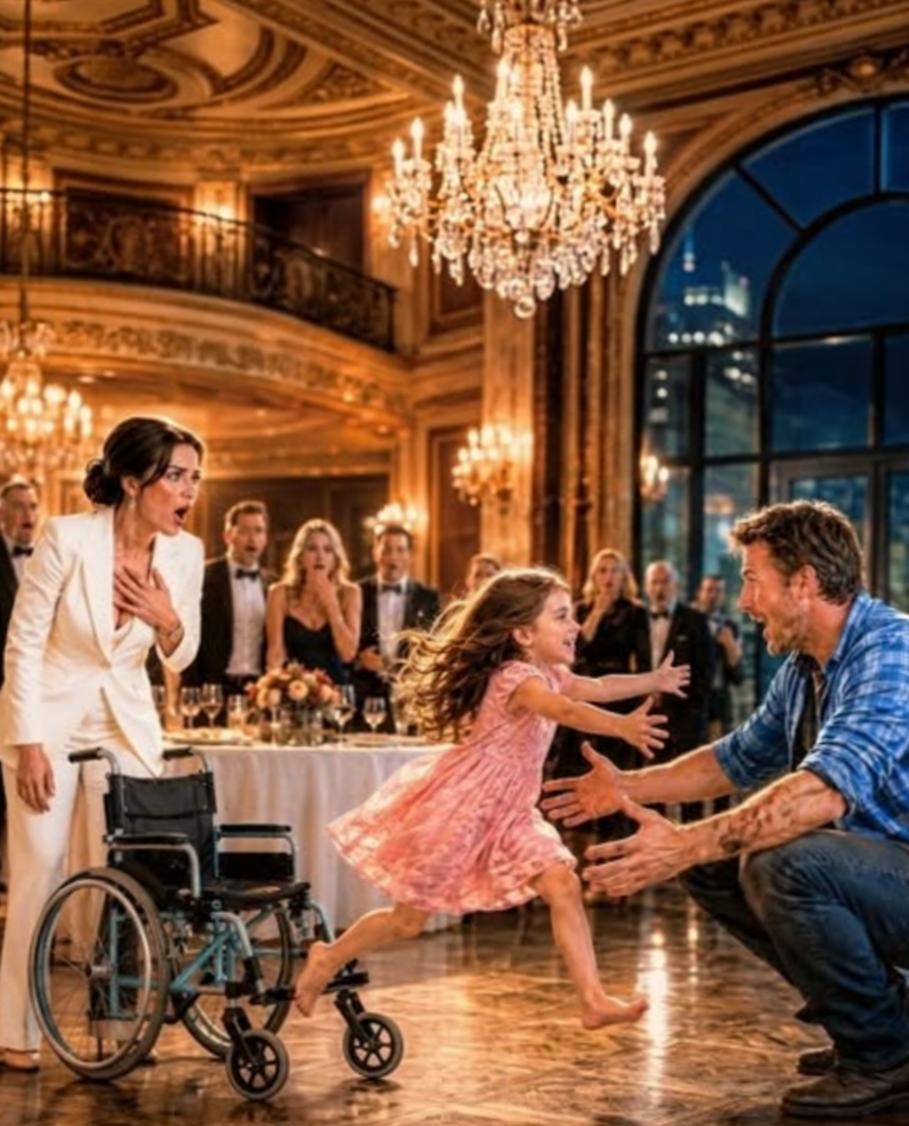
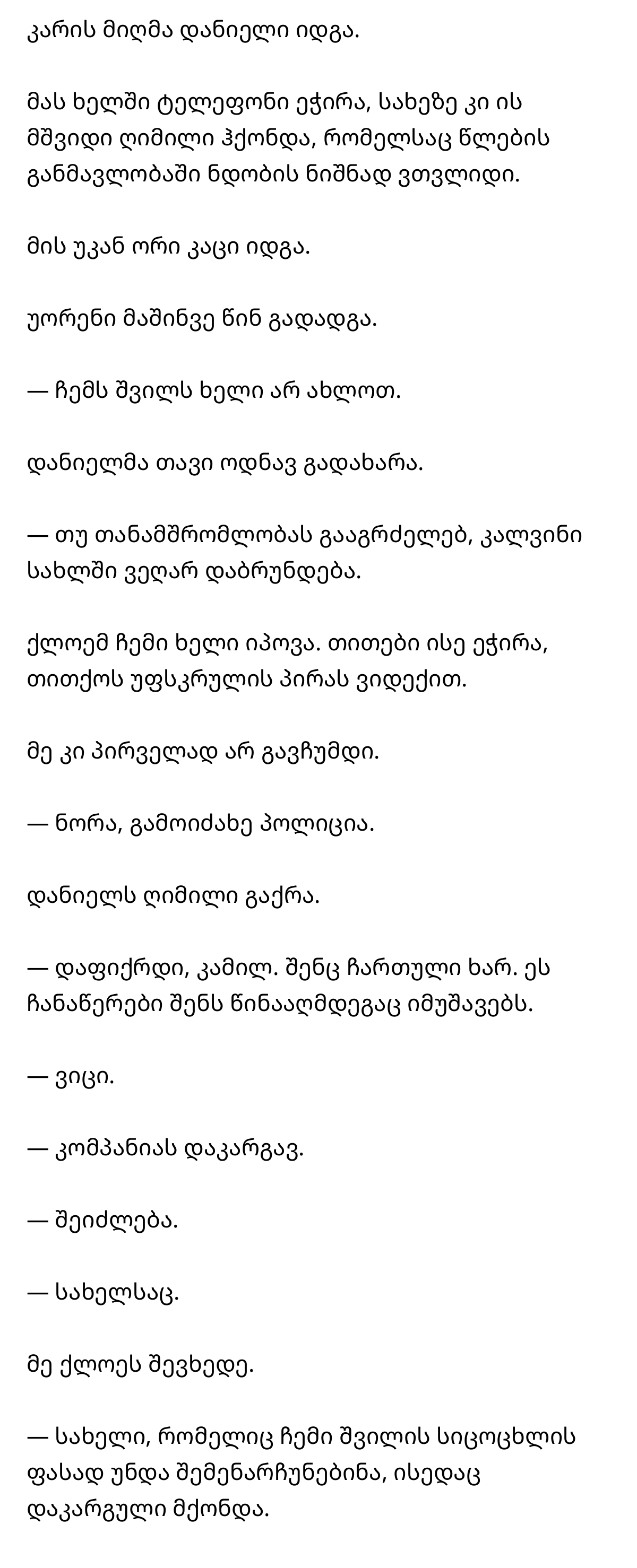

Daniel stood behind the door.
He was holding a phone in his hand, and on his face was the same calm smile that I had considered a sign of trust for years.
Two men stood behind him.
Warren immediately stepped forward.
“Do not touch my son.”
Daniel tilted his head slightly.
“If you continue cooperating, Calvin will not return home.”
Chloe found my hand. She held my fingers as if we were standing at the edge of an abyss.
And for the first time I did not remain silent.
“Nora, call the police.”
Daniel’s smile disappeared.
“Think, Camille. You are involved too. These recordings will work against you as well.”
“I know.”
“You will lose the company.”
“Perhaps.”
“Your name too.”
I looked at Chloe.
“The name I had to preserve at the price of my daughter’s life was already lost anyway.”
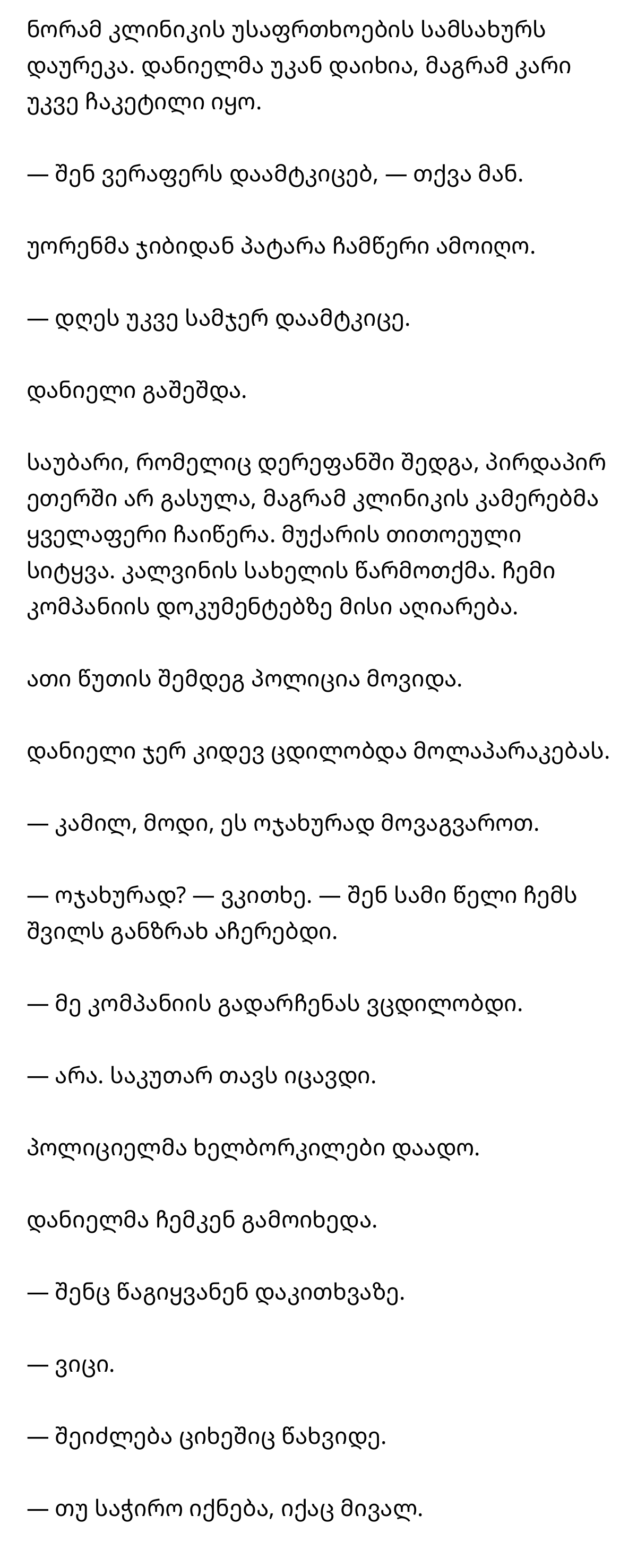

Nora called the clinic’s security service. Daniel stepped back, but the door was already locked.
“You cannot prove anything,” he said.
Warren took a small recorder from his pocket.
“Today you have already proved it three times.”
Daniel froze.
The conversation that took place in the corridor was not broadcast live, but the clinic cameras recorded everything. Every word of the threat. The utterance of Calvin’s name. His admission about my company’s documents.
Ten minutes later the police arrived.
Daniel was still trying to negotiate.
“Camille, let’s settle this as a family.”
“As a family?” I asked. “You deliberately held my daughter back for three years.”
“I was trying to save the company.”
“No. You were protecting yourself.”
The police officer put handcuffs on him.
Daniel looked toward me.
“They will take you in for questioning too.”
“I know.”
“You may even go to prison.”
“If necessary, I will go there too.”

That night, for the first time, I did not try to save myself.
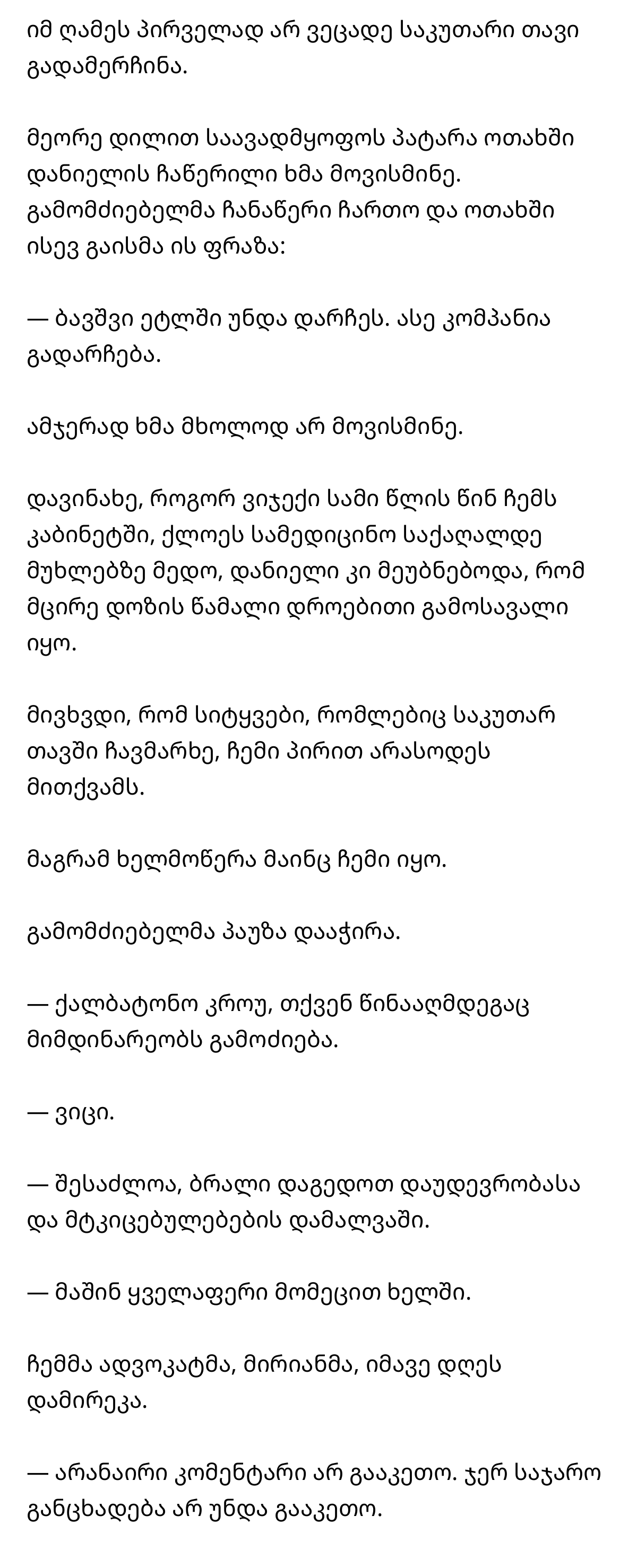
The next morning, in a small hospital room, I heard Daniel’s recorded voice. The investigator turned on the recording, and that phrase sounded through the room again:
“The child must remain in the wheelchair. That way the company will survive.”
This time I did not only hear the voice.
I saw how I had been sitting in my office three years earlier, Chloe’s medical file on my knees, while Daniel told me that a small dose of medicine was a temporary solution.
I realized that the words I had buried inside myself had never been spoken by my mouth.
But the signature was still mine.
The investigator pressed pause.
“Mrs. Crow, an investigation is also being conducted against you.”
“I know.”
“You may be charged with negligence and concealment of evidence.”
“Then put everything in my hands.”
My lawyer, Mirian, called me that same day.
“Do not make any comment. You must not make a public statement yet.”
“Unfortunately, three years is already enough silence.”
“Camille, if you tell the truth, the company’s shares will collapse.”
“Then let them collapse.”

Within several hours, the members of my board of directors demanded an emergency meeting. They told me that I had to step down temporarily.
“Do you understand what you are doing?” one of them asked me.
“For the first time, I know exactly.”
I stood in front of the cameras.
I had not prepared a text. Nor did I have advisers beside me.
“Three years ago, my child was saved from the fire by a man whom I forgot because others convinced me that silence was the path to survival. In my company they hid a defect, falsified medical plans, and took away my child’s right to recover. I did not see the truth when I should have seen it. Now I am handing over every document, recording, and report to law enforcement.”
My voice did not tremble.
But Chloe stood backstage and waved a small white cane at me.
That day the company lost half its value.
But for the first time I felt that I had won something.
Two weeks later I cleared out Chloe’s room in our old house.
Her titanium wheelchair still stood in the corner. A burned black mark remained on one wheel from the evening when she rammed it into the table.
I found a small photograph on the windowsill. Chloe was four years old, and I was standing behind her and smiling.
On the back of the photograph, in my handwriting, it said: “One day you will run again.”

Warren’s old work glove lay on the armchair. He had left it at the clinic when Chloe’s first rehabilitation day ended.
The glove smelled of oil on the fingers.
For a long time I could not touch it.
A month passed.
Warren came every day to Chloe’s physical therapy, but he never tried to enter my house without being invited. He moved with his son into a small nearby apartment, because after Daniel’s threat the police assigned them protection.
Chloe slowly learned to walk.
She took the first step toward Warren again.
The second toward me.
And the third independently.
“Mom, now I will not stop,” she told me.
“I will not stop you anymore.”
These words were heavier for me than any court.
Three months later the trial began. Daniel confessed to the crime when the audio recordings, cameras, and medical archives were presented. He was sentenced to imprisonment, while the company paid compensation to the affected families.
I did not shout against him in court.
Simply, when the judge asked me whether I had anything to say, I answered:
“I want no parent in the future to believe that money is more valuable than a person’s conscience.”

Mirian stopped working as a lawyer.
“I thought I was defending your company,” he told me. “In reality I was defending your silence.”
I no longer left him my anger.
Everyone had to bear their own consequence.
Six months later I moved from Seattle to a small coastal town. With the money I had left, I opened a rehabilitation center for children. My surname was not written there.
At the entrance I hung only one sentence:
“Every child deserves a second step.”
Chloe returned to school. Every day she chose her shoes herself, because now even tying her shoes was her victory.
One morning the scratching of pencils in the kitchen woke me.
Chloe was sitting at the table and drawing a picture. There were four people on it: me, herself, Warren, and Calvin. Behind them, instead of fire, she had drawn a green hill.
“Who is this?” I asked, pointing to a small black spot.
“A scar,” she replied. “But now I am not afraid. It shows us where everything began.”
The first snow was falling outside the window.
Warren was changing a car tire in the yard. Calvin handed him tools and deliberately gave him the wrong wrench every time.
“Not this one, Calvin,” Warren laughed. “If you continue like this, it will not be the car but the house that we have left to repair.”
I poured coffee and listened to their laughter.
Peace turned out to be strangely ordinary.

One evening a message arrived on my phone from an unknown number.
“Camille, everything is over. I have changed. Please agree to at least one meeting.”
It was Daniel’s message.
I looked at the screen for a long time.
Chloe was sitting beside me and doing her homework.
“Who is it?” she asked.
“The past.”
“Will you answer?”
I deleted the message.
“No.”
“Why?”
I went to the window. Snow already lay thickly in the yard. Warren’s old work glove, which he had left with me the last time, hung by the door.
At the wrist of the left glove the fabric was torn. Right there, a small metal plate sewn inside was visible, with Calvin’s name on it.
On the night when he carried Chloe out of the fire, Warren was wearing this glove. The scar was the memory of his body. The glove was the first real evidence of our family.
I hung it by the door.
Not to remember the past.
So that I would never forget what it means to hold someone’s hand when the whole world tells you that it is already too late.

Chloe lifted her head from the paper.
“Mom, how many steps will I take tomorrow?”
I smiled.
“As many as you yourself want.”
She stood up.
One step.
A second.
Then she ran toward the door.
The burned glove swayed lightly in the wind.
And this time I did not run after her anymore.
I knew that she was coming home.
Missed the beginning?
Related posts:
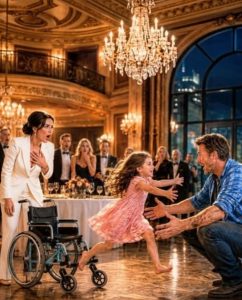 My daughter got up from her wheelchair and ran to an unknown mechanic — but her mother saw his wrist and turned pale
 Mi suegra humilló a mis hijas durante la cena y mi esposo me ordenó callar, pero entonces su sonrisa desapareció
 Rowan seated a secretary in my place and told me, “Remember your place” — but he turned pale at the sight of my calm smile
 My Husband Saw My Sister Kissing on New Year’s Eve, but at My Calm Answer, He Was the First to Turn Pale
 A Flat Tire Stopped Me at a Desert Diner, but When the Waitress Heard My Name, the Color Drained from Her Face
 The Husband Took His Secretary on the Honeymoon, but When the Plane Landed, the Smile Suddenly Disappeared from His Face