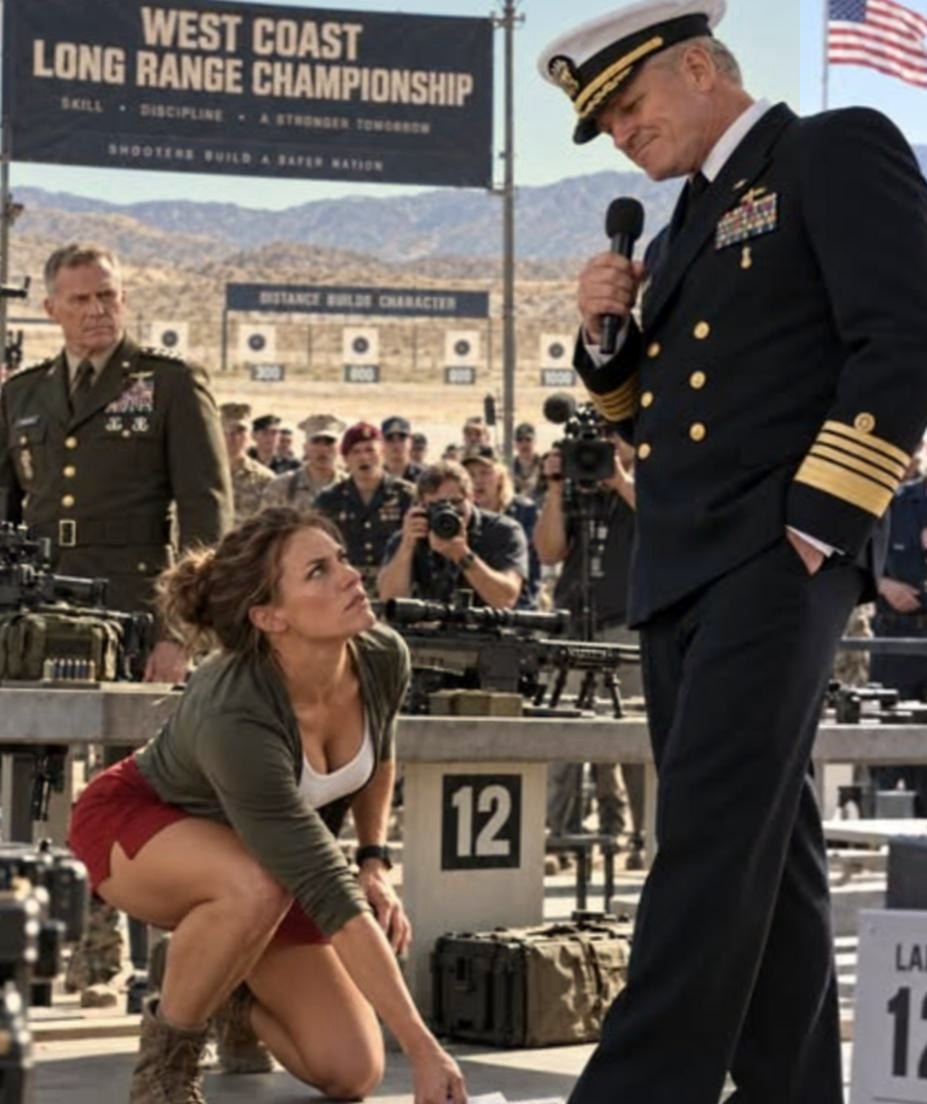

Admiral James Crawford pressed my registration sheet to the ground with a polished boot and asked me live on air: “What rank do you have, dear?” That morning, hundreds of sailors, marines, rangers, sponsors, and camera operators stood at the Cornado military range. Everyone was looking at me. I was forty-one years old, a retired Army sergeant major, and looked like an ordinary woman carrying a twenty-year-old rifle bag with brown adhesive tape wrapped around one corner.
“Retired sergeant major,” I answered.
Crawford roared with laughter as if I had told him a funny story.
“Sergeant major? Security, please remove the shopping-mall shooter from line twelve.”
Someone behind me snickered. My palms went cold, but I did not change my expression. My mother’s hospital bill lay in the bag. Two hundred sixty-eight thousand four hundred dollars. I was standing here for exactly that amount.
Six weeks earlier, my mother had dropped a plate beside the kitchen sink. That same night, doctors discovered a tumor on her pancreas. The treatment that would give her a real chance was not covered by insurance. I had fourteen thousand seven hundred dollars, an old pickup, a small military pension, and a part-time job at an equipment store. There was no military benefit for cancer.
That was why I registered for a three-hundred-thousand-dollar shooting championship.
Crawford did not know that for years I had worked in places whose names did not appear on maps. My military file was sealed. My past was hidden. Only one thing followed me home.
“Angel.”
That was my combat nickname. My commander, Eli Braddock, had given it to me. When he said over the radio, “Angel, listen to me,” everyone knew that the next words would save a life. I hated that name. There was nothing angelic about lying in mud for fourteen hours and deciding a person’s fate in seconds.

My last mission ended with Braddock’s disappearance. He tried to get wounded operators to a helicopter, but an explosion silenced his radio. I stayed at the position until every American had safely boarded. Then I returned home and spent three years making balcony boards, sorting screws, and planting tomatoes.
Now Crawford lifted his foot from my sheet.
“This woman has no sponsor, is not wearing a team uniform, and has no public results,” he said. “Rules are rules.”
I picked up the paper. His bootprint remained on it.
“Am I registered?” I asked.
His smile disappeared for one second.
“Formally, yes. But the formality will end soon.”
At eight o’clock, fifty-seven shooters lay on the ground. Crawford announced into the microphone: five shots, five hundred yards, and sixty seconds. Then he looked at me.
“Try not to shoot California.”
The flag fell.
Three years disappeared.
Five shots. Five metal targets answering. The timer stopped at eight point four seconds. The judge looked at the screen.
“Fifty out of fifty.”
No one was laughing anymore.
By noon I held first place. Crawford could simply have left. Instead, he gave the board a new order: second round—eight hundred yards. The wind machines switched on. The participants shouted.
A Marine named Calloway found me under the shade.
“He is shooting at you, not the target.”
I folded the sandwich wrapper.
“Protests cannot pay two hundred sixty-eight thousand dollars.”
Crawford smiled from a distance. I checked the rifle’s bolt, and just then a military vehicle stopped at the range. A general got out, holding a black folder, and walked straight toward me. Security blocked his path, but the general said only one word: “Angel…”

His hand reached for the folder’s clasp…
The folder’s clasp opened, and it seemed as though every sound on the range fell silent. General Alan Mercer stopped in front of me. His white hair moved in the wind, and old burn marks covered his fingers.
“Ms. Wells,” he said, “why are you here?”
“For three hundred thousand dollars.”
Crawford snickered.
“General, she is already in the round. Personal familiarity cannot change the rules.”
Mercer looked at him.
“You have no idea who you are standing before.”
“I know only that her file is sealed.”
“That is exactly the problem, Admiral.”
He took a small plastic card from the folder but did not show it to the cameras. He brought it only to my eyes. My old military number was written on it, and beneath it one word—“Angel.”
I felt weakness in my knees. Only a few people had ever seen that name.
“Is Braddock alive?” I asked quietly.
Mercer did not answer me. He explained to Crawford that the second round had to continue according to the rules. The admiral angrily spread out the papers.
“If she is such a legend, why has she not appeared for three years?”
The general said calmly:
“Because some heroes do not want to return.”
The second round began. The wind changed twice. I hit all eight targets. After the last shot, Mercer whispered in my ear:
“There is a reason greater than your mother’s treatment money for why you are here today. Crawford does not yet know that his order concerned your file…”

I opened the folder’s clasp all the way, but inside there were no award or competition documents. There was a sealed recording, an old radio chip, and a sheet with my name on it.
Crawford took one step forward.
“This is a competition, General, not a military museum.”
“No,” Mercer replied. “This is the place where the truth hidden three years ago must finally be heard.”
The range cameras began filming again. Mercer signaled the operator, and a hoarse voice came through the speakers.
“Angel, listen to me. The helicopter is taking the wounded. We are staying behind.”
My breath froze. It was Braddock’s voice.
The sound of an explosion came from the recording, then Crawford’s voice—young, but completely recognizable.
“Leave them. The terrain is on our side. If we go back, the entire operation will collapse.”
Then Braddock shouted:
“There are still people there!”
Crawford answered:
“That is an order. No one goes back.”
I clenched my fingers into the ground. This was exactly the order hidden in my sealed file. Braddock did not obey the order. He went back to the wounded, and I opened a path for them with the remaining fire.
The recording continued. After the explosion, my voice was heard:
“Everyone has crossed over. Braddock is not visible. I am not leaving the position.”
Mercer raised a second sheet.
“Three years ago, the official report stated that Braddock had ruined the operation because of disobedience. In reality, the report was falsified. He survived, but with severe injuries he was taken to a military clinic. And Crawford silenced every witness.”

Crawford’s face went pale.
“This is false.”
“It is your voice,” I said.
“The recording was edited!”
Calloway stepped forward.
“Then why are your hands shaking?”
Mercer handed me the sealed sheet.
“It says here that you, Tara Wells, saved nineteen people that night and were officially decorated, but the award and the record were kept secret because an investigation was being conducted against the operation’s commander.”
I looked at the sheet. My name was there. Not my signature—Braddock’s.
Crawford shouted at security:
“Turn off the cameras! Right now!”
No one moved.
Mercer took the microphone.
“Admiral, this is only the beginning. Your military file will be opened today, but the heaviest blow will fall not on your career, but on the fund you managed for years.”
“What fund?” I asked.
Mercer took a phone from his pocket. On the screen I saw the name of my mother’s hospital.
My body tensed.
“Your mother’s treatment has already been paid for,” he said. “But you do not yet know where this money came from. And when you find out, you may no longer want to accept it…”
At that moment, an unknown number called my phone. On the call screen, only one word appeared: Braddock…
კროუფორდმა საკუთარი ხმა პირველად მოისმინა და გაჩუმდა…
ფინალში ყველაფერი იმაზე მეტად იცვლება, ვიდრე მეგონა. სიმართლე მხოლოდ ერთ ადამიანს არ ანადგურებს — ის სხვას თავისუფლებას უბრუნებს.
„ისევ გინდა, რომ ანგელოზი დაგიძახო?“
ამჯერად გავიღიმე.
😱 გაიგე, რას მალავდნენ ისინი →
👇 ისტორიის ფინალი უკვე გახსნილია
Related posts:
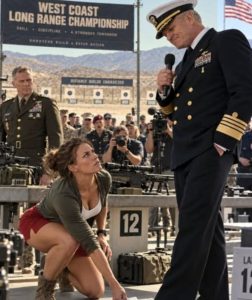 Part 4 — The Admiral Publicly Humiliated Me and Ordered Me Expelled from the Competition, but One Word from the General Erased His Smile
 When They Mocked My Mother’s Truth in the School Hall, the Admiral Saw My Name and Immediately Turned Pale
 Four Girls Asked Me to Pretend to Be Their Father, but When Their Mother Came In, the Man Standing Beside Her Lost Color
 An Unknown Man Humiliated Me in Front of Everyone, but the Restaurant Owner Looked at Me Only Once — and His Smile Immediately Disappeared
 The Video Sent on Our Wedding Anniversary Revealed My Husband’s Betrayal, but One Reflection Suddenly Erased His Smile
 A Flat Tire Stopped Me at a Desert Diner, but When the Waitress Heard My Name, the Color Drained from Her Face