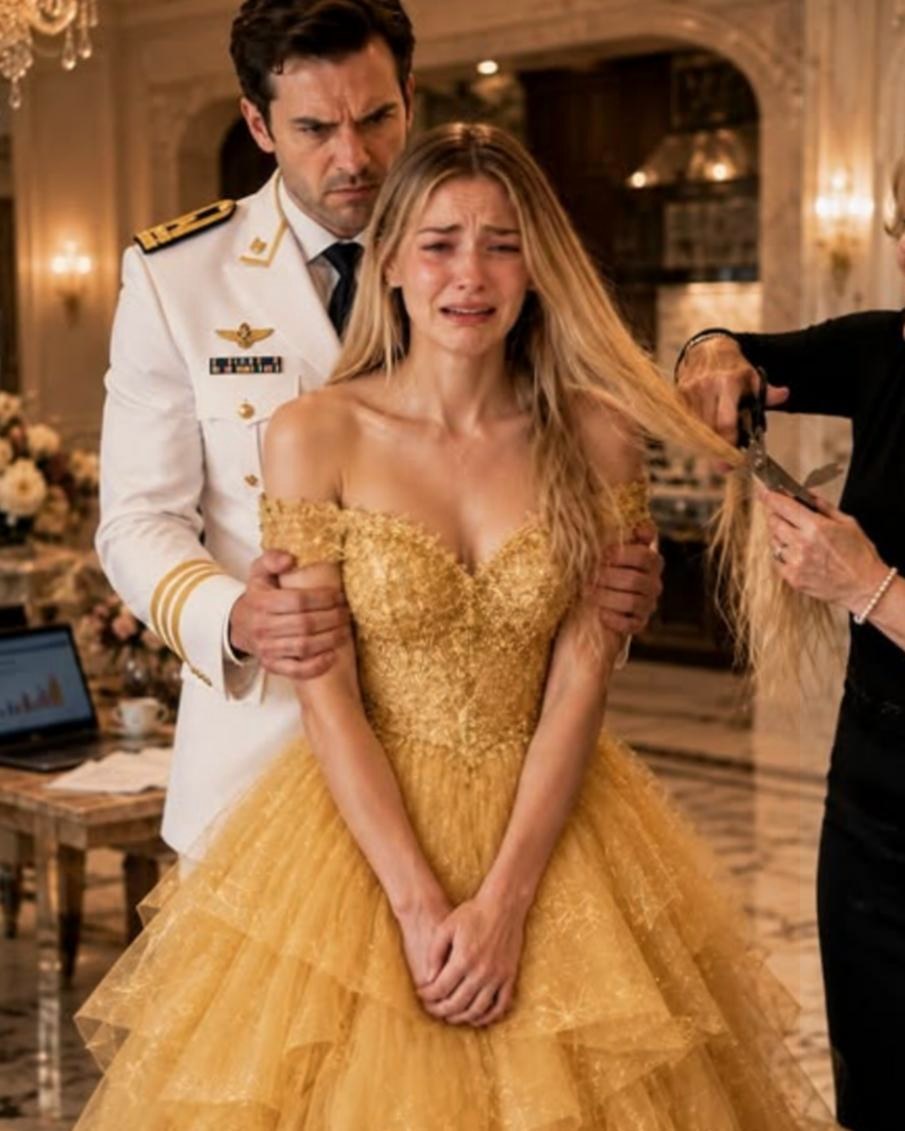

As soon as the call on my father’s phone ended, such silence fell over the room as if every sound had been muffled in one moment.
“Which document did they find?” I asked.
Father looked first at the committee members, then at me.
“The original data of your research.”
“They should have been with me.”
“That is precisely why Hunter hid their existence.”
The security officers held Hunter’s hands behind his back. Barbara stood at the door and clutched her bag so tightly that her fingers turned white.
“This is a family matter,” she said.
“No,” Father replied. “This is a criminal matter.”
Hunter stopped smiling for the first time.
“Father, I have to explain something.”
“Now I am no longer a person to whom you will explain anything. Now I am the one who will hand the audit report to the police.”
Hunter shook his head.
“You are destroying my family because of your own daughter?”
“No. Your choice did this.”
Father’s voice was calm. That was precisely what was hardest.

Then Hunter turned toward me.
“Elene, tell them that we were simply arguing. About the hair… It was nonsense. Forgive me and let us go home.”
My hands were trembling, but my voice was not anymore.
“You told me that you took the scissors to teach me my place.”
“I was angry.”
“And were you angry when you stole the money too?”
He said nothing.
The chair of the committee played the recording again. Hunter’s own voice sounded in the room: “She will not defend it. I will take care of it.”
Hunter leaned against the wall.
For the first time he was listening to himself through someone else’s ears.
First irritation appeared on his face, then fear. When Barbara’s voice sounded in the recording and she said that she already had my electronic signature ready, Barbara closed her eyes.
“Turn it off,” she whispered.
“No,” I said. “Listen to it to the end.”
Hunter’s laughter sounded in the recording.
“When she receives her diploma, she will no longer be dependent on us.”
Those words finally broke something inside me.
Not because it hurt.
Because I realized: he had never loved my success. He had loved only my dependence.

That same evening the police arrested Hunter and Barbara. The charges included fraud, forgery of documents, misappropriation of financial resources, and violence. The lawyer whom Hunter had hired for years told him in front of the courthouse:
“Mr. Hunter, I can no longer defend you in this case. You hid evidence from me.”
Hunter called out to me before they put him in the car.
“Elene, believe me just once!”
I did not turn toward him.
My defense continued the next day. I entered the hall at seven in the morning. My hair was short and uneven, but the trembling of my voice could no longer be noticed.
“What is the main result of your research?” Professor Nadiradze asked me.
I looked at the screen.
“That truth withstands even the greatest pressure if you do not force it to hide.”
Four hours later the committee went out to deliberate. I stood by the window and looked at Father. He was still holding that black folder.
“Why did you not tell me everything from the beginning?” I asked.
“I was one of the co-researchers of your research,” he answered. “When I realized that Hunter was trying to sell the data, I wanted first to protect the evidence completely. But I could not foresee what happened in your home.”
“You were leaving me alone when you thought you were managing the situation.”
He lowered his head.
“I know. And no document can fix that.”
It was the first sincere apology I had heard that week.

The committee returned.
The chair smiled at me.
“Doctor Elene, your defense has been successfully completed.”
The earth did not shake. Music did not start. Simply, my heart, which had been bound by fear several hours earlier, began beating freely for the first time.
That same evening I returned home, but that house was no longer mine. Several cut strands still lay on the bedroom floor. I picked them up and threw them into the trash bin.
Then I removed the wooden bird clip from the wall. One of its wings was broken when I took it out of the bag, but I kept it anyway.
Hunter sent me letters from prison.
In the first it was written that Barbara had planned everything.
In the second—that Barbara had been putting pressure on him.
In the third there was only one sentence: “Our marriage deserves another chance.”
I gave the letters to the lawyer and did not answer.
Several weeks later, at the divorce hearing, Hunter again tried to speak with me.
“You still love me,” he told me.
I remember the white walls and the ticking of the old clock in the courthouse corridor.
“I loved you once,” I answered. “But love does not mean that I must live against myself.”
“I will change.”
“Maybe. But your changing is no longer my business.”
That was everything I told him.

The court confirmed the divorce, issued a protective order against violence against him, while the investigation of the financial case lasted several months. Hunter and Barbara were sentenced, the grant money was returned to the university, and all debts taken in my name were canceled.
I did not wait for their downfall.
My life was already beginning somewhere else.
Three months later I rented a small apartment in a seaside city. In the morning I gave lectures at the university, and in the evening I sat on the balcony and edited the research book. I installed a new shelf on the wall. There I placed my diploma, an old photograph of Father, and the wooden bird.
I did not repair its broken wing.
I wanted to see every morning that surviving does not always mean restoring oneself perfectly.
One evening Father visited me. He was holding a small box.
“This is the recording from the day of your defense,” he told me. “When you are ready, listen to it.”
“I do not want to now.”
“Nor is it necessary.”
We were drinking tea when my little niece, Nini, ran into the room. She was holding a sheet of paper.
“Aunt Elene, I drew you!”
On the paper was a woman drawn with short hair and very large wings. A small bird stood beside her.
“Why do I have such large wings?” I asked.
Nini shrugged.
“Because no one holds you anymore.”

Those words struck me more than a thousand words in court.
That night I slept for the first time without checking three times that the door was locked.
The next morning I found a new message from Hunter.
“I am no longer asking you to come back to me. Meet me just once and listen to me.”
I deleted it.
Then I wrote to the lawyer that any further contact should take place through official channels.
I did not shout.
I did not punish.
I simply no longer opened the door behind which losing myself awaited me.
On the first day of winter I walked home from the university. A thin layer of snow lay on the streets. The wooden bird still hung from the handle of my bag, its wing broken, but together with me.
I stopped on the bridge. Lights moved on the surface of the river. For years I had thought that freedom would be a loud victory, visible and memorable to everyone.
In reality it turned out to be very quiet.
As quiet as the sound of my steps on the snow.
I ran my finger over the wooden bird and for the first time no longer wanted to repair it.
I had already learned to fly.
Missed the beginning?
Related posts:
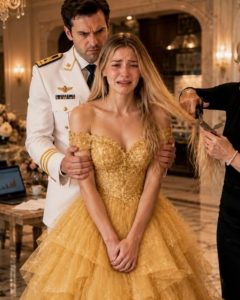 On the Night Before Her Doctoral Defense, Her Husband Cut Her Hair by Force, but at the Appearance of Her Father, His Face Lost Its Color
 They laughed at my profession until they suddenly saw in the hospital corridor whom the entire team was waiting for, and Barbara’s smile disappeared
 La familia de mi prometido me presentó como enfermera, pero cuando entré al quirófano, su madre dejó de sonreír
 My family did not accept my child as a guest on Thanksgiving, but still came to the wedding — my mother’s smile disappeared then
 My Father Was Fed by a Poor Woman at Night, but When I Followed Her Trail, a Stranger’s Face Suddenly Turned Pale
 La familia de mi prometido se burló de mi trabajo durante el brunch, pero al verme en el pasillo del hospital su sonrisa desapareció