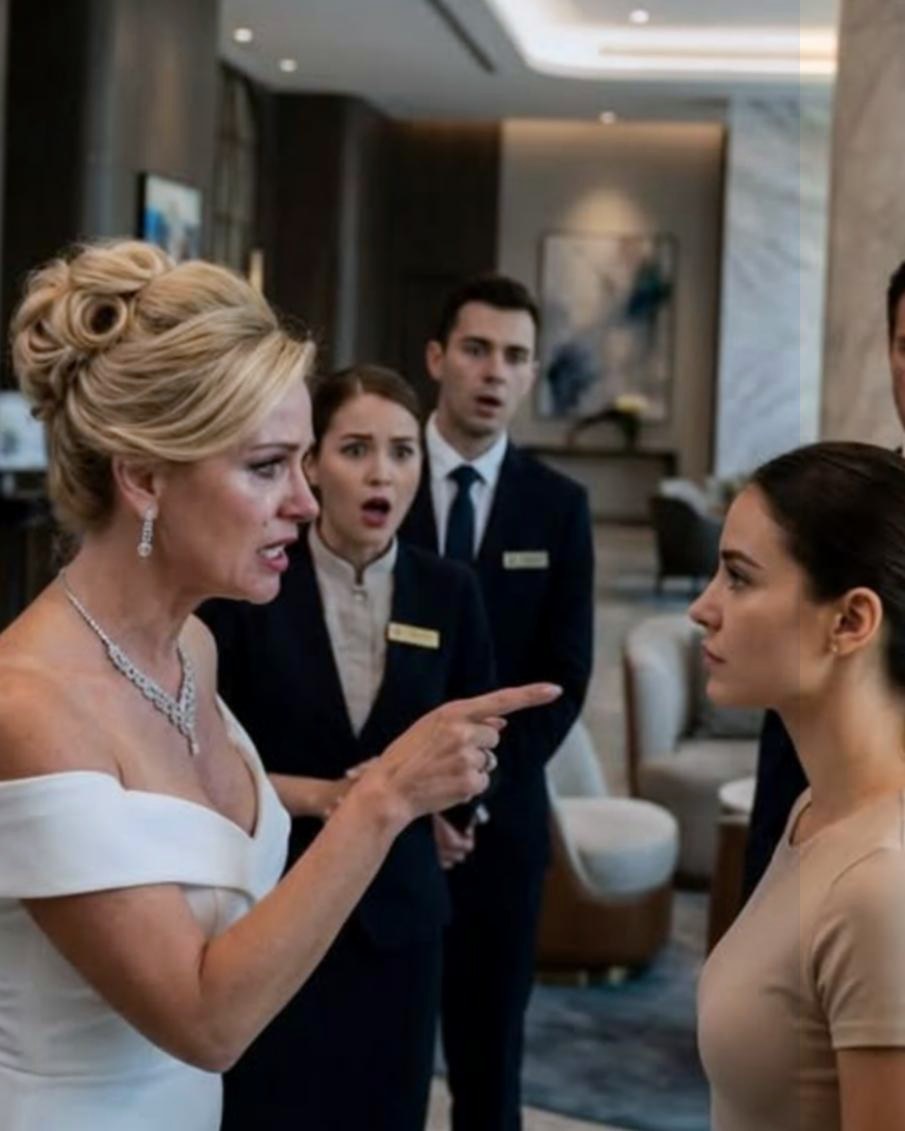

That evening, the French words of a rich woman silenced all the guests in the hotel’s main hall, and I realized for the first time that my past might imprison one person.
It was six o’clock in the evening in the vestibule of San Miguel de Allende’s “Imperial Mirador.” Rain struck the enormous glass windows, while I touched the small copper bell lying on the mahogany counter every few seconds so that my hands would not be noticed. For ten years I had taught linguistics at a university, but now I welcomed hotel guests with a smile and tried not to let anyone see how tired I was.
Valeria Montalvo entered with the sharp clicking of high-heeled shoes. In her hand she held a white umbrella, on whose silver handle a small black bird was engraved.
“Why is my room not ready?” she asked me as if the walls of the building belonged to her.
“Mrs. Montalvo, your room is already prepared. I will have your luggage taken up immediately.”
She narrowed her eyes at me.
“At least this time do not forget that I am not a guest here, but the wife of the owner of this hotel.”
“I certainly have not forgotten that.”
There was politeness in my voice, but inwardly a small spark awakened. Valeria saw it. That was exactly why she smiled.
Roberto stood several steps behind her. He was wearing a dark jacket and holding a ring of the hotel’s old keys, which he turned whenever he was nervous. Our eyes met, but he immediately lowered his gaze to the floor.
“Roberto, tell her that I expect a French breakfast tomorrow morning,” Valeria said.
Then she turned toward me and began speaking in French.
Her voice was soft, almost musical. But the words were like a knife. She told me that simple waitresses like me appeared only when rich people needed to look at them. She added that my smile was a cheap mask and that Roberto would soon grow tired of my “educated servitude.”
She thought I would not understand.
But French was the language I spoke most calmly among the five languages I knew.
“Mrs. Montalvo,” I answered in the same language, “if you wish, I will also translate your words into Georgian so that everyone present here can understand better.”
The hall became so silent that I heard the ticking of the wall clock.

The smile disappeared from Valeria’s face.
“You… know French?”
“Enough that I will not forget what was said.”
Roberto looked at me for the first time. Shame and fear were fighting in his eyes.
“Camila, come on, let us not continue this here,” he said.
“No, Roberto,” Valeria raised her hand. “Now it has become very interesting.”
She took a small golden phone from her bag and looked at the screen. It was then that I noticed she was not wearing a precious-stone ring on her hand. Instead, she had a thin red mark on her finger, as if from ink.
Valeria said to me quietly:
“You do not know whom you have touched.”
“And you do not know whom you are humiliating.”
Her face hardened. Then she turned to Roberto.
“Either she leaves, or I will no longer remain in this house.”
Roberto fell silent.
At that moment I realized that it was not only her marriage that was collapsing in the hotel. Something larger was hidden—something because of which Valeria feared my French more than she feared me.

At ten o’clock at night, when the employees had left and only the sound of rain remained in the hall, the internal telephone lying on the counter rang. No number was visible.
“Mrs. Herrera?” a hoarse man’s voice asked me. “If you still want to learn why your father died after Valeria’s family’s debt, come to the hotel’s old archive tomorrow morning.”
My breath caught.
“Who are you?”
Instead of an answer, I heard only one phrase:
“You already know the French words. Now you must see the numbers.”
The line went dead.
The next morning, at seven o’clock, I stood at the door of the old archive. The iron handle was cold. In my pocket lay my mother’s small ivory bookmark—the object she used in every book.
The door locked from the inside.
Then Roberto appeared at the end of the corridor, holding a brown folder. He slowly came toward me and said:
“Camila, before you open this, you should know that Valeria already knows who called you…”
Roberto’s words struck the old mirror hanging in the corridor and seemed to return to us.
“Who called me?” I asked.
“My father’s lawyer. He died two years ago, but before his death he left something for me.”
“Why should I believe you?”
Roberto placed the folder on the floor. His fingers were trembling so much that the corners of the paper made a noise.
“Because I no longer know whom to trust either.”

We entered the archive. The smell of dust, old accounting books, and an extinguished lamp hanging in the corner seemed to preserve the past. In the folder I saw my father’s handwriting, with the same slanted letters in which he had written my birthday cards in childhood.
“Did my father know about Valeria’s family?” I asked.
“He knew more than I did.”
Suddenly the sound of a lock turning came from outside.
Roberto opened the door, but no one stood in the corridor. Only my old work bag was lying there. My mother’s bookmark was no longer inside.
In its place I found a small voice recorder.
I turned on the recorder.
For the first time I heard Valeria’s voice, in French, in exactly the tone with which she had insulted me the previous evening.
Then a second voice sounded.
My father’s voice.
“If Camila hears this, tell her that I did not hide the truth within the hotel walls. It is with the person she sees every day.”
Roberto turned pale.
The rustling of paper sounded in the recorder, and then my father added in a whisper:
“But the most dangerous document is not in Valeria’s safe. It is registered in her name…”
The recorder fell from my hand, but it did not reach the floor—Roberto caught it. On his face I saw such fear that it was as if my father’s voice was not unexpected for him, but a long-awaited sentence.
“What does ‘it is registered in her name’ mean?” I asked.
It was already half past eight in the morning. Gray light entered the old hotel archive through the window, while my mother’s bookmark lay on the dust-covered table. Someone had taken it from the bag and put it here. A small crack had appeared on its ivory surface.

Roberto opened the folder.
“My father discovered that the money from my company’s charitable foundation had been transferred to other accounts for years. Valeria was the final owner of the accounts.”
“And my father?”
“He was the auditor who discovered this.”
The words stuck in my throat.
“You said that my father died because of debts.”
“That is what I was told. Valeria’s father told me that your father would falsify everything if he did not return the money. I believed him. I realized far too late that it was a lie.”
He took a document from the folder. My father’s signature and the audit stamp were visible on it. On the last page it said that he had not admitted making the money disappear, but had prepared an official complaint against Valeria’s family.
“This is only a copy,” Roberto said. “My mother’s lawyer told me that he gave the original to one of the employees.”
“The employee who called me yesterday?”
Roberto nodded.
At that moment the door opened and Valeria entered. She held a white leather bag in her hand, and a calm smile was on her face.
“How sweet,” she said. “A husband and his new adviser are looking for the truth in old papers.”
“You knew about my father,” I told her.
“I knew that he was a weak man.”
Roberto turned toward her.
“Did you threaten to kill him?”
For the first time Valeria lost her composure.
“I only told him not to touch the family.”
“And then why did all the accounts change after his death?” I asked.
She leaned toward me.
“Because you too will soon understand how a person disappears when he opposes an influential family.”

At these words Roberto took a phone from his pocket.
“Say it once more.”
Valeria smiled.
“Did everything get recorded?”
“Yes.”
Her face became gray.
Just then the telephone rang. An unknown number appeared on the screen. I answered.
“Camila Herrera?” a woman’s voice asked me. “I am calling from the prosecutor’s office. Your father’s case is being reopened. But before that you must know: a large sum left Valeria’s accounts last night and was deposited into an account opened in your son Mateo’s name.”
My knees gave way.
“My son has nothing to do with this.”
“That is exactly why you must come today. Valeria is trying to shift the crime onto you.”
Roberto looked at me.
“Camila, where is Mateo?”
I rushed to the window. A school bus had stopped in the hotel courtyard. Mateo was getting off with his bag, but a black car stood behind him.
The car door opened.
Valeria’s driver got out.
The recorder turned on again, and at the end my father’s voice sounded:
“If they go after the child, then Camila must open the second folder, which Roberto has searched for all his life…”
რობერტომ საკუთარი ხმა მოისმინა და პირველად გაჩუმდა…
მეგონა, ყველაზე მძიმე სიმართლე უკვე ვიცოდი. მაგრამ ფინალმა დამანახა, რომ ზოგჯერ თავისუფლება სხვის დასჯას კი არა, საკუთარი თავის დაბრუნებას ნიშნავს.
„ჩემი ცხოვრება უკვე იქ არის, სადაც შენ აღარ ხარ.“
ამის შემდეგ პირველად იგრძნო სიმშვიდე.
👇 ისტორიის ფინალი უკვე გახსნილია
Related posts:
 My Husband Put Another Woman in My Place in the Biggest Contract of Our Lives, but One Question Erased His Smile
 Part 4 — When the Rich Man’s Wife Humiliated Me in French, a Sudden Ring in the Hall Immediately Erased Her Smile
 After my warning at the billionaire’s negotiation, the lawyer ordered the guards to remove me, but his smile suddenly disappeared
 They Broke Both of My Wife’s Legs and Everyone Called It an Accident, but My Question Made Her Relative’s Smile Disappear
 Three Weeks Before the Wedding, My Fiancée Poured Wine on the Maid, and After My Silence Her Smile Suddenly Disappeared
 I Found My Pregnant Wife on the Floor, While My Mother Declared Herself Innocent — But the Smile on Her Face Suddenly Disappeared