
The call from my father’s number froze my entire body.
“Who are you?” I asked.
In answer, I heard only breathing.
Then the line went dead.
Ellen locked the door.
“I’m calling the police.”
“No,” I told her. “First tell me why you knew about this number.”
Ellen lowered her eyes.
“Because your father left it for me. For emergency calls.”
Outside, a car engine started. Wade was trying to escape from the yard.
But two investigative vehicles were already standing at the gate.
Behind them my lawyer, Miranda Hayes, got out. She was holding a temporary court order.
“Hannah, the bank has suspended the foreclosure,” she told me. “And Wade’s company no longer has the right to sell your land.”
Wade headed toward her.
“Miranda, you were my lawyer.”
“I’m not anymore.”
“I’ll double your money.”
“That is exactly the problem. For years you have silenced everyone with money.”


Calvin took out his phone and called someone.
“This is a misunderstanding,” he repeated. “Hannah is simply angry.”
But no answer could be heard from the other side.
Miranda handed him a sheet of paper.
“The bank’s internal investigation has already begun. Your signature is on six false accounts.”
Calvin’s fingers trembled so much that the paper fell from his hand.
Wade looked toward me.
“You cannot do this. You cannot run this farm. You are a girl returned from Chicago who does not even understand the smell of the soil.”
I answered nothing.
The investigative service took a voice recorder out of the car. Miranda pressed the button.
Wade’s own voice sounded.
“We’ll add another thirty thousand to Hannah’s debt. When she panics, she’ll sell us the southern land herself.”
Then Calvin’s voice:
“The main thing is that she must not find her father’s recordings.”
Complete silence fell over the barn.
Wade looked at the recorded voice as though he had understood for the first time that these words had come from his own mouth.
“This… this was a private conversation.”
“No,” Miranda said. “This is a confession to a crime.”

That night Wade and Calvin were arrested on charges of financial fraud and forgery. Owen Cross gave testimony because he finally realized that another person’s silence was a continuation of his own crime. Tom and Mason apologized the next day. I could not forgive them immediately, but I still listened to their remorse.
The hardest thing was that my father had fought the truth alone.
I cleaned his office three days later.
An old photograph of the farm lay on the desk. On the back was written: “For Hannah, when she thinks she will not manage.”
There was no one else in the room. Only the smell of dust, the stopped clock on the wall, and my father’s wooden boots remained in the corner.
His whistle was still in my pocket.
When I blew into it for the first time, the sound came out weak and hoarse. I still heard it.
It was not an alarm.
It was the sound of returning home.

Three months later the bank confirmed my real debt. The false amounts were written off. The forty acres in the south remained with me. The court sentenced Wade to three years in prison and Calvin to five. Part of their property was sold to return money to the affected farmers.
I was not happy about their punishment.
I simply was no longer paying the price for their lies.
My father’s recordings showed me another possibility. For years he had bought old agricultural equipment, restored it, and given it cheaply to small farmers. Wade had deliberately suppressed this work because inexpensive equipment threatened his sales.
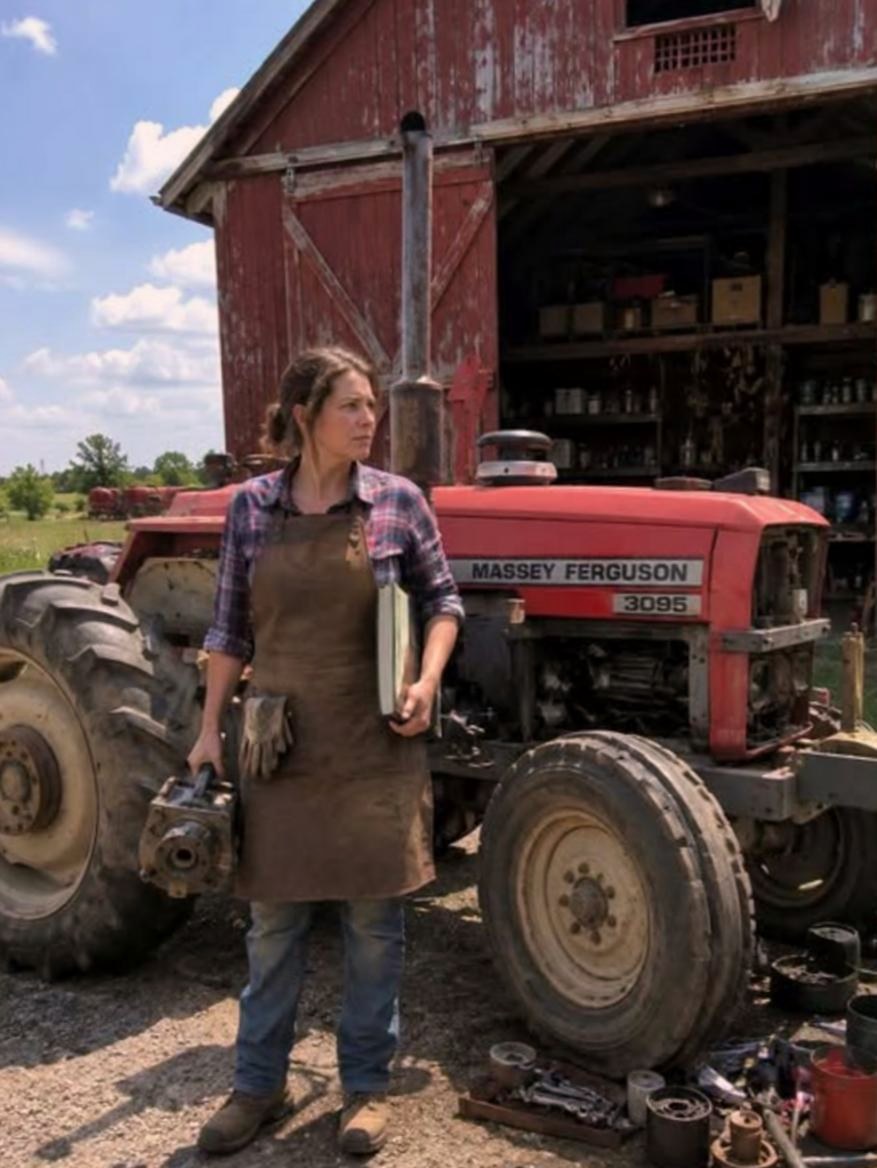
I opened a workshop in that same barn.
Only two people helped me during the first month: Ellen and Miranda.
In the second month six farmers came.
I taught them to repair engines, reuse old parts, and read bank contracts. We attached a small copper plate to each tractor, on which was written: “Restored, not written off.”
A year later our company’s income exceeded half a million dollars.

That money did not belong only to me. The farmers received shares. Twenty-one people worked in the workshop. The barn roof was new, and the old truck whose brake I secured with wire no longer stood in the yard.
One morning, when the first snow arrived, my little nephew Luke came into the workshop.
“Aunt Hannah, was this really the tractor everyone laughed at?”
“It was.”
“And now it works?”
“Every day.”
Luke showed me a small sun drawn on the windshield.
“I drew it. So it would not be sad anymore.”
I laughed.
“Tractors do not get sad.”
“People get sad. That is why I drew it.”
Those words reminded me of my father’s voice.


Several weeks later I received a letter from Wade. It was from prison. He wrote that he regretted everything, that he wanted to speak with me, and perhaps someday I would save his workshop too.
I read the letter to the end.
Then I wrote a reply.
“I no longer build my life around people who chose to destroy it. I wish you to find peace with your own decisions.”
Nothing more.
I put the letter in the mail and did not look back.
That evening I locked the workshop. Snow fell on the wooden doors. I placed my father’s copper whistle on the workbench. I cleaned the rust completely, but left the small scratch that revealed the thing hidden inside it that day.
Luke asked me:
“Why didn’t you throw it away?”
I looked at the whistle.
“Because sometimes a broken thing is brought to life not only by repair, but also by the story told about it.”
The winter wind blew outside.
I locked the door, put the whistle in my pocket, and headed toward the first light of morning.
This time there was nothing left for me to return home to.
Home was already coming to me.
Missed the beginning?
Related posts:
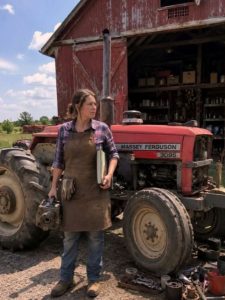 On My Bankrupt Farm, the Dealer Dumped a Humiliated Tractor, but When He Heard My Answer, the Banker’s Face Suddenly Went Pale
 Volví a casa cinco días después de una cesárea y encontré a mi esposo con otra mujer; entonces su madre palideció
 Pedí que aquel gigante dejara la incubadora, pero al ver su muñeca la enfermera jefe dejó de sonreír
 Mi hija golpeó al novio de su madre durante la boda, y cuando enseñó su teléfono, el padre de él dejó de respirar
 I Caught My Husband Kissing His Mistress in the Kitchen While I Was Twelve Weeks Pregnant, but One Letter of Mine Erased Her Smile
PARTE 4 — Pedí que aquel gigante dejara la incubadora, pero al ver su muñeca la enfermera jefe dejó de sonreír
I Caught My Husband Kissing His Mistress in the Kitchen While I Was Twelve Weeks Pregnant, but One Letter of Mine Erased Her Smile
PARTE 4 — Pedí que aquel gigante dejara la incubadora, pero al ver su muñeca la enfermera jefe dejó de sonreír